

Protection-availability.xyz adware is the threat that shows horrible redirects to other harmful sites

Protection-availability.xyz ads and notifications that fill up the screen with advertising material are controlled by the adware-type program that runs in the background and affects the machine significantly. This program can affect any of the web browsers, so users of Mozilla Firefox, Safari, and Google Chrome get introduced to intrusive commercial content online.
The threat can infect the machine and cause various issues with the system due to the processes launched in the background of the machine. Protection-availability.xyz ads are caused by the PUP that alters startup and other settings to keep the persistence and ensure that each reboot also runs this advertising-based program.
The particular program is not considered to be a virus, but push notifications, other pop-ups, advertisements, banners, random links on the browser, and coupons or promotional material that fills the screen can be related to malicious pages. Protection-availability.xyz has the purpose of showing advertising material to users and is causing issues with speed and system performance all the time.
What is this adware?
Protection-availability.xyz adware us the unwanted programs that is connected to various other sites and advertising campaigns that can result in downloading or installing free applications related to other sponsors and third-party applications. Views and clicks on such ads and sites can be monetized, and these sites ensure that users visit them all the time.
This is why these hijackers and adware programs are constantly causing redirects and pop-up ads or promotional content that encourages people to purchase or install particular programs. The existence of these PUPs can lead to a range of various worthless websites. These scam pages[1] and other deceptive content can be filled with malware.
| Name | Protection-availability.xyz |
|---|---|
| Type | Adware, push notifications virus |
| Category | Potentially unwanted program |
| Issues | It forces the user to see advertisements all the time, redirects cause issues with the speed and performance |
| Serving IP | 23.227.194.37 |
| Distribution | Freeware installations, deceptive pages, other applications like this |
| Removal | Antivirus tools can help with the elimination of the PUP. Try SpyHunterCombo Cleaner or MalwarebytesMalwarebytes |
| Repair | Recover the system using proper tools like FortectIntego |
Protection-availability.xyz ads or push notifications are not the intruders that you need to remove, the adware installed in the system is the one that needs to get removed from the machine. This program can work silently until it causes these speed or performance issues, so it is unclear when exactly the threat got installed.
Spreading infections online
Protection-availability.xyz ads and notifications can trigger injections of other threats, and these are the methods that the adware[2] can use to spread these programs around. There are various other methods employed for this, like deceptive sites and freeware distribution sites.
The infection can be installed during the simple download of the freeware program. The initial infection that causes issues with the Protection-availability.xyz can be included in the pirating software packages and inject the program during the installation from an insecure source like a torrent service or free download site.
Choosing proper sources and reliable sites, and official app stores can help to avoid particular installation of the infection, but users still go for free sources and skip through steps choosing Recommended options during downloads. All bundled programs get on the machine this way. Rely on Advanced or Custom options instead and avoid Protection-availability.xyz ads in the future.

Stopping the unwanted notification spam
Additional programs and browser-based content can cause issues with the machine and trigger those advertisements, and notifications, so make sure to block any sites that cause additional redirects. These settings should be manually reset to get rid of these Protection-availability.xyz ads.
Remove unwanted notifications from Google Chrome (desktop):
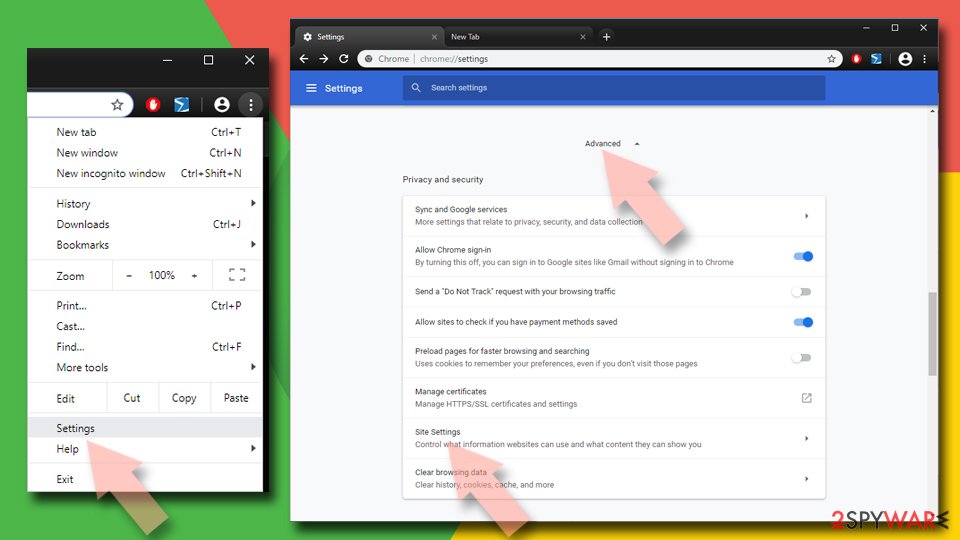
- Open Google Chrome browser and go to Menu > Settings.
- Scroll down and click on Advanced.
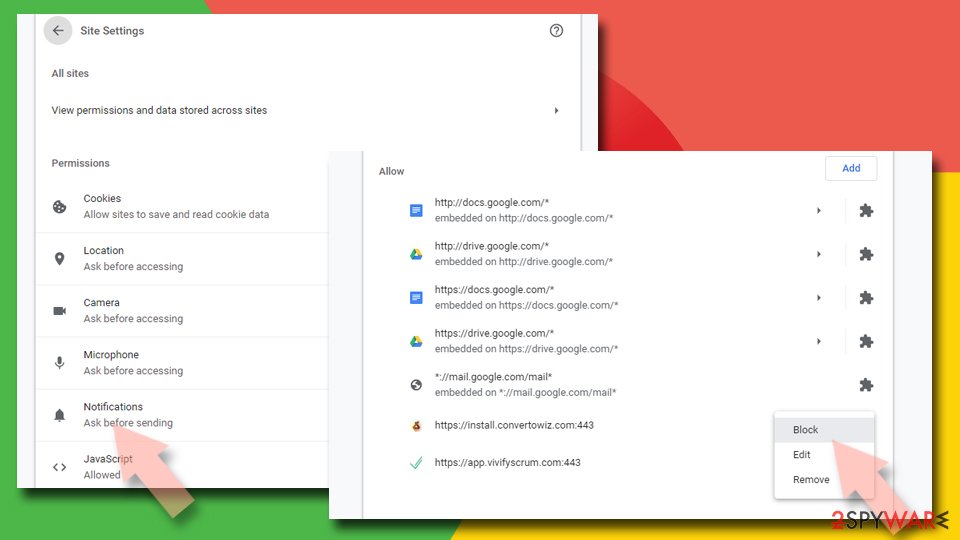
- Locate Privacy and security section and pick Site Settings > Notifications.
- Look at the Allow section and look for a suspicious URL.
- Click the three vertical dots next to it and pick Block. This should remove unwanted notifications from Google Chrome.


Remove unwanted notifications from Google Chrome (Android):
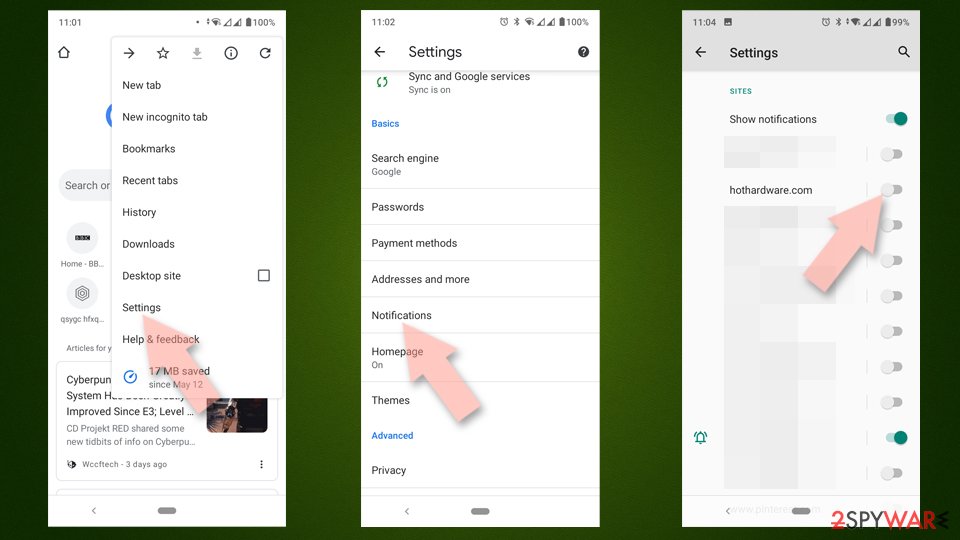
- Open Google Chrome and tap on Settings (three vertical dots).
- Select Notifications.
- Scroll down to the Sites section.
- Locate the unwanted URL and toggle the button to the left (Off setting).

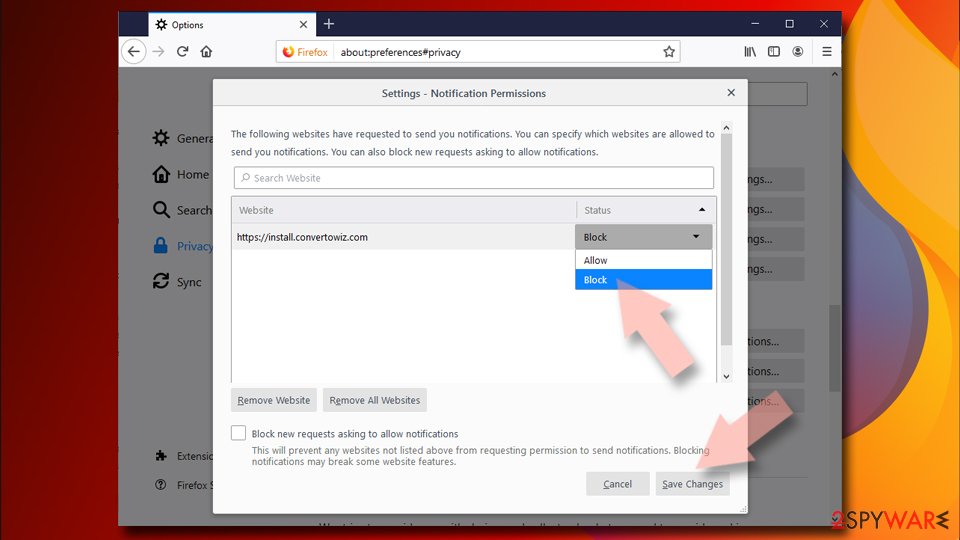
Remove unwanted notifications from Mozilla Firefox:
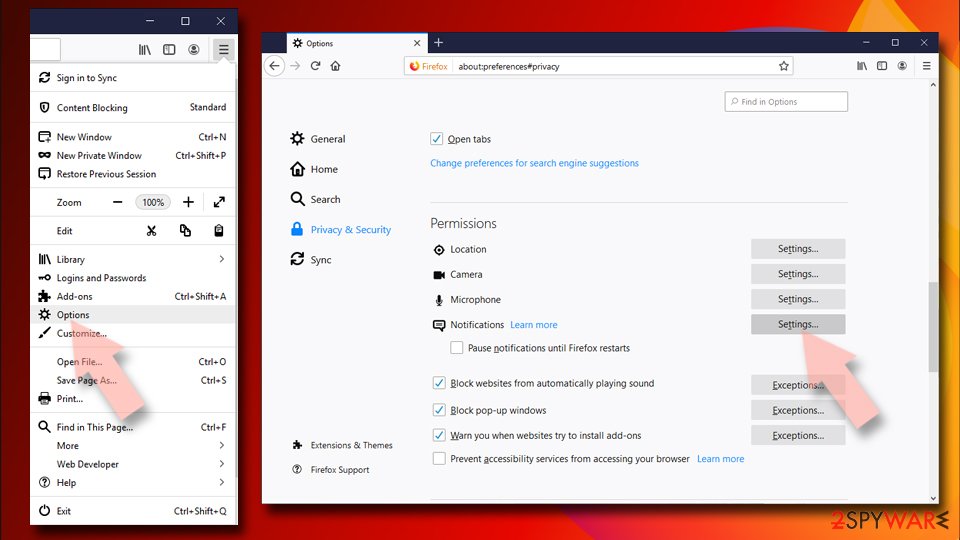
- Open Mozilla Firefox and go to Menu > Options.
- Click on Privacy & Security section.
- Under Permissions, you should be able to see Notifications. Click the Settings button next to it.
- In the Settings – Notification Permissions window, click on the drop-down menu by the URL in question.
- Select Block and then click on Save Changes. This should remove unwanted notifications from Mozilla Firefox.


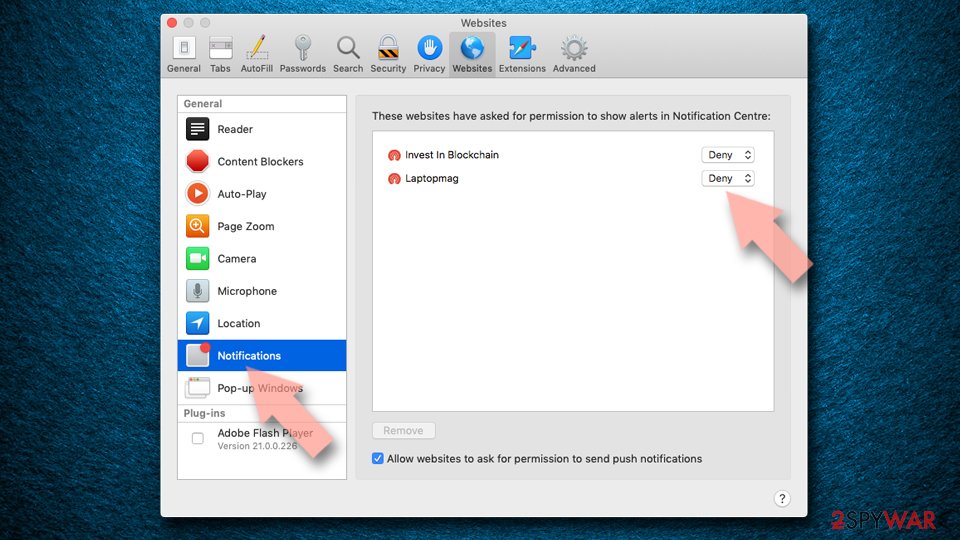
Remove unwanted notifications from Safari:
- Click on Safari > Preferences…
- Go to the Websites tab and, under General, select Notifications.
- Select the web address in question, click the drop-down menu and select Deny.

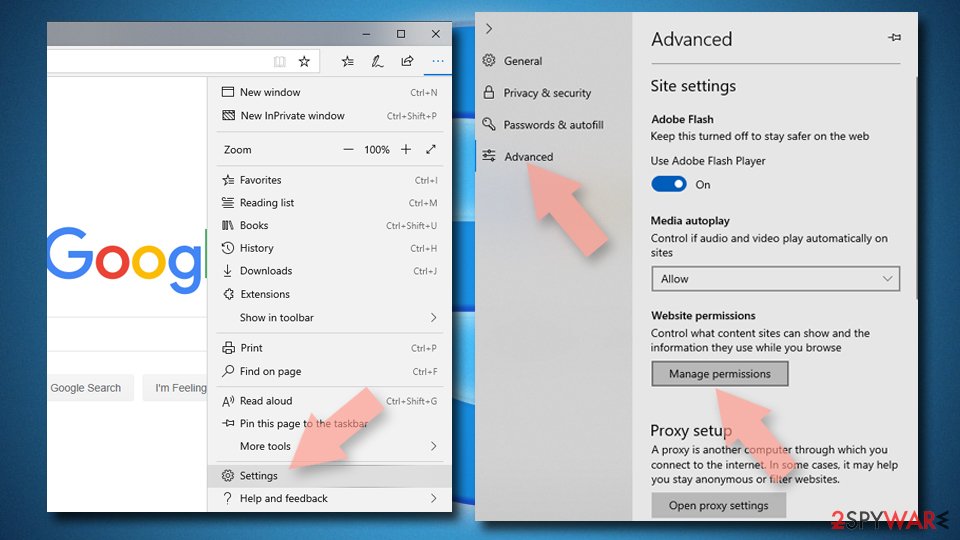
Remove unwanted notifications from MS Edge:
- Open Microsoft Edge, and click the Settings and more button (three horizontal dots) at the top-right of the window.
- Select Settings and then go to Advanced.
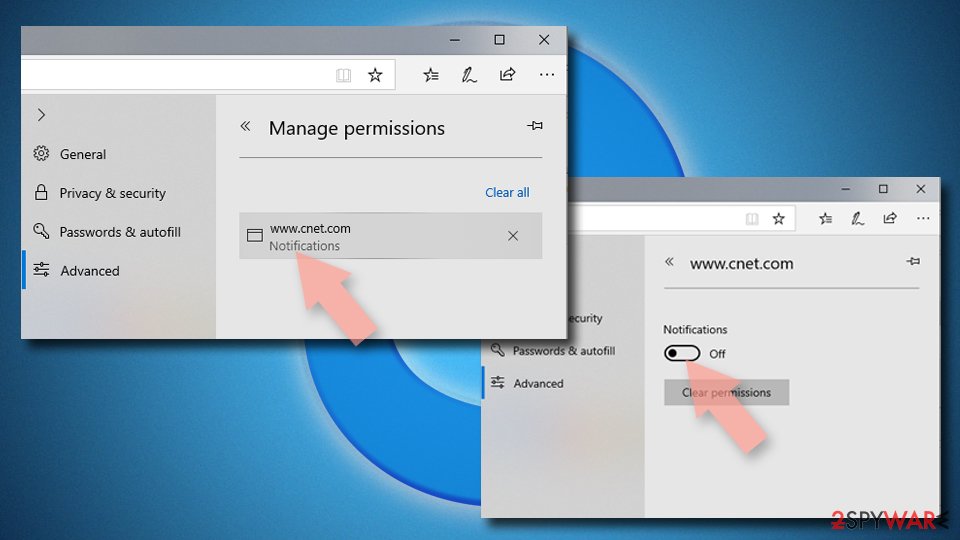
- Under Website permissions, pick Manage permissions and select the URL in question.
- Toggle the switch to the left to turn notifications off on Microsoft Edge.


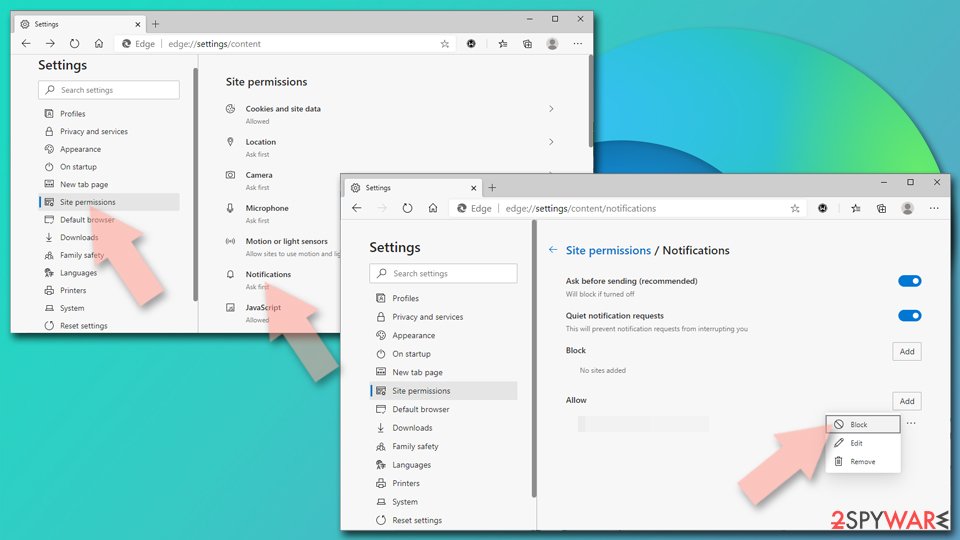
Remove unwanted notifications from MS Edge (Chromium):
- Open Microsoft Edge, and go to Settings.
- Select Site permissions.
- Go to Notifications on the right.
- Under Allow, you will find the unwanted entry.
- Click on More actions and select Block.

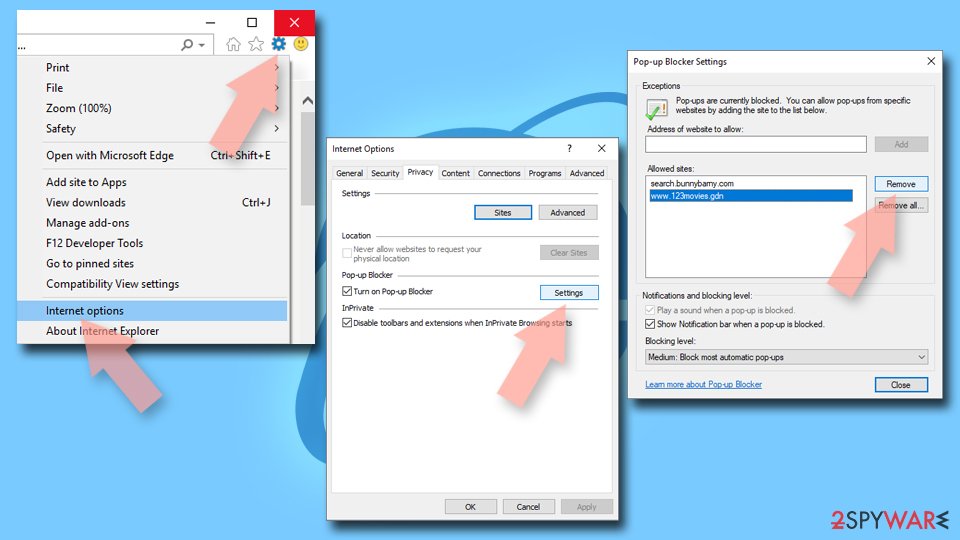
Remove unwanted notifications from Internet Explorer:
- Open Internet Explorer, and click on the Gear icon at the top-right of the window.
- Select Internet options and go to the Privacy tab.
- In the Pop-up Blocker section, click on Settings.
- Locate web address in question under Allowed sites and pick Remove.

Terminating the adware and cleaning the machine
Experts[3] note that installing a program like this can be silent and the procedure of removing the PUP is crucial because of the additional injections and downloads. Protection-availability.xyz ads and notifications that appear on the screen can be stopped when the anti-malware tools are launched.
Adware, browser hijackers, and potentially unwanted applications can trigger additional issues on the machine until these ads start coming on the screen. You need to run the proper antivirus tool and remove all intruders that are related to malware, trojans, or these advertising programs.
Protection-availability.xyz can also show claims about malware infections and offer AV tools, do not fall for these scams and install your own anti-malware tools to find all infections on the machine. Then the threat can be removed and fully stopped form affecting your machine.
Uninstall from Windows
Uninstall from Windows 10/8:
- Type Control Panel into the Windows search box and open the result.
- Under Programs, select Uninstall a program.


Uninstall from Windows 7/XP:
- Click on Windows Start > Control Panel (Windows XP users should click on Add/Remove Programs).
- In Control Panel, select Programs > Uninstall a program.


Remove the unwanted program:
- In the Programs and Features window, look for any recently installed suspicious entries, select them, and click Uninstall.
- If User Account Control appears, click Yes to confirm, then complete the removal.


Delete from macOS
Remove the unwanted application:
- From the menu bar, select Go > Applications.
- In the Applications folder, look for any suspicious entries, then drag them to Trash (or right-click and pick Move to Trash).


Delete leftover files and folders:
- Select Go > Go to Folder.
- Enter /Library/Application Support and remove any suspicious folders related to the unwanted program.
- Repeat the same check in the /Library/LaunchAgents and /Library/LaunchDaemons folders, deleting any suspicious entries.

- Finally, empty the Trash to permanently remove the leftovers.

Remove from Microsoft Edge
Delete unwanted extensions from MS Edge:
- Select Menu (three horizontal dots at the top-right of the browser window) and pick Extensions.
- From the list, pick the extension and click on the Gear icon.
- Click Remove.


Clear cookies and other browser data:
- Click on the Menu (three horizontal dots at the top-right of the browser window) and select Settings > Privacy, search, and services..
- Under Clear browsing data, pick Choose what to clear.
- Select Cookies and other site data and Cached images and files. (apart from passwords, although you might want to include Media licenses as well, if applicable) and click on Clear.


Restore new tab and homepage settings:
- Click the menu icon and choose Settings.
- Then find On startup section.
- Click Remove next to any suspicious startup page.
Reset MS Edge if the above steps did not work:
- Press on Ctrl + Shift + Esc to open Task Manager.
- Click on More details arrow at the bottom of the window.
- Select Details tab.
- Now scroll down and locate every entry with Microsoft Edge name in it. Right-click on each of them and select End Task to stop MS Edge from running.


Instructions for Chromium-based Edge
Delete extensions from MS Edge (Chromium):
- Open Edge and click select Settings > Extensions.
- Delete unwanted extensions by clicking Remove.


Clear cache and site data:
- Click on Menu and go to Settings.
- Select Privacy, search and services.
- Under Clear browsing data, pick Choose what to clear.
- Under Time range, pick All time.
- Select Clear now.


Reset Chromium-based MS Edge:
- Click on Menu and select Settings.
- On the left side, pick Reset settings.
- Select Restore settings to their default values.
- Confirm with Reset.
- This will disable extensions and reset startup pages but will not delete bookmarks, saved passwords, or browsing history.


Remove from Mozilla Firefox (FF)
Remove dangerous extensions:
- Open Mozilla Firefox browser and click on the Menu (three horizontal lines at the top-right of the window).
- Select Add-ons.
- In here, select the unwanted extension and click Remove.


Reset the homepage:
- Click three horizontal lines at the top right corner to open the menu.
- Choose Settings.
- Under Home, set your preferred homepage and new tab settings.
Clear cookies and site data:
- Click Menu and pick Settings.
- Go to Privacy & Security section.
- Scroll down to locate Cookies and Site Data.
- Click on Clear Data...
- Select Cookies and Site Data and Temporary cached files and pages, then click Clear.


Reset Mozilla Firefox
If clearing the browser as explained above did not help, reset Mozilla Firefox:
- Open Mozilla Firefox browser and click the Menu.
- Go to Help and then choose Troubleshooting Information.

- Under Give Firefox a tune up section, click on Refresh Firefox...
- Once the pop-up shows up, confirm the action by pressing on Refresh Firefox.



Remove from Google Chrome
Delete malicious extensions from Google Chrome:
- Open Google Chrome, click on the Menu (three vertical dots at the top-right corner) and select More tools > Extensions.
- In the newly opened window, you will see all the installed extensions. Uninstall all suspicious extensions related to the unwanted program by clicking Remove.


Clear cache and web data from Chrome:
- Click on Menu and pick Settings.
- Under Privacy and security, select Clear browsing data.
- Select Browsing history, Cookies and other site data, as well as Cached images and files.
- Click Clear data.


Change your homepage:
- Click menu and choose Settings.
- Look for a suspicious site in the On startup section.
- Click on Open a specific or set of pages and click on three dots to find the Remove option.
Reset Google Chrome:
If the previous methods did not help you, reset Google Chrome to eliminate all the unwanted components:
- Click on Menu and select Settings.
- In the Settings, scroll down and click Advanced.
- Scroll down and locate Reset and clean up section.
- Now click Restore settings to their original defaults.
- Confirm with Reset settings.


Delete from Safari
Remove dangerous extensions:
- Open Safari, click Safari in the menu at the top-left of the screen, and select Preferences.
- Go to the Extensions tab, look for any suspicious entries, and click Uninstall to remove them.


Clear history and website data:
- Click Safari in the menu and pick Clear History.
- Set Clear to all history and confirm with Clear History.


Reset Safari:
- Click Safari in the menu and select Preferences > Advanced.
- Enable Show Develop menu in menu bar.
- From the menu bar, click Develop and select Empty Caches.


Did this guide help?
Be the first to comment