

ProVideoSearch hijacks your browser and displays pop-up windows
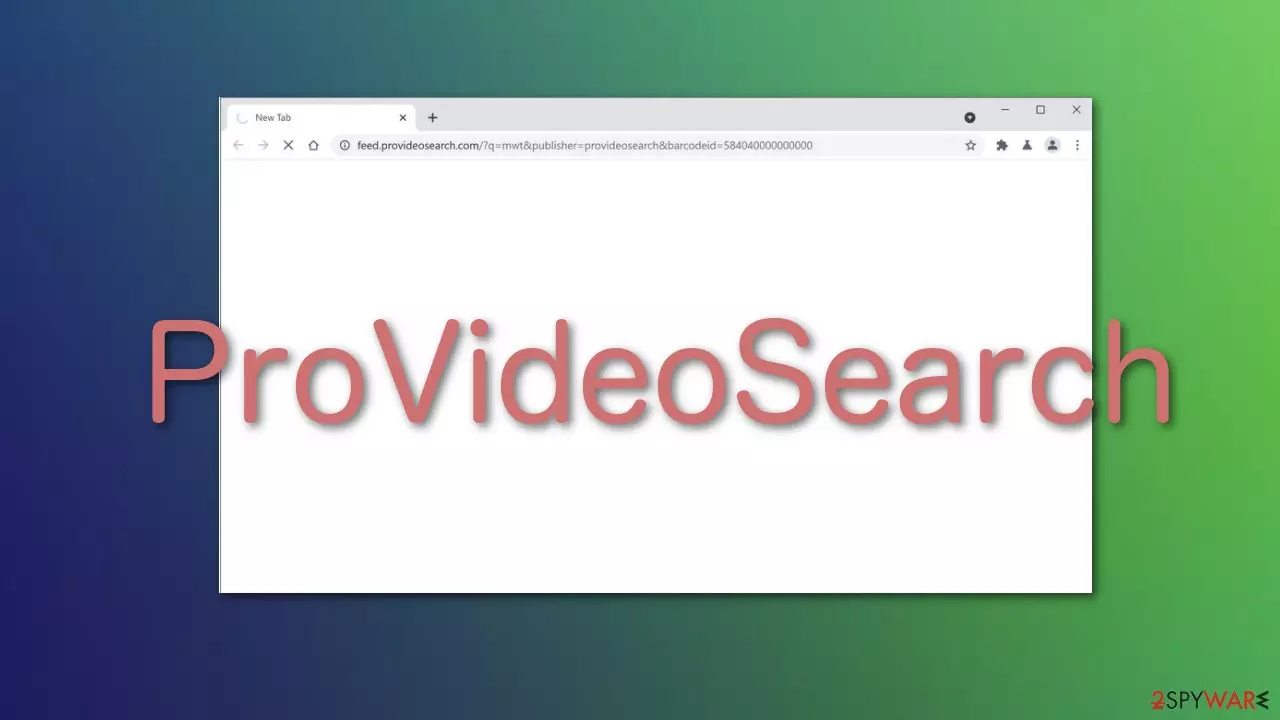
ProVideoSearch is classified as a browser hijacker because it changes default browser settings like the landing page. This is an annoying occurrence because, besides changing the settings, the add-on spams users with pop-up ads, which can take people to shady websites. Redirects are also a characteristic of this program, causing your browser search queries to feed.provideosearch.com, which will redirect to search result pages from search.yahoo.com. This is most likely done in order to generate advertising revenue by using Yahoo Search for its search results.
Pay-per-view or pay-per-click advertising is not harmful in nature. It is a fantastic way for companies to promote their services and products effectively. But profit-seeking adware[1] developers have used this feature to their advantage. Creating fake extensions and websites to push commercial content without checking advertisers' credibility.
This creates a lot of problems for user safety. If people do not use measures to protect themselves while browsing the internet, it is easy to get wrapped up in deception tactics. Pop-up ads displayed by this extension can be untruthful and lure users into questionable websites where they can infect their devices with potentially unwanted programs and give away their personal information.
| NAME | ProVideoSearch |
| TYPE | Browser hijacker, potentially unwanted program |
| DISTRIBUTION | Software bundling, deceptive advertisements |
| SYMPTOMS | Browser's default homepage and other settings are changed; constant redirects |
| DANGERS | Your online habits and other browsing-related data can be exposed; misleading pop-up ads |
| ELIMINATION | Remove the browser hijacker by going to the browser settings extensions' section |
| FURTHER STEPS | Clean your browsers' cookies and cache with FortectIntego to fix any damage caused by potentially unwanted programs or malware |
The reasons your homepage changed on its own
Browser extensions can be very beneficial while surfing the internet, helping you get coupon codes automatically while shopping, protecting you from untrustworthy websites, and stopping them from tracking you. On the other hand, if you do not research the add-on beforehand or download it from non-official vendors, it can be an opposite situation.
One of the most obvious explanations for this is that you have added this browser extension yourself. It might have offered a broad range of “useful” features and impressed you that way. However, the advertised functions of these types of add-ons are rarely operational. Often these programs claim that they would provide “enhanced” or “quick” search results, while in reality, genuine results are exchanged for simple ads, benefiting the developers.
Another reason why you could be experiencing this is potentially unwanted programs[2]. They can also come disguised as convenient tools when in reality, they provide little to no benefit for the user. Without reading the Terms of Use, people have no idea about the true intentions of software.

- Open Google Chrome, click on the Menu (three vertical dots at the top-right corner) and select More tools > Extensions.
- In the newly opened window, you will see all the installed extensions. Uninstall all the suspicious plugins that might be related to the unwanted program by clicking Remove.


Once you have successfully removed the malicious extensions from the browser, you should take a few more steps to get rid of this cyber threat completely. Clear cache and web data from Chrome:
- Click on Menu and pick Settings.
- Under Privacy and security, select Clear browsing data.
- Select Browsing history, Cookies and other site data, as well as Cached images and files.
- Click Clear data.


Steps that could help you avoid suspicious activity in the future
From now on, you can implement specific habits into your web browsing routine to protect yourself from outside threats.
Clean your browsers' cookies and cache regularly to delete information websites have collected about your browsing behavior. You can do this by using a helpful tool that will perform these tasks automatically – FortectIntego
Keep your browsers updated as developers release patches after vulnerabilities get exposed to protect their customers. If you are not using the latest versions, you might be at higher risk.
Observe how often you get redirected to websites and focus your attention on domain names. Look for patterns for trying to identify obscure manners from typical ones.
Do not click on random links and advertisements. Inspect them first. Read through the text and look for any grammar or spelling mistakes. Decide if the imaging and branding look professional. Ask yourself what the ad is trying to say. If the message feels too good to be true, scammers might be using clickbait to lure you in.
Avoid downloading software from third-party websites as it can be bundled with PUPs. If you still want to proceed with downloading a “free” or “cracked”[3] version of a program, be careful while doing so. Focus your attention during the installation process. We know it might be boring, but you should not quickly skip through the steps. Read The Licence Agreement and Privacy Policy and read about what information about you the program will be gathering. Look through the files that are up for installation. If you see some that are unrelated and unneeded, untick the boxes next to them, so they are empty.
If removing the ProVideoSearch extension did not help or you could not find it, you can reset your browser altogether. To reset Google Chrome manually, please follow these steps:
- Click on Menu and select Settings.
- In the Settings, scroll down and click Advanced.
- Scroll down and locate Reset and clean up section.
- Now click Restore settings to their original defaults.
- Confirm with Reset settings.


Delete from Mozilla Firefox
- Open Mozilla Firefox browser and click on the Menu (three horizontal lines at the top-right of the window).
- Select Add-ons.
- In here, select unwanted plugin and click Remove.


Reset the homepage:
- Click three horizontal lines at the top right corner to open the menu.
- Choose Options.
- Under Home options, enter your preferred site that will open every time you newly open the Mozilla Firefox.
The instructions for other web browsers can be found at the bottom of this post.
Automatic removal options
If you keep experiencing unwanted actions carried out without your consent, it is advisable to have a trustworthy antivirus instrument like SpyHunterCombo Cleaner and MalwarebytesMalwarebytes that could help you with detecting PUPs, other harmful applications and delete them from your system.
Uninstall from Windows
Uninstall from Windows 10/8:
- Type Control Panel into the Windows search box and open the result.
- Under Programs, select Uninstall a program.


Uninstall from Windows 7/XP:
- Click on Windows Start > Control Panel (Windows XP users should click on Add/Remove Programs).
- In Control Panel, select Programs > Uninstall a program.


Remove the unwanted program:
- In the Programs and Features window, look for any recently installed suspicious entries, select them, and click Uninstall.
- If User Account Control appears, click Yes to confirm, then complete the removal.


Delete from macOS
Remove the unwanted application:
- From the menu bar, select Go > Applications.
- In the Applications folder, look for any suspicious entries, then drag them to Trash (or right-click and pick Move to Trash).


Delete leftover files and folders:
- Select Go > Go to Folder.
- Enter /Library/Application Support and remove any suspicious folders related to the unwanted program.
- Repeat the same check in the /Library/LaunchAgents and /Library/LaunchDaemons folders, deleting any suspicious entries.

- Finally, empty the Trash to permanently remove the leftovers.

Remove from Microsoft Edge
Delete unwanted extensions from MS Edge:
- Select Menu (three horizontal dots at the top-right of the browser window) and pick Extensions.
- From the list, pick the extension and click on the Gear icon.
- Click Remove.


Clear cookies and other browser data:
- Click on the Menu (three horizontal dots at the top-right of the browser window) and select Settings > Privacy, search, and services..
- Under Clear browsing data, pick Choose what to clear.
- Select Cookies and other site data and Cached images and files. (apart from passwords, although you might want to include Media licenses as well, if applicable) and click on Clear.


Restore new tab and homepage settings:
- Click the menu icon and choose Settings.
- Then find On startup section.
- Click Remove next to any suspicious startup page.
Reset MS Edge if the above steps did not work:
- Press on Ctrl + Shift + Esc to open Task Manager.
- Click on More details arrow at the bottom of the window.
- Select Details tab.
- Now scroll down and locate every entry with Microsoft Edge name in it. Right-click on each of them and select End Task to stop MS Edge from running.


Instructions for Chromium-based Edge
Delete extensions from MS Edge (Chromium):
- Open Edge and click select Settings > Extensions.
- Delete unwanted extensions by clicking Remove.


Clear cache and site data:
- Click on Menu and go to Settings.
- Select Privacy, search and services.
- Under Clear browsing data, pick Choose what to clear.
- Under Time range, pick All time.
- Select Clear now.


Reset Chromium-based MS Edge:
- Click on Menu and select Settings.
- On the left side, pick Reset settings.
- Select Restore settings to their default values.
- Confirm with Reset.
- This will disable extensions and reset startup pages but will not delete bookmarks, saved passwords, or browsing history.


Remove from Mozilla Firefox (FF)
Remove dangerous extensions:
- Open Mozilla Firefox browser and click on the Menu (three horizontal lines at the top-right of the window).
- Select Add-ons.
- In here, select the unwanted extension and click Remove.
Reset the homepage:
- Click three horizontal lines at the top right corner to open the menu.
- Choose Settings.
- Under Home, set your preferred homepage and new tab settings.
Clear cookies and site data:
- Click Menu and pick Settings.
- Go to Privacy & Security section.
- Scroll down to locate Cookies and Site Data.
- Click on Clear Data...
- Select Cookies and Site Data and Temporary cached files and pages, then click Clear.


Reset Mozilla Firefox
If clearing the browser as explained above did not help, reset Mozilla Firefox:
- Open Mozilla Firefox browser and click the Menu.
- Go to Help and then choose Troubleshooting Information.

- Under Give Firefox a tune up section, click on Refresh Firefox...
- Once the pop-up shows up, confirm the action by pressing on Refresh Firefox.



Delete from Safari
Remove dangerous extensions:
- Open Safari, click Safari in the menu at the top-left of the screen, and select Preferences.
- Go to the Extensions tab, look for any suspicious entries, and click Uninstall to remove them.


Clear history and website data:
- Click Safari in the menu and pick Clear History.
- Set Clear to all history and confirm with Clear History.


Reset Safari:
- Click Safari in the menu and select Preferences > Advanced.
- Enable Show Develop menu in menu bar.
- From the menu bar, click Develop and select Empty Caches.


Did this guide help?
Be the first to comment