

Romancedating.top is disguised as an adult website that needs to perform an age check
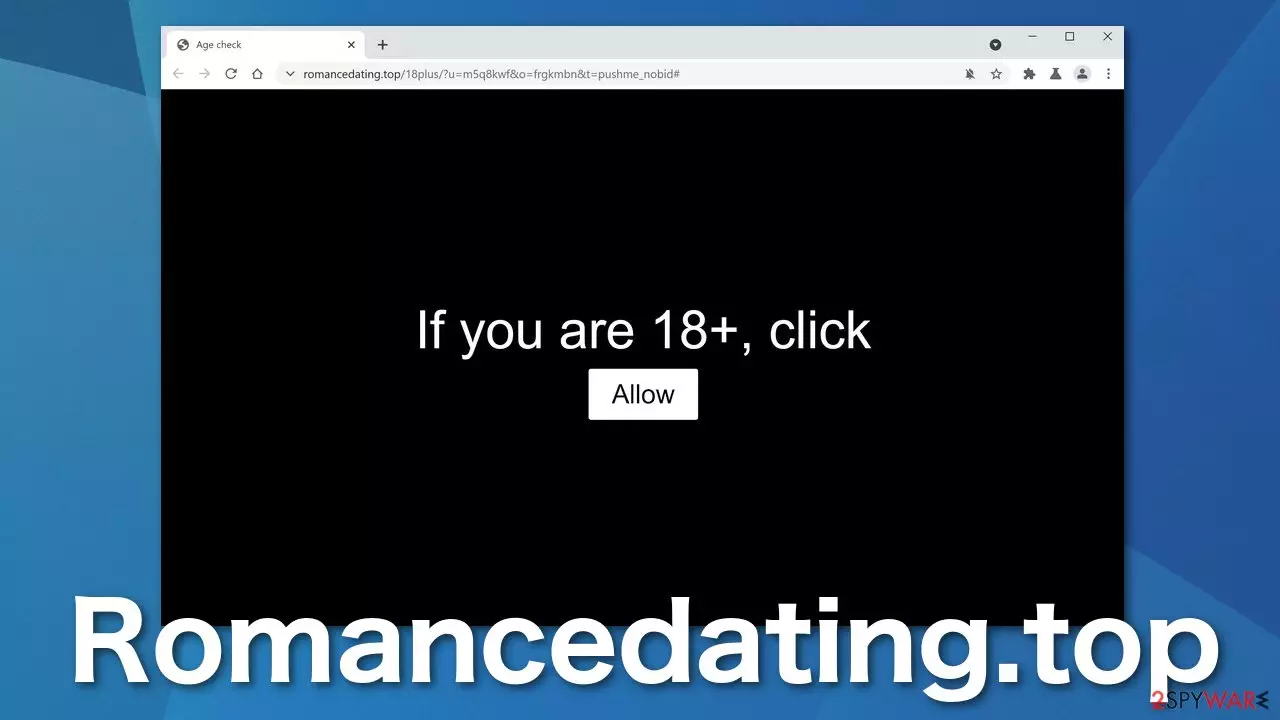
Romancedating.top is a fake website using deceptive tactics to fool users into allowing push notifications. When people open the site they are met with a message asking them to confirm their age. From the domain, it appears as a dating site for adults, but in reality, it does not have any more content besides the black page with white text saying to click the “Allow” button.
The main purpose of this page is to get users to subscribe to push notifications to make money from PPC advertising, The catch is – the creators of this page do not care about your privacy or safety, so they do not filter ads that come through them. As a result, the links that are embedded in the windows can lead to dangerous websites created by scammers and make users suffer from monetary losses or infect their devices with viruses.
Push notification spam has become an increasing problem in the past few years, and there are thousands of websites just like this one. Some of the other examples we already wrote about include Hookupfornights.com, Allhugeblog.com, and Matrixstar.net. The intensity of the ads depends on what settings the owner of the site has placed.
| NAME | Romancedating.top |
| TYPE | Push notification spam; adware |
| SYMPTOMS | Pop-up ads start appearing in the corner of the screen, sometimes even when the browser is closed |
| DISTRIBUTION | Shady websites, deceptive ads, freeware installations from unofficial sources |
| DANGERS | Links embedded in the pop-up windows can lead to dangerous websites where users could be tricked into providing their personal information or downloading PUPs and malware |
| ELIMINATION | To stop ads from appearing you have to go to your browser setting and block them, or deploy anti-malware tools to detect adware activity |
| FURTHER STEPS | After the elimination is complete, it is a good idea to take care of your browsers with FortectIntego, which can fix any remaining damage and optimize the machine |
Because people think that they are confirming their age, the ads seem to appear suddenly and out of nowhere. Most times people think that they got infected with a virus, but that is rarely the case as push notifications are based on a subscription model, so only users themselves can request to receive them.
The only possibility is an adware[1] infection which is a potentially unwanted program[2] that generates advertisements in the background. Users that have such programs hiding in their system experience sudden redirects to questionable pages, banners, surveys, and other commercial content in the browser or even when it is not in use.
How do users come to Romancedating.top in the first place?
People rarely come to pages like this on their own or find it in the search results. The site is promoted on other shady pages that are full of deceptive ads[3] and sneaky redirects. Once people are on these kinds of sites, it's easy to get tricked, because often people think that they will be able to access some kind of content in the new tab that opens.
In fact, the new tab that opens is just an ad, that has nothing to do with the previous page. People need to learn to read everything they click on because the Internet is far from a safe place. Many individuals search for opportunities to exploit web surfers that are oblivious about basic safety rules while browsing.
The age confirmation is not the only scheme used to get people to press the “Allow” button, that grants permission for the website to start sending push notifications. Some of the other messages can ask to confirm if users are human and not robots or ask them to press the button to be able to keep watching a video. There is never real content on these kinds of pages. They use fake images, GIFs, to make moving images look like movies that cannot load and so on.

Stop the annoying pop-ups
As we mentioned before, links embedded in the notification windows can lead to dangerous websites that can result in people providing their personal information and identity theft or infecting their device with malicious programs that could cause more serious problems.
Receiving pop-up ads from this website does not provide any benefits, so you should remove them as soon as possible. Lucky for you, because they are based on a subscription model, all you have to do is go to your browser settings and block push notifications from Romancedating.top. We show how to do that step-by-step in instructions posted below:
Remove unwanted notifications from Google Chrome (desktop):
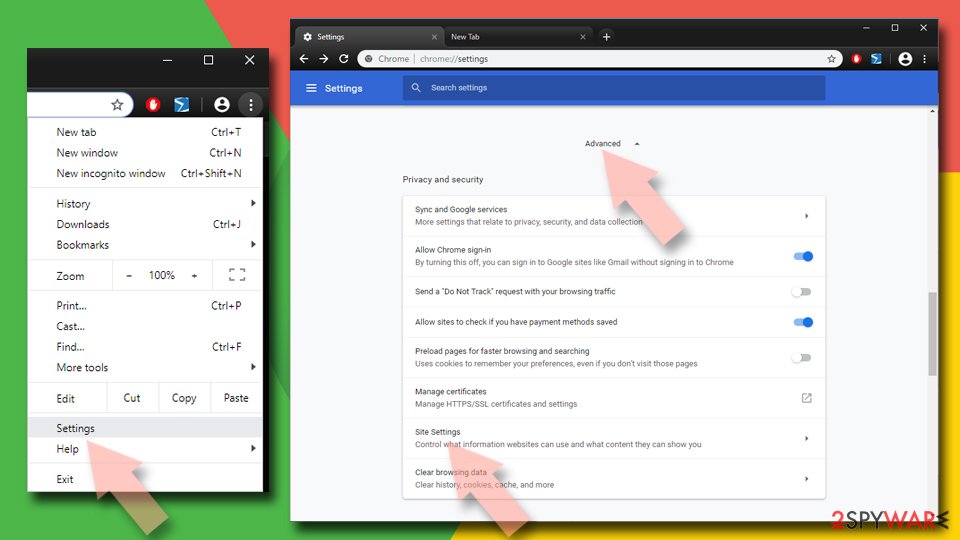
- Open Google Chrome browser and go to Menu > Settings.
- Scroll down and click on Advanced.
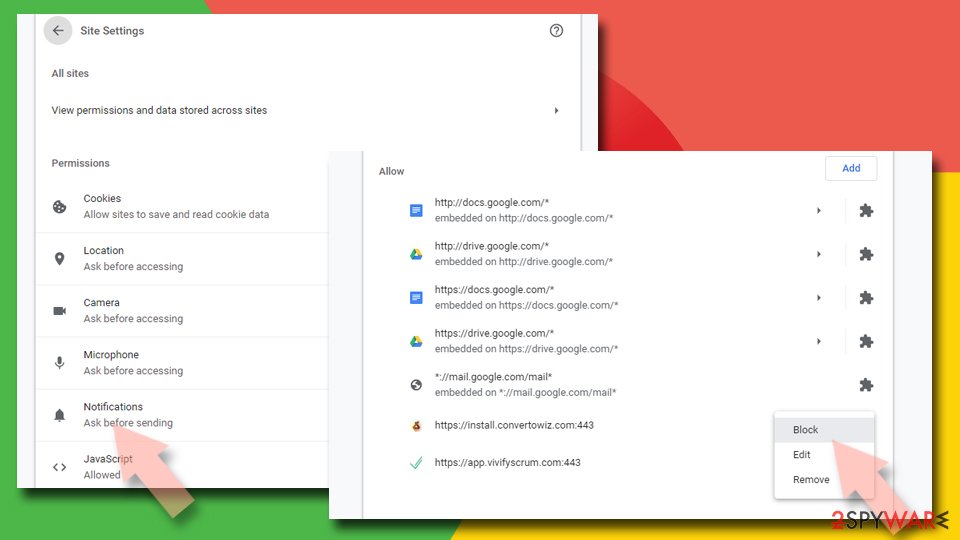
- Locate Privacy and security section and pick Site Settings > Notifications.
- Look at the Allow section and look for a suspicious URL.
- Click the three vertical dots next to it and pick Block. This should remove unwanted notifications from Google Chrome.


Google Chrome (Android):
- Open Google Chrome and tap on Settings (three vertical dots).
- Select Notifications.
- Scroll down to Sites section.
- Locate the unwanted URL and toggle the button to the left (Off setting).
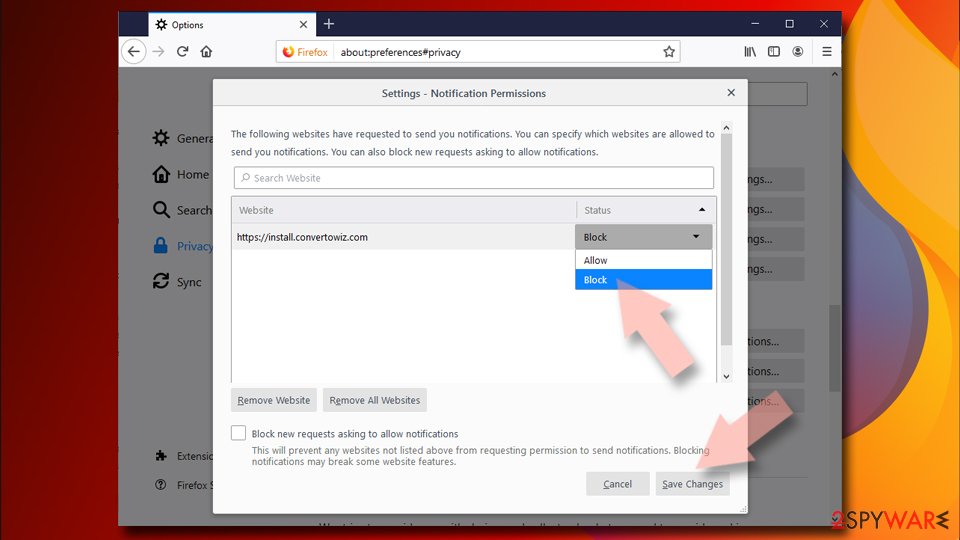
Mozilla Firefox:
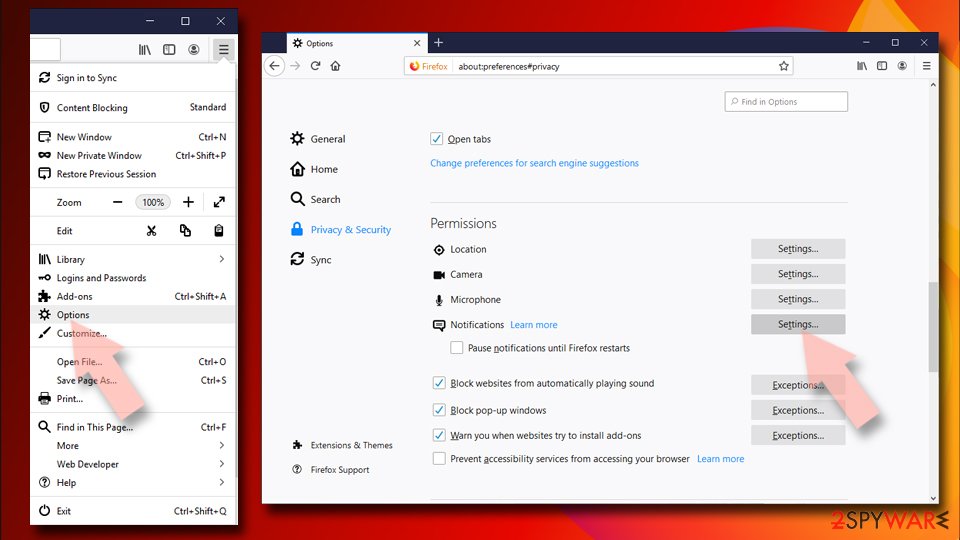
- Open Mozilla Firefox and go to Menu > Options.
- Click on Privacy & Security section.
- Under Permissions, you should be able to see Notifications. Click Settings button next to it.
- In the Settings – Notification Permissions window, click on the drop-down menu by the URL in question.
- Select Block and then click on Save Changes. This should remove unwanted notifications from Mozilla Firefox.


Safari:
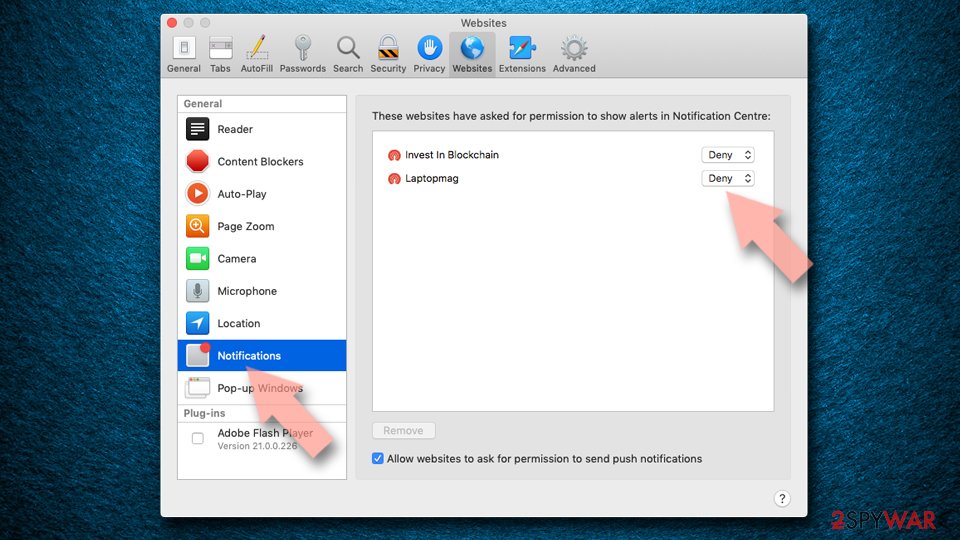
- Click on Safari > Preferences…
- Go to Websites tab and, under General, select Notifications.
- Select the web address in question, click the drop-down menu and select Deny.

MS Edge:
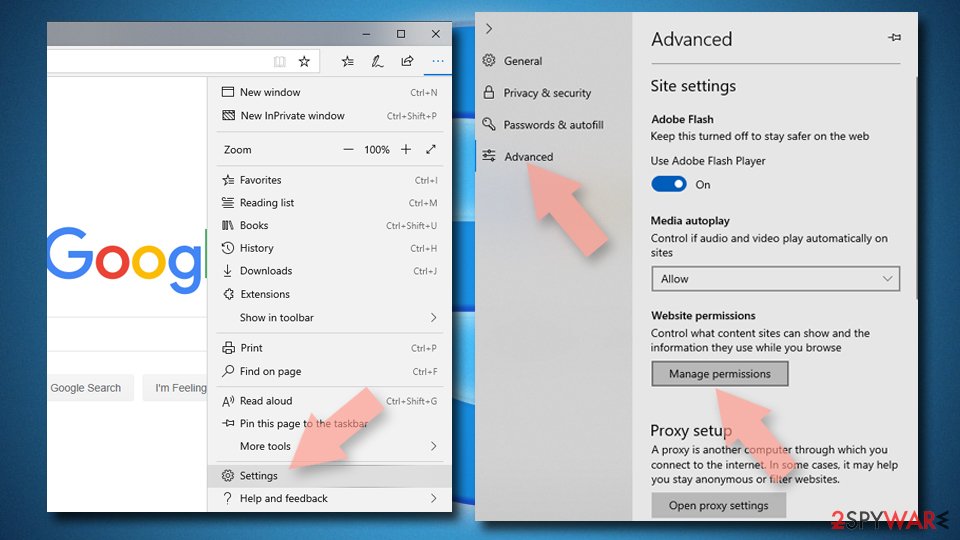
- Open Microsoft Edge, and click the Settings and more button (three horizontal dots) at the top-right of the window.
- Select Settings and then go to Advanced.
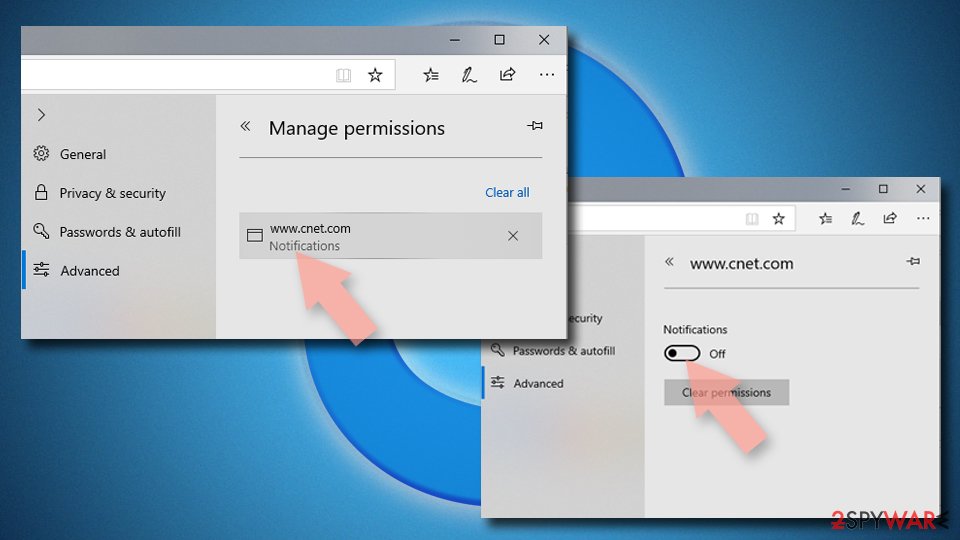
- Under Website permissions, pick Manage permissions and select the URL in question.
- Toggle the switch to the left to turn notifications off on Microsoft Edge.


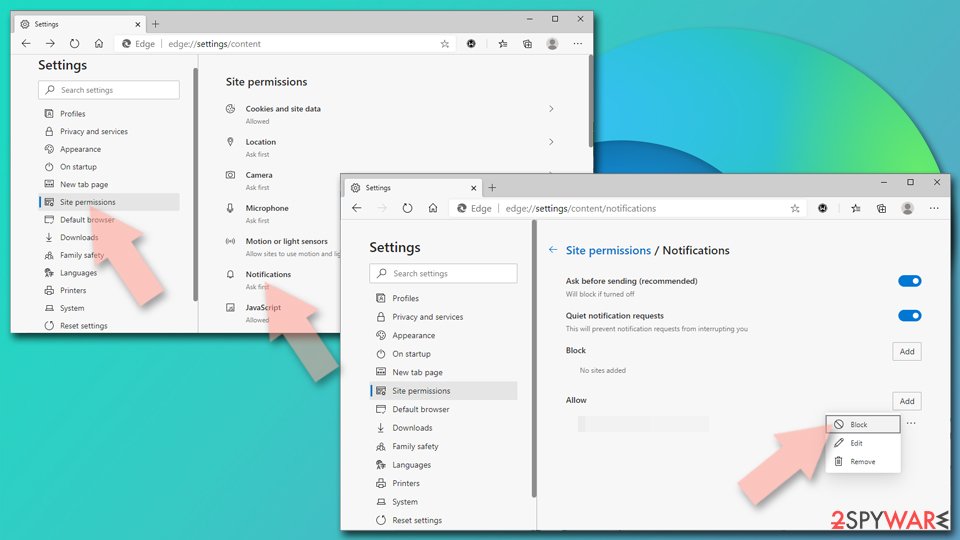
MS Edge (Chromium):
- Open Microsoft Edge, and go to Settings.
- Select Site permissions.
- Go to Notifications on the right.
- Under Allow, you will find the unwanted entry.
- Click on More actions and select Block.

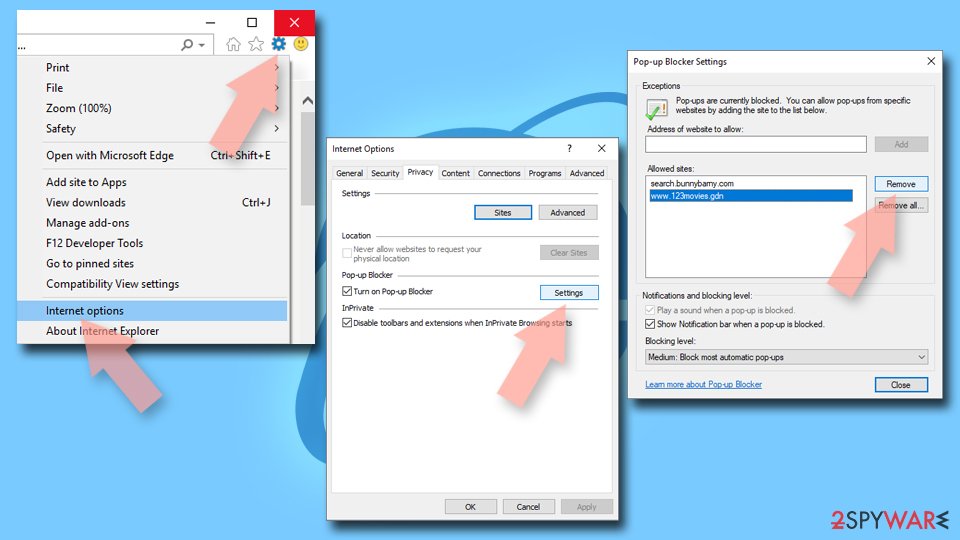
Internet Explorer:
- Open Internet Explorer, and click on the Gear icon at the top-right on the window.
- Select Internet options and go to Privacy tab.
- In the Pop-up Blocker section, click on Settings.
- Locate web address in question under Allowed sites and pick Remove.

Clear cookies and cache and check your machine for PUPs
After you have successfully got rid of push notifications and they are no longer appearing on your screen, we always recommend taking care of browsers. Almost every website you visit uses cookies to track your browsing activity like the IP address, the websites you visit, links you click on, and purchases you make.
Because you were receiving ads from all kinds of sources without your consent, it means you might have visited some pretty shady sites, that could still be keeping track of what you are doing. Cookies are stored on a client's device so users can remove them easily. If you use many browsers and want to avoid a long procedure, we suggest using FortectIntego, an optimization tool that can clear cookies and cache quickly and effectively. Besides that, this software can fix various system errors, corrupted files, so it can come in handy in the future.
You might also want to check if there is no adware in your machine, which we talked about before. These apps come disguised as handy tools that users download themselves, or from freeware installations. Sites that distribute free software still ned to make money, so they thought of other ways to monetize their activities. What they did was start including bundled software in the installer, without disclosing that information.
As many users find that boring, they rush through the process and do not notice them. So what you have to do in the future to avoid that is:
- Choose the “Custom” or “Advanced” installation method
- Go through all the steps and read the Terms of Use, Privacy Policy
- Check the file list and untick the boxes next to applications that seem unnecessary and unrelated
- Get professional security software like SpyHunterCombo Cleaner or MalwarebytesMalwarebytes that can detect unusual activity and warn you about it
Uninstall from Windows
Uninstall from Windows 10/8:
- Type Control Panel into the Windows search box and open the result.
- Under Programs, select Uninstall a program.


Uninstall from Windows 7/XP:
- Click on Windows Start > Control Panel (Windows XP users should click on Add/Remove Programs).
- In Control Panel, select Programs > Uninstall a program.


Remove the unwanted program:
- In the Programs and Features window, look for any recently installed suspicious entries, select them, and click Uninstall.
- If User Account Control appears, click Yes to confirm, then complete the removal.


Delete from macOS
Remove the unwanted application:
- From the menu bar, select Go > Applications.
- In the Applications folder, look for any suspicious entries, then drag them to Trash (or right-click and pick Move to Trash).


Delete leftover files and folders:
- Select Go > Go to Folder.
- Enter /Library/Application Support and remove any suspicious folders related to the unwanted program.
- Repeat the same check in the /Library/LaunchAgents and /Library/LaunchDaemons folders, deleting any suspicious entries.

- Finally, empty the Trash to permanently remove the leftovers.

Did this guide help?
Be the first to comment