

Search.bureau108.fr – a search engine that may lead to unexpected computer issues
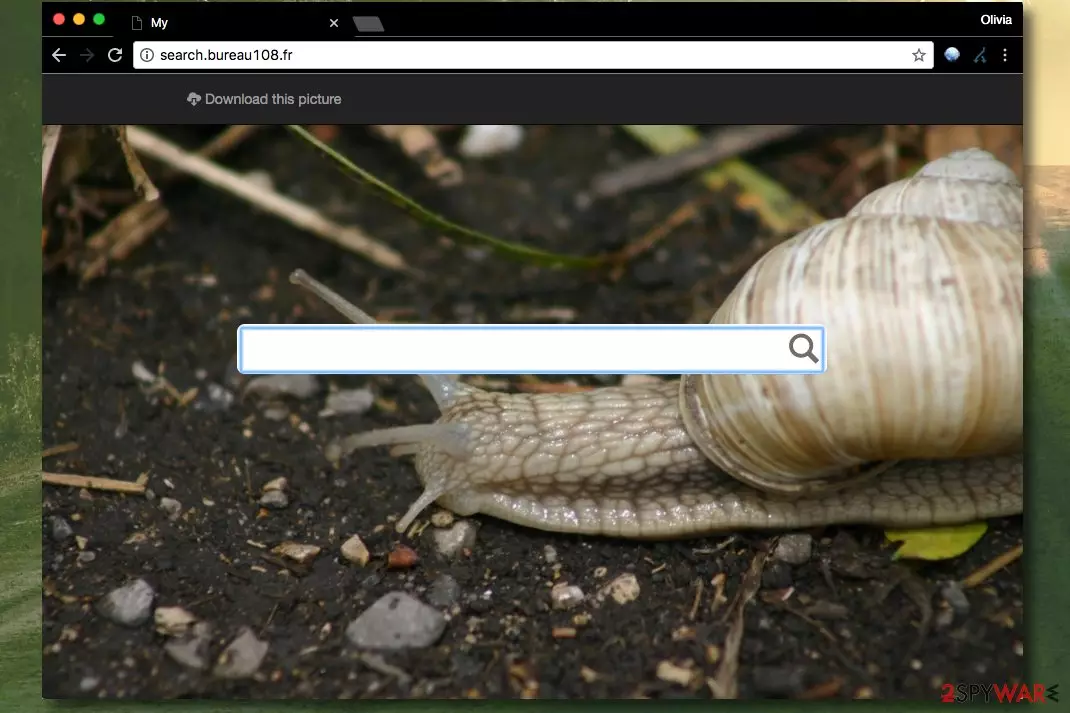
Search.bureau108.fr is a typical browser-hijacking computer application that installs itself on a victim’s computer by leveraging the software bundling technique[1]. Once installed, this potentially unwanted program (PUP) will hijack available web browsers and alter their default search engine, new tab, and homepage preferences.
The suspicious search engine is considered to be untrustworthy because it might serve you results with links leading to affiliate websites behind them. We do not advise using this browser extension. If you spot any of its symptoms, you have to remove it immediately because it might endanger your privacy and security.
| name | Search.bureau108.fr |
|---|---|
| Type | Redirect virus, browser hijacker |
| Symptoms | The threat modifies browser settings; slows down the device it's installed on and the browsing speed; redirects to suspicious portals; ads in search results |
| Risks | Installation of other potentially unwanted programs, money loss, privacy issues |
| Distribution | Software bundling, deceptive ads, file-sharing platforms |
| Elimination | Reliable security tools can remove this browser hijacker within minutes. Manual removal is also possible with our guides given at the bottom of the article |
| System health | To ensure that your device runs smoothly, perform system diagnostics with the FortectIntego app |
Usually, the developers of search engine that provides ads hardly ever endorse content shared on promoted web pages nor are they responsible for it. If you care about your safety, consider using a search tool that has a slightly better reputation.
Considering that the website’s country code is FR, we assume that the program that promotes it mainly targets French-speaking computer users. If you are one of them, we suggest visiting LesVirus.fr[2] for spyware removal instructions in your language.
If your browser started opening Search.bureau108.fr automatically, you should check what programs and browser extensions were added to your computer lately. You might be surprised to find some downright strange programs that you didn’t install.
Usually, the installation of these programs takes place when the user installs free software downloaded from the Internet without paying attention to essential installation steps[3]. You will find more information regarding this matter in the next paragraph.
To remove Search.bureau108.fr virus, we strongly recommend reading the instructions added to this page. After reading the instructions, ask yourself if they seem clear enough for you. If you have any questions regarding the removal, do not hesitate to contact our team.
If you seek a quicker removal option, consider using software like MalwarebytesMalwarebytes, SpyHunterCombo Cleaner, or similar to eliminate the browser hijacker within a few minutes. Whichever method you choose, when the removal is finished, you must scan your device with the FortectIntego PC repair tool for any system irregularities.

Things to consider when installing free software
Everyone likes to install free computer programs, but in order to avoid installing potentially unwanted programs, you need to know how to do it properly. The most important rule is to be careful and not rush when installing a new program. Besides, it is not worth trusting Default or Standard software installation settings – these will likely trick you into installing extra programs without realizing it.
For this reason, you should opt for a different method – the Custom or Advanced one. One or another will give you a chance to see items bundled with your preferred software and reject them. Usually, all that it takes is a few mouse clicks – you just have to deselect the ticks next to agreements to install extra programs.
Instructions to remove Search.bureau108.fr from your PC
There is no better way to remove Search.bureau108.fr virus than to remove it automatically. However, you can try to delete it from your machine manually. We have provided in-detail instructions on how to find the hijacker components and delete them from the system.
However, to ensure that all of the components are gone, we recommend performing a computer scan using trustworthy anti-malware software. If you do not have one yet, please consider installing one of the programs recommended by our experts.
Uninstall from Windows
Uninstall from Windows 10/8:
- Type Control Panel into the Windows search box and open the result.
- Under Programs, select Uninstall a program.


Uninstall from Windows 7/XP:
- Click on Windows Start > Control Panel (Windows XP users should click on Add/Remove Programs).
- In Control Panel, select Programs > Uninstall a program.


Remove the unwanted program:
- In the Programs and Features window, look for any recently installed suspicious entries, select them, and click Uninstall.
- If User Account Control appears, click Yes to confirm, then complete the removal.


Delete from macOS
Remove the unwanted application:
- From the menu bar, select Go > Applications.
- In the Applications folder, look for any suspicious entries, then drag them to Trash (or right-click and pick Move to Trash).


Delete leftover files and folders:
- Select Go > Go to Folder.
- Enter /Library/Application Support and remove any suspicious folders related to the unwanted program.
- Repeat the same check in the /Library/LaunchAgents and /Library/LaunchDaemons folders, deleting any suspicious entries.

- Finally, empty the Trash to permanently remove the leftovers.

Remove from Microsoft Edge
Delete unwanted extensions from MS Edge:
- Select Menu (three horizontal dots at the top-right of the browser window) and pick Extensions.
- From the list, pick the extension and click on the Gear icon.
- Click Remove.


Clear cookies and other browser data:
- Click on the Menu (three horizontal dots at the top-right of the browser window) and select Settings > Privacy, search, and services..
- Under Clear browsing data, pick Choose what to clear.
- Select Cookies and other site data and Cached images and files. (apart from passwords, although you might want to include Media licenses as well, if applicable) and click on Clear.


Restore new tab and homepage settings:
- Click the menu icon and choose Settings.
- Then find On startup section.
- Click Remove next to any suspicious startup page.
Reset MS Edge if the above steps did not work:
- Press on Ctrl + Shift + Esc to open Task Manager.
- Click on More details arrow at the bottom of the window.
- Select Details tab.
- Now scroll down and locate every entry with Microsoft Edge name in it. Right-click on each of them and select End Task to stop MS Edge from running.


Instructions for Chromium-based Edge
Delete extensions from MS Edge (Chromium):
- Open Edge and click select Settings > Extensions.
- Delete unwanted extensions by clicking Remove.


Clear cache and site data:
- Click on Menu and go to Settings.
- Select Privacy, search and services.
- Under Clear browsing data, pick Choose what to clear.
- Under Time range, pick All time.
- Select Clear now.


Reset Chromium-based MS Edge:
- Click on Menu and select Settings.
- On the left side, pick Reset settings.
- Select Restore settings to their default values.
- Confirm with Reset.
- This will disable extensions and reset startup pages but will not delete bookmarks, saved passwords, or browsing history.


Remove from Mozilla Firefox (FF)
Remove dangerous extensions:
- Open Mozilla Firefox browser and click on the Menu (three horizontal lines at the top-right of the window).
- Select Add-ons.
- In here, select the unwanted extension and click Remove.


Reset the homepage:
- Click three horizontal lines at the top right corner to open the menu.
- Choose Settings.
- Under Home, set your preferred homepage and new tab settings.
Clear cookies and site data:
- Click Menu and pick Settings.
- Go to Privacy & Security section.
- Scroll down to locate Cookies and Site Data.
- Click on Clear Data...
- Select Cookies and Site Data and Temporary cached files and pages, then click Clear.


Reset Mozilla Firefox
If clearing the browser as explained above did not help, reset Mozilla Firefox:
- Open Mozilla Firefox browser and click the Menu.
- Go to Help and then choose Troubleshooting Information.

- Under Give Firefox a tune up section, click on Refresh Firefox...
- Once the pop-up shows up, confirm the action by pressing on Refresh Firefox.



Remove from Google Chrome
Delete malicious extensions from Google Chrome:
- Open Google Chrome, click on the Menu (three vertical dots at the top-right corner) and select More tools > Extensions.
- In the newly opened window, you will see all the installed extensions. Uninstall all suspicious extensions related to the unwanted program by clicking Remove.


Clear cache and web data from Chrome:
- Click on Menu and pick Settings.
- Under Privacy and security, select Clear browsing data.
- Select Browsing history, Cookies and other site data, as well as Cached images and files.
- Click Clear data.


Change your homepage:
- Click menu and choose Settings.
- Look for a suspicious site in the On startup section.
- Click on Open a specific or set of pages and click on three dots to find the Remove option.
Reset Google Chrome:
If the previous methods did not help you, reset Google Chrome to eliminate all the unwanted components:
- Click on Menu and select Settings.
- In the Settings, scroll down and click Advanced.
- Scroll down and locate Reset and clean up section.
- Now click Restore settings to their original defaults.
- Confirm with Reset settings.


Delete from Safari
Remove dangerous extensions:
- Open Safari, click Safari in the menu at the top-left of the screen, and select Preferences.
- Go to the Extensions tab, look for any suspicious entries, and click Uninstall to remove them.


Clear history and website data:
- Click Safari in the menu and pick Clear History.
- Set Clear to all history and confirm with Clear History.


Reset Safari:
- Click Safari in the menu and select Preferences > Advanced.
- Enable Show Develop menu in menu bar.
- From the menu bar, click Develop and select Empty Caches.


Did this guide help?
Be the first to comment