

SilkTopic mac virus is the unwanted program affecting the particular macOS device by causing redirects
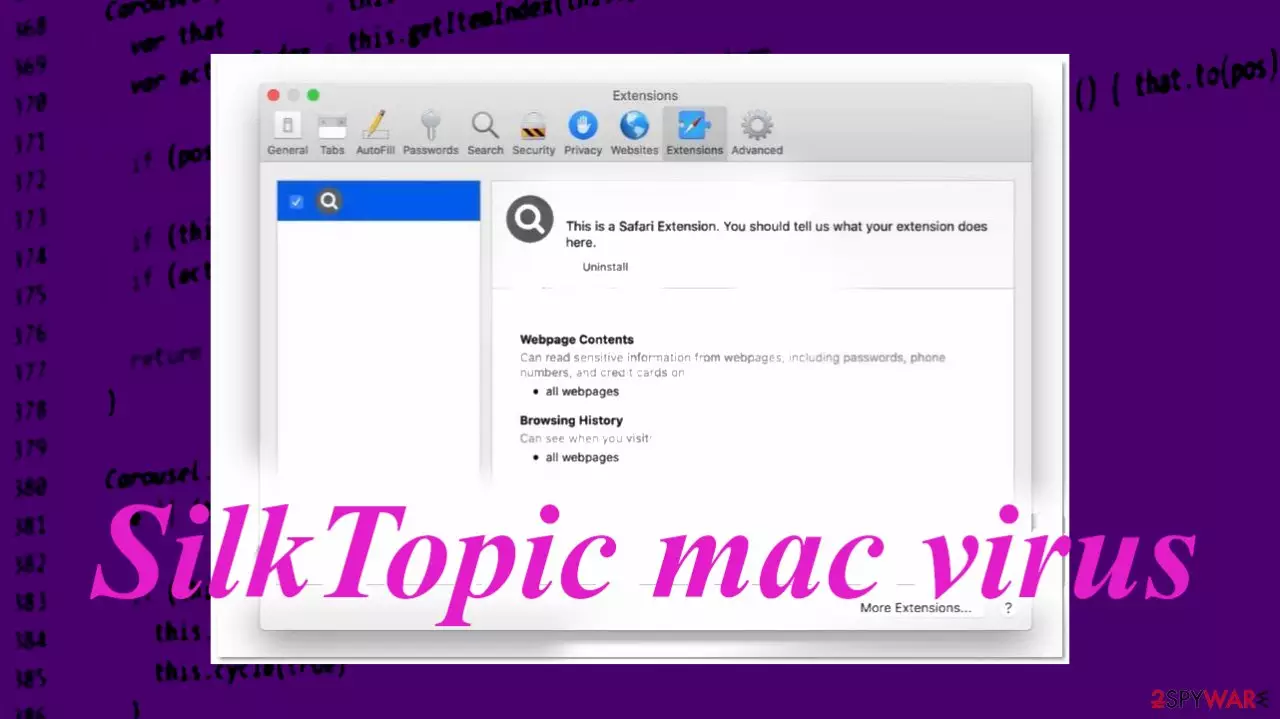
SilkTopic mac virus is a threat that can be called adware because it is closely related to various advertising platforms and sponsored commercial content creators. The infection is the software that delivers ads and notifications to promote online scams and other platforms related to rogue platforms and processes. The threat cannot be called a virus, but the infection is annoying and intrusive, so it should be removed as soon as possible.
The mac malware[1] is commonly believed to not exist, but these threats coming from the Adload family show that Apple devices are not immune to threats at all. These PUPs, like the SilkTopic mac virus, are specially designed to affect these particular devices silently.
Users cannot pin the point when the infection happened because adware-type intruders spread around using deceptive methods and managed to install infections stealthily during normal freeware download and installation procedures. Make sure to remove the infection from the machine as soon as possible.
Adware in-depth
SilkTopic mac adware is the program that tricks users into visiting pages and advertisements with the capabilities of installing malicious programs, so the sooner you remove the program from the system, the better. The threat is not valuable, so it should be removed properly from the system right away.
| Name | SilkTopic adware |
|---|---|
| Type | Mac virus, redirect |
| Category | Potentially unwanted program |
| Issues | The program shows ads, notifications, redirects to other pages and it creates slowness of the machine, affects the performance of the computer |
| Distribution | Freeware installations, other programs, online platforms where p2p services are used, Flash Player update messages, fake errors |
| Family | Adload mac malware |
| Elimination | Threats should be removed using antivirus tools or similar security applications compatible with the operating system |
| Repair | These infections can cause issues with the machine, so running FortectIntego can help to repair issues related to performance or corrupted files on the system |
The adware is promoting various products and shows banners, notifications, and pop-up ads with offers and coupons, users interact with the content and can allow installation of other malware or threats that are more dangerous than this initial adware-type intruder. SilkTopic mac virus can be used by scammers and expose people to rogue sites, so it should be avoided.
The threat abuses various deceptive methods and tries to show affiliate content to obtain illegitimate commissions from purchases and views of these sites. The adware is promoting various sites, and it even tricks users into filling out surveys or other details, so people can be endangered when the application runs on the device.
SilkTopic mac virus is intrusive and damaging because it runs in the background and can act as a browser hijacker. Experts[2] note that these functionalities can trigger additional issues and lead to data tracking abilities and identity theft or privacy problems, so do not keep the PUP on your system.

Removing the PUP
SilkTopic mac adware is the PUP that runs in the background and causes all the issues with the machine and internet browsing experience. The presence of this software over time can create major issues with the PC, so the sooner you remove it, the better. That might be difficult, but there are ways.
SilkTopic mac virus can be persistent, and it is not easy to remove the application that is not present on the desktop or other parts of the machine right away. You might not see the app installed on the computer, but you can terminate the infection nonetheless.
Try to run the application like anti-malware tools and remove the SilkTopic mac virus properly. Antivirus programs like SpyHunterCombo Cleaner or MalwarebytesMalwarebytes can run the full system scan and remove the threat of any kind that is detected.[3] These security programs can indicate all threats and potentially dangerous materials, so your device is virus-free again. You can still check particular system places for damaging applications.
Remove items from Applications folder:
- From the menu bar, select Go > Applications.
- In the Applications folder, look for all related entries.
- Click on the app and drag it to Trash (or right-click and pick Move to Trash)


To fully remove an unwanted app, you need to access Application Support, LaunchAgents, and LaunchDaemons folders and delete relevant files:
- Select Go > Go to Folder.
- Enter /Library/Application Support and click Go or press Enter.
- In the Application Support folder, look for any dubious entries and then delete them.
- Now enter /Library/LaunchAgents and /Library/LaunchDaemons folders the same way and terminate all the related .plist files.


The program can spread using various deceptive material online like fake update messages, program promotional ads, alerts about existing programs, and other errors or system earnings. These threats are deceptive and possibly malicious, so avoid anything that is suspicious to avoid infections of these shady apps.
You need to remove SilkTopic mac virus properly to forget about those issues with the internet browsing and other processes. Those redirects to dubious pages and unwanted advertisement delivery should be the first indication that an adware-type infection is running and encourage you to scan the machine to remove all existing cyber threats.
Remove from Mozilla Firefox (FF)
Remove dangerous extensions:
- Open Mozilla Firefox browser and click on the Menu (three horizontal lines at the top-right of the window).
- Select Add-ons.
- In here, select the unwanted extension and click Remove.


Reset the homepage:
- Click three horizontal lines at the top right corner to open the menu.
- Choose Settings.
- Under Home, set your preferred homepage and new tab settings.
Clear cookies and site data:
- Click Menu and pick Settings.
- Go to Privacy & Security section.
- Scroll down to locate Cookies and Site Data.
- Click on Clear Data...
- Select Cookies and Site Data and Temporary cached files and pages, then click Clear.


Reset Mozilla Firefox
If clearing the browser as explained above did not help, reset Mozilla Firefox:
- Open Mozilla Firefox browser and click the Menu.
- Go to Help and then choose Troubleshooting Information.

- Under Give Firefox a tune up section, click on Refresh Firefox...
- Once the pop-up shows up, confirm the action by pressing on Refresh Firefox.



Remove from Google Chrome
Delete malicious extensions from Google Chrome:
- Open Google Chrome, click on the Menu (three vertical dots at the top-right corner) and select More tools > Extensions.
- In the newly opened window, you will see all the installed extensions. Uninstall all suspicious extensions related to the unwanted program by clicking Remove.


Clear cache and web data from Chrome:
- Click on Menu and pick Settings.
- Under Privacy and security, select Clear browsing data.
- Select Browsing history, Cookies and other site data, as well as Cached images and files.
- Click Clear data.


Change your homepage:
- Click menu and choose Settings.
- Look for a suspicious site in the On startup section.
- Click on Open a specific or set of pages and click on three dots to find the Remove option.
Reset Google Chrome:
If the previous methods did not help you, reset Google Chrome to eliminate all the unwanted components:
- Click on Menu and select Settings.
- In the Settings, scroll down and click Advanced.
- Scroll down and locate Reset and clean up section.
- Now click Restore settings to their original defaults.
- Confirm with Reset settings.


Delete from Safari
Remove dangerous extensions:
- Open Safari, click Safari in the menu at the top-left of the screen, and select Preferences.
- Go to the Extensions tab, look for any suspicious entries, and click Uninstall to remove them.


Clear history and website data:
- Click Safari in the menu and pick Clear History.
- Set Clear to all history and confirm with Clear History.


Reset Safari:
- Click Safari in the menu and select Preferences > Advanced.
- Enable Show Develop menu in menu bar.
- From the menu bar, click Develop and select Empty Caches.


Did this guide help?
Be the first to comment