

Temlo ransomware creators demand payment in Bitcoin
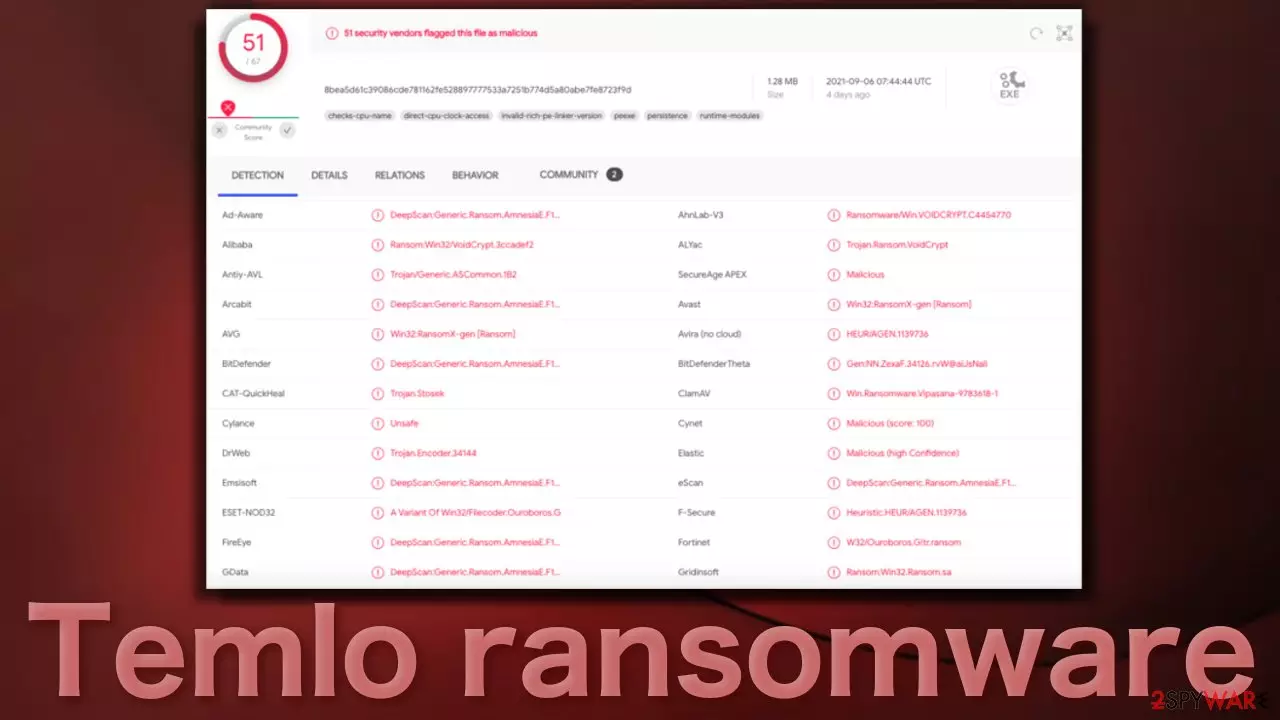
Ransomware is an advanced form of cyberattack, and one of the biggest threats that security teams around the world are facing. Ransomware is used to target all organizations, from small teams to large enterprises, state systems, government networks, and private individuals.
Ransomware attacks have been on the rise in the past few years because cybercriminals began to understand the potential it has for money extortion. Over the years, thousands of new ransomware strains have been developed and spread all over the world, infecting high-profile organizations and regular consumers.
Recently, there have been reports about users' files getting appended with a .temlo extension. The cyber criminals' email address and a unique ID assigned to the victim was also added. For example, if a file was named picture.jpg, after encryption it would look like this – picture.jpg.[temloown@gmail.com][victim-ID].temlo.
Temlo ransomware has been identified to belong to Void ransomware family, which was first detected at the beginning of April 2020. After the encryption is done the malicious program drops a ransom note Decrypt-info.txt that gives the victims instructions about what to do next.
Of course, the threat actors want to get paid in Bitcoin[1] in return for a decryption key.[2] The targets have to contact the attackers through email – temloown@gmail.com and temloown@tuta.io.
| NAME | Temlo |
| TYPE | Ransomware, cryptovirus, data locking malware |
| MALWARE FAMILY | Void ransomware |
| DISTRIBUTION | Email attachments, peer-to-peer file sharing platforms, malicious ads |
| FILE EXTENSION | .temlo |
| RANSOM NOTE | Decrypt-info.txt |
| FILE RECOVERY | If no backups are available, recovering data is almost impossible. We list alternative methods that could help you in some cases below |
| MALWARE REMOVAL | Scan your machine with anti-malware software like SpyHunterCombo Cleaner or MalwarebytesMalwarebytes to eliminate the malicious files. This will not recover your data. |
| SYSTEM FIX | Malware can seriously tamper with Windows systems, causing errors, crashes, lag, and other stability issues. To remediate the OS and avoid its reinstallation, we recommend scanning it with the FortectIntego repair tool |
We do not recommend engaging with cybercriminals as they cannot be trusted. Many ransomware victims report that they never heard back after paying the demanded ransom amount. What is more, you cannot charge back cryptocurrencies, so after you make the payment you can be left without money and your personal files – photos, videos, documents.
How did you get infected?
Typically, the software gets introduced by an executable file (.exe) that may have been in a zip folder, embedded within Microsoft Office document’s macros, or disguised as fax or other viable attachment. This usually happens because of user error and ignorance of security risks.
- Phishing attacks. This involves an attacker attaching an infected document or URL to an email while disguising it as being legitimate to trick users into opening it, which will install the malware on their device.
- Trojan horse style. This involves disguising ransomware as legitimate software online, and then infecting devices after users install it.
- Installations of “Cracked” software. Websites that distribute free versions of programs should not be trusted because their activity is illegal. Most often the downloads are filled with potentially unwanted programs and malware.
- Drive-by downloads. Hackers embed the malicious code[3] on a website or redirect the victim to another site that they control, which hosts exploit kits. They give hackers the ability to silently scan the visiting device for its specific weaknesses, and, if found, execute code in the background without the user clicking anything.
- Software vulnerabilities. Hackers look for weak spots to exploit so those who do not patch their programs frequently are at higher risk.

When ransomware is downloaded, the process moves very quickly. Sometimes in seconds it will take over the critical processes on the device, and search for files to be encrypted, meaning all of the data within them is scrambled.
The ransomware will then try to infect any other hard drives or USB devices connected to the infected host machine. Any new devices or files added to the infected device will also be encrypted. Then, the virus will begin sending out signals to all of the other devices on the network, to attempt to infect them too.
Within a few minutes the device will display a message that looks like this:
All Your Files Has Been Encrypted
You Have to Pay to Get Your Files Back
1-Go to C:\ProgramData\ or in Your other Drives and send us prvkey*.txt.key file , * might be a number (like this : prvkey3.txt.key)
2-You can send some file little than 1mb for Decryption test to trust us But the test File should not contain valuable data
3-Payment should be with Bitcoin
4-Changing Windows without saving prvkey.txt.key file will cause permanete Data loss
Our Email : temloown@gmail.comin Case of no Answer:temloown@tuta.io
Cybercriminals do not specify what amount should be paid in the ransom note, so that is probably negotiated with every victim individually. Users can also send the hackers a file as a test, to ensure they can perform the decryption.
Start the elimination process
The important thing to do is disconnect the affected machine from the local network as we talked about the dangers of that previously. For home users, disconnecting the ethernet cable should do the job. If this happened at your workplace, doing that might be complicated, so we have instructions for corporate environments at the bottom of this post.
If you try to recover your data first, it can result in permanent loss. It can also encrypt your files the second time. It will not stop until you remove the malicious files causing it first. You should not attempt removing the malicious program yourself unless you have experience.
Use anti-malware tools like SpyHunterCombo Cleaner or MalwarebytesMalwarebytes to scan your system. This security software should find all the related files and entries and remove them automatically for you. In some cases, malware is not letting you use antivirus in normal mode, so you need to access Safe Mode and perform a full system scan from there:
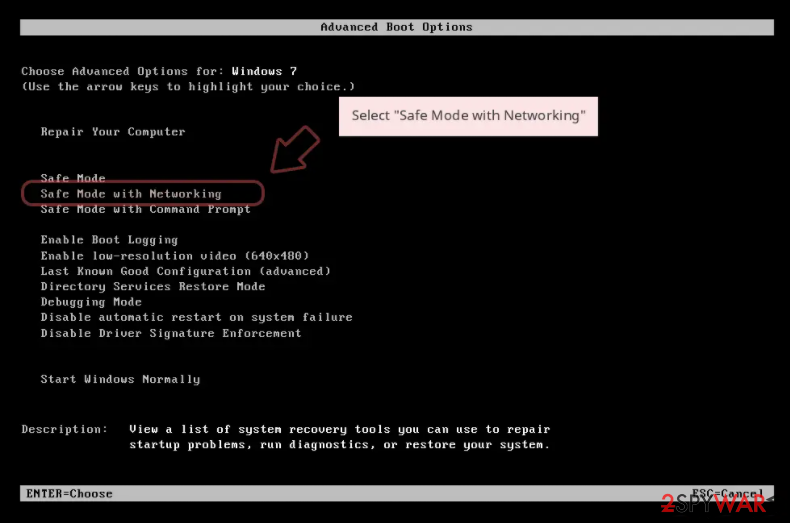
Windows 7 / Vista / XP
- Click Start > Shutdown > Restart > OK.
- When your computer becomes active, start pressing F8 button (if that does not work, try F2, F12, Del, etc. – it all depends on your motherboard model) multiple times until you see the Advanced Boot Options window.
- Select Safe Mode with Networking from the list.

Windows 10 / Windows 8
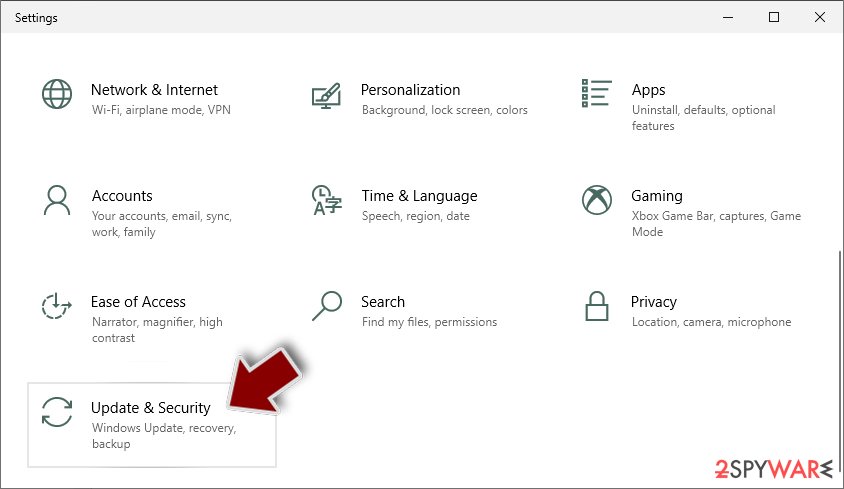
- Right-click on Start button and select Settings.
- Scroll down to pick Update & Security.
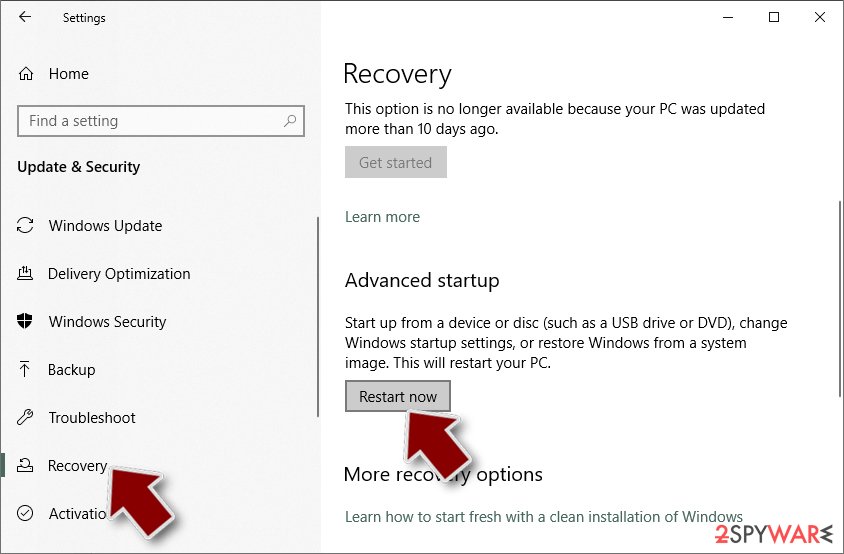
- On the left side of the window, pick Recovery.
- Now scroll down to find Advanced Startup section.
- Click Restart now.
- Select Troubleshoot.
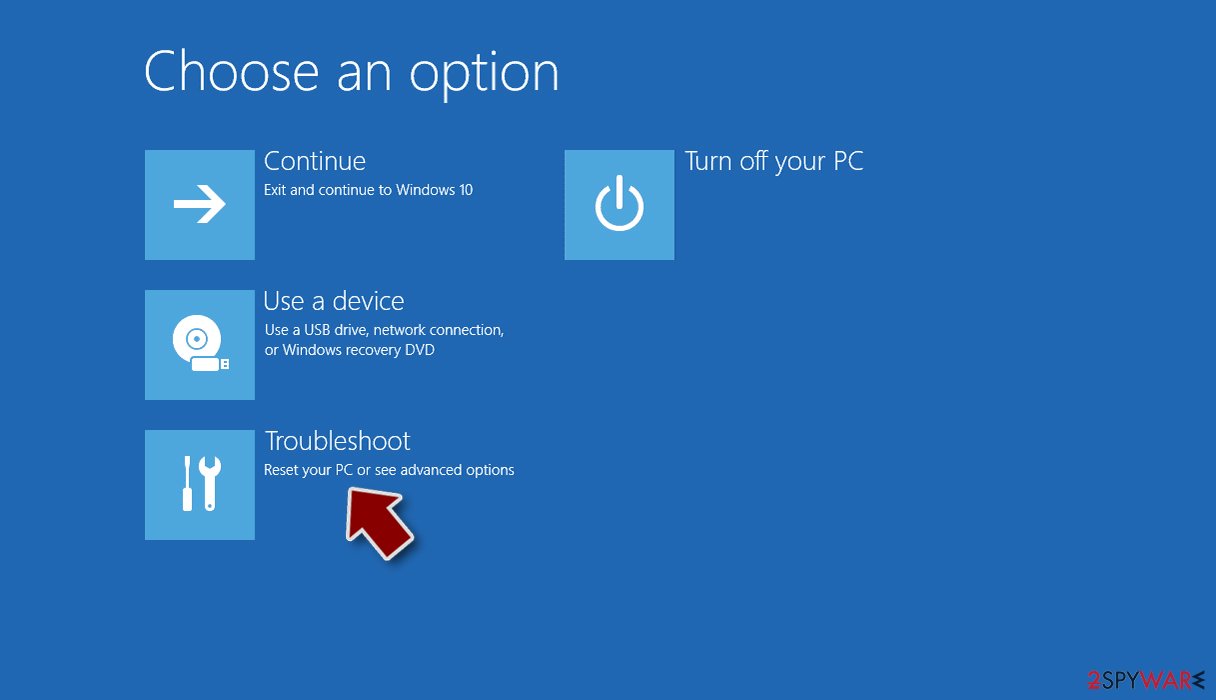
- Go to Advanced options.
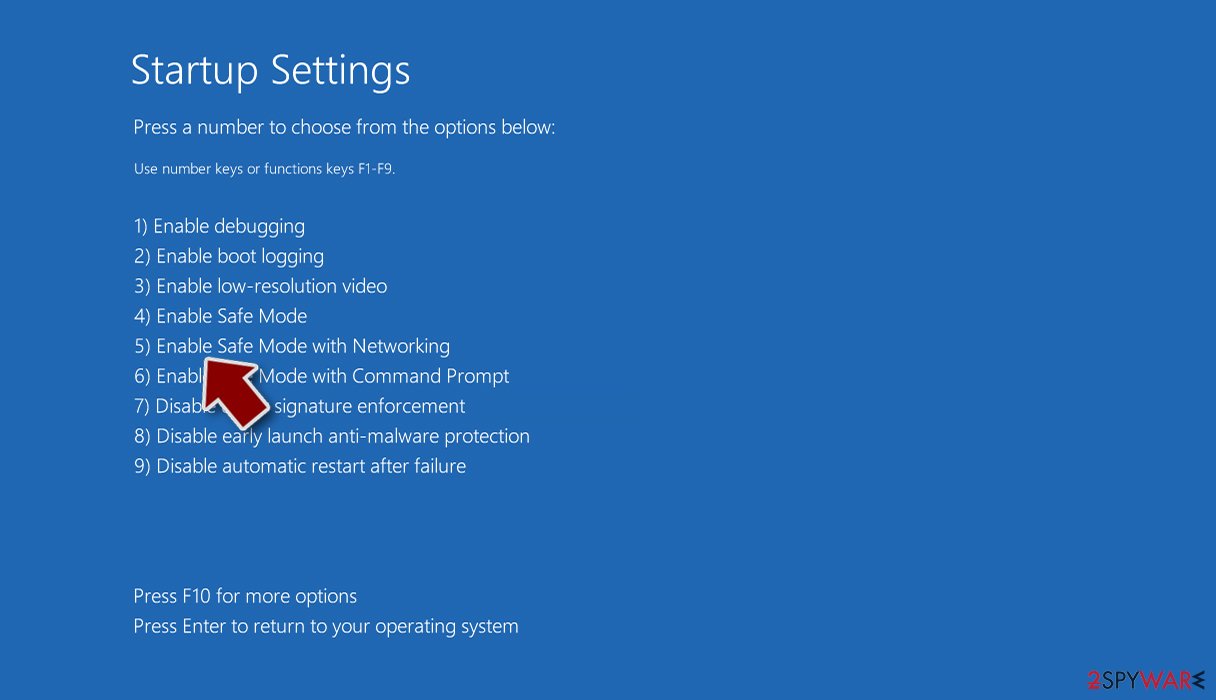
- Select Startup Settings.
- Click Restart.
- Press 5 or click 5) Enable Safe Mode with Networking.


Fix corrupted system files
Performance, stability, and usability issues, to the point where a full Windows reinstall is required, are expected after malware infection. These types of infections can alter the Windows registry database, damage vital bootup, and other sections, delete or corrupt DLL files, etc. Once a system file is damaged by malware, antivirus software is not able to repair it.
This is why FortectIntego was developed. It can fix a lot of the damage caused by an infection like this. Blue Screen errors, freezes, registry errors, damaged DLLs, etc., can make your computer completely unusable. By using this maintenance tool, you could avoid Windows reinstallation.
- Download the application by clicking on the link above
- Click on the ReimageRepair.exe
- If User Account Control (UAC) shows up, select Yes
- Press Install and wait till the program finishes the installation process
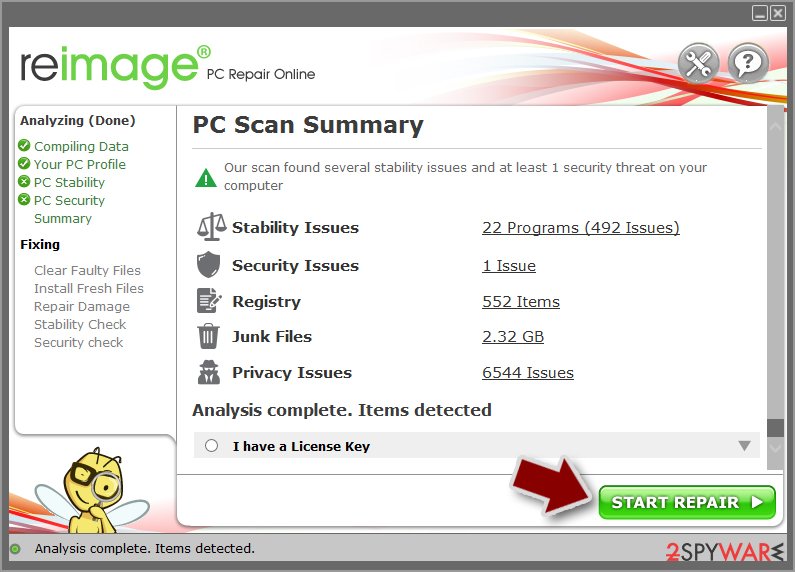
- The analysis of your machine will begin immediately
- Once complete, check the results – they will be listed in the Summary
- You can now click on each of the issues and fix them manually
- If you see many problems that you find difficult to fix, we recommend you purchase the license and fix them automatically.

A chance at recovery
Only hackers hold the decryption key, which can unlock your files, so if you did not back them up previously, you possibly lost your files forever. You can try using data recovery software, but third-party programs cannot always decrypt the files. We suggest at least trying this method. Before proceeding, you have to copy the corrupted files and place them in a USB flash drive or another storage. And remember – only do this if you have already removed the Temlo ransomware.
Only hackers hold the decryption key, which can unlock your files, so if you did not back them up previously, you possibly lost your files forever. You can try using data recovery software, but third-party programs cannot always decrypt the files. We suggest at least trying this method. Before proceeding, you have to copy the corrupted files and place them in a USB flash drive or another storage. And remember – only do this if you have already removed the Temlo ransomware.
Before you begin, several pointers are important while dealing with this situation:
- Since the encrypted data on your computer might permanently be damaged by security or data recovery software, you should first make backups of it – use a USB flash drive or another storage.
- Only attempt to recover your files using this method after you perform a scan with anti-malware software.
Install data recovery software
- Download Data Recovery Pro.
- Double-click the installer to launch it.
- Follow on-screen instructions to install the software.
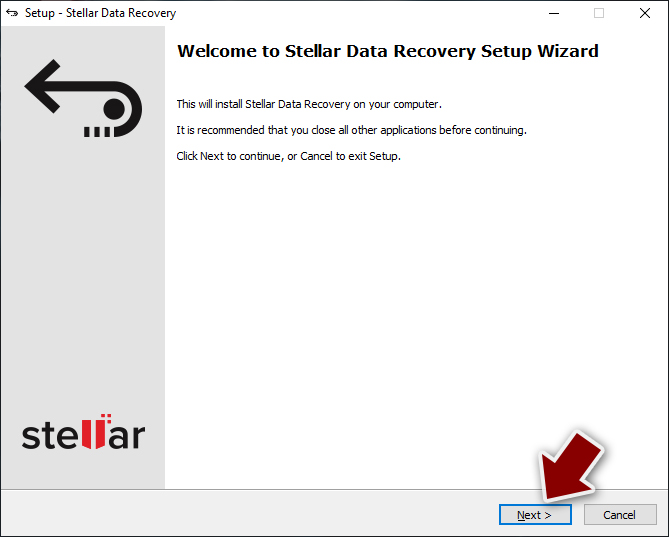
- As soon as you press Finish, you can use the app.
- Select Everything or pick individual folders where you want the files to be recovered from.
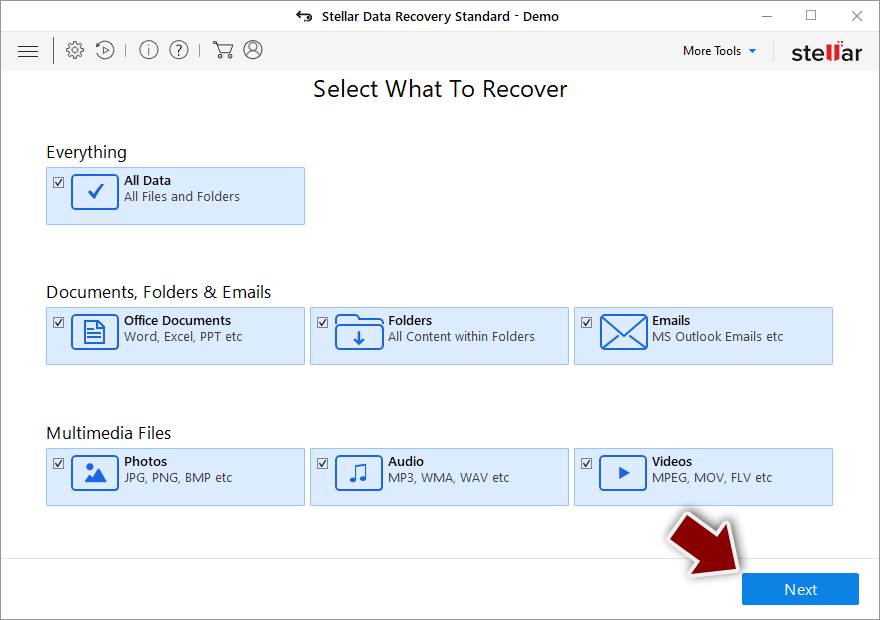
- Press Next.
- At the bottom, enable Deep scan and pick which Disks you want to be scanned.
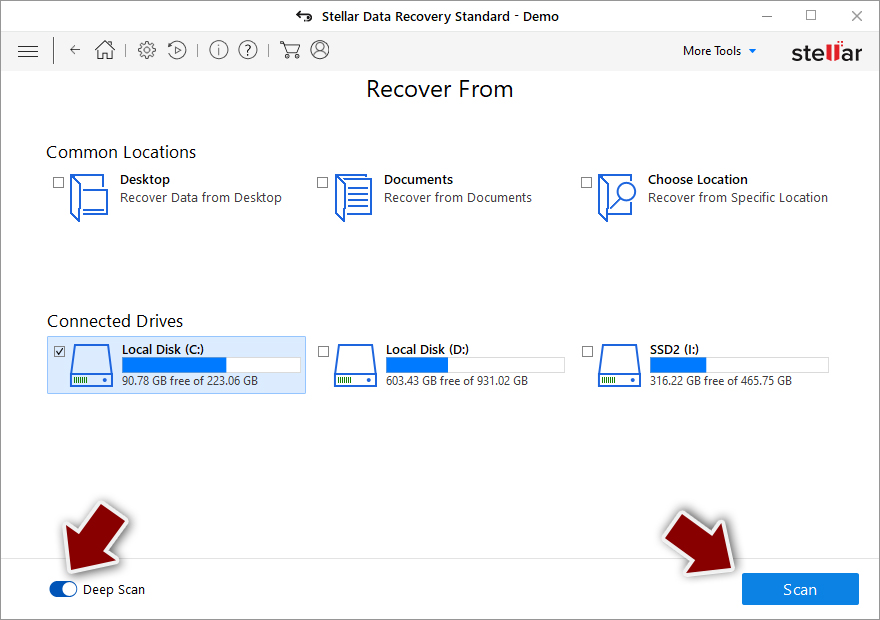
- Press Scan and wait till it is complete.
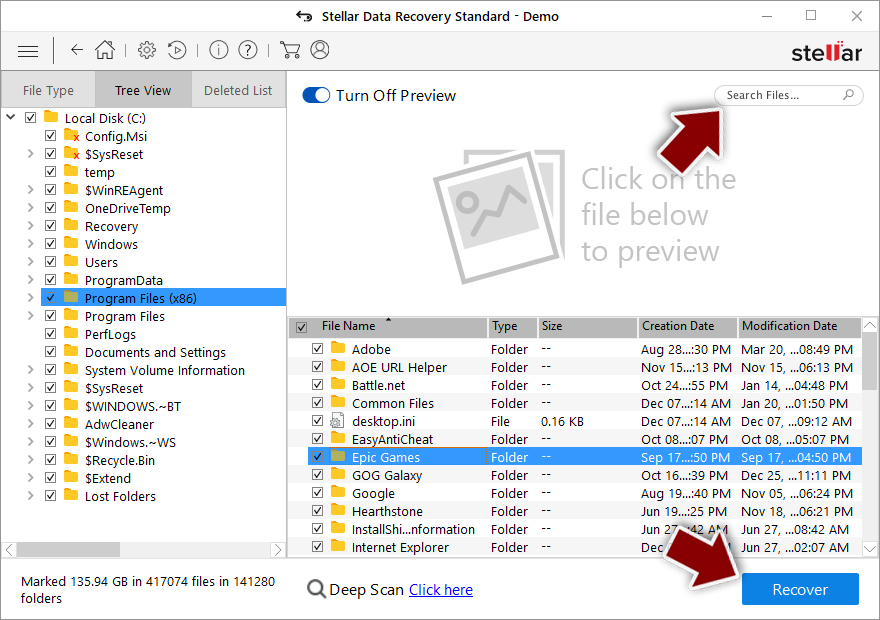
- You can now pick which folders/files to recover – don't forget you also have the option to search by the file name!
- Press Recover to retrieve your files.


How to Prevent Ransomware Attacks:
- Secure Email Gateways with targeted attack protection are crucial for detecting and blocking malicious emails that deliver ransomware. These solutions protect against malicious attachments, malicious documents, and URLs in emails delivered to user computers.
- Mobile attack protection products, when used in conjunction with mobile device management (MDM) tools, can analyze applications on users’ devices and immediately alert to any applications that might compromise the environment.
- Secure web gateways can scan users’ web surfing traffic to identify malicious web ads that might lead them to ransomware.
- Monitoring tools can detect unusual file access activities, viruses, network C&C traffic,[4] and CPU loads, possibly in time to block ransomware from activating.
Did this guide help?
Be the first to comment