

Toptosearch.com URL is related to a browser hijacker installed on your system
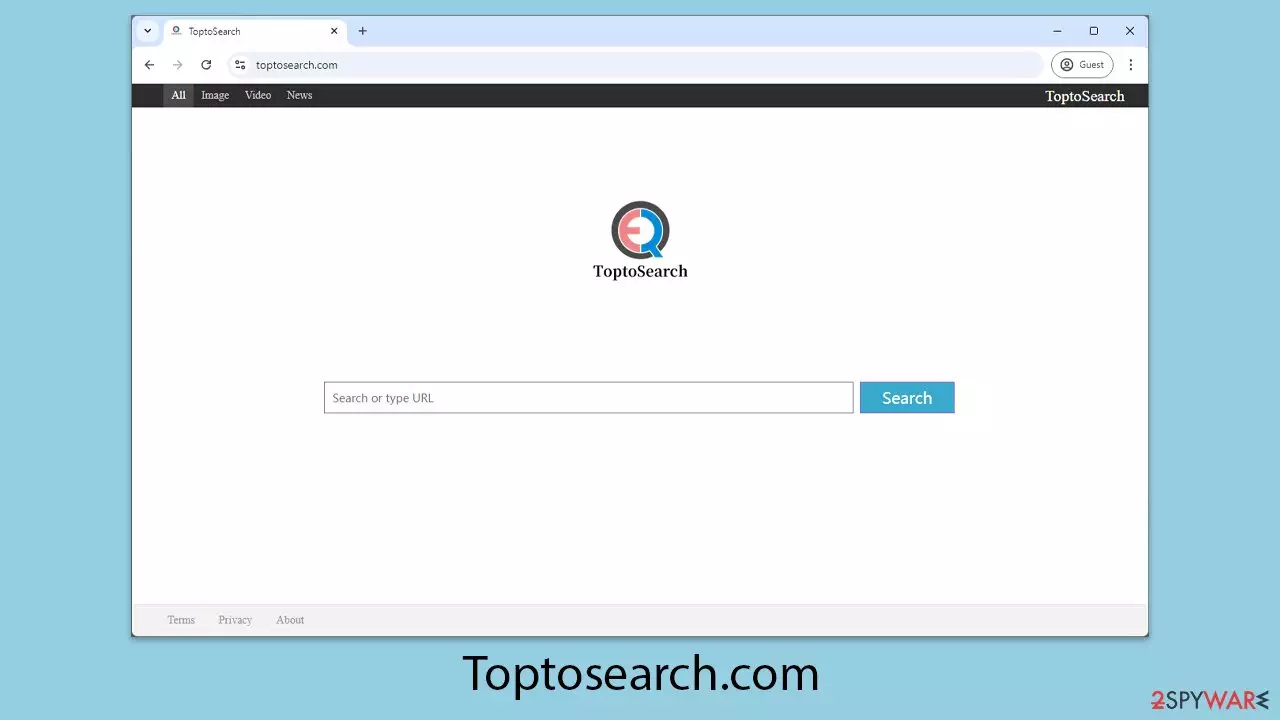
A browser hijacker is an unwanted program that often gets installed unintentionally through deceptive software bundling. Once it’s on your system, it changes your homepage and new tab settings. In this case, the address would be set to Toptosearch.com, which will also appear every time you open a new tab in Google Chrome or any other browser.
Another sign of this issue is a changed search box that directs your searches to an unfamiliar search engine, such as m.nearbyme.io, or sometimes to more familiar ones like Yahoo or Bing, depending on your location.
These search results are often altered, with promotional links and ads placed at the top to encourage clicks. Meanwhile, the Toptosearch.com hijacker quietly gathers browsing data from users for targeted advertising.
If you notice that your homepage and new tab settings have been changed without your consent and you have Top Search browser extension installed on your system, follow the instructions below to learn more about this issue and how to remove the unwanted software easily.
| Name | Toptosearch.com |
| Type | Browser hijacker, potentially unwanted application |
| Distribution | Fake ads, software bundles |
| Symptoms | Homepage and new tab address hijacked by the extension; promotional links are displayed as top search results; intrusive ads on various visited websites |
| Risks | Data tracking from various third parties, exposure to malicious ads, redirects to malicious sites, installation of other PUPs |
| Removal | You can eliminate the browser hijacker by adjusting your browser's settings. Scanning your system with SpyHunterCombo Cleaner security software will confirm that there is no adware or malware running in the background |
| Other tips | Cleaning web browsers is one of the secondary things you should do after PUP/malware removal to secure your privacy. You can use FortectIntego to do it quickly |
How hijackers spread
Some people might believe that Toptosearch.com just appeared on their browser without any action on their part. However, this isn’t true, as browser hijackers are often installed without users being fully aware. Unlike malware like ransomware or trojans, PUPs (Potentially Unwanted Programs) don't spread on their own but are typically downloaded by users through deceptive methods.
Software bundling is a common practice that allows multiple apps to be installed at once, sometimes without the user's knowledge or consent. This method is widely used by third-party websites because it generates revenue through pay-per-install operations. However, this practice can lead to the unintentional installation of unwanted or even harmful apps, particularly when downloading from less reputable sources like torrent or warez sites.
To avoid falling victim to this deceptive tactic, it’s important to be cautious when installing new programs from third-party sources. Always opt for Advanced settings instead of Recommended during installation, uncheck any pre-ticked boxes, and be on the lookout for misleading buttons or fine print – these tricks are often used to catch people off guard, especially those who are in a hurry.

Potential dangers
While browser hijackers may not be as dangerous as certain computer viruses, they should not be ignored, especially if they were installed unknowingly. Their main disruption involves altering your online browsing experience, including changes to search functions and how you access the internet.
Browser hijackers like Toptosearch.com often push non-organic results and links, usually disguised as “ads” or similar labels at the top of search results. Unsuspecting users might click on these top links without realizing they are ads, potentially leading them to misleading or inaccurate information.
It's also common for browser hijackers and other potentially unwanted programs (PUPs) to present themselves as useful tools. They often use appealing language, claiming to offer “enhanced,” “fast,” or “secured” searches. However, these are deceptive strategies used by PUP developers to attract users. In reality, these tools usually change the search engine and manipulate search results to include extra ads, boosting their pay-per-click revenue.
In summary, while browser hijackers may not directly damage your system, they can significantly disrupt your web browsing, especially if you're not careful. The increase in advertisements and potential third-party tracking adds to the inconvenience. Despite their claims of usefulness, the negative effects on user experience and privacy should not be overlooked.
Removal explained
Although they may not be as dangerous as malware, browser hijackers can still be quite disruptive. They can compromise your browsing experience and invade your privacy through data tracking techniques. Therefore, these applications shouldn't be ignored or allowed to run in the background. Removing all potentially unwanted programs from your system is beneficial for everyone – even if the hijacker isn’t malicious, it doesn’t offer any advantages to the user.
Since Toptosearch.com typically spreads as a browser extension, you should locate and remove it first. As a precaution, it’s wise to scan your system for more severe malware before removing the extension. Tools like SpyHunterCombo Cleaner or MalwarebytesMalwarebytes can help with this in just a few minutes. Once you’ve ensured that your computer is free of viruses, you can proceed to remove the extension:
Google Chrome
- Open Google Chrome, click on the Menu (three vertical dots at the top-right corner) and select More tools > Extensions.
- In the newly opened window, you will see all the installed extensions. Uninstall all the suspicious plugins that might be related to the unwanted program by clicking Remove.


Mozilla Firefox
- Open Mozilla Firefox browser and click on the Menu (three horizontal lines at the window's top-right).
- Select Add-ons.
- Here, select the unwanted plugin and click Remove.


MS Edge (Chromium)
- Open Edge and click select Settings > Extensions.
- Delete unwanted extensions by clicking Remove.


Safari
- Click Safari > Preferences…
- In the new window, pick Extensions.
- Select the unwanted extension and select Uninstall.


Internet Explorer
- Open Internet Explorer, click on the Gear icon (IE menu) on the top-right corner of the browser
- Pick Manage Add-ons.
- You will see a Manage Add-ons window. Here, look for suspicious plugins. Click on these entries and select Disable.


Clearing browsers from leftovers
As mentioned earlier, browser hijackers are notorious for their data-tracking capabilities, much like most other potentially unwanted applications. This is because marketing companies highly value user data, and once it’s collected, it can be sold or shared for profit. To achieve this, third-party applications often use various tracking methods such as cookies, web beacons, pixels, and similar technologies.
These small tracking elements may be placed on your device and continue operating even after Toptosearch.com has been removed. Therefore, it’s important to ensure that web caches, where these trackers might be stored, are thoroughly cleaned. Regularly clearing these caches can also enhance your overall security and prevent issues like bugs and errors during browsing.
The easiest way to remove leftover files from PUPs is by using FortectIntego. This tool can eliminate all trackers and junk from your system while also fixing any problems that may have occurred due to malware, such as system crashes or program errors. If you prefer to clean your browsers manually, follow the steps below:
Google Chrome
- Click on Menu and pick Settings.
- Under Privacy and security, select Clear browsing data.
- Select Browsing history, Cookies and other site data, as well as Cached images and files.
- Click Clear data.


Mozilla Firefox
- Click Menu and pick Options.
- Go to Privacy & Security section.
- Scroll down to locate Cookies and Site Data.
- Click on Clear Data…
- Select Cookies and Site Data, as well as Cached Web Content, and press Clear.


MS Edge (Chromium)
- Click on Menu and go to Settings.
- Select Privacy and services.
- Under Clear browsing data, pick Choose what to clear.
- Under Time range, pick All time.
- Select Clear now.


Safari
- Click Safari > Clear History…
- From the drop-down menu under Clear, pick all history.
- Confirm with Clear History.


Internet Explorer
- Click on the Gear icon > Internet options and select the Advanced tab.
- Select Reset.
- In the new window, check Delete personal settings and select Reset.


Did this guide help?
Be the first to comment