

What are the reasons to avoid Tvtabsearch.com?
Tvtabsearch virus is designed to promote a useful free tool called MyTVTab, providing its uses a quick access to popular online video streaming sites and the ability to watch live sports broadcasts. In truth, it is a potentially unwanted program which has also been deemed a browser hijacker virus, due to its aggressive behavior on the infected computer’s browser. So, all of its promises to guide you to Hulu, Netflix, and other sites might quickly turn bitter as you start noticing unpleasant changes in your browser. One of the first and most obvious signs of the browser hijack is the appearance of the suspicious tvtabsearch.com search site instead of your regular homepage or default search engine. Unfortunately, the attempts to switch back to their regular setting are often unsuccessful because the virus makes sure this engine is supported by additional toolbars or browser extensions which help the virus to reassign Tvtabsearch.com back again. The website will continue to reappear as long as the browser hijacker runs on your computer. To remove Tvtabsearch.com from your device, you will first have to find its executive file and terminate it. Then, locate any additional virus-related components and delete them as well. Or, you can simply run a scan with FortectIntego and let the automatic antivirus utility to indicate and delete the malicious files for you.
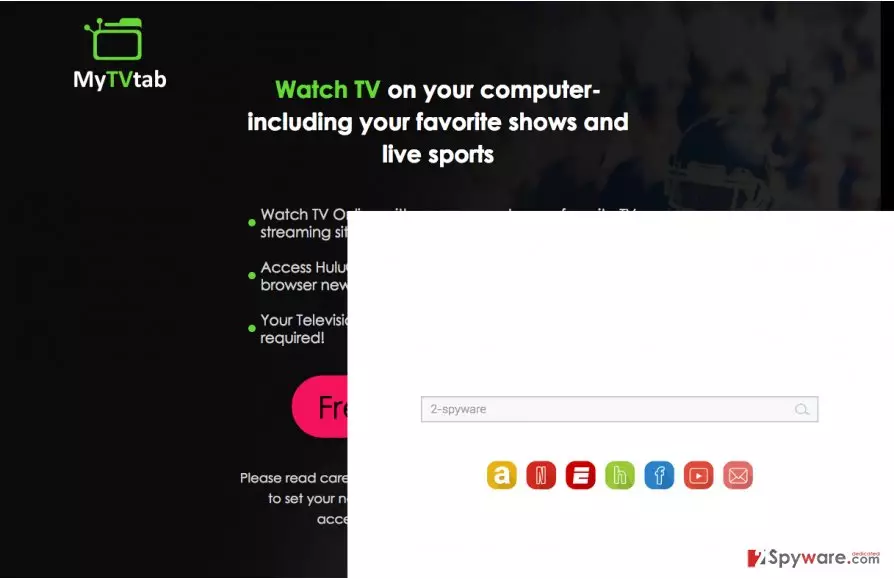
Luckily, there were no reports of this virus infiltrating OS X, but Windows can be easily targeted, so your Edge, Google Chrome or Mozilla Firefox and other popular browsers are at risk. Besides, switching between the browsers does not help escape the virus either, and only the Tvtabsearch.com removal can make your Internet surfing safe again. In the meanwhile, look out for insecure sites this hijacker might redirect you to and keep in mind that your browsing might be continuously monitored. The virus may keep a record of what sites you are visiting and even what you search for online and use this information to generate ads. Frankly said, the hijacker will do almost anything to gain profit. Since you are unlikely to get anything back, there is no reason to keep it on your computer.
How can my computer get infected with this hijacker?
Potentially unwanted program creators have found a way of making the system infiltration easy using the technique called “bundling.” This deceptive marketing method takes advantage of other freeware and shareware applications, such Flash Player, Adobe Reader or some PDF converters by spreading the PUP along with them. These malicious products are hidden in the “Default” software installation settings, so there’s no wonder that the users who always rush through the installation get infected. If you opt for an “Advanced” mode, the outcome will be quite different. All the additional and even purposefully hidden programs will be listed out, and you will be able to cancel their installation.
Tvtabsearch.com removal tips and recommendations:
Browser hijackers are one of those viruses which may put up a little fight before they finally exit the computer. To be the one who wins this fight quicker, remove Tvtabsearch.com using professional help from a reliable antivirus utility. As we have already mentioned, you must run a scan of your entire computer to detect all the hidden virus components. Note: you must update your antivirus utility before your begin the removal process. If you are having difficulties with the Tvtabsearch.com removal, you can try manual virus removal as well. Instructions for this particular method are provided below.
Uninstall from Windows
Uninstall from Windows 10/8:
- Type Control Panel into the Windows search box and open the result.
- Under Programs, select Uninstall a program.


Uninstall from Windows 7/XP:
- Click on Windows Start > Control Panel (Windows XP users should click on Add/Remove Programs).
- In Control Panel, select Programs > Uninstall a program.


Remove the unwanted program:
- In the Programs and Features window, look for any recently installed suspicious entries, select them, and click Uninstall.
- If User Account Control appears, click Yes to confirm, then complete the removal.


Delete from macOS
Remove the unwanted application:
- From the menu bar, select Go > Applications.
- In the Applications folder, look for any suspicious entries, then drag them to Trash (or right-click and pick Move to Trash).


Delete leftover files and folders:
- Select Go > Go to Folder.
- Enter /Library/Application Support and remove any suspicious folders related to the unwanted program.
- Repeat the same check in the /Library/LaunchAgents and /Library/LaunchDaemons folders, deleting any suspicious entries.

- Finally, empty the Trash to permanently remove the leftovers.

Remove from Microsoft Edge
Delete unwanted extensions from MS Edge:
- Select Menu (three horizontal dots at the top-right of the browser window) and pick Extensions.
- From the list, pick the extension and click on the Gear icon.
- Click Remove.


Clear cookies and other browser data:
- Click on the Menu (three horizontal dots at the top-right of the browser window) and select Settings > Privacy, search, and services..
- Under Clear browsing data, pick Choose what to clear.
- Select Cookies and other site data and Cached images and files. (apart from passwords, although you might want to include Media licenses as well, if applicable) and click on Clear.


Restore new tab and homepage settings:
- Click the menu icon and choose Settings.
- Then find On startup section.
- Click Remove next to any suspicious startup page.
Reset MS Edge if the above steps did not work:
- Press on Ctrl + Shift + Esc to open Task Manager.
- Click on More details arrow at the bottom of the window.
- Select Details tab.
- Now scroll down and locate every entry with Microsoft Edge name in it. Right-click on each of them and select End Task to stop MS Edge from running.


Instructions for Chromium-based Edge
Delete extensions from MS Edge (Chromium):
- Open Edge and click select Settings > Extensions.
- Delete unwanted extensions by clicking Remove.


Clear cache and site data:
- Click on Menu and go to Settings.
- Select Privacy, search and services.
- Under Clear browsing data, pick Choose what to clear.
- Under Time range, pick All time.
- Select Clear now.


Reset Chromium-based MS Edge:
- Click on Menu and select Settings.
- On the left side, pick Reset settings.
- Select Restore settings to their default values.
- Confirm with Reset.
- This will disable extensions and reset startup pages but will not delete bookmarks, saved passwords, or browsing history.


Remove from Mozilla Firefox (FF)
Remove dangerous extensions:
- Open Mozilla Firefox browser and click on the Menu (three horizontal lines at the top-right of the window).
- Select Add-ons.
- In here, select the unwanted extension and click Remove.


Reset the homepage:
- Click three horizontal lines at the top right corner to open the menu.
- Choose Settings.
- Under Home, set your preferred homepage and new tab settings.
Clear cookies and site data:
- Click Menu and pick Settings.
- Go to Privacy & Security section.
- Scroll down to locate Cookies and Site Data.
- Click on Clear Data...
- Select Cookies and Site Data and Temporary cached files and pages, then click Clear.


Reset Mozilla Firefox
If clearing the browser as explained above did not help, reset Mozilla Firefox:
- Open Mozilla Firefox browser and click the Menu.
- Go to Help and then choose Troubleshooting Information.

- Under Give Firefox a tune up section, click on Refresh Firefox...
- Once the pop-up shows up, confirm the action by pressing on Refresh Firefox.



Remove from Google Chrome
Delete malicious extensions from Google Chrome:
- Open Google Chrome, click on the Menu (three vertical dots at the top-right corner) and select More tools > Extensions.
- In the newly opened window, you will see all the installed extensions. Uninstall all suspicious extensions related to the unwanted program by clicking Remove.


Clear cache and web data from Chrome:
- Click on Menu and pick Settings.
- Under Privacy and security, select Clear browsing data.
- Select Browsing history, Cookies and other site data, as well as Cached images and files.
- Click Clear data.


Change your homepage:
- Click menu and choose Settings.
- Look for a suspicious site in the On startup section.
- Click on Open a specific or set of pages and click on three dots to find the Remove option.
Reset Google Chrome:
If the previous methods did not help you, reset Google Chrome to eliminate all the unwanted components:
- Click on Menu and select Settings.
- In the Settings, scroll down and click Advanced.
- Scroll down and locate Reset and clean up section.
- Now click Restore settings to their original defaults.
- Confirm with Reset settings.


Delete from Safari
Remove dangerous extensions:
- Open Safari, click Safari in the menu at the top-left of the screen, and select Preferences.
- Go to the Extensions tab, look for any suspicious entries, and click Uninstall to remove them.


Clear history and website data:
- Click Safari in the menu and pick Clear History.
- Set Clear to all history and confirm with Clear History.


Reset Safari:
- Click Safari in the menu and select Preferences > Advanced.
- Enable Show Develop menu in menu bar.
- From the menu bar, click Develop and select Empty Caches.


Did this guide help?
Be the first to comment