
Registry Cure Pro: what it is and how to remove it
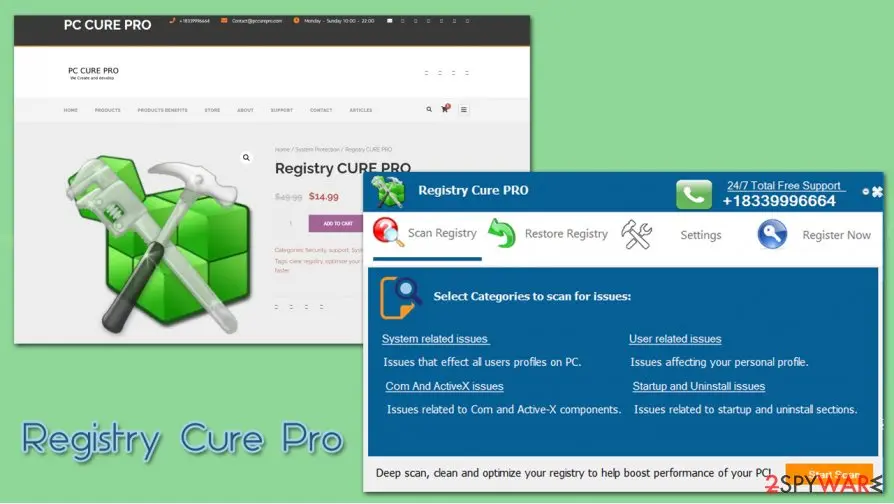
Registry Cure Pro is a so-called system optimizer that claims to fix the system, user, startup, ActiveX, and other issues, boosting and enhancing the speed of a Windows PC in the process. However, this application is also categorized as a potentially unwanted program that is often spread via software bundle packages and deceptive advertisements that can be encountered on random websites.
Facts checked October 7, 2026. Removal steps tested on Windows 11 (26H2) and checked against Microsoft's and the browser makers' current documentation. Sections marked as our earlier report are the original text: they describe the threat as it was then and have not been reviewed since. The 2026 status, the removal steps and the questions are current.
Automatic
Get a free scan and check if your PC is infected.
Fortect finds malware, unwanted programs and the Windows damage they leave behind, and repairs it in one pass.
Programs like Registry Cure Pro usually arrive in groups; a free scan lists the companions that are easy to miss.
Do it yourself · free Remove Registry Cure Pro yourself 4 steps, about 12 minutes, no software needed.
Start the steps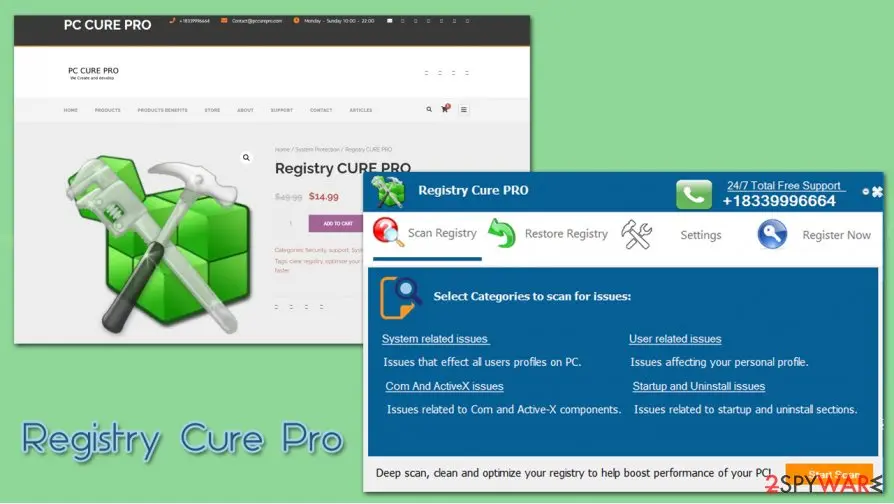
Registry Cure Pro: summary
| Distribution | Official website, software bundle packages, deceptive advertisements, etc. |
|---|---|
| Damage | Financial losses, Windows system corruption, installation of other unwanted apps, personal data disclosure to unknown parties |
| Name | Registry Cure Pro |
| Type | Potentially unwanted program, fake system optimzer |
| Installer | registrycurepro.msi |
| Developer | Energizer softech Pvt Ltd |
| Removal | Scan the PC with security software to find and remove the malware and anything installed with it. Fortect scans Windows for malware and repairs the system files and settings it damaged. Remove it nowTo use the full-featured product, you have to purchase a license for Fortect. The scan is free. |
Show 6 more facts
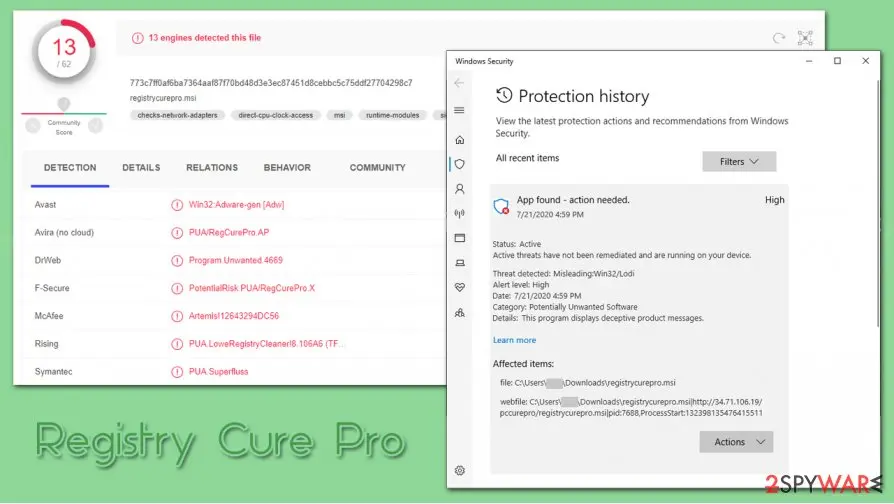
| Detection | Multiple AV vendors detect the installer of the app on Virus Total: Win32:Adware-gen [Adw] W32/Deceptor.QSEH-2022 Riskware/LoweRegistryCleaner Microsoft: Misleading:Win32/Lodi PUA.Superfluss PotentialRisk.PUA/RegCurePro.X, etc. |
|---|---|
| Symptoms | An unknown program in Installed apps |
| Evidence | 4 write-ups by security sites; details still limited |
| Program | Registry Cure Pro |
| First seen | 22 July 2020 |
| Facts checked | 7 October 2026 |
Is Registry Cure Pro safe? Why it is flagged
From our report of Jul 2020 · not reviewed since
Registry Cure Pro - a fake system optimizer that might reduce the health of your PC
Registry Cure Pro is a so-called system optimizer that claims to fix the system, user, startup, ActiveX, and other issues, boosting and enhancing the speed of a Windows PC in the process. However, this application is also categorized as a potentially unwanted program that is often spread via software bundle packages and deceptive advertisements that can be encountered on random websites.
The main issue with fake system optimizers like Registry Cure Pro is that they often exaggerate or even fake scan results in order to make users believe that their systems are in poor condition.
Most less experienced users are unaware of how a computer operates, and, with the help of various scare tactics employed by developers, they are convinced that they need to fix the problems immediately. Such software acts like a scam and relies on deception to make sales.
Besides, Registry Cure Pro is also detected by multiple reputable security vendors, including Microsoft.
Users can encounter Registry Cure Pro on various websites during their web browsing sessions on Google Chrome, Mozilla Firefox, or another browser. Ads that advertise this software might be dubious, as they might claim virus infections, missing plugins such as Flash, , etc.
However, the application can also be downloaded from and official website, which is filled with questionable claims and grammar/spelling mistakes. Fake reviews are also present - one of it claims the following:
However, a poorly constructed website is not a reason why you should avoid or remove Registry Cure Pro from your system.
When looking at apps to boost your PC performance, you should make sure that the developers will not attempt to scam you in the first place. Registry Cure Pro authors use very common marketing practices with an intent to mislead users into believing that the software is beneficial.
To understand why Registry Cure Pro removal is the best option, you should first get to know more about the Windows registry. Many of PUP developers claim that cleaning registry regularly would "speed up" or "boost" the performance of any Windows computer. However, this statement is very far from the truth, as the registry should rarely be touched by users or even programs.
Windows registry is a database that stores all the settings for Windows system functions, as well as applications that are installed. If some such settings are deleted or alerted, they could permanently damage the operation of the said feature/program.
Hence, meddling with this database is not advisable, unless there is a need for it (for example, some malware and alter registry keys to perform certain functions).
Unlike reputable tools, however, Registry Cure Pro attempts to make users believe that deleting tiny registry files is an essential process for Windows maintenance and that users should immediately buy the full license of the app to fix registry errors. In fact, in case of Registry Cure Pro performs incorrect Windows registry changes, it might sometimes result in system file corruption.
Thus, avoid the so-called Registry Cure Pro virus at all costs. There is no need to install useless apps on your system that might even corrupt your operating system instead of boosting its speed. Instead, rely on reputable tools that are trusted by millions of users online and are not running a scam scheme in order to increase its sales.

From our report of Jul 2020 · not reviewed since
Avoid questionable application by being attentive when installing freeware
Software bundling is one of the most commonly used distribution tactics when it comes to potentially unwanted program delivery (essentially, it is one of the reasons why such apps are called "potentially unwanted"). Since many users enjoy using software that seems to be absolutely free, they make their way to various app distribution websites, some of which are less secure than the others.
Keep in mind that app developers use other monetization methods if they offer software for free, e.g., affiliate programs, ad revenue, in-app purchases, etc. Unfortunately, some developers choose questionable methods for monetization, such as displaying fake scan results, offering deceptive functionality, showing malicious ads, or using deceptive distribution methods.
First of all, you should always be aware that there are secure and some are not. As a general rule, only download software from sites that are trusted by many and do not visit high-risk websites such as torrents.
Nonetheless, even a well-known site typically engages in software bundling practices, so you should never rush the installation procedure and always pick Advanced/Custom installation settings when prompted in order to get rid of all optional components before they are installed.
From our report of Jul 2020 · not reviewed since
Terminate Registry Cure Pro
If you want to remove the so-called Registry Cure Pro virus, you can follow the instructions we provide below - make sure you follow each step carefully.
However, the app might establish certain settings on the system that might make it elimination difficult.
In such a case, you should download and install powerful anti-malware software and perform a full system scan. Note that not all security applications are capable of detecting all the potentially unwanted programs, so you might have to download several different tools before you succeed in automatic Registry Cure Pro removal.
Nonetheless, powerful anti-malware can serve you as a great option when it comes to cybersecurity - combined with correct online browsing habits, you will be less likely to infect your machine with PUPs and malware in the future
From our report of Jul 2020 · not reviewed since
More from our earlier report on Registry Cure Pro
- Employ powerful anti-malware software or uninstall the program manually as per instructions provided at the bottom section of the article
- Unreliable applications can meddle with the Windows registry and corrupt functionality of some apps or even Windows system functions.
- You can attempt to repair such damage with
- Julia Victor Easy and Hassle from PC "Registry Cure Pro is super program, which make my pc speed like new.
- Now it dont take long time to start as well as browsing websites.
- Finally i must say my old pc becomes new computer.
How to uninstall Registry Cure Pro
Uninstall the bundle first, then everything it added:
- programs
- extensions
- changed browser settings
Step 1: Uninstall Registry Cure Pro
Open Settings > Apps > Installed apps in Windows 11, or Settings > Apps > Apps & features in Windows 10.
Sort the list by install date and find Registry Cure Pro, then choose Uninstall from the three-dot menu next to it (in Windows 10, click the entry and then Uninstall).
Remove anything else installed on the same day that you do not recognise, because such programs usually arrive together in one installer. If the uninstaller opens a browser page with an offer or a survey, close it: the program is removed either way.
Full procedure with screenshots: Uninstall a program or app in Windows On uGetFix
Step 2: Remove it from startup
Whatever Registry Cure Pro installed usually starts with Windows.
Open Task Manager with Ctrl + Shift + Esc, go to Startup apps in Windows 11 or the Startup tab in Windows 10, and disable what you do not know, starting with entries that have an empty Publisher column.
Open file location on the right-click menu shows the file, which helps you decide and tells you what to delete later. Disabling is safe: if something you need stops working, switch it back on.
Full procedure with screenshots: Stop apps from opening at startup On uGetFix
Step 3: Delete the folders left behind
What the uninstaller leaves behind is usually in the user folders. Open File Explorer, switch on View > Show > Hidden items (in Windows 10 View > Hidden items), and go through
%LocalAppData%,%AppData%, %ProgramData% and the two Program Files folders.Sort by Date modified and delete folders that appeared together with the problem and belong to no program you use. Folders with random names that hold
.exe,.dll, .js or .ps1 files are the strongest sign.Full procedure with screenshots: Remove what malware leaves behind in Windows
Step 4: Scan the PC, then run the offline scan
Open Windows Security > Virus & threat protection > Scan options, run a Full scan and remove everything it finds. Then select Microsoft Defender Antivirus (offline scan) and click Scan now: the PC restarts and scans before Windows loads, which finds files that hide while Windows runs.
Save your work first, because the offline scan takes about 15 minutes. Both scans are built into Windows 11 and Windows 10, and a second scanner from another vendor is a useful extra opinion.
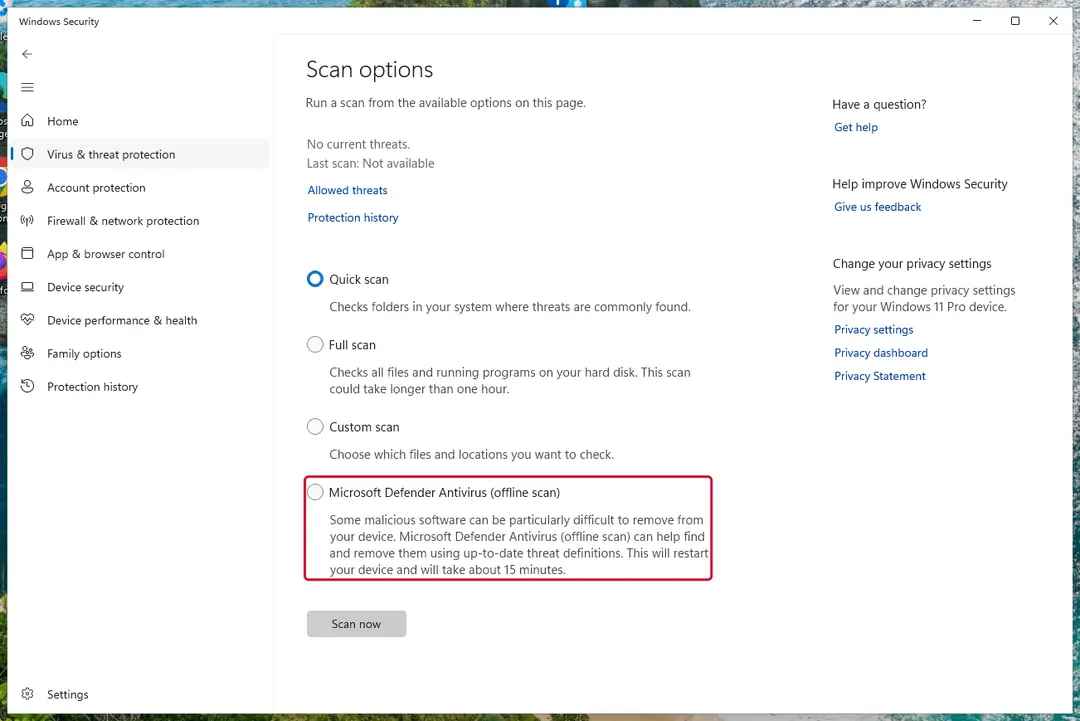
Windows 11: Windows Security > Virus & threat protection > Scan options. Full procedure with screenshots: Run a Microsoft Defender Offline scan
Instructions for each browser and system
The detailed steps for every browser and system this guide covers. Open the one you use.
Uninstall from Windows
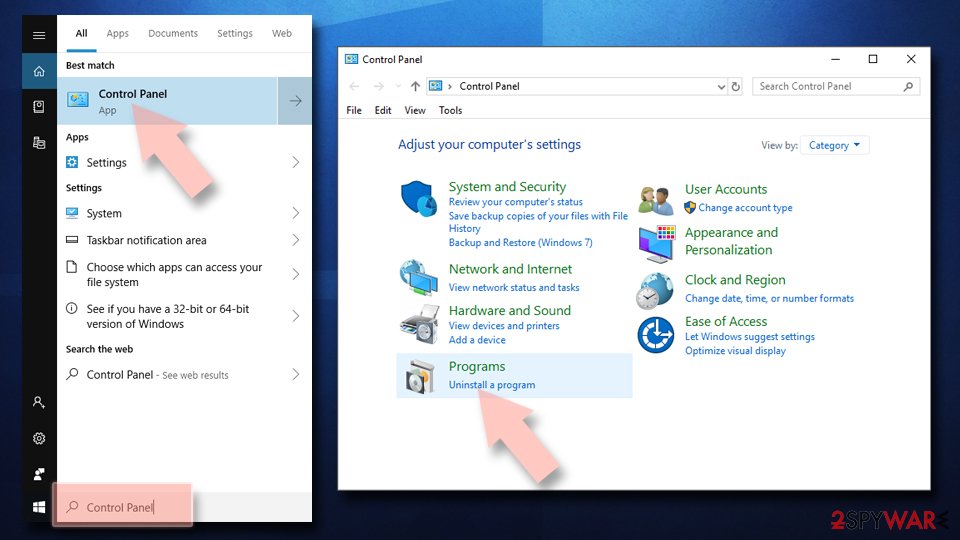
To uninstall Registry Cure Pro virus from your PC, you should access Control Panel on your Windows machine:
Uninstall from Windows 10/8:
- Type Control Panel into the Windows search box and open the result.
- Under Programs, select Uninstall a program.
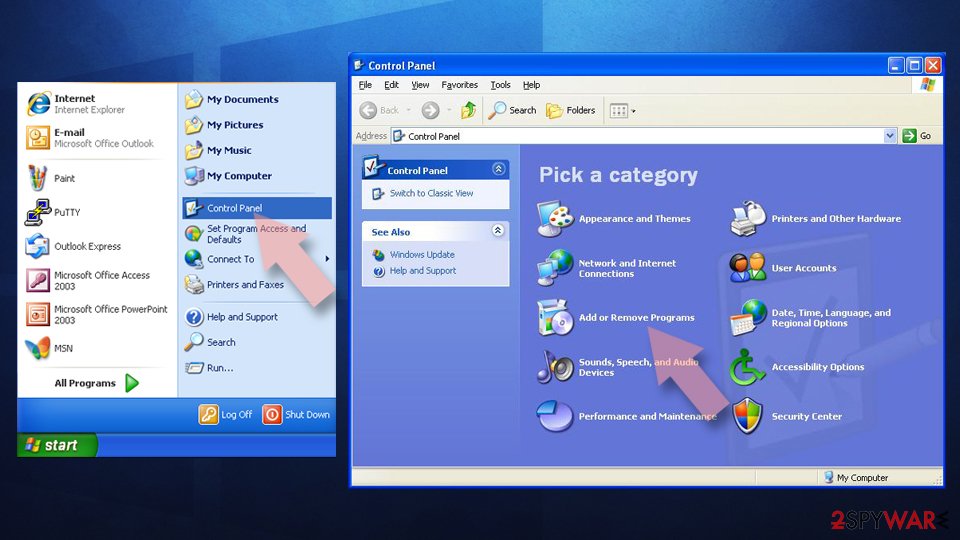
Uninstall from Windows 7/XP:
- Click on Windows Start > Control Panel (Windows XP users should click on Add/Remove Programs).
- In Control Panel, select Programs > Uninstall a program.
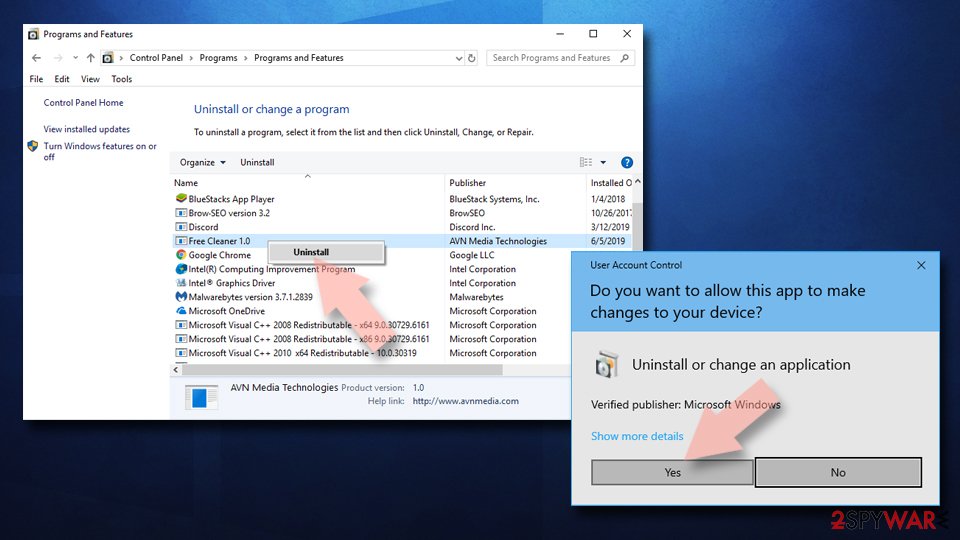
Remove the unwanted program:
- In the Programs and Features window, look for any recently installed suspicious entries, select them, and click Uninstall.
- If User Account Control appears, click Yes to confirm, then complete the removal.
Do not let government spy on you
The government has many issues in regards to tracking users' data and spying on citizens, so you should take this into consideration and learn more about shady information gathering practices.
Avoid any unwanted government tracking or spying by going totally anonymous on the internet.
You can choose a different location when you go online and access any material you want without particular content restrictions. You can easily enjoy internet connection without any risks of being hacked by using VPN.
Control the information that can be accessed by government any other unwanted party and surf online without being spied on. Even if you are not involved in illegal activities or trust your selection of services, platforms, be suspicious for your own security and take precautionary measures by using the VPN service.
Backup files for the later use, in case of the malware attack
Computer users can suffer from data losses due to cyber infections or their own faulty doings.
Ransomware can encrypt and hold files hostage, while unforeseen power cuts might cause a loss of important documents. If you have proper up-to-date backups, you can easily recover after such an incident and get back to work. It is also equally important to update backups on a regular basis so that the newest information remains intact - you can set this process to be performed automatically.
When you have the previous version of every important document or project you can avoid frustration and breakdowns. It comes in handy when malware strikes out of nowhere. Use for the data restoration process.
Questions about Registry Cure Pro
What is Registry Cure Pro and why is it on my PC?
Registry Cure Pro is a program that was installed on the PC, most likely together with something else you downloaded. Free software sites and many installers add extra programs on setup pages with pre-ticked boxes, so the extra install looks like your choice even though nobody read the page.
Check the install date in Settings, Apps, Installed apps: the program you installed that day is the probable carrier. If you do not need Registry Cure Pro, uninstall it. If it belongs to your hardware or to a program you use, search its exact name and publisher first, because drivers and their tools can have unfamiliar names.
Registry Cure Pro came back after I uninstalled it. Why?
Something else is reinstalling it. Common causes are a second program from the same publisher, a scheduled task that downloads it again, or a browser extension that keeps prompting for it. Sort Installed apps by install date and uninstall each entry from the same day that you did not choose.
Then open Task Scheduler and look in the Task Scheduler Library for tasks with updater-style names that you do not recognise. Check Startup apps in Task Manager too. If Registry Cure Pro still returns, start Windows in Safe Mode, uninstall it there and run a Microsoft Defender offline scan, which looks for loaders that ordinary scans can miss.
Is it safe to remove Registry Cure Pro?
Yes. Removing an unwanted program does not damage Windows, because programs like this are not part of the system. Before uninstalling, make sure it is not something you rely on: if the publisher is a company you know and you use the program, keep it.
If not, uninstall it from Installed apps, restart and check that registry Cure Pro in the list of installed apps is gone. If something you need stops working afterwards, reinstall that program from its official website, choosing the custom installation so that the unwanted extra is not added again.
Registry Cure Pro came back after I removed it. Why?
Something reinstalls it:
- another program from the same bundle
- a scheduled task that downloads it again
- a browser extension restored by sync
Look in Installed apps for anything from the same publisher or installed on the same date, and in Task Scheduler for tasks with the program's name or random names. Remove extensions while signed in to the browser so sync deletes them on every device.
Remove everything in one session and restart. If Registry Cure Pro still returns, a full scan and a Microsoft Defender offline scan usually find the part that brings it back.
Can I use Registry Cure Pro safely?
Yes, if you installed it on purpose and control its settings. Download it only from the publisher's own site, never through a bundle or a portal. After installing, disable automatic start, offers and telemetry, and check that it did not change your search engine or add extensions.
Watch for renewals if you bought a licence, and turn on PUA blocking in Windows Security so that anything it tries to add during updates is stopped. If Registry Cure Pro keeps pushing payments or offers, it is not worth the trouble.
How do I remove Registry Cure Pro completely?
Work in three steps. First uninstall it from Settings > Apps > Installed apps, together with anything installed on the same day. Second, remove what restarts it: unknown entries under Settings > Apps > Startup and tasks in Task Scheduler with matching names.
Third, clean the browsers: extensions you did not add and changed search settings. Restart and watch for registry Cure Pro in the list of installed apps; if it does not come back within a day, the removal is complete.
If it does, run a Microsoft Defender offline scan, which works before Windows starts and finds helpers that hide while the PC runs.
Can Windows block unwanted programs automatically?
Yes, with one setting. Windows Security has Potentially unwanted app blocking under App & browser control > Reputation-based protection settings. Block apps stops flagged programs from installing, and Block downloads works in Microsoft Edge.
On some PCs this was not switched on, which is how programs like Registry Cure Pro got through. It does not catch everything, so read installer screens, choose Custom setup and decline offers. Removing free tools you no longer use also helps, because their updates are a common route for new bundles.
Should I call Registry Cure Pro malware?
Most security vendors would call it a potentially unwanted program rather than malware. The difference is intent and consent:
- malware hides and harms
- while unwanted programs are installed with a click someone barely noticed
- then do more than expected
The sign reported here, registry Cure Pro in the list of installed apps, is typical of the second group. In practice the label matters less than the result.
Whatever it is called, a program you did not choose should go, and the place it came from should be checked for other programs. Microsoft Defender can block this class of software if you switch on Potentially unwanted app blocking in Windows Security.
Does Registry Cure Pro use a lot of resources?
It depends on the program, and no measurements have been published for Registry Cure Pro. The sign reported is registry Cure Pro in the list of installed apps. Check for yourself: open Task Manager, find its process and watch the CPU, memory and network columns for a minute while the PC is otherwise idle.
Steady use with nothing open is a strong reason to remove it. Even if it seems light, it may run more processes under other names, so sort Installed apps by date and remove anything else from the same day. Then restart and compare.
Will Fortect remove Registry Cure Pro?
Fortect scans Windows for malware and unwanted programs and repairs the system files and settings they change, and its free scan shows what it finds on your PC before you decide anything.
For Registry Cure Pro, follow the plan above as well: the browser steps take back permissions and settings that no scanner treats as a threat, and uninstalling the program that brought it removes the source.
Run Microsoft Defender's full scan and, if anything was found, its offline scan as a second opinion. If the symptoms are gone after the plan and both scans are clean, there is nothing more to do.
Sources
- How-To Geek: PUPs Explained: What is a "Potentially Unwanted Program"? (read October 7, 2026)
- Intego: How to tell if an Adobe Flash Player update is valid (read October 7, 2026)
- FTC: How to recognize, remove and avoid malware (read October 7, 2026)
- Microsoft Learn: Microsoft Defender Offline (read October 7, 2026)
- Microsoft Learn: How Microsoft names malware (read October 7, 2026)