

Worldnewads.top ads can bring you to malicious websites: what you should know

Worldnewads.top is yet another example of a deceptive website designed to manipulate users into unknowingly subscribing to push notification spam. While it might appear to serve a legitimate purpose at first glance, its primary function is to misrepresent a browser’s notification request prompt and trick users into granting permissions.
These scams are typically encountered on unsafe websites, often ones involved in piracy, unauthorized streaming, or similar questionable content. Users can also be redirected to Worldnewads.top through adware already present on their device, which makes a full system inspection essential.
Once notifications are enabled, the site begins pushing misleading and often harmful ads that appear directly on the screen, regardless of what the user is doing at the time. These notifications can overlap with other apps or browser tabs and include content that is clearly fraudulent, ranging from fake alerts and adult content to financial scams and phishing links. Interacting with any of them puts your personal data and device security at risk.
To stop these intrusive ads and mitigate the potential harm, immediate action is necessary. That includes checking for adware, removing notification permissions, and cleaning up browser settings.
| Name | Worldnewads.top |
| Type | Push notifications, ads, scam, pop-ups |
| Distribution | The website can begin to show ads at any point after the “Allow” button within the notification prompt is clicked |
| Symptoms | Pop-up notifications are shown on a desktop at random times |
| Risks | The ads shown within push notifications might include misleading messages and links to malicious websites. If clicked, you might end up infecting your system with malware, disclosing your personal information, or losing money |
| Removal | To stop intrusive push notifications, go to the Chrome menu and choose Settings. Then, to ensure that your system is not infected with adware or malware, scan it with SpyHunterCombo Cleaner |
| Additional tips | Clear caches and other web data to avoid data tracking by utilizing the FortectIntego repair and maintenance tool. This tool can also help fix any damaged system components |
How scammers fake CAPTCHAs to impersonate legitimate requests
The trick behind Worldnewads.top lies in its calculated use of social engineering. Rather than outright forcing users into anything, scammers rely on deceptive messaging, impulsive user behavior, and the general lack of understanding around browser permissions.
When users end up on Worldnewads.top (whether through a redirect, shady ad, or compromised website), they’re met with prompts that seem routine. These might imitate a CAPTCHA check, an age verification gate, or a video playback requirement. Messages such as:
- Click Allow to confirm that you are not a robot
- Press “Allow” to watch the video
- Click Allow to start downloading
- If you are 18+, click Allow
- Click “Allow” to win the prize and get it in our shop!

are engineered to appear legitimate. The familiar wording masks the real intent: getting users to click “Allow” so that the site can send push notifications.
The moment that permission is granted, scammers exploit it to flood the device with ads. These notifications often contain sketchy links that lead to scams, phishing sites, or harmful software. The setup feels seamless to victims because it mimics what they’ve seen on legitimate sites – just enough to pass as trustworthy.
This manipulation works best when users act quickly and don’t second-guess the prompt. That’s why recognizing the signs early and avoiding any interaction with such sites is key to preventing spam and potential threats.
Scammers exploit browser redirects to push sites like Worldnewads.top
Internet fraud remains a persistent challenge due to the decentralized nature of the web. With thousands of websites launched every day and little oversight, deceptive pages like Worldnewads.top can emerge suddenly, pull in traffic, and vanish, only to be replaced by a similar clone. These scam sites are part of a broader network that thrives on misdirection and manipulation to earn revenue or steal sensitive data.
In many cases, scammers benefit from shady advertising networks and semi-legitimate websites that distribute pirated movies, cracked software, and torrent content. These platforms are rife with fraudulent download buttons, fake updates, and deceptive ads that redirect users to phishing sites or even trigger malware downloads, including ransomware.
Another key contributor is adware – a form of software that often operates silently in the background. Once installed, adware can:
- Inject links into web pages
- Generate pop-up ads seemingly at random
- Redirect browser sessions to malicious websites
- Tamper with search engine results
This means users may end up on phishing or scam sites like Worldnewads.top either by accident or as a direct result of an adware infection that hijacks normal browsing activity.
To eliminate the root cause of these redirects, it is strongly recommended to scan the system with powerful security tools like SpyHunterCombo Cleaner, MalwarebytesMalwarebytes, or similar anti-malware solutions. These tools can identify and remove hidden threats, including adware and other potentially unwanted programs. For complete cleanup and restoration of browser and system stability, a trusted optimization tool like FortectIntego is also recommended.
Eliminating unwanted pop-up notifications
If you’ve unintentionally enabled push notifications from a site like Worldnewads.top, the situation can still be managed effectively, as long as you avoid clicking on the ads or links within the notifications. Refraining from any interaction significantly reduces the chance of encountering malware, phishing attempts, or additional redirects.
To stop these intrusive alerts permanently, you’ll need to revoke the notification permission previously granted to the site. Below, you'll find detailed step-by-step instructions for disabling push notifications across the most popular web browsers:
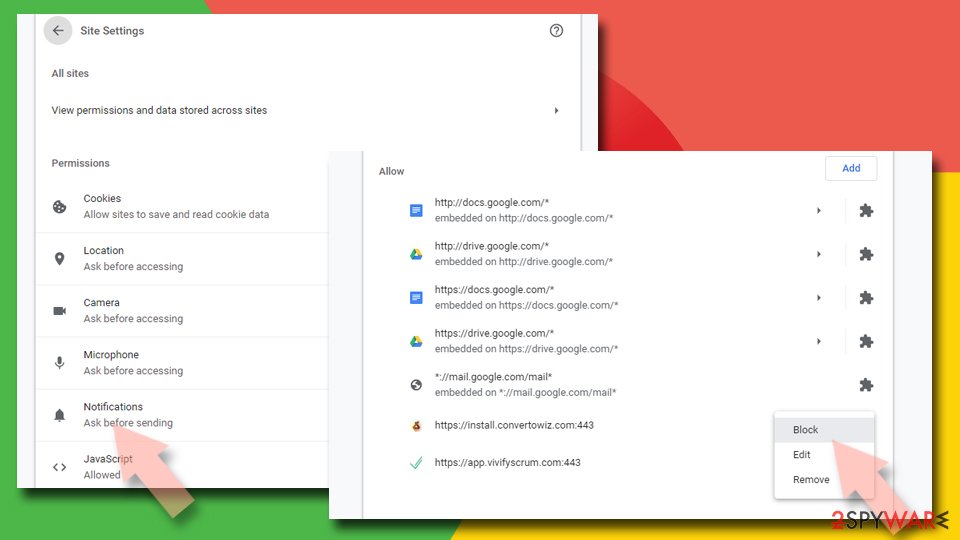
Google Chrome (desktop)
- Open the Google Chrome browser and go to Menu > Settings.
- Scroll down and click on Advanced.
- Locate the Privacy and security section and pick Site Settings > Notifications.
- Look at the Allow section and look for a suspicious URL.
- Click the three vertical dots next to it and pick Block. This should remove unwanted notifications from Google Chrome.

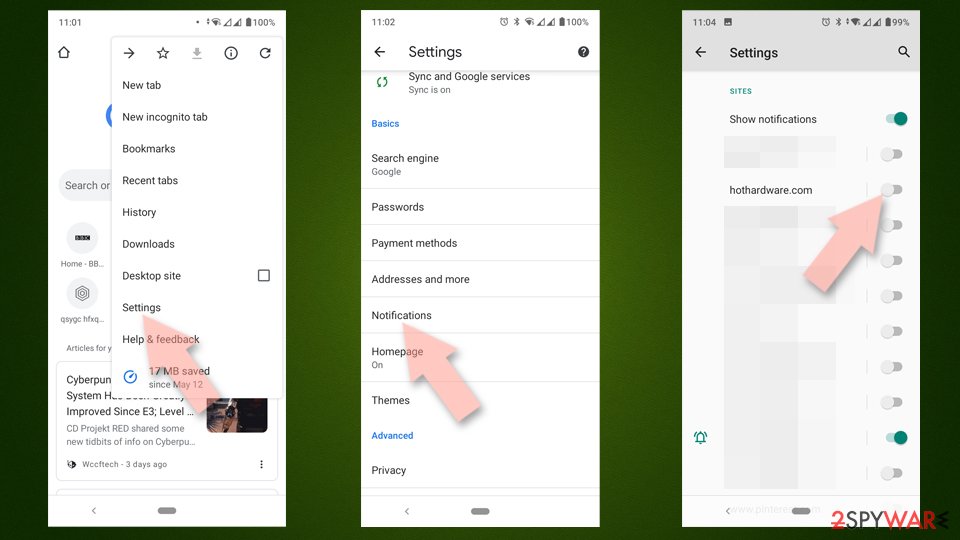
Google Chrome (Android)
- Open Google Chrome and tap on Settings (three vertical dots).
- Select Notifications.
- Scroll down to the Sites section.
- Locate the unwanted URL and toggle the button to the left (Off setting).

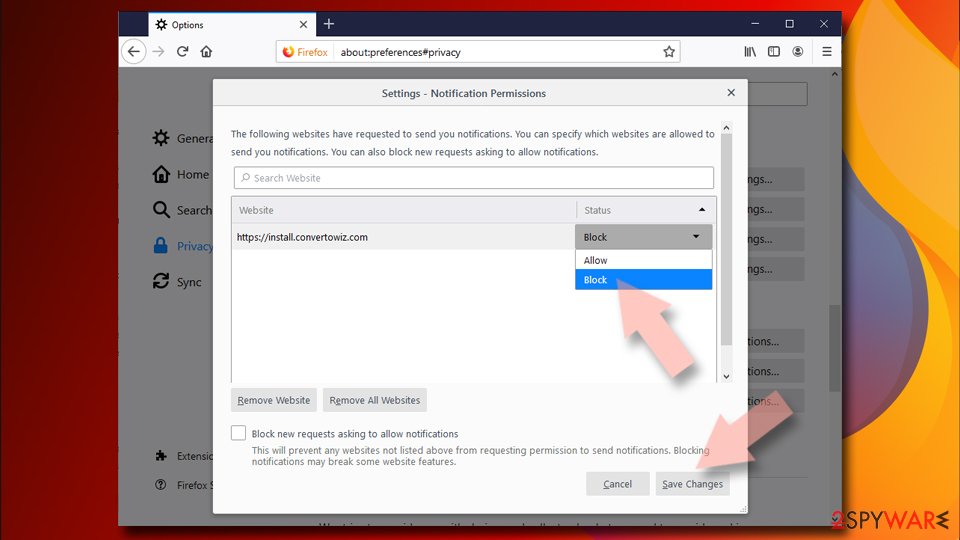
Mozilla Firefox
- Open Mozilla Firefox and go to Menu > Options.
- Click on Privacy & Security section.
- Under Permissions, you should be able to see Notifications. Click the Settings button next to it.
- In the Settings – Notification Permissions window, click on the drop-down menu by the URL in question.
- Select Block and then click on Save Changes. This should remove unwanted notifications from Mozilla Firefox.

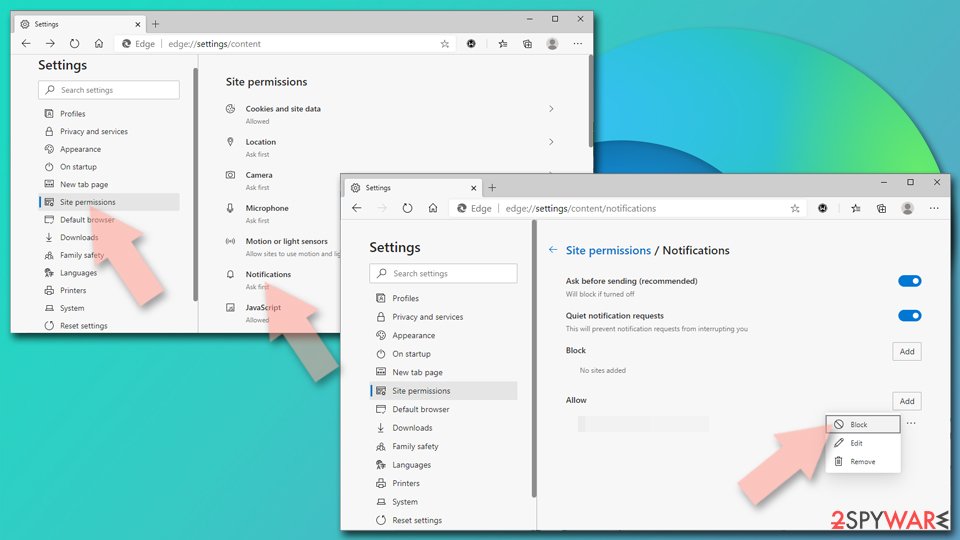
MS Edge (Chromium)
- Open Microsoft Edge, and go to Settings.
- Select Site permissions.
- Go to Notifications on the right.
- Under Allow, you will find the unwanted entry.
- Click on More actions and select Block.

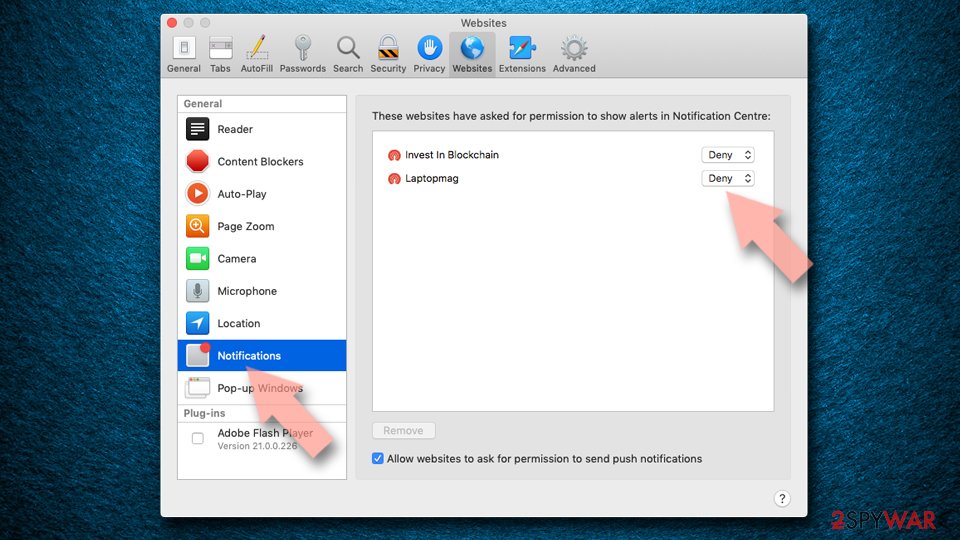
Safari
- Click on Safari > Preferences…
- Go to the Websites tab and, under General, select Notifications.
- Select the web address in question, click the drop-down menu and select Deny.

Internet Explorer
- Open Internet Explorer, and click on the Gear icon at the top-right of the window.
- Select Internet options and go to the Privacy tab.
- In the Pop-up Blocker section, click on Settings.
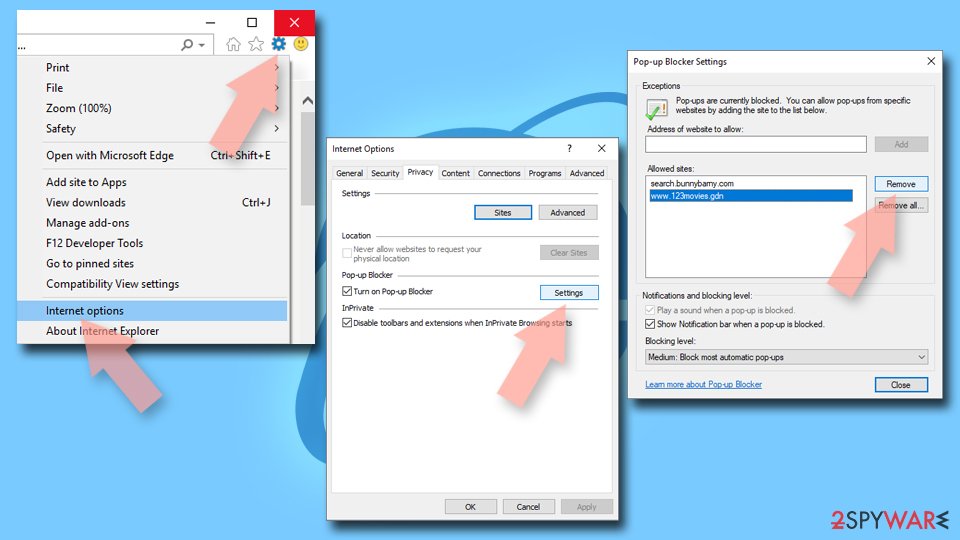
- Locate the web address in question under Allowed sites and pick Remove.

Did this guide help?
Be the first to comment