

Wsevosteran is a browser-hijacking extension that changes new tab address, homepage, and the search engine
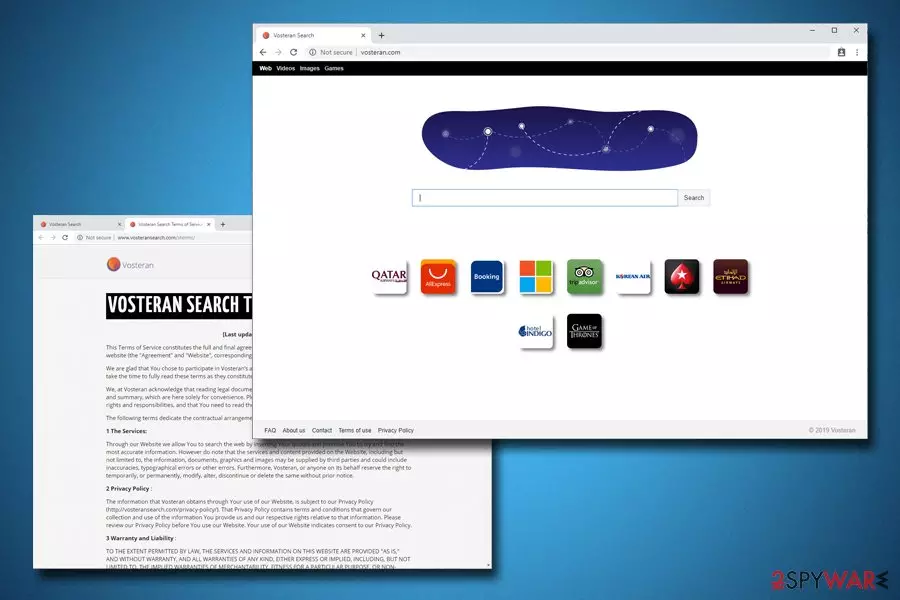
Wsevosteran is a potentially unwanted program that falls into the browser hijacker category and comes as a browser extension for Google Chrome, Safari, Mozilla Firefox, Opera, etc. It travels within software bundles, so computer owners rarely spot its infiltration. However, this can be avoided with the careful installation of freeware that is downloaded from third-party websites.
As soon as Wse_vosteran clips itself to the browser, it starts immediate changes:
- homepage and a new tab is changed to vosteran.com;
- a customized search engine is added.
However, these alternations are just a surface, as users will notice a more significant difference when they start browsing. The search results are filled with sponsored links, diverting traffic to predetermined sites, and users will encounter more ads overall. Besides, just as any other potentially unwanted program, this one tracks a variety of information about web browsing activities.
| Name | Wsevosteran |
| Type | Browser plugin |
| Category | Browser hijacker, potentially unwanted program |
| Homepage set to | hxxp://vosteran.com |
| Other symptoms | Search results littered with sponsored links, increased amount of ads on all visited websites |
| Risk factors | Installation of other unwanted software, information disclosure to unknown parties, malware infections |
| Termination | Use anti-virus software or employ our manual instructions |
| Recovery | Fix virus damage by scanning the infected device with the FortectIntego software |
While browser hijackers are considered to be one of the minor threats when it comes to computer security and online safety, their presence should not be overlooked. Besides, research shows that Wsevosteran might be related to a far more sinister threat that can replace the original Google Chrome browser, intercept traffic, and show malicious advertisements.[1]
Therefore, how should you know which version of the virus are you affected by? Well, the best way is to install a security application and perform a full system scan. Anti-virus programs are specifically designed to locate and delete browser hijackers and all the other infections automatically.
However, you can also complete Wsevosteran removal manually if you are affected by a minor version of it. Simply follow our guidelines below, as we will explain how to terminate the unwanted application step-by-step on Windows and Mac operating systems. Additionally, a browser reset is recommended, as changed settings would not go away otherwise, and the intrusive content will continue.

Another reason to remove the article's culprit is due to privacy issues. It does employ tracking technologies like cookies or web beacons[2] in order to track the data such as:
- IP address
- Technical information
- Browser type
- Operating system details
- Search queries
- Sites visited and the duration of the visit
- Links clicked, etc.
Be aware that search queries might include your personal data if you choose to enter it so that Wsevosteran browser hijacker and its affiliates will gather it. All in all, we recommend you get rid of it, along with all the malicious components it might have.
You can do that by scanning your device with proper anti-malware software such as MalwarebytesMalwarebytes or SpyHunterCombo Cleaner. Such tools will come in handy in the future to prevent you from installing any PUPs and blocking malware. After that, you should also scan your computer with FortectIntego for the best recovery option.
Be wary when installing third-party applications – PUPs can be included
Software bundling is a well-established technique used all over the world by freeware and shareware developers. Unfortunately, it makes use of users' willingness to install the application as quickly as possible, without paying much attention to the process itself.

Optional components are often hidden in free software installers that come from third-party sites, such as Download.com, File Hippo, Softonic, and many others. Therefore, careful installation is mandatory if you want to avoid potentially unwanted programs entirely.
Experts advise[3] to be attentive while establishing a new program from the internet: check for essential documents like Privacy Policy or Terms of Service; decline all deals and offers; always opt for Advanced/Custom installation instructions instead of Recommended/Quick ones and remove all the tick marks next to System optimizers, driver downloaders, PDF converters, browser extensions, etc.
Remove Wsevosteran from your computer and rely on secure search engines
Allegedly, Wsevosteran claims to allow access to all the logos and links to websites that you have saved and promises to “optimize the way you navigate the internet.” However, the customization can be applied directly to the browser itself, bookmarks added, and particular tabs at the start page created because such features are built-in.
In reality, the customized search seeks to bring you to sponsored sites, generating money for the advertiser as well as Wse_vosteran authors. Therefore, remove it as soon as possible. You can do this by installing a security application that focuses on PUP removal or using our step-by-step instructions below to terminate the threat manually.
Be aware that the anti-malware tool will also serve as protection from most computer infections in the future. Once you complete the removal, you should also reset all the installed browsers. Remember, PUPs insert tracking mechanisms into the browser, and they will stay there until Google Chrome, Mozilla Firefox, and others are reset.
Uninstall from Windows
Uninstall from Windows 10/8:
- Type Control Panel into the Windows search box and open the result.
- Under Programs, select Uninstall a program.


Uninstall from Windows 7/XP:
- Click on Windows Start > Control Panel (Windows XP users should click on Add/Remove Programs).
- In Control Panel, select Programs > Uninstall a program.


Remove the unwanted program:
- In the Programs and Features window, look for any recently installed suspicious entries, select them, and click Uninstall.
- If User Account Control appears, click Yes to confirm, then complete the removal.


Delete from macOS
Remove the unwanted application:
- From the menu bar, select Go > Applications.
- In the Applications folder, look for any suspicious entries, then drag them to Trash (or right-click and pick Move to Trash).


Delete leftover files and folders:
- Select Go > Go to Folder.
- Enter /Library/Application Support and remove any suspicious folders related to the unwanted program.
- Repeat the same check in the /Library/LaunchAgents and /Library/LaunchDaemons folders, deleting any suspicious entries.

- Finally, empty the Trash to permanently remove the leftovers.

Remove from Microsoft Edge
Delete unwanted extensions from MS Edge:
- Select Menu (three horizontal dots at the top-right of the browser window) and pick Extensions.
- From the list, pick the extension and click on the Gear icon.
- Click Remove.


Clear cookies and other browser data:
- Click on the Menu (three horizontal dots at the top-right of the browser window) and select Settings > Privacy, search, and services..
- Under Clear browsing data, pick Choose what to clear.
- Select Cookies and other site data and Cached images and files. (apart from passwords, although you might want to include Media licenses as well, if applicable) and click on Clear.


Restore new tab and homepage settings:
- Click the menu icon and choose Settings.
- Then find On startup section.
- Click Remove next to any suspicious startup page.
Reset MS Edge if the above steps did not work:
- Press on Ctrl + Shift + Esc to open Task Manager.
- Click on More details arrow at the bottom of the window.
- Select Details tab.
- Now scroll down and locate every entry with Microsoft Edge name in it. Right-click on each of them and select End Task to stop MS Edge from running.


Instructions for Chromium-based Edge
Delete extensions from MS Edge (Chromium):
- Open Edge and click select Settings > Extensions.
- Delete unwanted extensions by clicking Remove.


Clear cache and site data:
- Click on Menu and go to Settings.
- Select Privacy, search and services.
- Under Clear browsing data, pick Choose what to clear.
- Under Time range, pick All time.
- Select Clear now.


Reset Chromium-based MS Edge:
- Click on Menu and select Settings.
- On the left side, pick Reset settings.
- Select Restore settings to their default values.
- Confirm with Reset.
- This will disable extensions and reset startup pages but will not delete bookmarks, saved passwords, or browsing history.


Remove from Mozilla Firefox (FF)
Remove dangerous extensions:
- Open Mozilla Firefox browser and click on the Menu (three horizontal lines at the top-right of the window).
- Select Add-ons.
- In here, select the unwanted extension and click Remove.


Reset the homepage:
- Click three horizontal lines at the top right corner to open the menu.
- Choose Settings.
- Under Home, set your preferred homepage and new tab settings.
Clear cookies and site data:
- Click Menu and pick Settings.
- Go to Privacy & Security section.
- Scroll down to locate Cookies and Site Data.
- Click on Clear Data...
- Select Cookies and Site Data and Temporary cached files and pages, then click Clear.


Reset Mozilla Firefox
If clearing the browser as explained above did not help, reset Mozilla Firefox:
- Open Mozilla Firefox browser and click the Menu.
- Go to Help and then choose Troubleshooting Information.

- Under Give Firefox a tune up section, click on Refresh Firefox...
- Once the pop-up shows up, confirm the action by pressing on Refresh Firefox.



Remove from Google Chrome
Delete malicious extensions from Google Chrome:
- Open Google Chrome, click on the Menu (three vertical dots at the top-right corner) and select More tools > Extensions.
- In the newly opened window, you will see all the installed extensions. Uninstall all suspicious extensions related to the unwanted program by clicking Remove.


Clear cache and web data from Chrome:
- Click on Menu and pick Settings.
- Under Privacy and security, select Clear browsing data.
- Select Browsing history, Cookies and other site data, as well as Cached images and files.
- Click Clear data.


Change your homepage:
- Click menu and choose Settings.
- Look for a suspicious site in the On startup section.
- Click on Open a specific or set of pages and click on three dots to find the Remove option.
Reset Google Chrome:
If the previous methods did not help you, reset Google Chrome to eliminate all the unwanted components:
- Click on Menu and select Settings.
- In the Settings, scroll down and click Advanced.
- Scroll down and locate Reset and clean up section.
- Now click Restore settings to their original defaults.
- Confirm with Reset settings.


Delete from Safari
Remove dangerous extensions:
- Open Safari, click Safari in the menu at the top-left of the screen, and select Preferences.
- Go to the Extensions tab, look for any suspicious entries, and click Uninstall to remove them.


Clear history and website data:
- Click Safari in the menu and pick Clear History.
- Set Clear to all history and confirm with Clear History.


Reset Safari:
- Click Safari in the menu and select Preferences > Advanced.
- Enable Show Develop menu in menu bar.
- From the menu bar, click Develop and select Empty Caches.


Did this guide help?
Be the first to comment