

Eprendens.com ads can show scams and lead you to malicious websites

Eprendens.com is a scam site that specializes in tricking users into subscribing to push notifications. Once users are tricked, they may start receiving suspicious pop-ups on their desktops, regardless of what they are doing at the time. These pop-ups often contain misleading messages and links, such as fake security alerts or offers for free software. In some cases, users may be told that their security software has expired and that malware has been found on their system, prompting them to download fake software or provide personal information.
In this article, we will provide more information on push notifications from Eprendens.com and how to prevent them from showing up. Push notifications are a legitimate feature of many websites and apps, but they can also be abused by scammers to deliver unwanted or harmful content. By understanding how push notifications work and taking steps to block unwanted ones, you can protect yourself from these types of scams.
| Name | Eprendens.com |
| Type | Push notifications, ads, pop-ups, scam |
| Distribution | Users start seeing intrusive pop-ups at some point after they click the “Allow” button within the site's notification prompt |
| Symptoms | Push notifications that include misleading information links would show up on the desktop at random times |
| Risks | Pop-ups that are shown include phony notifications and push scams. Links can also direct you to sites filled with malware |
| Removal | You can stop intrusive push notifications by blocking the website's URL in browser settings. It is also important to check the system for adware or other infections |
| Recovery | It is important to clean your browsers after removing potentially unwanted programs from your system – use FortectIntego for quick and reliable results |
How you end up on malicious websites and how to avoid it
Malicious websites can pose a serious threat to users, as they may contain malware, phishing scams, or other harmful content. In many cases, users may end up on such sites accidentally, often through a series of clicks that lead them to an insecure website. Torrent sites, social media platforms, and chatting apps are common culprits, as users may click on links or download files without fully understanding the risks involved.
Another common cause of suspicious links and redirects is adware. Adware is a type of software that displays unwanted ads or pop-ups on a user's device. Adware can be installed through free software downloads or by clicking on fake ads. Once installed, it can track a user's browsing activity and redirect them to malicious sites. In some cases, adware can also modify a user's browser settings, making it difficult to remove.
To avoid ending up on malicious websites, users should take several precautions. First, they should be wary of clicking on links from unknown sources, especially on social media, messaging apps, or email. Second, users should avoid downloading files from untrusted sources or using torrent sites to download content illegally. Third, users should install and regularly update antivirus and antimalware software on their devices to detect and remove any malicious software.
In addition, users should also be cautious when downloading free software, as many free downloads come bundled with adware or other unwanted software. They should always read the terms and conditions carefully and opt out of any additional offers or downloads during the installation process. Lastly, users should keep their operating system and browser updated, as updates often include security patches that can help prevent malicious attacks.

The fake messages used to scam users
When it comes to push notification scams, users are often caught off guard when they're redirected to Eprendens.com, as they're typically presented with what appears to be a reasonable request. Unfortunately, without giving it much thought, it's easy to fall victim to a scam and discover the activity much later.
When you visit Eprendens.com or a similar site of this nature (for example, Uponwarmth.com, Newcaptchahere.top, Colamecola.biz, etc.) you may see the following alerts:
- Click Allow if you're not a robot
- If you're 18+, tap Allow
- To access the video, click “Allow”
- Click “Allow” to start downloading
- Just one more step! “Allow” to continue.
Confirming that users aren't robots is something many are accustomed to, as everyone has had to deal with captchas and similar verification schemes. However, in this setting, the verification is fake, and pressing the “Allow” button would enable the website to deliver push notifications to users. Push notification scam sites don't have any valuable information or features; their main goal is to make people subscribe to push notifications and redirect them to other dangerous sites.
Once subscribed, users may start seeing suspicious pop-ups on their desktops, regardless of what they are doing at the time. These pop-ups could include various suspicious links and misleading messages, such as fake security alerts or offers for free software. In the next section, we will provide more information on how to prevent push notifications from showing up and how to protect yourself from these scams.
Remove Eprendens.com ads and check your system for infections
Users who receive intrusive push notifications from Eprendens.com may become confused about the source of the activity and its cause. Suspicious pop-ups may lead people to believe that their computers are infected with a virus, and they may attempt to use security software to scan their devices for infections. Unfortunately, push notifications can only be manually disabled through browser settings, which can be challenging for some users.
However, it is essential to scan the device for adware or other unwanted software that may be running in the background without the user's knowledge. Malware may be inadvertently downloaded while downloading repacked software or viewing dangerous ads. The entire process is cunning, and users may not even realize that their system has been compromised.
It is recommended to use robust security software such as SpyHunterCombo Cleaner or MalwarebytesMalwarebytes to scan the system before removing Eprendens.com ads. Additionally, using FortectIntego to delete browser caches, including cookies, can help ensure that no data tracking is occurring.
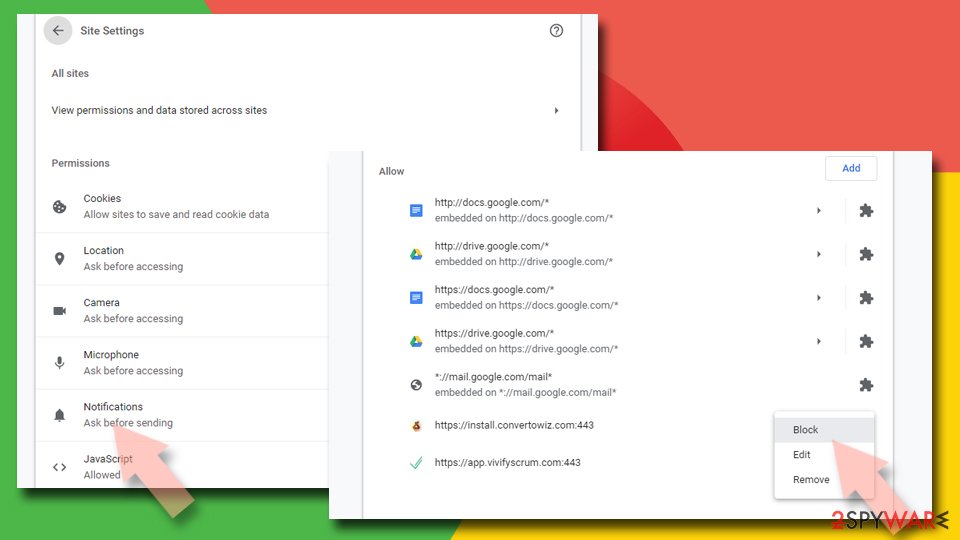
Google Chrome (desktop)
- Open the Google Chrome browser and go to Menu > Settings.
- Scroll down and click on Advanced.
- Locate the Privacy and security section and pick Site Settings > Notifications.
- Look at the Allow section and look for a suspicious URL.
- Click the three vertical dots next to it and pick Block. This should remove unwanted notifications from Google Chrome.

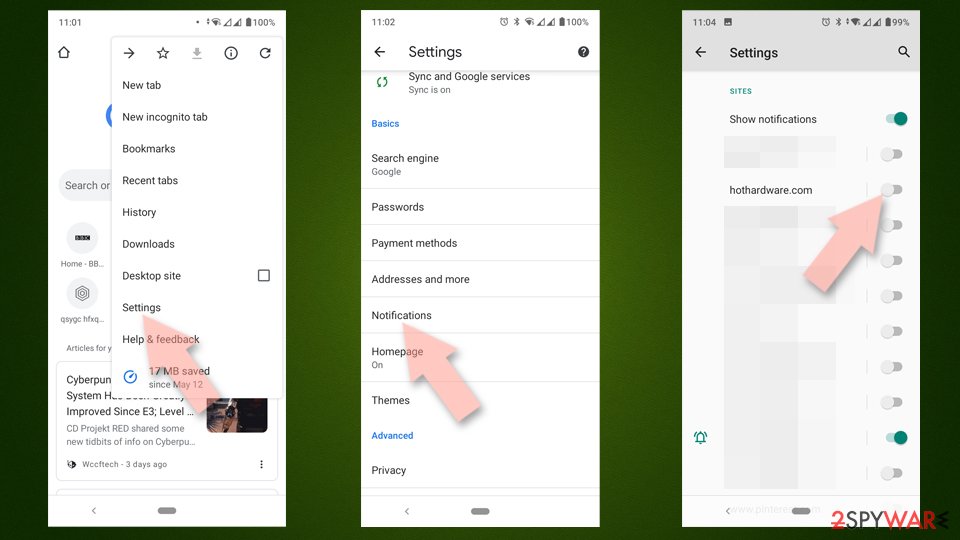
Google Chrome (Android)
- Open Google Chrome and tap on Settings (three vertical dots).
- Select Notifications.
- Scroll down to the Sites section.
- Locate the unwanted URL and toggle the button to the left (Off setting).

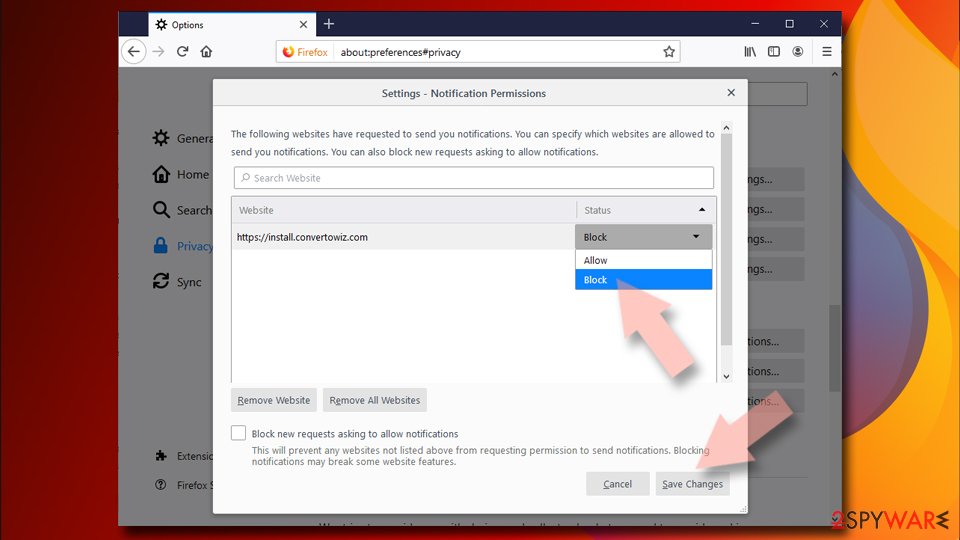
Mozilla Firefox
- Open Mozilla Firefox and go to Menu > Options.
- Click on Privacy & Security section.
- Under Permissions, you should be able to see Notifications. Click the Settings button next to it.
- In the Settings – Notification Permissions window, click on the drop-down menu by the URL in question.
- Select Block and then click on Save Changes. This should remove unwanted notifications from Mozilla Firefox.

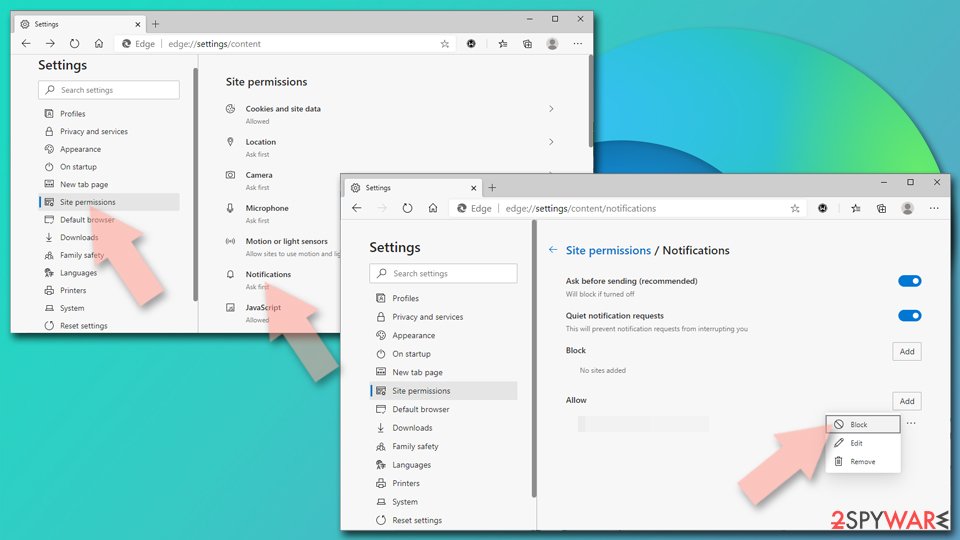
MS Edge (Chromium)
- Open Microsoft Edge, and go to Settings.
- Select Site permissions.
- Go to Notifications on the right.
- Under Allow, you will find the unwanted entry.
- Click on More actions and select Block.

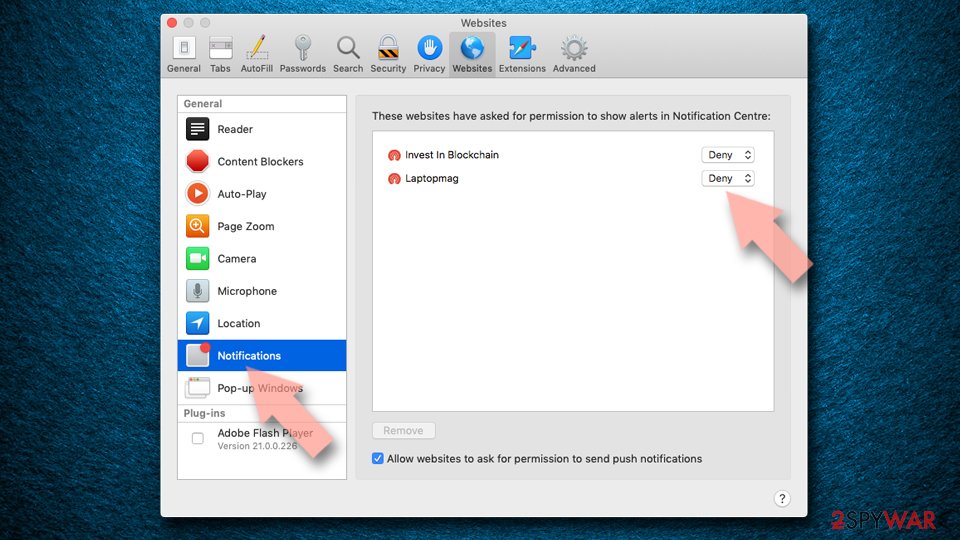
Safari
- Click on Safari > Preferences…
- Go to the Websites tab and, under General, select Notifications.
- Select the web address in question, click the drop-down menu and select Deny.

Internet Explorer
- Open Internet Explorer, and click on the Gear icon at the top-right of the window.
- Select Internet options and go to the Privacy tab.
- In the Pop-up Blocker section, click on Settings.
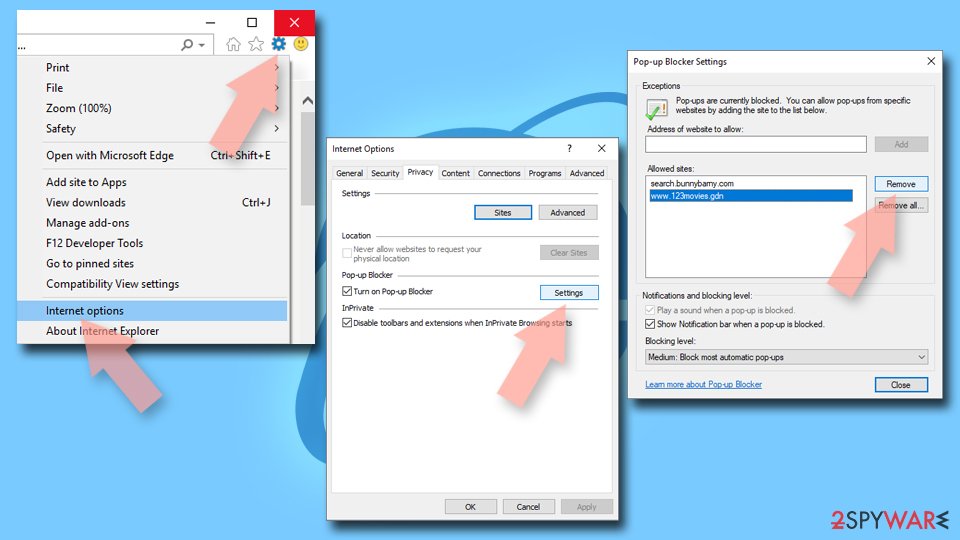
- Locate the web address in question under Allowed sites and pick Remove.

Did this guide help?
Be the first to comment