

Nzqw ransomware is a dangerous virus that encrypts users' personal files
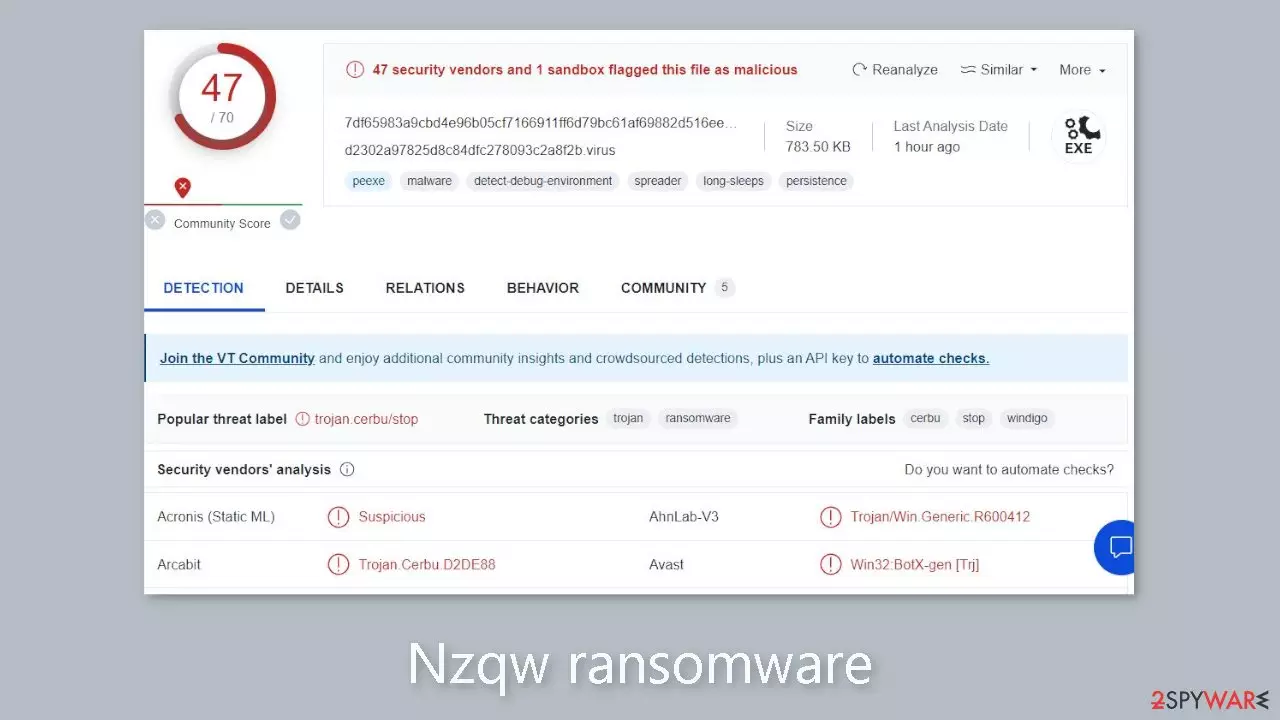
The Nzqw ransomware is a harmful program that is a member of the Djvu ransomware family. It is well known for its ability to encrypt common files located on infected computers and prohibit user access. Since it may spread through several types of malware, including trojans and information stealers, this virus is particularly difficult to discover.
Usually, when a user downloads a damaged file or opens a file attachment from an email, the device is compromised. Once the Nzqw file virus has access to a device, it can cause serious damage. It may conceal its presence by using extra pop-up components to make it appear as though the user's data is simply locked and given the .nzqw extension.
In reality, the virus encrypts the files using strong encryption techniques. The virus's authors then transmit a ransom note, demanding money in exchange for a purportedly accessible decryption tool. The likelihood of their delivering on this promise is slim, though, as they frequently disappear before giving the victim a useful tool.
| NAME | Nzqw |
| TYPE | Cryptovirus, file-locker |
| MALWARE FAMILY | Djvu ransomware |
| FILE EXTENSION | .nzqw |
| RANSOM NOTE | _readme.txt |
| RANSOM AMOUNT | $490/$980 |
| CONTACT MAILS | support@freshmail.top, datarestorehelp@airmail.cc |
| DISTRIBUTION | Malicious files can be shared via email, as well as through various online platforms that may present security risks or engage in pirating activities |
| REMOVAL | Use specialized tools that are designed to remove threats and protect against security breaches |
| SYSTEM FIX | If the infection has caused damage to parts of your machine, you can use FortectIntego to repair any issues with the system that have been caused by the corruption. |
How does ransomware spread?
Nzqw is one of the versions of the Djvu ransomware group, which is known for using a variety of malware types to spread its payload. This tactic includes sending malicious file attachments or distributing bundles of pirated software. Utilizing malware like Vidar and RedLine, the Nzqw file virus can covertly introduce its payload onto a system and start the encryption process.
Nzqw ransomware can be downloaded accidentally from torrent websites or unknowingly opened in emails that contain malicious file attachments. In order to protect yourself from potential infections, it is important to verify and carefully evaluate these files prior to downloading.
Djvu ransomware family
The Nzqw version of the Djvu ransomware family, which is extremely prevalent and has the ability to constantly improve its encryption abilities, has acquired notoriety. The most recent versions use stronger encryption methods coupled with a weekly release schedule. The virus also employs unique online IDs for each affected device, departing from earlier iterations that used standard offline keys for all devices encrypted by a specific variant. Even though the Djvu virus no longer frequently uses offline keys, attempting to decrypt these files is still a viable alternative.
The ransom note
Nzqw ransomware drops the following _readme.txt ransom note on victims' machines:
ATTENTION!
Don't worry, you can return all your files!
All your files like pictures, databases, documents and other important are encrypted with strongest encryption and unique key.
The only method of recovering files is to purchase decrypt tool and unique key for you.
This software will decrypt all your encrypted files.
What guarantees you have?
You can send one of your encrypted file from your PC and we decrypt it for free.
But we can decrypt only 1 file for free. File must not contain valuable information.
You can get and look video overview decrypt tool:
hxxps://we.tl/t-rmxjMZAZBJ
Price of private key and decrypt software is $980.
Discount 50% available if you contact us first 72 hours, that's price for you is $490.
Please note that you'll never restore your data without payment.
Check your e-mail “Spam” or “Junk” folder if you don't get answer more than 6 hours.To get this software you need write on our e-mail:
support@freshmail.topReserve e-mail address to contact us:
datarestorehelp@airmail.ccYour personal ID:
–

How can Nzqw ransomware be removed?
The Nzqw ransomware poses as a powerful and persistent threat with dangerous capabilities that have the potential to cause major harm. It becomes crucial to remove this infection in order to get your gadget working again. One effective strategy entails doing a thorough system scan using a threat detection tool like SpyHunterCombo Cleaner or MalwarebytesMalwarebytes. These programs are skilled in locating dangerous files on your system, including covert Nzqw malware or other related threat components.
Through the system scan, the Nzqw file infection can be located and categorized as potentially destructive malware, at which point it can be eliminated. It's crucial to realize, though, that getting rid of the virus doesn't mean you can also decrypt it or retrieve your data after the infection. Since the virus might persist on your system and potentially encrypt fresh files it comes across or even re-encrypt previously decrypted files, causing irreparable damage, the initial focus must be on malware removal. Rapid virus removal is essential because it stops the virus from causing additional interruptions and system damage.
Decrypt .nzqw files
Consider using the Emsisoft decryptor to try and recover your data if your machine has been infected with a Djvu ransomware variant. It's crucial to recognize that this tool's effectiveness isn't general; it only applies in situations when the data was encrypted using an offline ID, indicating that the malware was unable to connect to its remote servers.
Even if your situation fits this description, the remedy calls for one of the affected parties to act as a go-between to satisfy the demands of the attackers, obtain the offline key, and then communicate it to Emsisoft's security specialists. Consequently, it might not be possible to immediately restore your encrypted files. If the decryptor confirms that your data was locked with an offline ID but is currently still unrecoverable, it is suggested to think about trying again later. A pair of files must be uploaded to the company's servers, one encrypted and the other in its original form, in order to use the decryptor.
- Download the app from the official Emsisoft website.
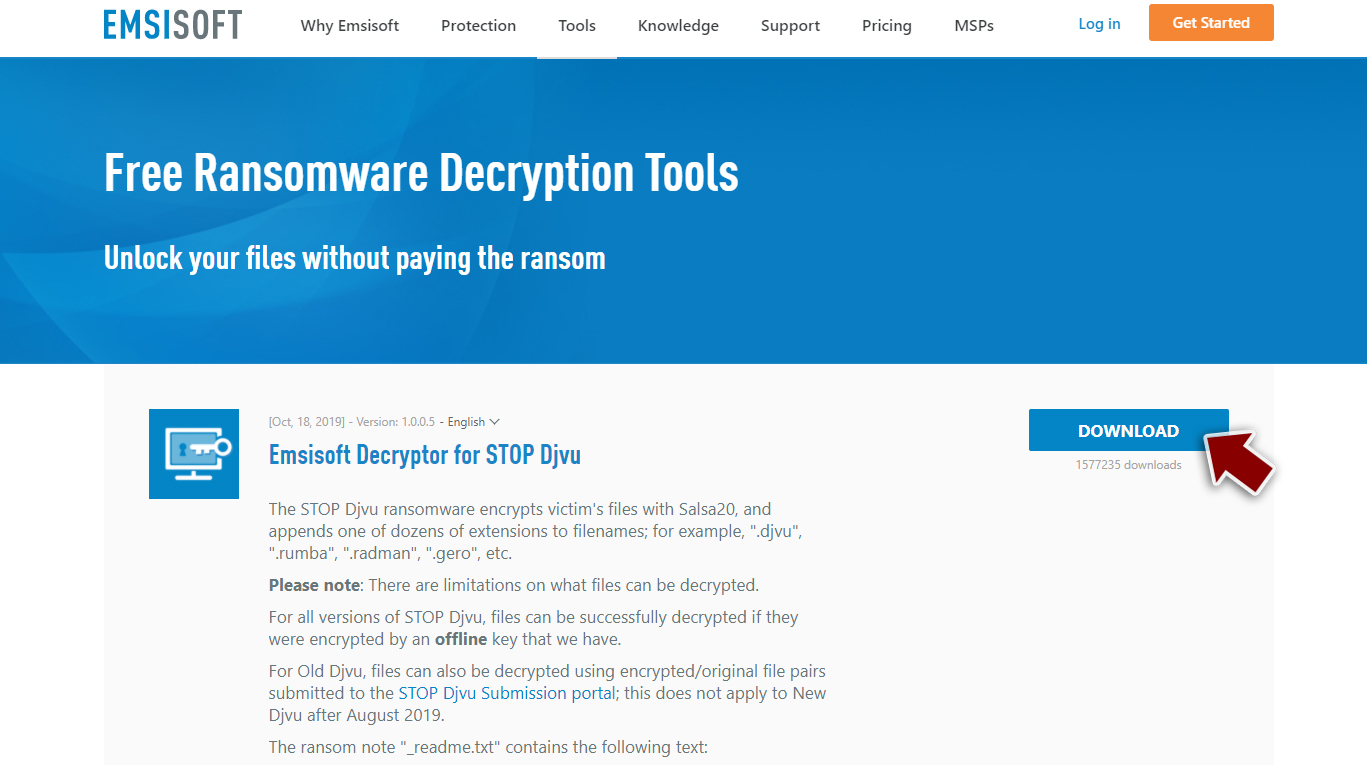
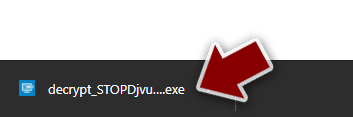
- After pressing Download button, a small pop-up at the bottom, titled decrypt_STOPDjvu.exe should show up – click it.
- If User Account Control (UAC) message shows up, press Yes.
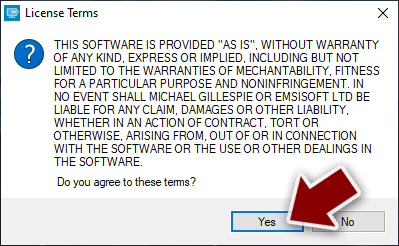
- Agree to License Terms by pressing Yes.
- After Disclaimer shows up, press OK.
- The tool should automatically populate the affected folders, although you can also do it by pressing Add folder at the bottom.
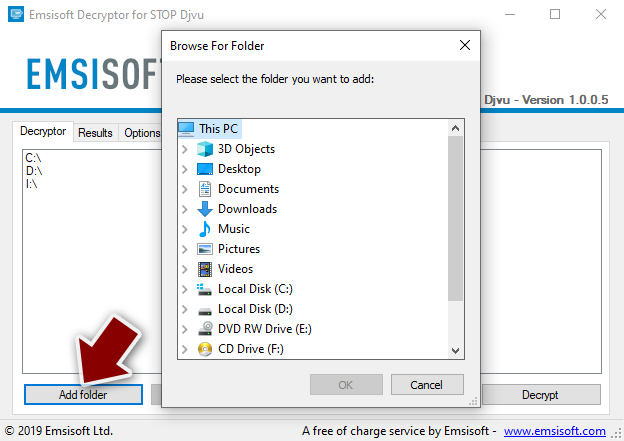
- Press Decrypt.
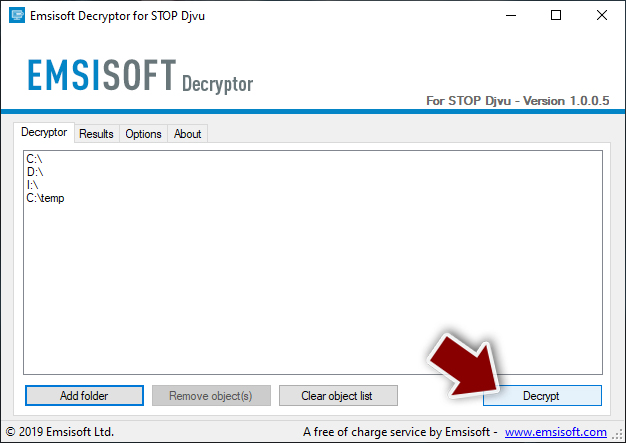


From here, there are three available outcomes:
- “Decrypted!” will be shown under files that were decrypted successfully – they are now usable again.
- “Error: Unable to decrypt file with ID:” means that the keys for this version of the virus have not yet been retrieved, so you should try later.
- “This ID appears to be an online ID, decryption is impossible” – you are unable to decrypt files with this tool.
System file recovery
Malware has the power to cause a variety of changes in a computer's operation, including removing or corrupting DLL files, altering the Windows registry database, affecting crucial boot-up and other processes, and more. Antivirus software's effectiveness may not be enough to fix a system file that malware has adversely affected. A compromised system state may arise from this circumstance, which may cause performance issues, instability, and usability problems that may call for a full reinstallation of the Windows operating system.
We suggest the application of FortectIntego, a distinctive and patented repair method, to address these challenges. Additionally, this tool shows proficiency in handling a variety of Windows-related problems that are not caused by malware infections. These problems range from registry issues and system freezes to broken DLLs and Blue Screen errors.
Did this guide help?
Be the first to comment