

Modus operandi of Domino ransomware virus
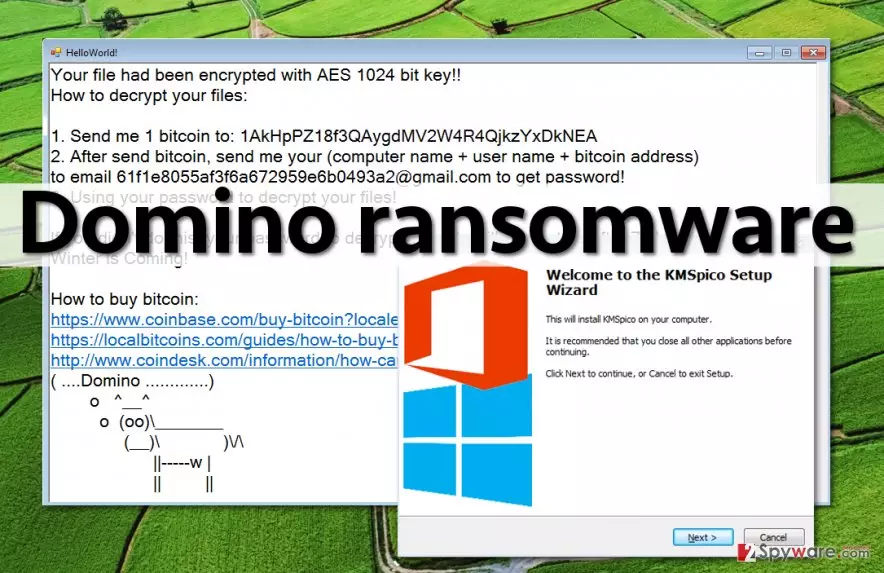
It is better to avoid infecting your computer with Domino virus at all costs. This ransomware-type infection corrupts all computer files and adds .domino file extensions to them. The aim of this virus is to make data inaccessible for the user, and force him/her to panic and seek for solutions how to make these files normal again. This crypto-ransomware virus provides a solution for the computer user, asking to pay 1 Bitcoin to get all files back. The ransom should be sent to a specified Bitcoin address. After that, the virus asks the victim to send a letter to cyber criminals to 61f1e8055af3f6a672959e6b0493a2@gmail.com, providing computer name, user name and user’s bitcoin address. The ransom note also announces that all files will remain encrypted forever if the victim will not pay up in 72 hours. According to the ransom note, Domino ransomware uses AES 1024 bit encryption to lock all files. We must note that this ransomware virus is built based on Hidden Tear open source ransomware code, which is a quite promising fact. Victims can use this Brute Forcer to brute force the unique key needed to decrypt .Domino files. To remove Domino malware, we recommend using FortectIntego or SpyHunterCombo Cleaner programs.
How do ransomware spread and how you can protect your computer?
Speaking of Domino malware, it spreads via bogus KMSpico installer. KMSpico is a tool that helps to activate Windows or Microsoft Office for free, but this virus spreads with the help of a modified version of it. Once the victim downloads KMSpico and launches it, it saves a randomly named executive file into TEMP folder. This file automatically executes and saves a Help.zip file, which can only be accessed with a password (the password is abc123456). Help.zip file includes two files – help.exe and helloworld.exe. The HelloWorld file is the one that displays the ransom note and the file that is named Help actually is responsible for the encryption procedure.
To protect your computer from ransomware and other infectious software, it is a must to keep your anti-virus or anti-malware software up-to-date. This is the most important ransomware prevention advice. Next, try to avoid places on the Internet that seem suspicious to you. Typically, ransomware spreads via email – the most infamous examples like Locky or CryptXXX are distributed using this method. Criminals send deceptive emails containing malicious attachments, or include hideous links in the message and asks to open them. However, the Domino ransomware case shows that ransomware can spread alongside bogus software installers, too. Therefore, computer users should stay away from websites providing unofficial software versions, avoid downloading software cracks and other tools required to illegally install paid software. Remember – cyber criminals know what computer users look for very well, and they will use it for their benefit. If you have already been infected, scroll down and read what the Domino removal guide says to learn how to eliminate this virus for good.
How to remove Domino virus?
Domino ransomware is a malicious computer threat, which wants to scare computer users and force them to pay the ransom. If you have become a victim of this malware, please, do not pay the ransom – this way, you would only support cyber criminals and help them to continue their malicious activities. We always advise users not to pay because this way, we can show them that their actions do not affect computer users and eventually they are going to stop doing that. In addition to that, protect your computer and your files from being corrupted by installing a decent anti-malware software. To remove Domino virus, use a malware removal software. We have provided Domino removal instructions below – follow them carefully to get rid of this virus.
Did this guide help?
4 comments
Help!
I CANNOT DECRYPT MY FILES!!! THERE MUST BE A WAY TO DECRYPT THEM!
Liza
Theres no way to decrypt them.. I have tried everything...
Gregor
guys, try the decryption tool that is provided above, it decrypts the files! really!
Solveiggg
YOURE THE BEST MAN thankx