

JapanLocker ransomware virus. What do we know?
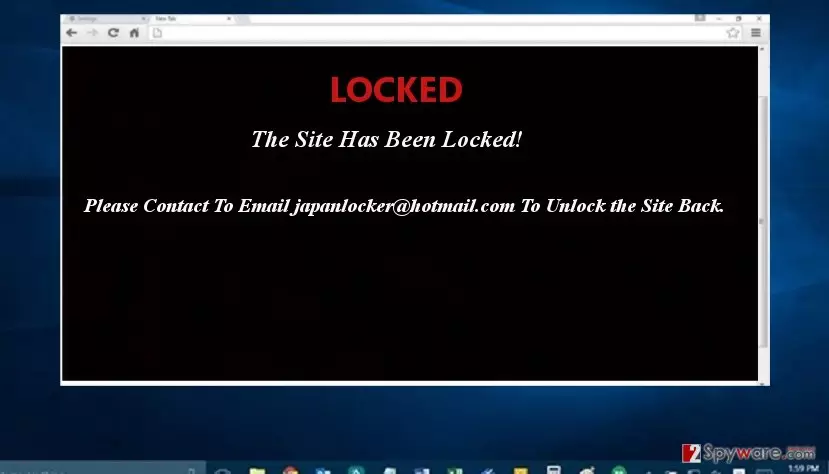
JapanLocker virus is a ransomware-type virus which joined the community of viruses in the beginning of October. According to the latest reports, its developers have nothing to do with Japan. This ransomware belongs to Indonesian gang which has already become famous for publishing various scripts and exploits on hacking forums. However, it seems that now this gang is ready to make the money with the help of another illegal way – distribution of an open source ransomware that targets websites. According to security researchers, JapanLocker ransomware can encrypt web sites with a help of combination of base64 encoding, ROT13 encryption algorithm and top-bottom swapping. The server can be decrypted by reversing this process or using a free decrypter that has already been presented, so you should Brush aside the considerations to pay the money, and make JapanLocker removal your current priority. As soon as this cryptomalware finishes its work, it presents japanlocker@hotmail.com email address to the victim.
The ransom message which is displayed by JapanLocker claims: “LOCKED. The site has been locked!” It seems that there has been a new wave of “Locker” virus series. The “predecessor” of this family – CryptoLocker has been officially terminated a few months ago. However, there have been several other Locker threats appearing, such as CTB Locker, TorrentLocker, and VenusLocker. Certainly, not all of them are as complex as the mentioned threat which managed to rampage on the internet for several months and make thousands of dollars profit. Taking a look at the current virus, it is surely an interesting sample. At the moment of writing, it seeks to affect websites so you are likely to encounter this ransomware if you own a domain and you haven’t paid much attention nor resources to the protection of your web page. However, there are ways how to remove JapanLocker. You can do it with the help of FortectIntego.
Besides, following the current trend, this ransomware may turn into an ordinary crypto virus that targets users or company’s data and then encrypts it with the RSA-2048 or RSA-1024 algorithm. After that, the virus opens a .txt message with the instructions of data recovery and payment transmission. Depending on the sense of personal greed, hackers may demand 1 (1BTC≈ 600 USD) or more Bitcoins. Looking back at the notorious case of CryptoLocker, the cyber criminals have managed to collect several millions of dollars revenue. Therefore, there are no or few reports about data return. In the case of JapanLocker malware, hackers may require a delicate amount of money as well since they target websites which monitor larger amounts of money. It might be only a matter of time when this ransomware starts assaulting private users. Thus, you should be more vigilant than ever before.
Furthermore, there have been already Japan-themed file-encrypting threats. A few months ago, hackers decided to make fun by launching KawaiiLocker. The authors of this malware were hardly Japanese as the ransom message was presented in the Russian language. Around the same time, Takahiro Locker ransomware made the appearance. This virus has been named after the name of notorious layer Takahiro Karasawa. Dissatisfied Japanese citizens have made numerous mocking posts about his behavior. The scandals inspired hackers‘ imagination as well. However, the ransomware is surely not a small computer pest, as it uses several channels for distribution: spam messages and exploit kits. The ransomware employed a complex encryption technique and demanded three bitcoins in exchange for the encrypted data. Though website blocking is performed using different techniques, JapanLocker ransomware should not be underestimated as well.
How can I get infected with this cryptomalware?
The current main target rests on websites. Thus, web page administrators, who failed to update their WordPress or CloudFare proxy servers, risked running into Japan Locker malware. In addition, the malicious code which locks the website might have slipped through another infected web page which shared the same proxy. You should not exclude the possibility that the malware exploits exploit kits for facilitating its attacks. When it comes to these malicious tools, it is of utmost importance to employ proper security applications which specialize in confronting and terminating ransomware threats.
How to remove JapanLocker?
Ransomware threats are surely an unpleasant phenomenon. While you can get rid of ordinary viruses quite easily, the former threats leave lingering aftermaths, such as encrypted data. We suggest using security applications, e.g. FortectIntego or MalwarebytesMalwarebytes, for the termination. After you remove JapanLocker virus, you might notice that your website includes several encrypted elements. In that case, you might use the below-suggested data recovery tools. If the computers of the infected server are hard to control, you will need to regain full access. In order to perform full JapanLocker removal, the following instructions assist you in continuing the process.
Did this guide help?
4 comments
ohayo266
Ransomware threats advance to next level... interesting.
Momo2
A fresh gulp of air. Japanese hackers are on the move!
cassy564
It it doesnt encrypt files, its okay.
clapclap
Interestingly, that my PC got infected while laptop didnt...