

Is Dangerous ransomware really a big cyber threat?
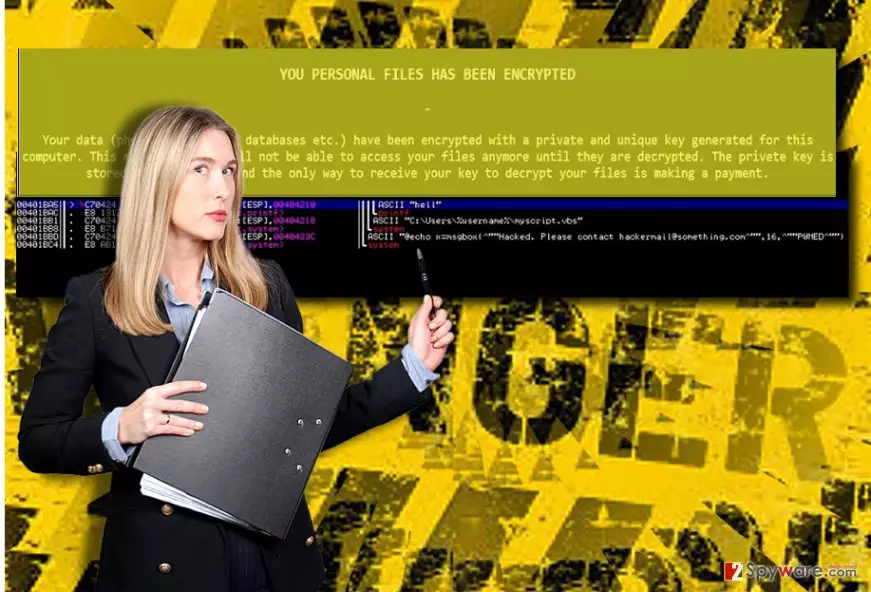
Dangerous virus is introduced as a file-encrypting virus[1] targeting users worldwide. Regarding its ransom note, this malware is hardly the product of an organized gang of virtual hackers. The authors include cliché notes in the ransom message such as “hell” or “pwned”. However, it might be perilous to underestimate this infection. It is known that the virus employs .vbs script to perform its full attack on the computer. This peculiarity resembles another big threat in the cyber space – Cerber virus. Though the ransomware has not started spreading massively, it is important to take all precautions. In case, you did not succeed in escaping this virus, please get acquainted with Dangerous virus removal guide.
This infection is likely to attack residents of an economically developed country[2]. Since such users are less likely to pay the ransom, the cyber villains prefer targeting such netizens. Nonetheless, paying the ransom does not boost up the chances of retrieving the files[3]. In 2016, file-encrypting threats earned their owners over a million of dollars in total. Only very few gearheads play fair and return the files. Dangerous malware might be still in the development stage since it contains some bugs in its execution procedure. What is more, the owners do not indicate the specific amount of ransom in the notification. In its source code, they have presented the hackermail@something.com email address. At the moment, since the virus is not highly developed yet, this email performs the role of a prank rather than a legitimate contact address. It is seen in the source code that the malware exploits myscripts.vbs to take over the computer. Looking from a general perspective, this threat contains a potential to evolve into bigger virtual malware.
What are the chances of avoiding it?
At this point, the malware is distributed via spam emails[4] and trojans. Dangerous hijack might have occurred when you open the infected spam email. It is likely that the main payload with DANGEROUS_RANSOMW.exe file might hide in .zip folder. It might be named as an invoice or another seemingly important document. You should also arm up with anti-malware and anti-virus utilities to lower the risk of getting infected with trojans distributing Dangerous malware: trojan.Win32.Generic!BT, Trojan.Win32.Filecoder, Artemis, Win32.Trojan-Ransom.Dangerous.A, Ransom_CRYPDANGER.A. It is of utmost importance to update security programs for them to provide proper protection. Anti-malware utilities such as FortectIntego and MalwarebytesMalwarebytes will help you locate the main elements of this ransomware and remove Dangerous virus as well.
Dangerous elimination guide
Even if there is little information about this file-encrypting malware, do not delay Dangerous ransomware removal. Install a security program and then perform the scan. If you encounter any difficulties eliminating this threat, use the below suggested instructions to continue with the elimination procedure. Then you will be able to remove Dangerous virus properly. Note that these programs will not decode the files. For that reason, you need another software. If you have previously saved the backup copies, they might be one of the solutions to recover the data. Keep in mind that virus awareness is one of the factors lowering the risk of encountering a complex threat[5]. Bear in mind that cyber villains find new hacking techniques and methods to revive the older threats. Stay vigilant and update your security programs daily.
Did this guide help?
3 comments
PhoenixZealand
How cliche can it become?
Elrosss-@
Command Prompt is not responding...
gLabNara
Ill just hope that my anti-ransomware app works...