

Search.iexplore.co is the PUP that loads users with sponsored content
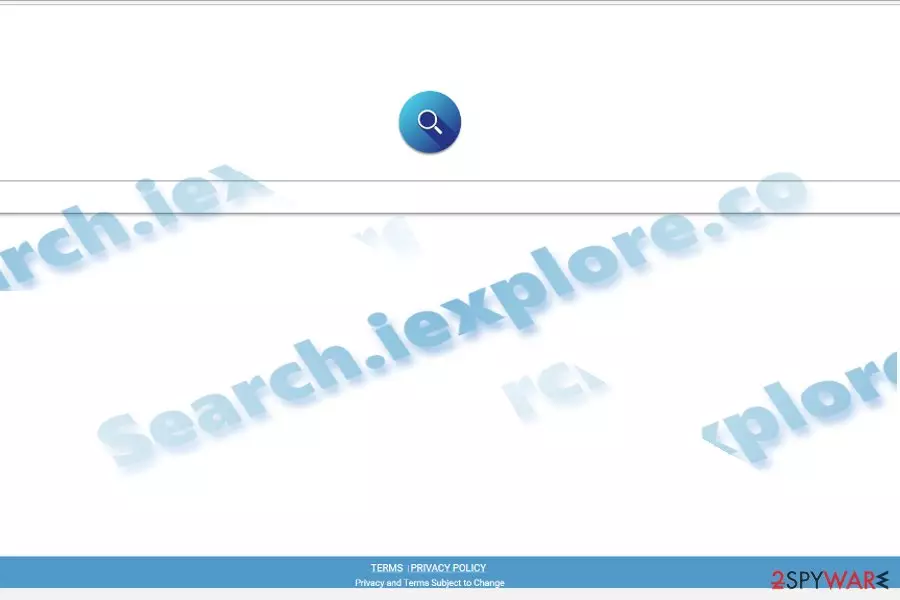
Search.iexplore.co virus functions as a search engine developed by AirFind corporation. Though the site may seem ordinary and not cause any suspicion, in fact, it is classified as a browser hijacker and falls for the PUP category. Potentially unwanted programs are the ones that trigger issues out of nowhere because the distribution methods include freeware installation and deceptive sites or pop-up ads. You cannot get rid of those redirects until you delete the PUP fully from the system. That is possible with anti-malware tools. We would like to explain how this intruder works and how to deal with all the symptoms and consequences.
| Name | Search.iexplore.co |
|---|---|
| Type | Browser hijacker |
| Symptoms | Homepage, search engine, new tab settings get altered. This site initiates all the online searches |
| Distribution | Freeware installations, deceiving sites, promotional sites, and ads |
| Danger | The system gets affected by the PUP when it relies on redirecting and pop-up ad delivery |
| Elimination | Anti-malware tools are designed to find PUPs and other malware. You can also find tips and tricks below |
| Repair | Running the system tool like FortectIntego can help find and repair any affected parts of the system |
Though the main page is not overcrowded with ads, you will see sponsored content during browsing sessions. Its privacy policy raises key concerns. According to it, it does not only collect non-personal information but may acquire personal data[1] from third parties.
Take a look at this extract:
We may now or in the future receive Personally Identifiable Information about you from third parties. For example, if you access our Sites or Services through a third-party connection or log-in, including social networking services such as Google, Facebook, or Twitter, by “following,” “liking,” (…)
What is more, the developers may even use the collected information for statistical purposes. Taking these aspects into consideration, it is highly recommended to perform Iexplore removal. SpyHunterCombo Cleaner or MalwarebytesMalwarebytes is helpful in this situation because anti-malware tools can detect intruders and properly delete them off of the machine.
Search engine or a browser hijacker?
This tool is categorized as the browser hijacker due to obvious security flaws[2], though it does not exhibit all key elements of the hijacker which is capable to:
- hijack default search engine
- redirect to insecure domains
- promote questionable security tools
Speaking of this hijacker, it will hardly direct you to malicious domains, but to sponsored websites for sure. However, it does not limit the risk that you might get directed to an insecure domain. Therefore, this redirect should not be ignored.
If this does not bother you, note, that compiling too much data about you and your browsing habits does not only violate privacy but may result in serious issues. If you are looking for a quick way to remove the PUP, you will find relevant tips in the last section of the article.
Crooks stick to popular distribution methods
This domain can be found on its official website. However, taking into account, its active cooperation with third parties, you may find the domain promoted in sponsored domains.
Additionally, this unwanted app may occur if you will overlook its add-on attached to the free application. Opt for “Advanced” settings to detect optional tools. Usually, PUP developers use this technique to distribute their shady tools, so you will hardly lose anything if you unmark all optional programs.
Delete Search.iexplore.co properly with anti-malware tools
You can delete the hijacker manually. It does not root in the system deeply so you should not encounter any troubles uninstalling the hijacker. You might want to run an anti-malware tool and check for all the possible threats on the machine. This is how you can see what caused those issues.
You might remove search.iexplore.co virus scripts faster with the assistant of malware elimination tool. It will also come in handy battling with more troublesome malware. In addition, check below the removal guidelines. This hijacker may target all users, even if they non-native English speakers, for instance, French[3], as well.
Uninstall from Windows
Uninstall from Windows 10/8:
- Type Control Panel into the Windows search box and open the result.
- Under Programs, select Uninstall a program.


Uninstall from Windows 7/XP:
- Click on Windows Start > Control Panel (Windows XP users should click on Add/Remove Programs).
- In Control Panel, select Programs > Uninstall a program.


Remove the unwanted program:
- In the Programs and Features window, look for any recently installed suspicious entries, select them, and click Uninstall.
- If User Account Control appears, click Yes to confirm, then complete the removal.


Delete from macOS
Remove the unwanted application:
- From the menu bar, select Go > Applications.
- In the Applications folder, look for any suspicious entries, then drag them to Trash (or right-click and pick Move to Trash).


Delete leftover files and folders:
- Select Go > Go to Folder.
- Enter /Library/Application Support and remove any suspicious folders related to the unwanted program.
- Repeat the same check in the /Library/LaunchAgents and /Library/LaunchDaemons folders, deleting any suspicious entries.

- Finally, empty the Trash to permanently remove the leftovers.

Remove from Microsoft Edge
Delete unwanted extensions from MS Edge:
- Select Menu (three horizontal dots at the top-right of the browser window) and pick Extensions.
- From the list, pick the extension and click on the Gear icon.
- Click Remove.


Clear cookies and other browser data:
- Click on the Menu (three horizontal dots at the top-right of the browser window) and select Settings > Privacy, search, and services..
- Under Clear browsing data, pick Choose what to clear.
- Select Cookies and other site data and Cached images and files. (apart from passwords, although you might want to include Media licenses as well, if applicable) and click on Clear.


Restore new tab and homepage settings:
- Click the menu icon and choose Settings.
- Then find On startup section.
- Click Remove next to any suspicious startup page.
Reset MS Edge if the above steps did not work:
- Press on Ctrl + Shift + Esc to open Task Manager.
- Click on More details arrow at the bottom of the window.
- Select Details tab.
- Now scroll down and locate every entry with Microsoft Edge name in it. Right-click on each of them and select End Task to stop MS Edge from running.


Instructions for Chromium-based Edge
Delete extensions from MS Edge (Chromium):
- Open Edge and click select Settings > Extensions.
- Delete unwanted extensions by clicking Remove.


Clear cache and site data:
- Click on Menu and go to Settings.
- Select Privacy, search and services.
- Under Clear browsing data, pick Choose what to clear.
- Under Time range, pick All time.
- Select Clear now.


Reset Chromium-based MS Edge:
- Click on Menu and select Settings.
- On the left side, pick Reset settings.
- Select Restore settings to their default values.
- Confirm with Reset.
- This will disable extensions and reset startup pages but will not delete bookmarks, saved passwords, or browsing history.


Remove from Mozilla Firefox (FF)
Remove dangerous extensions:
- Open Mozilla Firefox browser and click on the Menu (three horizontal lines at the top-right of the window).
- Select Add-ons.
- In here, select the unwanted extension and click Remove.


Reset the homepage:
- Click three horizontal lines at the top right corner to open the menu.
- Choose Settings.
- Under Home, set your preferred homepage and new tab settings.
Clear cookies and site data:
- Click Menu and pick Settings.
- Go to Privacy & Security section.
- Scroll down to locate Cookies and Site Data.
- Click on Clear Data...
- Select Cookies and Site Data and Temporary cached files and pages, then click Clear.


Reset Mozilla Firefox
If clearing the browser as explained above did not help, reset Mozilla Firefox:
- Open Mozilla Firefox browser and click the Menu.
- Go to Help and then choose Troubleshooting Information.

- Under Give Firefox a tune up section, click on Refresh Firefox...
- Once the pop-up shows up, confirm the action by pressing on Refresh Firefox.



Remove from Google Chrome
Delete malicious extensions from Google Chrome:
- Open Google Chrome, click on the Menu (three vertical dots at the top-right corner) and select More tools > Extensions.
- In the newly opened window, you will see all the installed extensions. Uninstall all suspicious extensions related to the unwanted program by clicking Remove.


Clear cache and web data from Chrome:
- Click on Menu and pick Settings.
- Under Privacy and security, select Clear browsing data.
- Select Browsing history, Cookies and other site data, as well as Cached images and files.
- Click Clear data.


Change your homepage:
- Click menu and choose Settings.
- Look for a suspicious site in the On startup section.
- Click on Open a specific or set of pages and click on three dots to find the Remove option.
Reset Google Chrome:
If the previous methods did not help you, reset Google Chrome to eliminate all the unwanted components:
- Click on Menu and select Settings.
- In the Settings, scroll down and click Advanced.
- Scroll down and locate Reset and clean up section.
- Now click Restore settings to their original defaults.
- Confirm with Reset settings.


Delete from Safari
Remove dangerous extensions:
- Open Safari, click Safari in the menu at the top-left of the screen, and select Preferences.
- Go to the Extensions tab, look for any suspicious entries, and click Uninstall to remove them.


Clear history and website data:
- Click Safari in the menu and pick Clear History.
- Set Clear to all history and confirm with Clear History.


Reset Safari:
- Click Safari in the menu and select Preferences > Advanced.
- Enable Show Develop menu in menu bar.
- From the menu bar, click Develop and select Empty Caches.


Did this guide help?
Be the first to comment