

Rosetheet.com redirects can introduce you to deceptive web ads
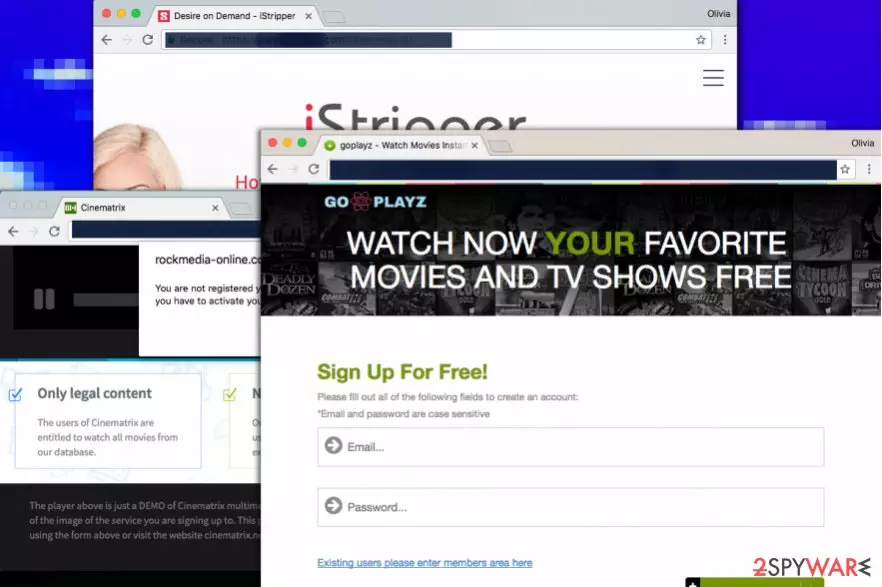
Rosetheet.com is one of those suspicious domains that flash in your browser’s URL box for a second before you get redirected to a questionable website promoting particular content. If these redirects[1] occur often, it is likely that your computer was infected with an ad-supported program that now displays pop-up, pop-under and full-screen ads to you.
Ignoring Rosetheet.com virus can lead to sad consequences such as losing personal information or installing spyware/malware on your computer. After analyzing the content of the ads this suspicious program provides, we can divide them into the following categories:
- Suggestions to watch adult-only content;
- Offers to “check” your computer system using highly questionable software;
- Invites to join online dating sites;
- Sites asking to sign up to “watch free movies and TV shows;”
- Websites offering to watch undressed girls online.
Such and similar ads by Rosetheet, Trackingclick.com or Contentplaces.com are not only annoying and awkward, but dangerous as well. One of these ads appearing on your screen while your child is using the computer might not be the worst thing that can happen. Clicking on them can instantly place additional spyware or malware type applications or files on your PC, posing a threat to your security and privacy.
The developers of the adware that now bothers you and prevents you from using your computer freely seek to earn pay-per-click revenue as you click on the deceptive ads[2]. Do not give them the pleasure of earning money by causing annoyance to you and take actions to solve the redirect problem right now.
To avoid risks that the described spyware program can cause, remove Rosetheet.com virus today. It won’t be easy because this virtual parasite seeks to root into the computer system and operate without being detected and deleted.
Sadly, Losvirus.fr team says[3] that many users find it difficult to identify and erase files associated with such adware programs. When in doubt, you can always opt for automatic Rosetheet.com removal and exterminate the annoyance with FortectIntego or similar software.

Installation of ad-supported programs that cause browser redirects
Pop-ups and pop-under ads appearing all of a sudden can pose a serious risk of visiting an unwanted website or installing shady program unknowingly. Sometimes users activate clickable content without realizing what hides behind the link, ad or a button, and consequently suspicious elements infiltrate the computer system.
Luckily, the vast majority of potentially unwanted programs can be warded off with a simple trick. Simply choose Custom or Advanced options during software installation and deselect every extra added to your download. You are not obliged to try programs you do not want, so drop off these additions without thinking for a minute.
Bad news for those who rush during software installation and leave pre-selected installation options on (Default or Standard). These settings are filled with agreements written in fine print (which are often ignored by computer users) that grant permissions for potentially unwanted programs to enter the computer system. That is the reason why you should never opt for these installation modes.
Remove Rosetheet.com redirect issue with ease
If you want your computer to run at its peak performance again, do not hesitate and remove Rosetheet.com virus using expert tips provided below. If the stubborn redirect virus refuses to go away, check whether you have completed each of the provided steps. If everything seems to be done correctly, you might need to use the power of anti-malware software and find virus’ remains automatically.
Automatic Rosetheet.com removal will also wipe all other spyware/malware elements from your machine at once. If you do not like wasting your time, such junkware removal option might be the optimal choice for you.
Uninstall from Windows
Uninstall from Windows 10/8:
- Type Control Panel into the Windows search box and open the result.
- Under Programs, select Uninstall a program.


Uninstall from Windows 7/XP:
- Click on Windows Start > Control Panel (Windows XP users should click on Add/Remove Programs).
- In Control Panel, select Programs > Uninstall a program.


Remove the unwanted program:
- In the Programs and Features window, look for any recently installed suspicious entries, select them, and click Uninstall.
- If User Account Control appears, click Yes to confirm, then complete the removal.


Delete from macOS
Remove the unwanted application:
- From the menu bar, select Go > Applications.
- In the Applications folder, look for any suspicious entries, then drag them to Trash (or right-click and pick Move to Trash).


Delete leftover files and folders:
- Select Go > Go to Folder.
- Enter /Library/Application Support and remove any suspicious folders related to the unwanted program.
- Repeat the same check in the /Library/LaunchAgents and /Library/LaunchDaemons folders, deleting any suspicious entries.

- Finally, empty the Trash to permanently remove the leftovers.

Reset Internet Explorer
Remove dangerous add-ons:
- Open Internet Explorer, click on the Gear icon (IE menu) on the top-right corner of the browser
- Pick Manage Add-ons.
- You will see a Manage Add-ons window. Here, look for suspicious plugins. Click on these entries and select Disable.


Change your homepage if it was altered:
- Open IE and click on the Gear icon.
- Select Internet Options.
- In the General tab, delete the Home page address and replace it by your preferred one (for example, Google.com).
- Click Apply and then select OK.


Delete temporary files:
- Press on the Gear icon and select Internet Options.
- Under Browsing history, click Delete...
- Select relevant fields and press Delete.


Reset Internet Explorer:
- Click on Gear icon > Internet options and select Advanced tab.
- Select Reset.
- In the new window, check Delete personal settings and select Reset.


Remove from Microsoft Edge
Delete unwanted extensions from MS Edge:
- Select Menu (three horizontal dots at the top-right of the browser window) and pick Extensions.
- From the list, pick the extension and click on the Gear icon.
- Click Remove.


Clear cookies and other browser data:
- Click on the Menu (three horizontal dots at the top-right of the browser window) and select Settings > Privacy, search, and services..
- Under Clear browsing data, pick Choose what to clear.
- Select Cookies and other site data and Cached images and files. (apart from passwords, although you might want to include Media licenses as well, if applicable) and click on Clear.


Restore new tab and homepage settings:
- Click the menu icon and choose Settings.
- Then find On startup section.
- Click Remove next to any suspicious startup page.
Reset MS Edge if the above steps did not work:
- Press on Ctrl + Shift + Esc to open Task Manager.
- Click on More details arrow at the bottom of the window.
- Select Details tab.
- Now scroll down and locate every entry with Microsoft Edge name in it. Right-click on each of them and select End Task to stop MS Edge from running.


Instructions for Chromium-based Edge
Delete extensions from MS Edge (Chromium):
- Open Edge and click select Settings > Extensions.
- Delete unwanted extensions by clicking Remove.


Clear cache and site data:
- Click on Menu and go to Settings.
- Select Privacy, search and services.
- Under Clear browsing data, pick Choose what to clear.
- Under Time range, pick All time.
- Select Clear now.


Reset Chromium-based MS Edge:
- Click on Menu and select Settings.
- On the left side, pick Reset settings.
- Select Restore settings to their default values.
- Confirm with Reset.
- This will disable extensions and reset startup pages but will not delete bookmarks, saved passwords, or browsing history.


Remove from Mozilla Firefox (FF)
Remove dangerous extensions:
- Open Mozilla Firefox browser and click on the Menu (three horizontal lines at the top-right of the window).
- Select Add-ons.
- In here, select the unwanted extension and click Remove.


Reset the homepage:
- Click three horizontal lines at the top right corner to open the menu.
- Choose Settings.
- Under Home, set your preferred homepage and new tab settings.
Clear cookies and site data:
- Click Menu and pick Settings.
- Go to Privacy & Security section.
- Scroll down to locate Cookies and Site Data.
- Click on Clear Data...
- Select Cookies and Site Data and Temporary cached files and pages, then click Clear.


Reset Mozilla Firefox
If clearing the browser as explained above did not help, reset Mozilla Firefox:
- Open Mozilla Firefox browser and click the Menu.
- Go to Help and then choose Troubleshooting Information.

- Under Give Firefox a tune up section, click on Refresh Firefox...
- Once the pop-up shows up, confirm the action by pressing on Refresh Firefox.



Remove from Google Chrome
Delete malicious extensions from Google Chrome:
- Open Google Chrome, click on the Menu (three vertical dots at the top-right corner) and select More tools > Extensions.
- In the newly opened window, you will see all the installed extensions. Uninstall all suspicious extensions related to the unwanted program by clicking Remove.


Clear cache and web data from Chrome:
- Click on Menu and pick Settings.
- Under Privacy and security, select Clear browsing data.
- Select Browsing history, Cookies and other site data, as well as Cached images and files.
- Click Clear data.


Change your homepage:
- Click menu and choose Settings.
- Look for a suspicious site in the On startup section.
- Click on Open a specific or set of pages and click on three dots to find the Remove option.
Reset Google Chrome:
If the previous methods did not help you, reset Google Chrome to eliminate all the unwanted components:
- Click on Menu and select Settings.
- In the Settings, scroll down and click Advanced.
- Scroll down and locate Reset and clean up section.
- Now click Restore settings to their original defaults.
- Confirm with Reset settings.


Delete from Safari
Remove dangerous extensions:
- Open Safari, click Safari in the menu at the top-left of the screen, and select Preferences.
- Go to the Extensions tab, look for any suspicious entries, and click Uninstall to remove them.


Clear history and website data:
- Click Safari in the menu and pick Clear History.
- Set Clear to all history and confirm with Clear History.


Reset Safari:
- Click Safari in the menu and select Preferences > Advanced.
- Enable Show Develop menu in menu bar.
- From the menu bar, click Develop and select Empty Caches.


Did this guide help?
Be the first to comment