

Youtubedownload.video – a third-party Youtube video converter that can drop unwanted ads on the user's computer screen
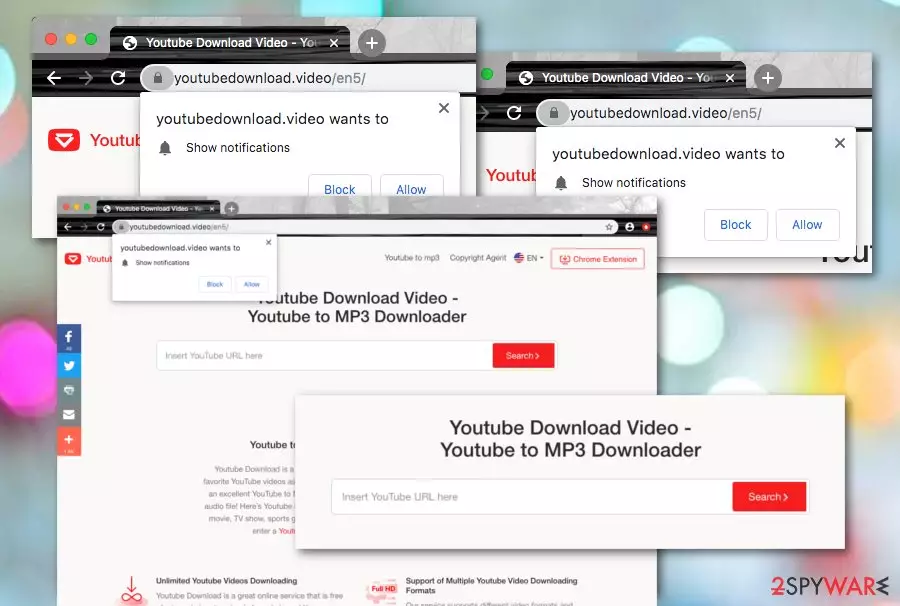
Youtubedownload.video claims to be a handy Youtube video downloading tool when it truly haves some features of an adware program. This tool has its own promotion page and tries to attract as many users as possible by providing a list of comfortable features that the program is capable of. However, we do not recommend using this converting service as it has earned a questionable reputation among many users.
Some claim that this PUP can install other suspicious programs such as Freecorder. Youtubedownload.video is also known for its ability to display an excessive number of advertisements some of which might look attractive to you but should not be clicked due to the possibility of redirecting or getting involved in a bogus service. Additionally, by clicking anywhere on the converting page, you might also get taken to unknown locations.
| Name | Youtubedownload.video |
|---|---|
| Category | Potentially unwanted program/converting tool |
| Feature | This suspicious product claims that it provides comfortable Youtube video converting features |
| Risks | Even though this particular app is not considered malware, it can easily bring other threats such as Freecorder to the computer system, force redirects to potentially dangerous locations |
| Activities | The PUP can get you involved in various unexpected activities such as advertising during browsing sessions, redirecting to affiliate and odd sources. The app can also collect browsing-related information for income purposes and change your web browser's settings such as the homepage and new tab URL |
| Removal | You can eliminate the potentially unwanted program with the help of antimalware software or by using the manual step-by-step guidelines that have been added to the end of this article |
| Fix | If you have found some signs of system compromisation, you can try repairing things with the help of software such as FortectIntego |
Youtubedownload.video virus is the name attached to this tool as it can be responsible for many bogus activities when installed on the user's computer system. First of all, PUPs[1] can interfere with web browser settings such as the homepage and new tab URL. These types of modifications can touch various web browsers such as Google Chrome, Mozilla Firefox, Internet Explorer, Microsoft Edge, and Safari.
Also, Youtubedownload.video might inject suspicious extensions or plug-ins into your web browsers that can allow the adware program to display intrusive advertising content during online sessions. This program can even get the user involved in various scamming campaigns, provide the infected person with surveys, fake reward claims, technical support scams, and offers to purchase rogue security software.[2]
Do not fall for any deals that are provided by Youtubedownload.video as they are likely not to be as advantageous as promised. You are the most likely to spend your money on useless products and services, so better get your tools from reliable developers and sources only. Also, do not provide any sensitive information to any types of surveys and questionnaires as your personal data can get exposed at any time.

Redirecting is also another activity that Youtubedownload.video can be responsible for. This PUP can start forcibly taking the user to various sponsored locations. It also includes affiliate domains such as dl1.youtubedownload.video, dl2.youtubedownload.video, dl3.youtubedownload.video, dl4.youtubedownload.video, dl5.youtubedownload.video, dl6.youtubedownload.video.
Nevertheless, Youtubedownload.video can collect browsing-related information about the user's online activities, browser type, and IP address by using tracking cookies while the user engages in the provided services. This is also written in the app's Privacy Policy:
Whenever you interact with our website, we automatically receive and record information on our server logs from your browser including your IP address, “cookie” information, and the page you requested. “Cookies” are identifiers we transfer to your computer or mobile device that allow us to recognize your computer or device and tell us how and when the Services are visited and by how many people.
Youtubedownload.video removal is the best thing you can do in order to get rid of all the unwanted activities on your computer and web browser. Keep in mind that the longer the intrusive ads flood your browser app, the more the system resources can get used and this might relate to high CPU work level. Also, your apps and computer system might start struggling to carry out various casual actions.
You can easily remove Youtubedownload.video with the help of automatical elimination software, just make sure to choose a trustworthy program. These tools can easily detect the problem source and help you solve the issue fastly. Additionally, do not forget to refresh your web browsers too as these applications can be filled with unwanted content and changes in the homepage and new tab URL sections.

If you accidentally meet Youtubedownload.video on the Internet while visiting some third-party sources, you can disable the advertisements by closing the web page and installing an adblocking tool such as AdBlock[3] or Adblock Plus on your web browser. Also, you should travel to the Settings section of your web browser and remove the domain from the Notifications list if it has been added there.
Another thing you should do while getting rid of Youtubedownload.video is to check if the PUP did not add other suspicious or malicious objects to your computer system. If you find any unknown products, you should eliminate all of them to avoid other unexpected activities on your machine. Additionally, you can try to scan your system for possible damage. If you find some corruption, try using FortectIntego for fixing things.
The delivery techniques of PUPs and how to prevent their appearance
Potentially unwanted programs can be spread anywhere on the Internet sphere, so it is important to recognize those sources and learn how to avoid such a threat. According to cybersecurity specialists from Virusai.lt,[4] PUPs are often delivered by using a deceptive technique such as “software bundling”. This method succeeds when the user gets the rogue app delivered together in a software package of free products from sources such as cnet.com.
You should use only reliable sources for downloading and installing all of your programs, otherwise, you might be easily approached with a potentially unwanted program. Continuously, you need to make sure that you have opted for the right configuration mode such as Custom or Advanced as the Recommended or Quick option does not provide the required protection when the first type of settings allow the users to opt-out all suspicious-looking products.
Continuously, there might be more delivery sources of the potentially unwanted program. Third-party developers find various ways such as advertisements, hyperlinks, and fake software updates to distribute their questionable products. You should always stop yourself from entering every website that you see on the Internet. Also, make sure that you have downloaded strong antivirus protection that will detect all the potential threats and drop alerts if things go wrong.
Terminating Youtubedownload.video from your PC
If you want to stop all of the annoying activities such as advertising and redirecting and reverse suspicious browser changes, you should remove Youtubedownload.video and all of its additional objects permanently. For this purpose, it would be easier to employ automatical software that is a suitable option for both inexperienced and advanced computer users as it allows to accomplish the entire task safely and effectively within a few minutes of time.
Youtubedownload.video removal can be carried out also manually by cleaning the operating system and web browsers on yourself. Below we have provided some steps on how to delete the suspicious programs from Windows, macOS computers and web browser applications such as Google Chrome, Mozilla Firefox, Internet Explorer, Microsoft Edge, and Safari that also might be filled with suspicious components and modifications.
Uninstall from Windows
Uninstall from Windows 10/8:
- Type Control Panel into the Windows search box and open the result.
- Under Programs, select Uninstall a program.


Uninstall from Windows 7/XP:
- Click on Windows Start > Control Panel (Windows XP users should click on Add/Remove Programs).
- In Control Panel, select Programs > Uninstall a program.


Remove the unwanted program:
- In the Programs and Features window, look for any recently installed suspicious entries, select them, and click Uninstall.
- If User Account Control appears, click Yes to confirm, then complete the removal.


Delete from macOS
Remove the unwanted application:
- From the menu bar, select Go > Applications.
- In the Applications folder, look for any suspicious entries, then drag them to Trash (or right-click and pick Move to Trash).


Delete leftover files and folders:
- Select Go > Go to Folder.
- Enter /Library/Application Support and remove any suspicious folders related to the unwanted program.
- Repeat the same check in the /Library/LaunchAgents and /Library/LaunchDaemons folders, deleting any suspicious entries.

- Finally, empty the Trash to permanently remove the leftovers.

Reset Internet Explorer
Remove dangerous add-ons:
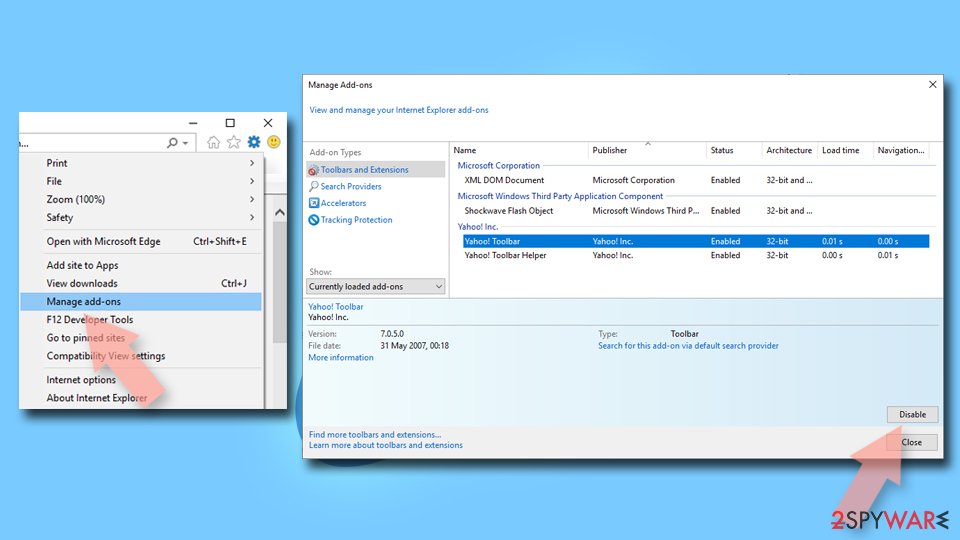
- Open Internet Explorer, click on the Gear icon (IE menu) on the top-right corner of the browser
- Pick Manage Add-ons.
- You will see a Manage Add-ons window. Here, look for suspicious plugins. Click on these entries and select Disable.

Change your homepage if it was altered:
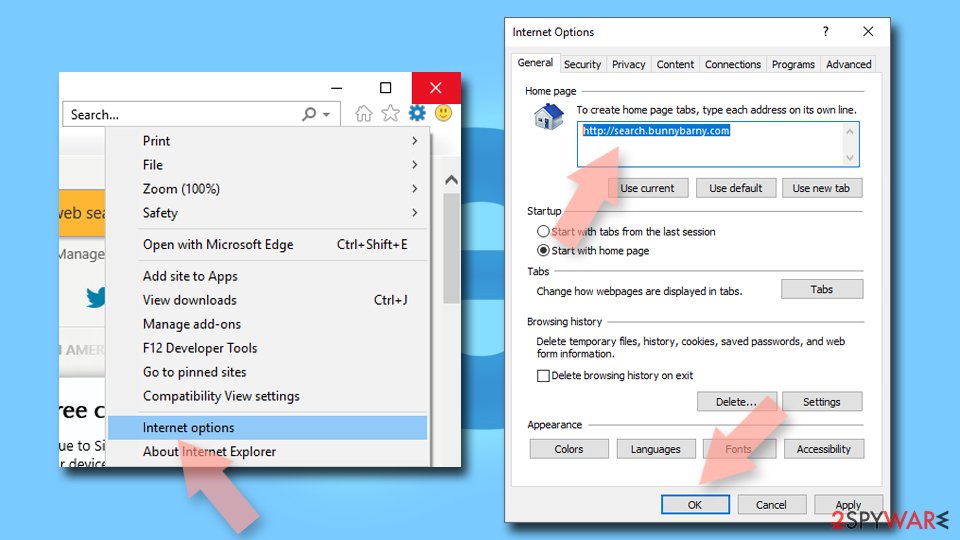
- Open IE and click on the Gear icon.
- Select Internet Options.
- In the General tab, delete the Home page address and replace it by your preferred one (for example, Google.com).
- Click Apply and then select OK.

Delete temporary files:
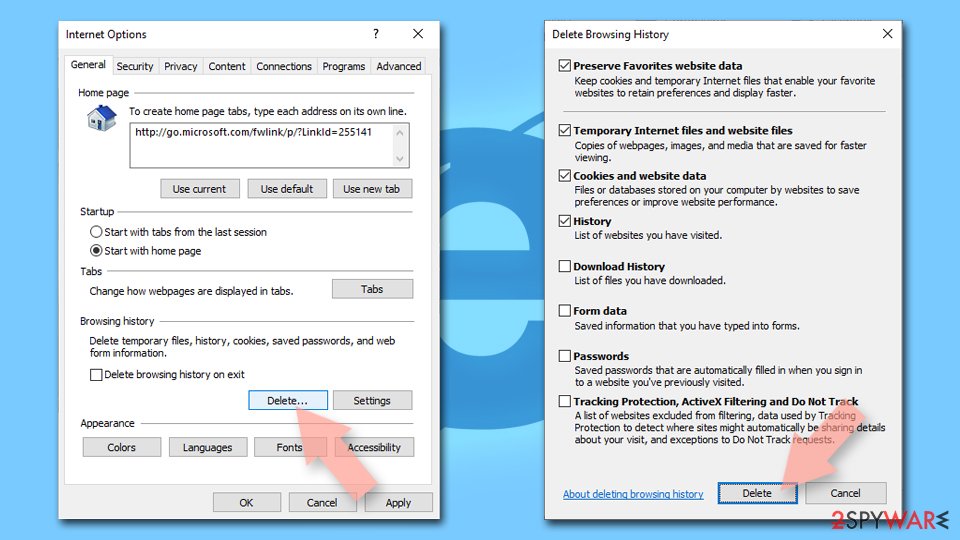
- Press on the Gear icon and select Internet Options.
- Under Browsing history, click Delete...
- Select relevant fields and press Delete.

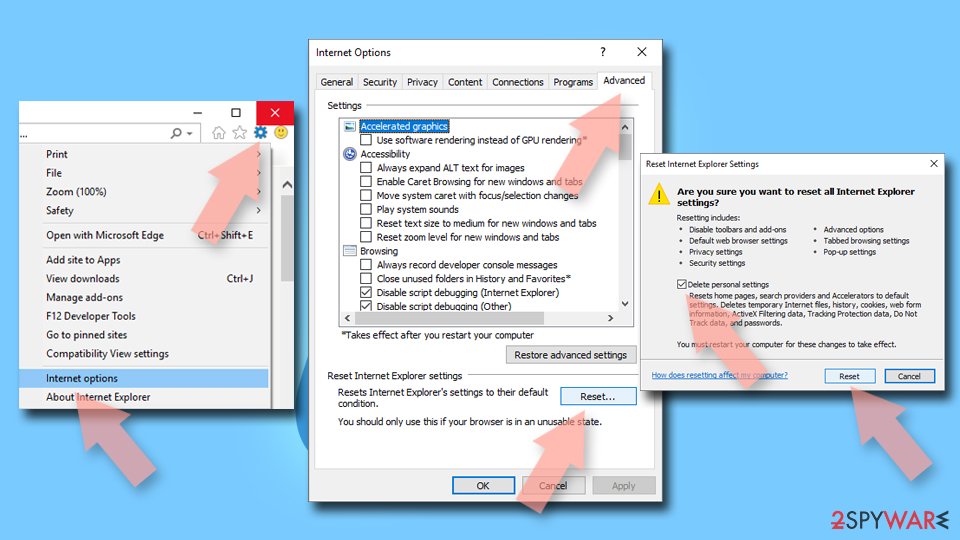
Reset Internet Explorer:
- Click on Gear icon > Internet options and select Advanced tab.
- Select Reset.
- In the new window, check Delete personal settings and select Reset.

Remove from Microsoft Edge
Delete unwanted extensions from MS Edge:
- Select Menu (three horizontal dots at the top-right of the browser window) and pick Extensions.
- From the list, pick the extension and click on the Gear icon.
- Click Remove.


Clear cookies and other browser data:
- Click on the Menu (three horizontal dots at the top-right of the browser window) and select Settings > Privacy, search, and services..
- Under Clear browsing data, pick Choose what to clear.
- Select Cookies and other site data and Cached images and files. (apart from passwords, although you might want to include Media licenses as well, if applicable) and click on Clear.


Restore new tab and homepage settings:
- Click the menu icon and choose Settings.
- Then find On startup section.
- Click Remove next to any suspicious startup page.
Reset MS Edge if the above steps did not work:
- Press on Ctrl + Shift + Esc to open Task Manager.
- Click on More details arrow at the bottom of the window.
- Select Details tab.
- Now scroll down and locate every entry with Microsoft Edge name in it. Right-click on each of them and select End Task to stop MS Edge from running.


Instructions for Chromium-based Edge
Delete extensions from MS Edge (Chromium):
- Open Edge and click select Settings > Extensions.
- Delete unwanted extensions by clicking Remove.


Clear cache and site data:
- Click on Menu and go to Settings.
- Select Privacy, search and services.
- Under Clear browsing data, pick Choose what to clear.
- Under Time range, pick All time.
- Select Clear now.


Reset Chromium-based MS Edge:
- Click on Menu and select Settings.
- On the left side, pick Reset settings.
- Select Restore settings to their default values.
- Confirm with Reset.
- This will disable extensions and reset startup pages but will not delete bookmarks, saved passwords, or browsing history.


Remove from Mozilla Firefox (FF)
Remove dangerous extensions:
- Open Mozilla Firefox browser and click on the Menu (three horizontal lines at the top-right of the window).
- Select Add-ons.
- In here, select the unwanted extension and click Remove.


Reset the homepage:
- Click three horizontal lines at the top right corner to open the menu.
- Choose Settings.
- Under Home, set your preferred homepage and new tab settings.
Clear cookies and site data:
- Click Menu and pick Settings.
- Go to Privacy & Security section.
- Scroll down to locate Cookies and Site Data.
- Click on Clear Data...
- Select Cookies and Site Data and Temporary cached files and pages, then click Clear.


Reset Mozilla Firefox
If clearing the browser as explained above did not help, reset Mozilla Firefox:
- Open Mozilla Firefox browser and click the Menu.
- Go to Help and then choose Troubleshooting Information.

- Under Give Firefox a tune up section, click on Refresh Firefox...
- Once the pop-up shows up, confirm the action by pressing on Refresh Firefox.



Remove from Google Chrome
Delete malicious extensions from Google Chrome:
- Open Google Chrome, click on the Menu (three vertical dots at the top-right corner) and select More tools > Extensions.
- In the newly opened window, you will see all the installed extensions. Uninstall all suspicious extensions related to the unwanted program by clicking Remove.


Clear cache and web data from Chrome:
- Click on Menu and pick Settings.
- Under Privacy and security, select Clear browsing data.
- Select Browsing history, Cookies and other site data, as well as Cached images and files.
- Click Clear data.


Change your homepage:
- Click menu and choose Settings.
- Look for a suspicious site in the On startup section.
- Click on Open a specific or set of pages and click on three dots to find the Remove option.
Reset Google Chrome:
If the previous methods did not help you, reset Google Chrome to eliminate all the unwanted components:
- Click on Menu and select Settings.
- In the Settings, scroll down and click Advanced.
- Scroll down and locate Reset and clean up section.
- Now click Restore settings to their original defaults.
- Confirm with Reset settings.


Delete from Safari
Remove dangerous extensions:
- Open Safari, click Safari in the menu at the top-left of the screen, and select Preferences.
- Go to the Extensions tab, look for any suspicious entries, and click Uninstall to remove them.


Clear history and website data:
- Click Safari in the menu and pick Clear History.
- Set Clear to all history and confirm with Clear History.


Reset Safari:
- Click Safari in the menu and select Preferences > Advanced.
- Enable Show Develop menu in menu bar.
- From the menu bar, click Develop and select Empty Caches.


Did this guide help?
Be the first to comment