

Rigd virus is the ransomware-type infection that controls various processes to remain persistent

Rigd ransomware – the virus that aims to get money from victims, so it starts the attack with file encryption. Using the powerful encryption methods[1] allows the threat to change the original code of the file and make it useless and even unopenable. The virus delivers the _readme.txt file once all the files receive the indicational .rigd appendix. These pictures, documents, audio, or video files become locked, but not fully damaged. It is for blackmail purposes. Hence, criminals claim to offer the decryption tool that should possibly recover affected parts after the payment of $980 gets transferred in the form of Bitcoin. However, not even the discount of $490 should encourage you to pay up. It is not safe to even communicate with these criminals.
It appears that Rigd ransomware encrypts data instantly right after infiltration. The ransom note describes payment instructions by providing necessary links where victims should reach out for further information, contact information, discount offer. If you ever find yourself in such a dilemma, do not hesitate if paying is the best option. It is never the solution, and many experts[2] note that extortionists are not thinking about your belongings. Feel free to use our guide for decrypting the virus, so you can get your files back without paying anything at all. Virus removal is more crucial here, and files are not that important as the system of your device.
Undoubtedly, there are already many types of ransomware infection existing, and ransomware developers use different encryption algorithms and various symmetric and asymmetric key generation mechanisms. However, the text file, the tactics, distribution methods, and the pattern of the file appendix show that this is the Djvu ransomware family member. These criminals have not changed the techniques for a while and the ransom note distributed around is the same for a few years at least. Other more recent versions like Lqqw, Efdc, Koom show that the family is no longer decryptable, unfortunately.
| Name | Rigd virus |
|---|---|
| Type | Ransomware, file-locker, encryption virus |
| File extension | .rigd |
| Family | Djvu/ STOP ransomware virus |
| Ransom amount | Initially $980, but a discount is available for the first 72 hours that cut the amount to $490 in the form of Bitcoin |
| Distribution | Pirated files, game cracks, cheatcodes, files attached to malicious spam emails |
| Ransom note | _readme.txt |
| Contact info | manager@mailtemp.ch, managerhelper@airmail.cc |
| Elimination | These malicious programs require proper tools like anti-malware, so the detection engine can locate and eliminate all pieces of the malware |
| Repair | The system damage can lead to severe issues, so we recommend running a tool like FortectIntego that can fix damaged system parts |
The Rigd cryptovirus appends the .rigd extension to the original names of the encoded files and drops a ransom note in each folder with encrypted data. This particular version is known as the one that uses the online method, which means it does need to be connected to the Internet for its components to operate correctly. That makes file encryption using the previously developed tool mainly impossible.
After the successful contact to the C&C Server, Rigd creates a key and sends both public and private parts of this key to the server. The server stores them for future decryption of files. This means that all victims get a unique identification key that is needed for the best decryption after the infection. Without such a key, the recovery is limited or even impossible. At least with the available decrypter.
The virus can encrypt data on local drives (fixed and removable), network shares available at the moment of encryption, and files in any accessible shared folders. During encryption, it deletes volume shadow copies. There are additional changes in registries, system folders. This is not only a file-locking malware, so you must remove the threat fully. AV detection[3] rates show that the process is possible if you use tools like SpyHunterCombo Cleaner or MalwarebytesMalwarebytes.

Once a computer is infected with malware, its system is changed to operate differently. For example, an infection can alter the Windows registry database, damage vital bootup, and other sections, delete or corrupt DLL files, etc. Once a system file is damaged by malware, antivirus software cannot do anything about it, leaving it just the way it is. Consequently, users might experience performance, stability, and usability issues, to the point where a full Windows reinstallation is required.
Therefore, we highly recommend using a one-of-a-kind, patented technology of FortectIntego repair. Not only can it fix virus damage after the infection, but it is also capable of removing malware that has already broken into the system thanks to several engines used by the program. Besides, the application can also fix various Windows-related issues that are not caused by malware infections, for example, Blue Screen errors, freezes, registry errors, damaged DLLs, etc.
- Download the application by clicking on the link above
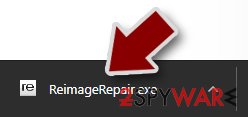
- Click on the ReimageRepair.exe
- If User Account Control (UAC) shows up, select Yes
- Press Install and wait till the program finishes the installation process
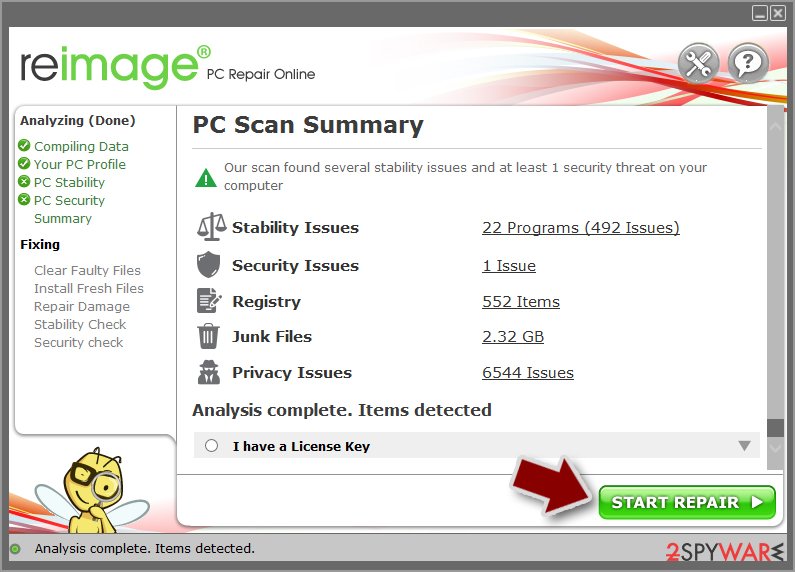
- The analysis of your machine will begin immediately
- Once complete, check the results – they will be listed in the Summary
- You can now click on each of the issues and fix them manually
- If you see many problems that you find difficult to fix, we recommend you purchase the license and fix them automatically.


Possible ways to restore your files after the Rigd file-locker attack
At first, it is essential to clarify that not all files can be decrypted or recovered. The virus will only encrypt files with specific extensions. By default, the virus intends to encrypt common file types, but this number can increase on each system and attack. However, generally, system files are not affected by encryption. Though, such pieces get damaged by the malicious infection directly.
If Rigd cannot establish a connection to its command and control server (C&C Server) before starting the encryption process, it uses the offline key that is not unique to each victim. This key is the same for all victims, making it possible to decrypt files encrypted during a ransomware attack.
If you have infected your computer with one of the Djvu variants, you should use Emsisoft decryptor for Djvu/STOP. It is important to mention that this tool will not work for everyone – it only works if data is locked with an offline ID due to malware failing to communicate with its remote servers.
Even if your case meets this condition, somebody from the victims has to pay criminals, retrieve an offline key, and then share it with security researchers at Emsisoft. As a result, you might not be able to restore the .rigd files immediately. Thus, if the decryptor says your data was locked with an offline ID but cannot be recovered currently, you should try later. You also need to upload a set of files – one encrypted and a healthy one to the company's servers before you proceed.
- Download the app from the official Emsisoft website.
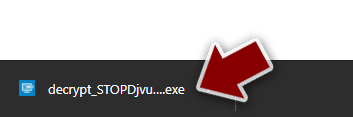
- After pressing Download button, a small pop-up at the bottom, titled decrypt_STOPDjvu.exe should show up – click it.
- If User Account Control (UAC) message shows up, press Yes.
- Agree to License Terms by pressing Yes.
- After Disclaimer shows up, press OK.
- The tool should automatically populate the affected folders, although you can also do it by pressing Add folder at the bottom.
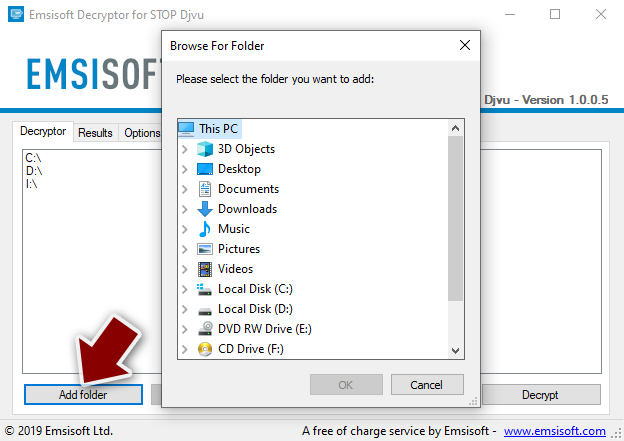
- Press Decrypt.
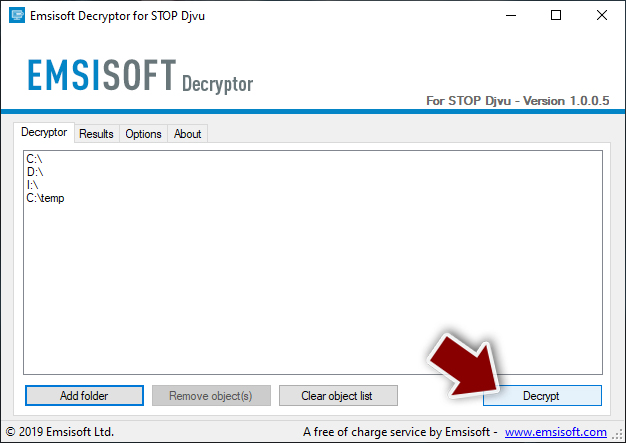


From here, there are three available outcomes:
- “Decrypted!” will be shown under files that were decrypted successfully – they are now usable again.
- “Error: Unable to decrypt file with ID:” means that the keys for this version of the virus have not yet been retrieved, so you should try later.
- “This ID appears to be an online ID, decryption is impossible” – you are unable to decrypt files with this tool.
Ransom note analysis and what to do instead of paying
The data locking virus delivers a ransom note titled _readme.txt that includes all the information required for users to understand the demands of cybercriminals. The hackers offer victims an opportunity to pay $980 in Bitcoin. It is possible to get a discount of 50% within the first 72 hours instead of paying full price. As we mentioned, try to ignore these instructions and move on with virus removal instead. This is the best way to avoid significant damage to your machine.
ATTENTION!
Don't worry, you can return all your files!
All your files like pictures, databases, documents and other important are encrypted with strongest encryption and unique key.
The only method of recovering files is to purchase decrypt tool and unique key for you.
This software will decrypt all your encrypted files.
What guarantees you have?
You can send one of your encrypted file from your PC and we decrypt it for free.
But we can decrypt only 1 file for free. File must not contain valuable information.
You can get and look video overview decrypt tool:
hxxps://we.tl/t-CtDpAM1g5f
Price of private key and decrypt software is $980.
Discount 50% available if you contact us first 72 hours, that's price for you is $490.
Please note that you'll never restore your data without payment.
Check your e-mail “Spam” or “Junk” folder if you don't get answer more than 6 hours.To get this software you need write on our e-mail:
manager@mailtemp.chReserve e-mail address to contact us:
managerhelper@airmail.ccYour personal ID:
–
When the user wants to contact cyber criminals, it is possible to reach them via email (manager@mailtemp.ch, managerhelper@airmail.cc ). If the victim does so, then criminals can look for a needed decryption tool and send that after the money transfer. This happens rarely, so make sure to remove the Rigd infection instead of paying. We will answer all the questions for you.
There are no special tactics involved, and there are too few successful decryption stories to encourage you to trust these blackmailers. Even a simple email message exchange can lead to serious issues when the criminal is sending the email back with some additional malware payload. You can never be sure.
Criminals often offer a discount or a free decryption option for one of the affected files. This is not recommended. These file-lockers can store some smaller files and state that you got your file encrypted when they send you a copy of the piece before encryption. You become a victim of their scam this way. Do not try to get anything from them. There is nothing trustworthy about extortionists.
Since many users do not prepare proper data backups before being attacked by Rigd ransomware, they might often permanently lose access to their files. Paying criminals is also very risky, as they might not fulfill the promises and never send back the required decryption tool.
While this might sound terrible, not all is lost – data recovery software might be able to help you in some situations (it highly depends on the encryption algorithm used, whether ransomware managed to complete the programmed tasks, etc.). Since there are thousands of different ransomware strains, it is immediately impossible to tell whether third-party software will work for you.
Install data recovery software
- Download Data Recovery Pro.
- Double-click the installer to launch it.
- Follow on-screen instructions to install the software.
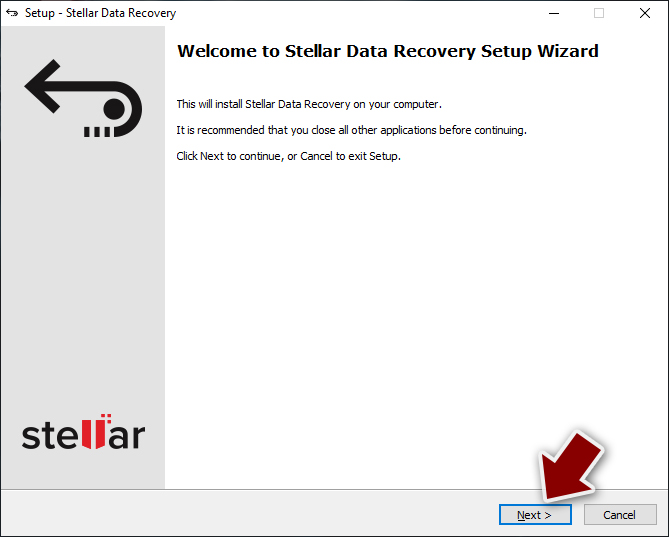
- As soon as you press Finish, you can use the app.
- Select Everything or pick individual folders where you want the files to be recovered from.
- Press Next.
- At the bottom, enable Deep scan and pick which Disks you want to be scanned.
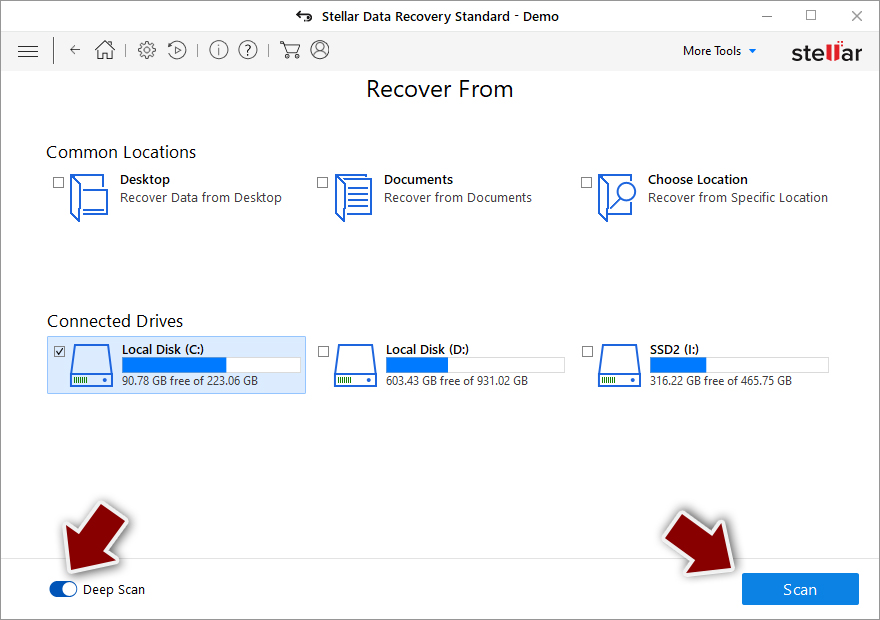
- Press Scan and wait till it is complete.
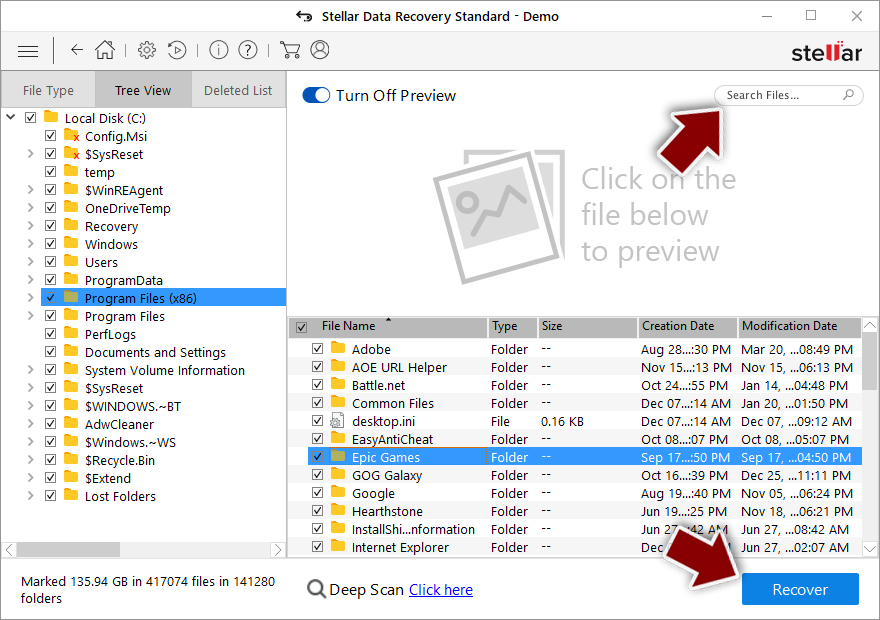
- You can now pick which folders/files to recover – don't forget you also have the option to search by the file name!
- Press Recover to retrieve your files.


Do not skip through this later section with additional tips because when Rigd ransomware is active, your device can get damaged significantly. You may need to enter the Safe Mode or find a different solution to bring back the computer to a normal state. If the virus is not taken care of, your computer can be damaged and stop working correctly. There are no other options for cleaning the system and preparing it for file recovery.
If you put your restored files on the infected machine – the PC can get damaged. The only way to protect the system is to prevent ransomware infections. These threats are silent and malicious, so distribution methods include pirating platforms and malicious spam email attachments. The malware was written by people with malicious intents and released online as a quickly adapting threat. The family is known for releasing new versions weekly. Do not sleep and remove the virus.
Rigd encrypts files on the PC and appends the extension at the end of every encrypted file name. But that is the only visible symptom on the machine. Your machine might store additional threats and run processes damaging the device or spreading further on the network. Rely on tools like SpyHunterCombo Cleaner, MalwarebytesMalwarebytes, FortectIntego to have the machine recovered and ensure the security of the device.
Did this guide help?
Be the first to comment