

Gettingyourcontent.com can be found on other shady websites
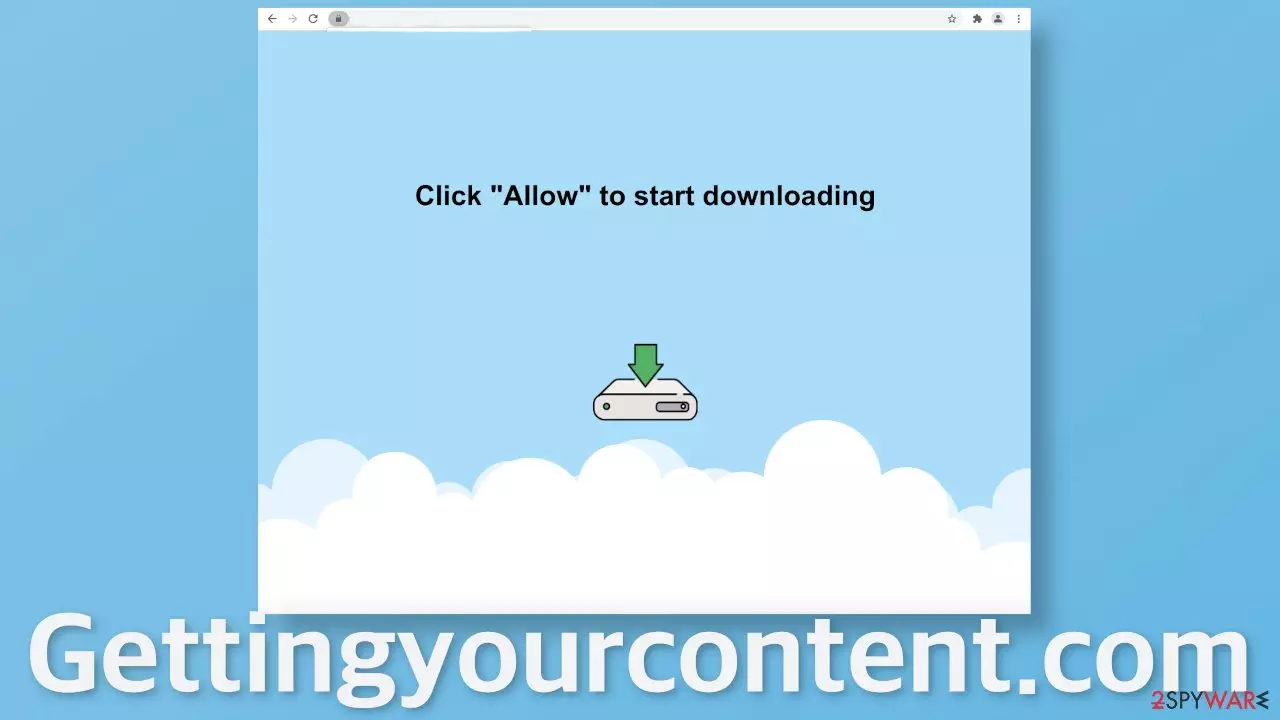
Gettingyourcontent.com is one of the pages that makes money by sending pop-up ads straight to users' screens. It uses social engineering techniques[1] to make people click the “Allow” button and grant permission for the site to show push notifications. Because they are based on a subscription model, there is no other way how they could have appeared in your machine.
Unfortunately, most of the time the appearance of such pages is also the fault of the user. They are often hidden on already shady pages that engage in illegal activities and are full of deceptive ads and sneaky redirects. It is a common misconception among some people that the Internet is a safe space and scams, other types of schemes are a thing of the past.
It is actually the opposite, as cybercriminal activity has significantly increased because people spend more and more time in front of their screens. People ignore security expert advice on how to stay safe online, and it sometimes leads to even more serious problems, like PUP (potentially unwanted program) and malware installations.
| NAME | Gettingyourcontent.com |
| TYPE | Push notification spam; adware |
| SYMPTOMS | Pop-up ads start appearing in the corner of the screen after an interaction with the site |
| DISTRIBUTION | Shady websites, deceptive ads, redirects, bundled software |
| DANGERS | The pop-ups can lead users to dangerous pages where they can get tricked into providing their personal information and suffer from financial losses or download PUPs and malware |
| ELIMINATION | You can block push notifications in the browser settings |
| FURTHER STEPS | Use FortectIntego maintenance tool to scan the machine and fix any remaining damage to the system |
The process of infection in detail
When users surf through questionable pages, like illegal streaming platforms they often encounter ads that open in new tabs, redirects, and fake ads that look like Download or Play buttons. It is easy to get thrown to one of the sites that engage in PPC advertising.[2] There are a dozen of them and we write about new ones every day. You can read about similar pages that we wrote about like Shotvideoalt.ru, CleverCaptcha.top, and Ukndaspiratioty.xyz.
Once you land on the page, depending on how it looks and what it displays, people think that it is related to the page they were previously on. But it is just a shady ad that opened in a new tab. You can encounter many different false messages on these kinds of pages, but the most popular are:
Click Allow to continue
Click Allow to watch the video
Download is ready. Click Allow to download your file
Press Allow to verify that you are not a robot
This may look similar to a captcha verification process, but a legitimate verification will never ask you to click to “continue”, “watch the video,” etc. As you can see in the picture below, the browser prompt clearly says that the site wants to “Show notifications”. This does not give the power to the page to perform something. This is why it is so important not to rush and make sure you know what you are clicking on because some mistakes are more difficult to undo than others.

When you browse through questionable pages, all of them can track your browsing activity with the help of cookies. The page developers can collect information about your IP address, the links you click on, or what you purchase. These little pieces of data are stored on your device and can clog up the system if you do not clear them occasionally. There is an automatic solution to that – FortectIntego. This maintenance tool may improve the performance of your device, and fix corrupted files, registry issues, and other serious system errors.
Start the removal by going to your browser settings
Because push notifications are based on a subscription model, only you can disable them. Follow the guide:
Google Chrome (desktop):
- Open Google Chrome browser and go to Menu > Settings.
- Scroll down and click on Advanced.
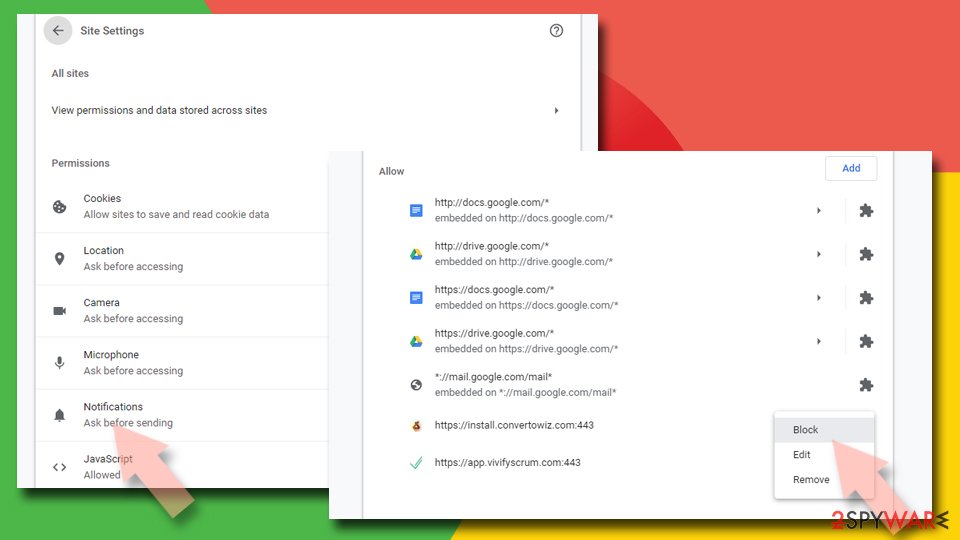
- Locate Privacy and security section and pick Site Settings > Notifications.
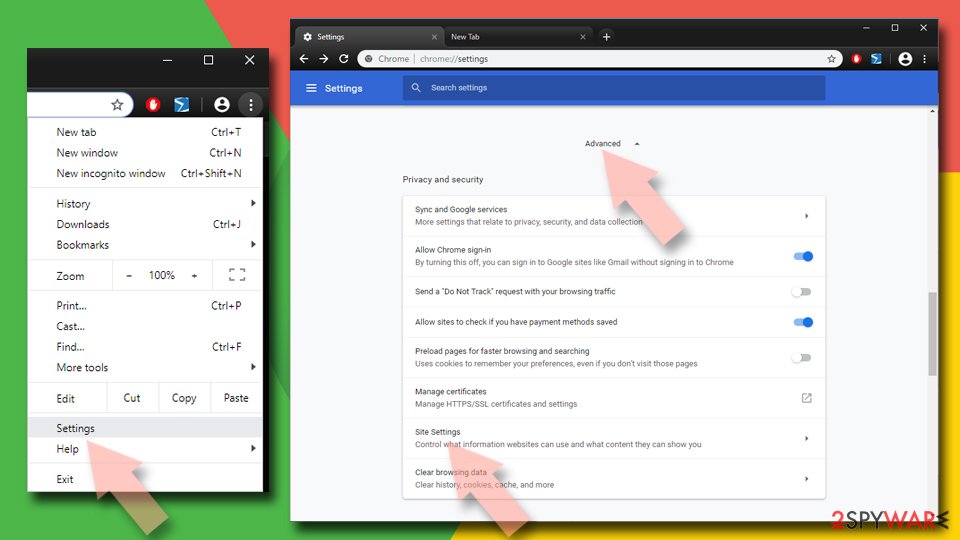
- Look at the Allow section and look for a suspicious URL.
- Click the three vertical dots next to it and pick Block. This should remove unwanted notifications from Google Chrome.


Google Chrome (Android):
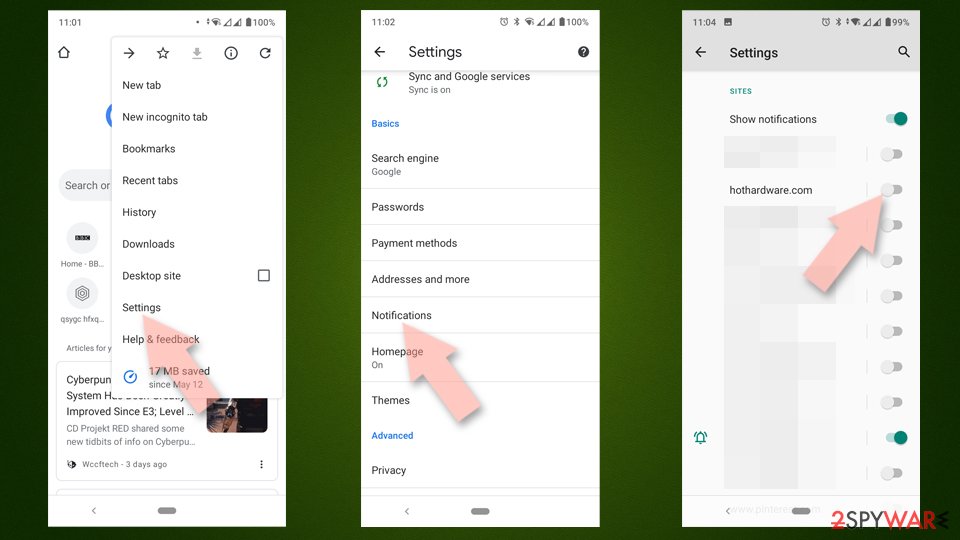
- Open Google Chrome and tap on Settings (three vertical dots).
- Select Notifications.
- Scroll down to the Sites section.
- Locate the unwanted URL and toggle the button to the left (Off setting).

Mozilla Firefox:
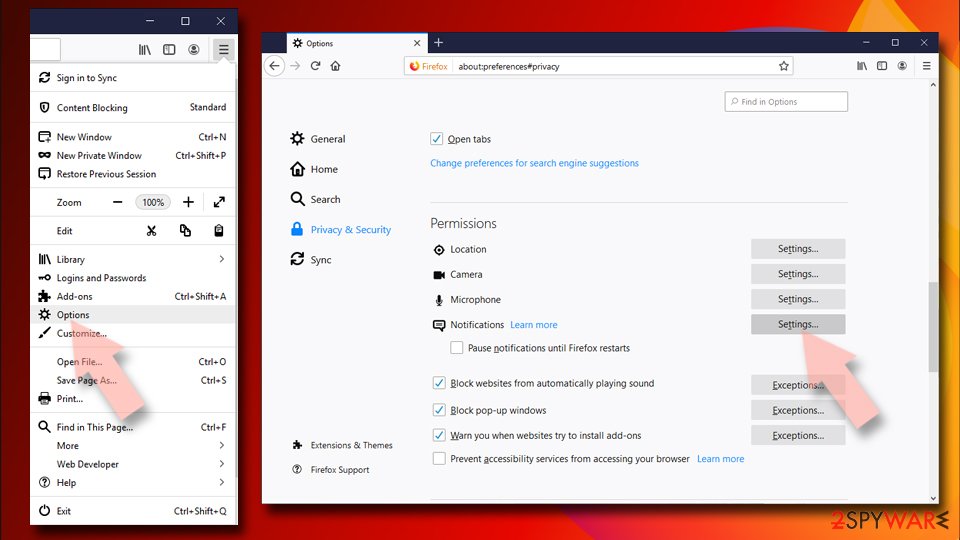
- Open Mozilla Firefox and go to Menu > Options.
- Click on Privacy & Security section.
- Under Permissions, you should be able to see Notifications. Click the Settings button next to it.
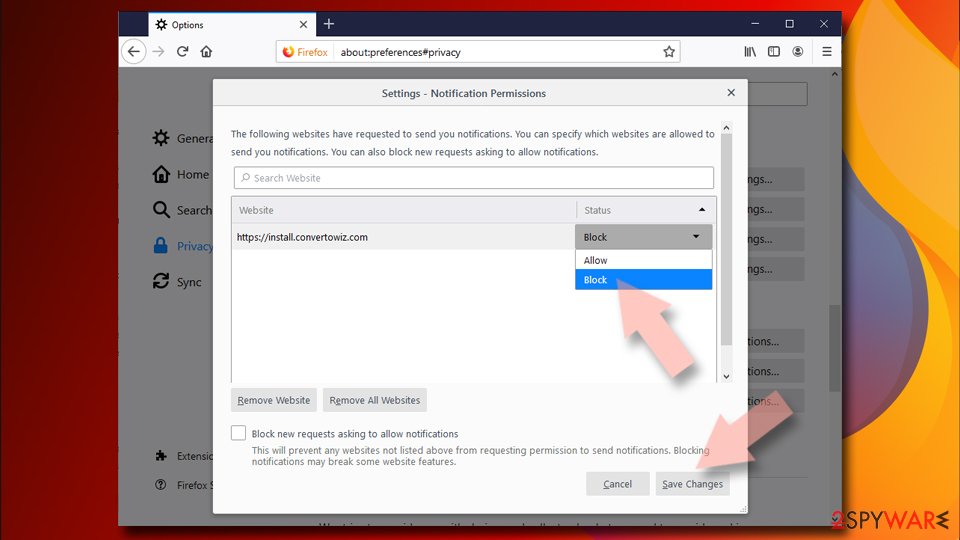
- In the Settings – Notification Permissions window, click on the drop-down menu by the URL in question.
- Select Block and then click on Save Changes. This should remove unwanted notifications from Mozilla Firefox.


Safari:
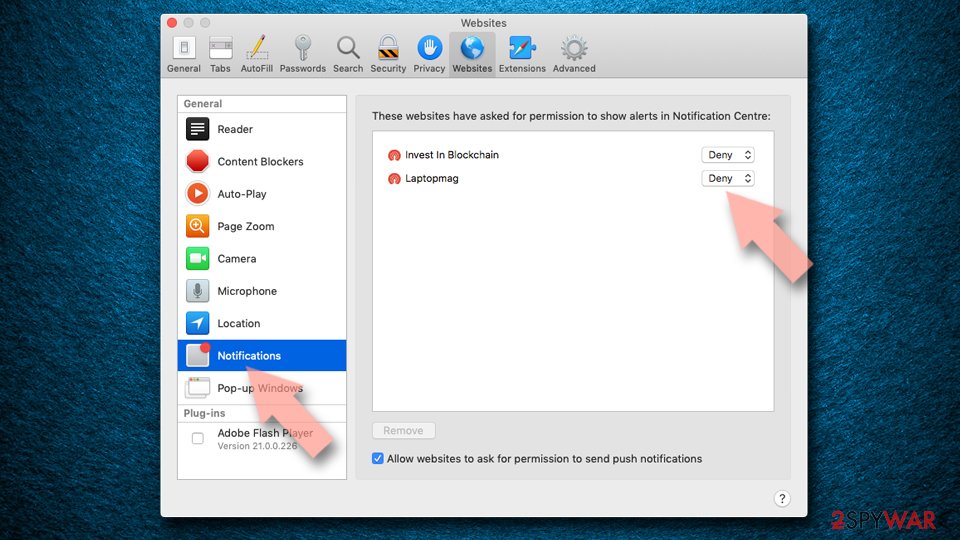
- Click on Safari > Preferences…
- Go to the Websites tab and, under General, select Notifications.
- Select the web address in question, click the drop-down menu and select Deny.

MS Edge:
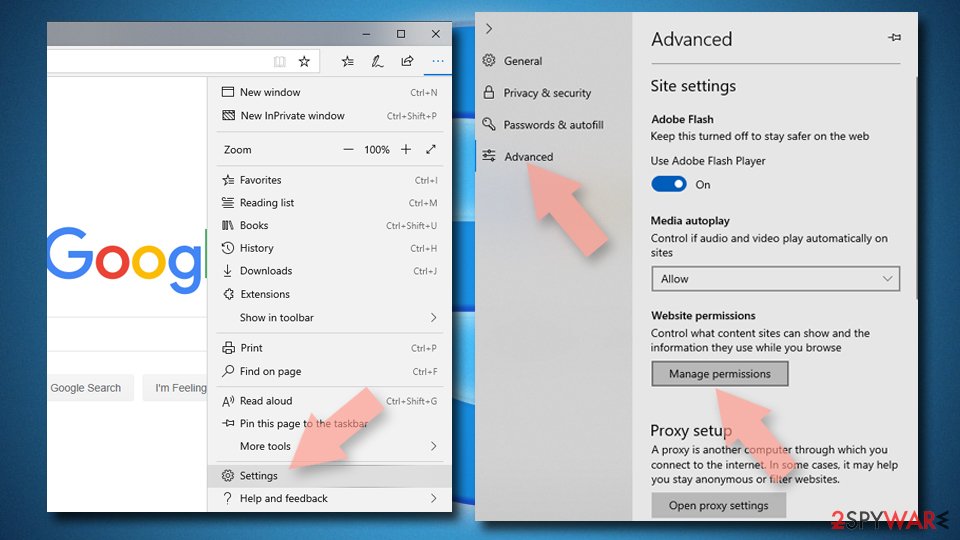
- Open Microsoft Edge, and click the Settings and more button (three horizontal dots) at the top-right of the window.
- Select Settings and then go to Advanced.
- Under Website permissions, pick Manage permissions and select the URL in question.
- Toggle the switch to the left to turn notifications off on Microsoft Edge.

MS Edge (Chromium):
- Open Microsoft Edge, and go to Settings.
- Select Site permissions.
- Go to Notifications on the right.
- Under Allow, you will find the unwanted entry.
- Click on More actions and select Block.
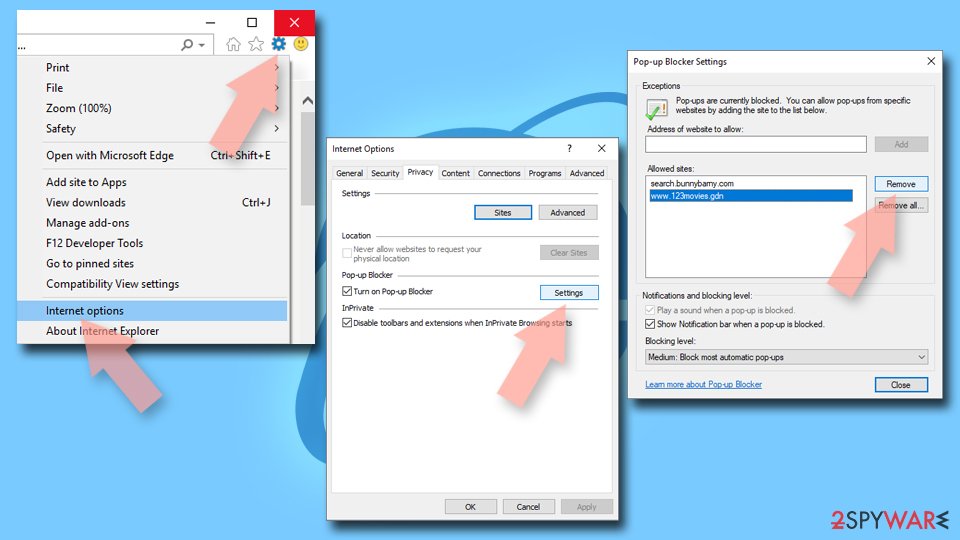
Internet Explorer:
- Open Internet Explorer, and click on the Gear icon at the top-right of the window.
- Select Internet options and go to the Privacy tab.
- In the Pop-up Blocker section, click on Settings.
- Locate web address in question under Allowed sites and pick Remove.

Scan your machine for adware
Once you block the notifications, there is still a chance that there is adware[3] hiding in your system. You might still be experiencing an increased amount of commercial content like surveys, banners. You might get redirected automatically by your browser to suspicious pages. If you have any of these symptoms, we strongly suggest deploying professional security tools like SpyHunterCombo Cleaner or MalwarebytesMalwarebytes to scan your machine.
They can detect suspicious processes happening in your machine and eliminate all the files causing it. What is more, it can prevent such infections in the future by warning you about a dangerous download. Of course, you can remove programs manually, but it can be difficult to identify PUPs as they can be disguised as handy tools that you use every day and would not suspect anything about them.
If you want to perform manual removal, you can follow the instructions posted below for Windows and Mac systems:
Windows 10/8:
- Enter Control Panel into Windows search box and hit Enter or click on the search result.
- Under Programs, select Uninstall a program.

- From the list, find the entry of the suspicious program.
- Right-click on the application and select Uninstall.
- If User Account Control shows up, click Yes.
- Wait till uninstallation process is complete and click OK.



Windows 7/XP:
- Click on Windows Start > Control Panel located on the right pane (if you are Windows XP user, click on Add/Remove Programs).
- In Control Panel, select Programs > Uninstall a program.

- Pick the unwanted application by clicking on it once.
- At the top, click Uninstall/Change.
- In the confirmation prompt, pick Yes.
- Click OK once the removal process is finished.

Mac:
- From the menu bar, select Go > Applications.
- In the Applications folder, look for all related entries.
- Click on the app and drag it to Trash (or right-click and pick Move to Trash)


To fully remove an unwanted app, you need to access Application Support, LaunchAgents, and LaunchDaemons folders and delete relevant files:
- Select Go > Go to Folder.
- Enter /Library/Application Support and click Go or press Enter.
- In the Application Support folder, look for any dubious entries and then delete them.
- Now enter /Library/LaunchAgents and /Library/LaunchDaemons folders the same way and terminate all the related .plist files.


Most often the cause of the problem is freeware and the sites that distribute it. The authors include additional programs in the installers without notifying the users and hope that no one will notice. That is what happens most of the time, so you need to be especially careful during installations. Always choose “Custom” or “Advanced” installation methods, read the Privacy Policy, and Terms of Use, uncheck the boxes next to file names that seem unnecessary.
Did this guide help?
Be the first to comment