

Vvew file virus is ransomware that cannot be decrypted easily since it is a version of a known threat

Vvew ransomware virus is a versatile and dangerous threat that can silently lock files, marking them with an extra extension. This creates symptoms when those infected files get locked and receive the .vvew appendix. This is pretty much the only symptom of the threat. Ransomware can infect the machine and run various malicious processes to keep the active virus affecting the machine further.[1]
Vvew ransomware is a silent, hidden threat that relies on scare tactics to get people's attention and demand for payments. Once this infection has taken hold of your device, it can affect various files making them impossible to access. Victims encounter issues with the machine when the additional processes slow down their computer systems even more.
However, threat actors can run the encryption process and deliver fake Windows update popups to mask the reason for the issues with the system. Even more, confusion is created when the _readme.txt appears on the desktop and in various folders with the particular claims that the only option is to pay up.
More details about the ransomware
It's not just the encryption process itself that can slow down your computer. The Vvew ransomware creators can claim various possible options and offer discounts just to fake legitimacy and trust. There is no guarantee that your information will be recovered, and these criminals might just disappear after the transfer of those funds.
| Name | Vvew ransomware |
|---|---|
| Type | File locker, cryptovirus |
| File marker | .vvew |
| Family | Djvu ransomware |
| Distribution | File spreading platforms, infected files delivered with email attachments, other threats |
| Ransom note | _readme.txt |
| Ransom amount | $490/ $980 |
| Contact emails | support@bestyourmail.ch, supportsys@airmail.cc |
| Elimination | Threats get removed using anti-malware tools |
| Repair | Clear virus damage using FortectIntego |
Fake researchers might try offering decryption codes in exchange for money too. Try to stay away from any of these people online. The version of the threat that is distributed around right now is not decryptable, so these options for file recovery are limited. Rely instead on alternate methods or proper Vvew ransomware virus removal processes.
The criminals are threatening to delete people's personal files unless they receive $490 worth of Bitcoin. If someone pays this much money within 72 hours after receiving an informing email from the creators, then surely there should at least be decryption tools being offered, but that is not happening. The sum doubles again, and people might not get any solutions at all.
Eliminating the file virus
Vvew file virus is not a simple program that could be found on the machine and removed easily. These threats can spread using pirating services, malicious applications, installation files, and packages. The installation of the virus can include other threats dropping on the machine too. Trojans[2] and malware can affect the performance further.
Vvew ransomware virus is coming from a family that can be considered most active and dangerous at this time because it releases new versions once or twice per week. The first campaign of the Djvu ransomware family was released back in 2018, with these threats getting distributed today still.
Payments don't guarantee anything. No matter if you pay the full $980 price or discounted amount. Remove the threat properly and do that by running the powerful anti-malware tool. You can remove Vvew file virus with a program that is based on AV detection[3] engines and can find all the infections. MalwarebytesMalwarebytes and SpyHunterCombo Cleaner can be great for that.

Repair system damage
Once a computer is infected with malware, its system is changed to operate differently. For example, an infection can alter the Windows registry database, damage vital bootup and other sections, delete or corrupt DLL files, etc. Once a system file is damaged by malware, antivirus software is not capable of doing anything about it, leaving it just the way it is. Consequently, users might experience performance, stability, and usability issues, to the point where a full Windows reinstall is required.
Therefore, we highly recommend using a one-of-a-kind, patented technology of FortectIntego repair. Not only can it fix virus damage after the infection, but it is also capable of removing malware that has already broken into the system thanks to several engines used by the program. Besides, the application is also capable of fixing various Windows-related issues that are not caused by malware infections, for example, Blue Screen errors, freezes, registry errors, damaged DLLs, etc.
- Download the application by clicking on the link above
- Click on the ReimageRepair.exe

- If User Account Control (UAC) shows up, select Yes
- Press Install and wait till the program finishes the installation process
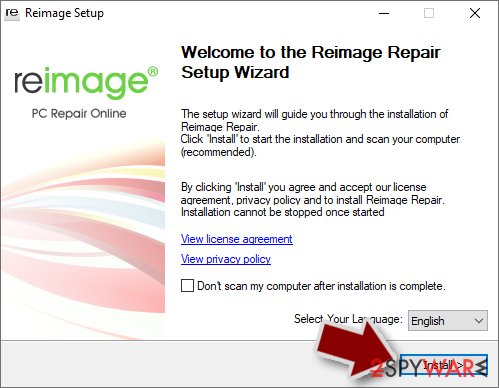
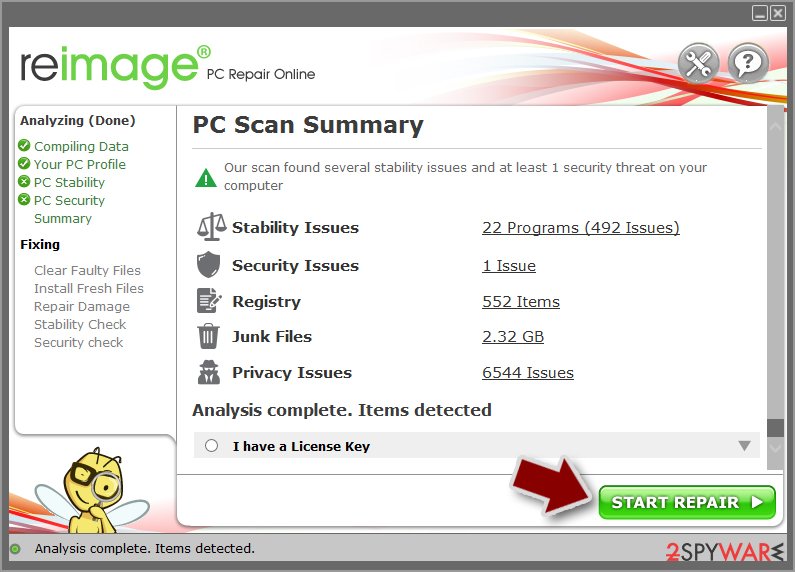
- The analysis of your machine will begin immediately
- Once complete, check the results – they will be listed in the Summary
- You can now click on each of the issues and fix them manually
- If you see many problems that you find difficult to fix, we recommend you purchase the license and fix them automatically.


The solution for the file recovery
Keeping your information safe is important, but it's even more crucial if you're dealing with ransomware. Djvu ransomware versions are becoming increasingly common, and many people don't know how to tell their computer has been taken over by one of these versions. This variant comes right after Ooxa and Oori strains.
Using Emsisoft’s decryptor tool for data recovery of the Vvew file virus damaged files could be an option. This was effective in helping victims recover data after being infected back in the day. However, these recent improvements and advanced code changes could have affected these options significantly.
Vvew ransomware virus version is the one using online IDs primarily, so unique keys are formed for each affected device. However, these C&C server connections can sometimes fail to work properly, resulting in an encryption process that relies on offline key methods, and decryption may be possible in such cases.
If your computer got infected with one of the Djvu variants, you should try using Emsisoft decryptor for Djvu/STOP. It is important to mention that this tool will not work for everyone – it only works if data was locked with an offline ID due to malware failing to communicate with its remote servers.
Even if your case meets this condition, somebody from the victims has to pay criminals, retrieve an offline key, and then share it with security researchers at Emsisoft. As a result, you might not be able to restore the encrypted files immediately. Thus, if the decryptor says your data was locked with an offline ID but cannot be recovered currently, you should try later. You also need to upload a set of files – one encrypted and a healthy one to the company's servers before you proceed.
- Download the app from the official Emsisoft website.
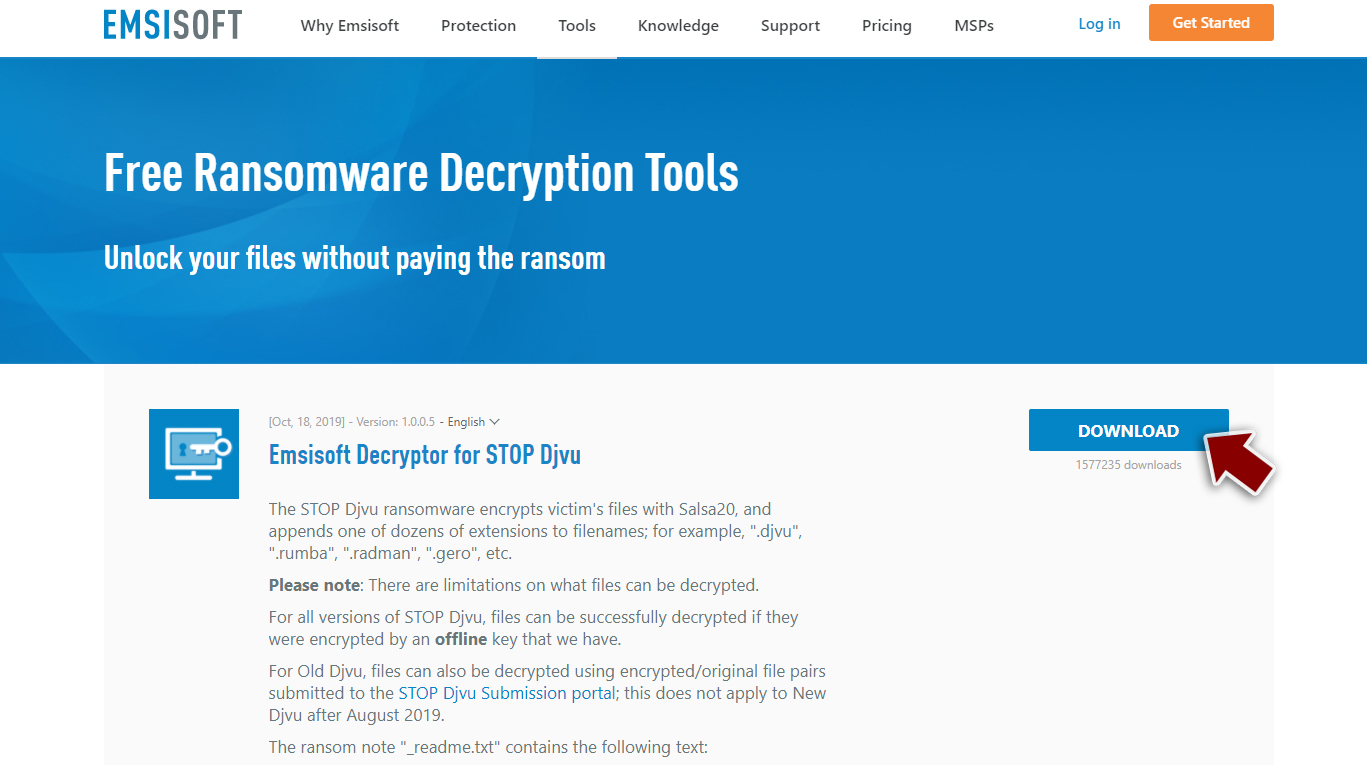
- After pressing Download button, a small pop-up at the bottom, titled decrypt_STOPDjvu.exe should show up – click it.

- If User Account Control (UAC) message shows up, press Yes.
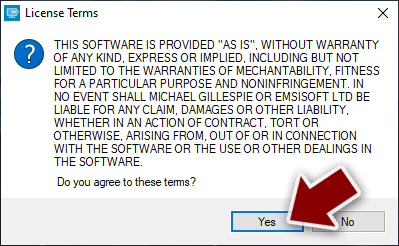
- Agree to License Terms by pressing Yes.
- After Disclaimer shows up, press OK.
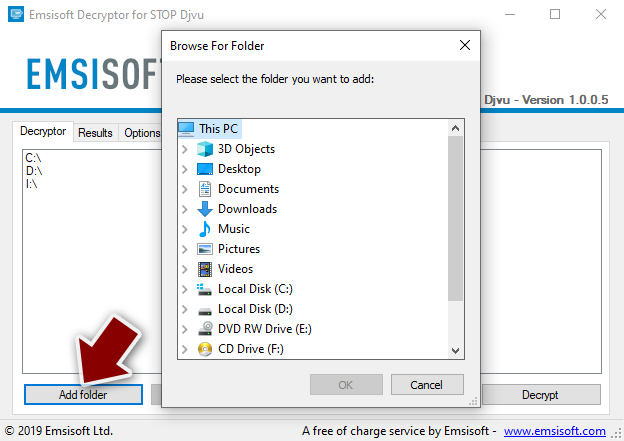
- The tool should automatically populate the affected folders, although you can also do it by pressing Add folder at the bottom.
- Press Decrypt.
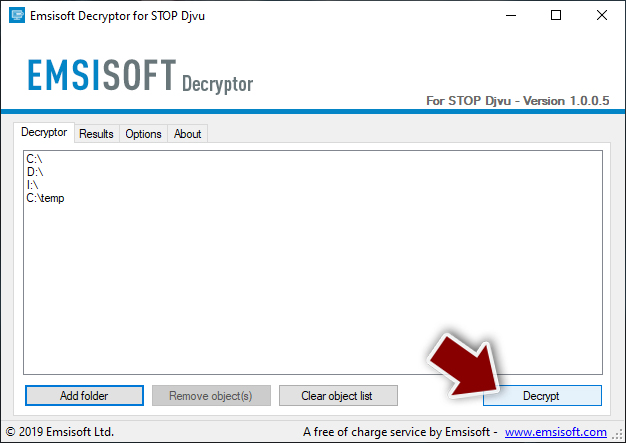


From here, there are three available outcomes:
- “Decrypted!” will be shown under files that were decrypted successfully – they are now usable again.
- “Error: Unable to decrypt file with ID:” means that the keys for this version of the virus have not yet been retrieved, so you should try later.
- “This ID appears to be an online ID, decryption is impossible” – you are unable to decrypt files with this tool.
Did this guide help?
Be the first to comment