

Mmvb ransomware is one of 500 versions on the list of this family

Mmvb file virus is the infection that comes after 550 other versions of the same ransom-demanding threat. The ransomware virus can lock data when the system gets infected, and files that are used commonly get encoded permanently. The goal of this malware infection, as its name suggests, is to ask you to pay upfront in exchange for a decryption tool so they don't ruin your important data. However, there is no guarantee that payment could help with file recovery.
Mmvb file virus is a complex infection that starts with an encryption algorithm[1] to modify the original code and ends in data locked, marked using unique extensions. This single symptom can indicate an active threat, so it must be cleaned immediately.
The ransomware cannot cause major issues before those files get locked, so the ransom note with money demands appears out of nowhere. The ransomware can be actively spread through your system and affect the machine. Experts[2] note that threats like this need to be removed as soon as possible.
More about the threat
You may not know it, but the Mmvb ransomware virus is a complex infection that starts with an encryption algorithm to modify the original code and ends in data locked from access. The payment demand that is presented via the _readme.txt file can change, and criminals might demand money again if you keep the threat running.
| Name | Mmvb ransomware |
|---|---|
| Type | The file-locker, cryptovirus |
| Family | Djvu ransomware/ STOP virus |
| Ransom note | _readme.txt |
| Ransom amount | $980/ $490 in Bitcoin |
| Contact details | support@bestyourmail.ch, datarestorehelp@airmail.cc |
| File marker | .mmvb |
| Removal | Threats should be removed using proper tools like SpyHunterCombo Cleaner or MalwarebytesMalwarebytes |
| Repair | These infections can cause issues with the machine, so run FortectIntego to indicate any leftovers and clear damage, repair affected files |
Mmvb ransomware is the version of Djvu ransomware family that recently released Oovb and Oopu, Oodt in a group. It is now possible for hackers to create their own variations of ransomware by tweaking just one line in the code, so releases can be weekly. This gives them more ability and power as they can release viruses with slightly altered features without having any hesitation
Mmvb ransomware creators do not care whether or not you restore files after paying them money. While it's true that victims get recovery software, there is no guarantee that any payments made in exchange for cybercriminals' services will stop spreading malware, and experts recommend ignoring requests from these hackers altogether.
Mmvb ransomware virus can ensure its persistence by running additional processes in the background or injecting other malware into your system. This means that you need to remove all threats which might keep it active on a machine. Make sure to clear the infection and stop all malicious processes.
Removing the infection
Once a computer has been infected with malware, it can be difficult to get rid of the infections. But don't worry! There are many programs available that will remove any threat and keep your system clean from now on. After this, you never have trouble again with threats like the Mmvb file virus.
Malicious software like this virus can be quickly and successfully removed from your computer, but the selection of AV tools you use will affect how long it takes. The best way to keep yourself protected against malicious files like those associated with the Mmvb file virus is by relying on the removal process. Threats can be eliminated by running a full system scan using security programs such as anti-malware apps relied on detection[3] rates.
The best way to keep your machine virus-free is by using software like SpyHunterCombo Cleaner or MalwarebytesMalwarebytes. These solutions identify the particular threats and list all malware pieces affecting the performance or security state of the PC. A proper system check allows you to remove the Mmvb ransomware. Double-check before moving to file recovery.

Repair the system data
Once a computer is infected with malware, its system is changed to operate differently. For example, an infection can alter the Windows registry database, damage vital bootup and other sections, delete or corrupt DLL files, etc. Once a system file is damaged by malware, antivirus software is not capable of doing anything about it, leaving it just the way it is. Consequently, users might experience performance, stability, and usability issues, to the point where a full Windows reinstall is required.
Therefore, we highly recommend using a one-of-a-kind, patented technology of FortectIntego repair. Not only can it fix virus damage after the infection, but it is also capable of removing malware that has already broken into the system thanks to several engines used by the program. Besides, the application is also capable of fixing various Windows-related issues that are not caused by malware infections, for example, Blue Screen errors, freezes, registry errors, damaged DLLs, etc.
- Download the application by clicking on the link above
- Click on the ReimageRepair.exe

- If User Account Control (UAC) shows up, select Yes
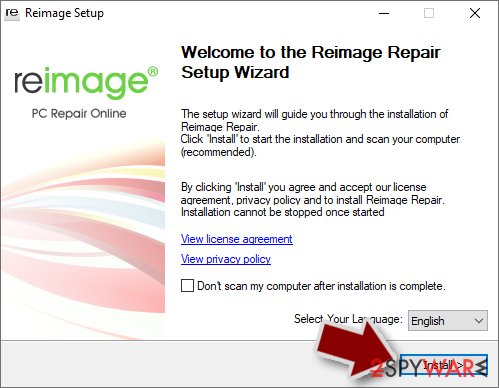
- Press Install and wait till the program finishes the installation process
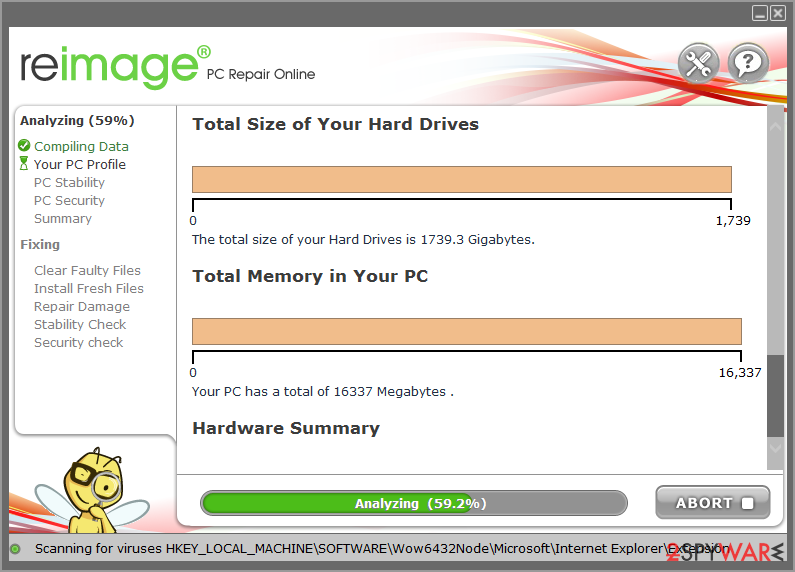
- The analysis of your machine will begin immediately
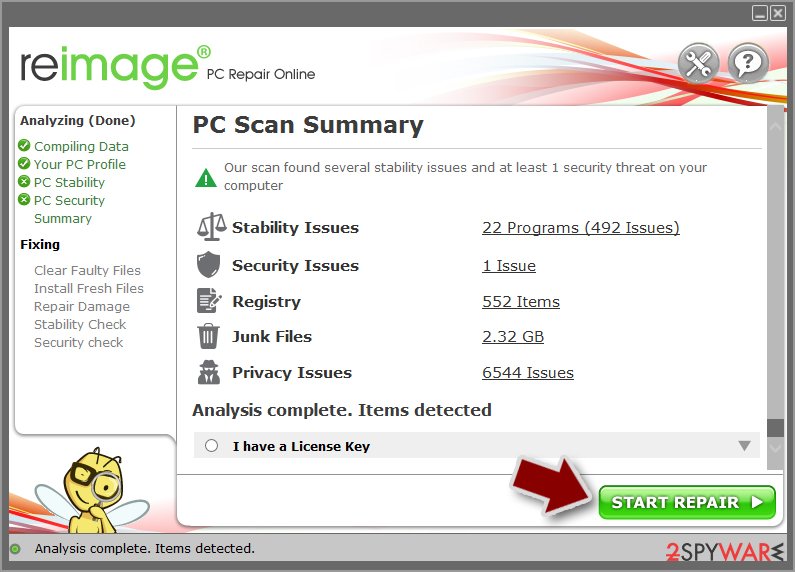
- Once complete, check the results – they will be listed in the Summary
- You can now click on each of the issues and fix them manually
- If you see many problems that you find difficult to fix, we recommend you purchase the license and fix them automatically.


Decryption options for the ransomware
The hackers behind Mmvb ransomware have implemented an advancement in their technique, which means all versions are more advanced than before. Previously, it was possible to decrypt files using a tool that relies on offline ids; however, this is no longer the case because they've updated how these work together and should be used interchangeably now
Mmvb ransomware virus that infected this computer used unique keys to ensure decryption is impossible without them. You can try looking for any evidence of offline key usage and hope you find something, but it's very unlikely given how few people actually use those techniques anymore. The test and check should be quick, so you should do that no matter what.
If your computer got infected with one of the Djvu variants, you should try using Emsisoft decryptor for Djvu/STOP. It is important to mention that this tool will not work for everyone – it only works if data was locked with an offline ID due to malware failing to communicate with its remote servers.
Even if your case meets this condition, somebody from the victims has to pay criminals, retrieve an offline key, and then share it with security researchers at Emsisoft. As a result, you might not be able to restore the encrypted files immediately. Thus, if the decryptor says your data was locked with an offline ID but cannot be recovered currently, you should try later. You also need to upload a set of files – one encrypted and a healthy one to the company's servers before you proceed.
- Download the app from the official Emsisoft website.
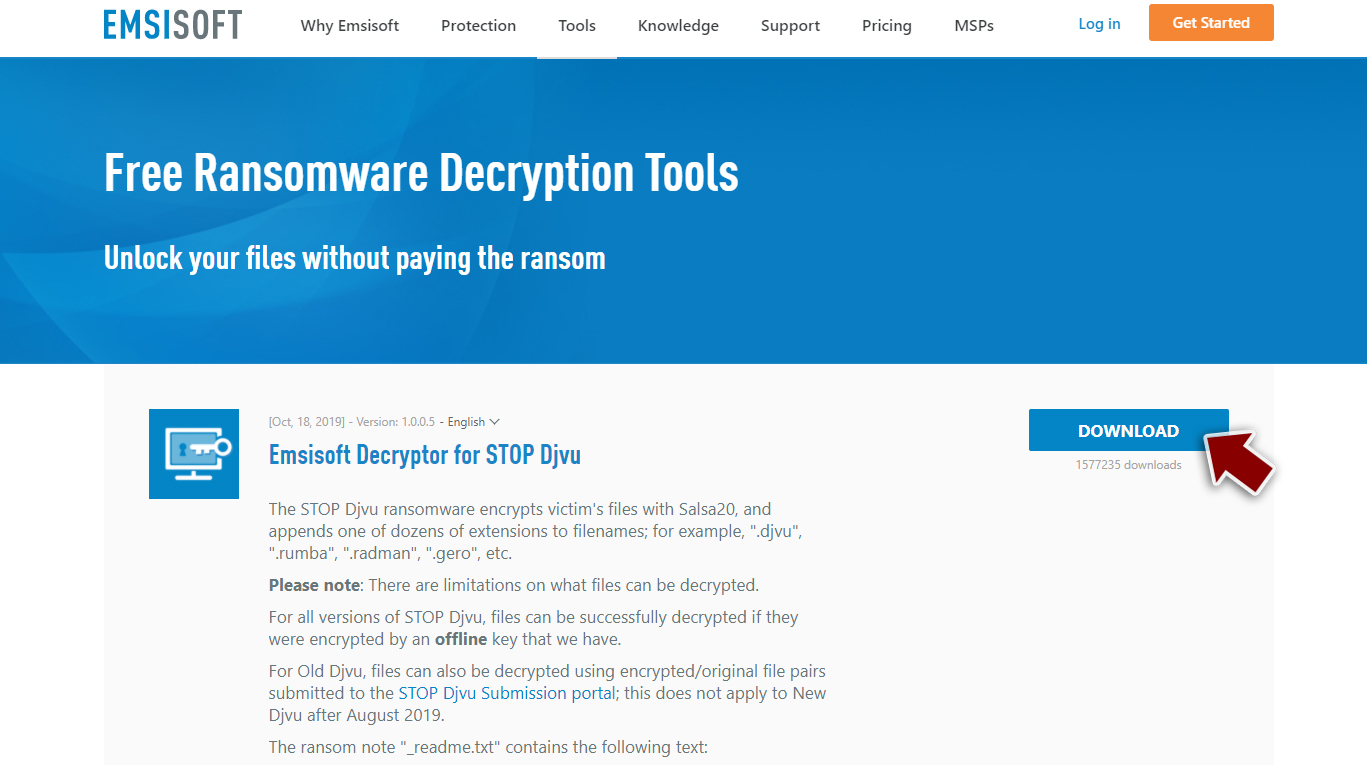
- After pressing Download button, a small pop-up at the bottom, titled decrypt_STOPDjvu.exe should show up – click it.
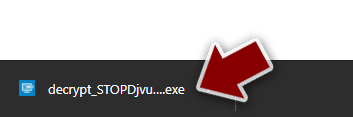
- If User Account Control (UAC) message shows up, press Yes.
- Agree to License Terms by pressing Yes.
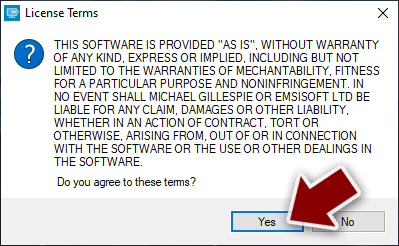
- After Disclaimer shows up, press OK.
- The tool should automatically populate the affected folders, although you can also do it by pressing Add folder at the bottom.
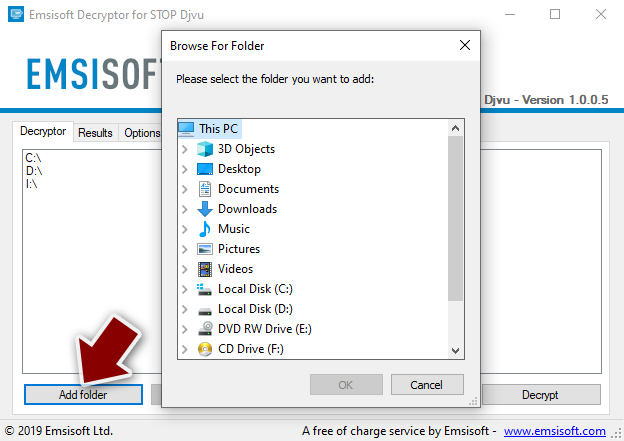
- Press Decrypt.
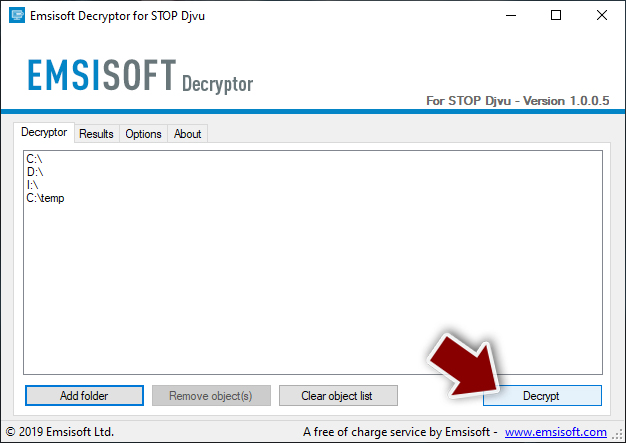


From here, there are three available outcomes:
- “Decrypted!” will be shown under files that were decrypted successfully – they are now usable again.
- “Error: Unable to decrypt file with ID:” means that the keys for this version of the virus have not yet been retrieved, so you should try later.
- “This ID appears to be an online ID, decryption is impossible” – you are unable to decrypt files with this tool.
Did this guide help?
Be the first to comment