

ACCDFISA v2.0 virus – ransomware that keeps spreading in 2018
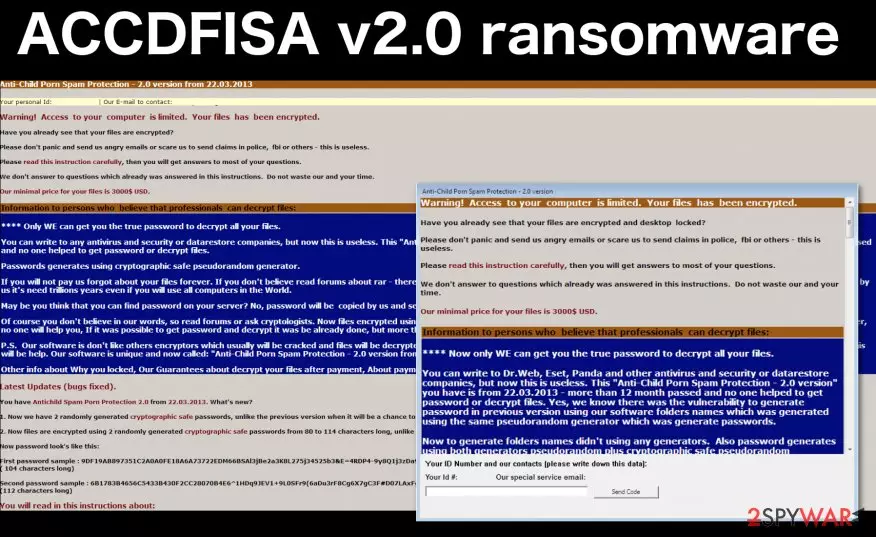
ACCDFISA v2.0 is a dangerous ransomware[1] which is closely related to ACCDFISA virus family. Just like its predecessor, it infiltrates users' devices via Remote Desktop Protocol (RDP) ports. First signs of the malware have been detected in 2016. Though the malware developers provide their own ACCDFISA Decryptor, it is not recommended to use it. Instead, remove ACCDFISA v2.0 as soon as possible. FortectIntego or MalwarebytesMalwarebytes might be of service in this process.
After a year of silence, the perpetrators decided to strike again. On October 2017, IT experts[2] detected a hype in virus activity. Several months later, malware is still using brute-force RDP ports to break into target computer systems. Brazil and Spanish[3] users are considered to be primary targets of ACCDFISA v2.0.
Alternatively known as Anti-Child Porn Spam Protection virus, this ransomware operates differently than the majority of threats. It does not employ specific cipher to encode data. In fact, it compresses the targeted files into .rar files and locks them with a password.
Each affected file is transformed into .exe file bearing the name of the original file name, IR number and perpetrator's email address, e.g. filename.format type(!! to get password email id 1449462382 to allhelp16@gmail.com !!).exe. Since ACCDFISA v2.0 is active again, latest version promotes these email addresses that should be used to contact its developers.
- bracode17@gmail.com
- uscodes17@gmail.com
- eucodes17@gmail.com
However, we highly NOT recommend using these email addresses while trying to perform ACCDFISA v2.0 decrypt procedure as there is no guarantee that hackers won't take the money from you and leave you with nothing.
ACCDFISA v2.0: screen locker, crypto-virus and decryptor
Before beginning the encryption process, certain conditions should be fulfilled. Firstly, the malware is downloaded as .rar or .zip folder. It contains a specific script which executes ACCDFISA v2.0 malware. This command also extracts virus components into C:\Windows\System32 folder (in 64-bit systems) or C:\Windows\SysWOW64 (in 32-bit systems). The infection is also known to modify registry files and place multiple of its own files. Some of them are[4]:
- C:\ProgramData\local\svchost.exe
- C:\ProgramData\local\undxkpwvlk.dll
- C:\ProgramData\local\vpkswnhisp.dll
- C:\Decrypt\Decrypt.exe (decryption tool)
Besides modifying the data, Anti-Child Porn Spam Protection malware functions as a screenlocker. Try cancelling it with ALT+F4. In case it does not help, move on to the access recovery instructions found under the last section discussing ACCDFISA v2.0 removal options.
The developers also urge to pay for ACCDFISA Decrypter which would supposedly help you restore affected documents and other important files. Other than considering this possibility, we suggest another data recovery method. 
Decrypting files affected by ACCDFISA v2.0
When you get infected with ransomware viruses, it is no wonder that the first thing that comes to mind is data recovery. At the moment, no security tool has created the decryption tool for this particular version. On other hand, a malware enthusiast by the name of Piotr Karwowski created the the tool which can decode the files modified due to ACCDFISA v2.0 hijack.
Further instructions are provided in the link. Note that you should follow attentively, otherwise, data decryption will be unsuccessful. Some users have reported that the tool helped them recover their files.[5] Before executing the keygen, scan it with the updated anti-virus tool.
Ransomware prevention measures
Since the malware mainly looks for weak RDP passwords, changing them is a necessity.
- During Remote Desktop session, press CTRL+ALT+END key combination. This command launches task menu on the remote server instead of on your local computer.
- Click on Change a Password menu option to alter the password.
This action will decrease the risk of encountering ACCDFISA in the future. Alternatively, be vigilant while surfing the web. Do not download any Flash Player updates promoted in random pages. When downloading a new application, check its reviews in different forums, EULA and privacy policy. Make sure the surce website is secure. Lastly, treat incoming emails with attached supposedly very important invoice and package information notices.
Eliminate ACCDFISA v2.0 virus completely
As we have mentioned previously, there are several ways you can try to recover the files encrypted by ACCDFISA v2.0 ransomware. But what you should be aware before you dive into the data recovery is that the infection must be fully eliminated from your computer before you attempt any of the suggested recovery solutions.
You can remove ACCDFISA v2.0 virus from your computer safely using virus-fighting utilities. Keep in mind, though that ransomware viruses are not your regular browser hijacker or adware infection and may put up a fight before you manage to get rid of them.
In case your antivirus utility struggles with ACCDFISA v2.0 removal, check out the detailed instructions at the end of the article. After you finally get rid of the virus, only then you can try data recovery.
Did this guide help?
3 comments
Edmunds
Scary infection...
Benassi34
So system reset wont help get rid of it??
trainer
Its a pure nightmare getting rid of this parasite.