

What is PhraseFinder?
PhraseFinder is a free and legitimate tool that is promoted as a very useful browser plug-in for those who are studying. As you have probably understood, it allows accessing various phrases without even leaving the page that you are surfing thru. It seems that many people have fallen into believing that this service is reliable since this app is very widely spread these days. However, there are more that one distribution method used for spreading this app. PhraseFinder virus may slither onto random computers bundled with other freewares and sharewares. No matter which way it has infiltrated your computer, we recommend eliminating it in order to keep your PC safe. Security experts have already categorized PhraseFinder as an adware and a potentially unwanted program (PUP) since it seems to be used for affiliate marketing mainly. It has been noticed that it tends to hijack all most popular web browsers, such as Google Chrome, Mozilla Firefox, and Internet Explorer and allow third parties to access user’s browsing history, bookmarks, search terms, IP address, email address and similar information. In the first place gathered information is used for advertising purposes. However, no one guarantees that it won’t be used for other suspicious purposes. In addition to that, it is responsible for driving visitors’ traffic to predetermined websites. However, you can never be sure what websites it seeks to promote. In the worst case scenario, ‘Ads by PhraseFinder’ may reroute you to suspicious websites filled with questionable content and cause infiltration of other potentially unwanted programs. Finally, if you want to prevent system slowdowns, security holes, flood of annoying advertisements, redirects to suspicious websites and other inconveniences, we recommend you to use FortectIntego, run a full system scan and delete PhraseFinder adware right away.
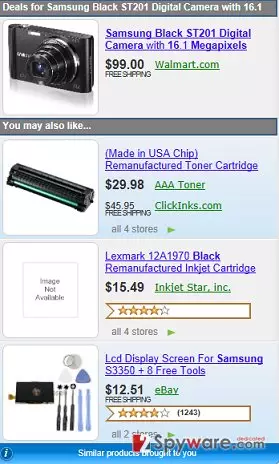
How can PhraseFinder hijack my computer?
PhraseFinder ads may turn your browsing sessions to hell. You may continuously be chased by pop-up, pop-under, banner, in-text and other forms of advertisements no matter if you want to see them or not. In most of the cases, these advertisements inform about various commercials, such as discounts, deals, offers, price comparisons and so on. However, you should be careful and try not to click on them due to a high-risk of PhraseFinder redirects to questionable or unsafe websites. Generally speaking, adware-type programs are not considered to be malicious; however, security experts to not recommend keeping them since they may open a backdoor to other potentially unwanted programs or even viruses. If you want to prevent all inconveniences that adwares are capable of causing, you should avoid installing them on your computer. Probably you already known that PUPs are, usually, traveling bundled with other freewares and sharewares. Therefore, you have to be extra careful when installing free software and opt out of additional components, such as PhraseFinder, that your selected program may be filled with. For that, you should use all your attentiveness and select Advanced or Custom installation option every time. If you suspect that this adware has already slithered onto your machine, do not wait long and eliminate it right away.
How can I remove PhraseFinder virus?
It should not be difficult to delete PhraseFinder virus from your computer if you will follow the guide that is given below and perform every step in the right order:
Uninstall from Windows
Uninstall from Windows 10/8:
- Type Control Panel into the Windows search box and open the result.
- Under Programs, select Uninstall a program.


Uninstall from Windows 7/XP:
- Click on Windows Start > Control Panel (Windows XP users should click on Add/Remove Programs).
- In Control Panel, select Programs > Uninstall a program.


Remove the unwanted program:
- In the Programs and Features window, look for any recently installed suspicious entries, select them, and click Uninstall.
- If User Account Control appears, click Yes to confirm, then complete the removal.


Delete from macOS
Remove the unwanted application:
- From the menu bar, select Go > Applications.
- In the Applications folder, look for any suspicious entries, then drag them to Trash (or right-click and pick Move to Trash).


Delete leftover files and folders:
- Select Go > Go to Folder.
- Enter /Library/Application Support and remove any suspicious folders related to the unwanted program.
- Repeat the same check in the /Library/LaunchAgents and /Library/LaunchDaemons folders, deleting any suspicious entries.

- Finally, empty the Trash to permanently remove the leftovers.

Remove from Microsoft Edge
Delete unwanted extensions from MS Edge:
- Select Menu (three horizontal dots at the top-right of the browser window) and pick Extensions.
- From the list, pick the extension and click on the Gear icon.
- Click Remove.


Clear cookies and other browser data:
- Click on the Menu (three horizontal dots at the top-right of the browser window) and select Settings > Privacy, search, and services..
- Under Clear browsing data, pick Choose what to clear.
- Select Cookies and other site data and Cached images and files. (apart from passwords, although you might want to include Media licenses as well, if applicable) and click on Clear.


Restore new tab and homepage settings:
- Click the menu icon and choose Settings.
- Then find On startup section.
- Click Remove next to any suspicious startup page.
Reset MS Edge if the above steps did not work:
- Press on Ctrl + Shift + Esc to open Task Manager.
- Click on More details arrow at the bottom of the window.
- Select Details tab.
- Now scroll down and locate every entry with Microsoft Edge name in it. Right-click on each of them and select End Task to stop MS Edge from running.


Instructions for Chromium-based Edge
Delete extensions from MS Edge (Chromium):
- Open Edge and click select Settings > Extensions.
- Delete unwanted extensions by clicking Remove.


Clear cache and site data:
- Click on Menu and go to Settings.
- Select Privacy, search and services.
- Under Clear browsing data, pick Choose what to clear.
- Under Time range, pick All time.
- Select Clear now.


Reset Chromium-based MS Edge:
- Click on Menu and select Settings.
- On the left side, pick Reset settings.
- Select Restore settings to their default values.
- Confirm with Reset.
- This will disable extensions and reset startup pages but will not delete bookmarks, saved passwords, or browsing history.


Remove from Mozilla Firefox (FF)
Remove dangerous extensions:
- Open Mozilla Firefox browser and click on the Menu (three horizontal lines at the top-right of the window).
- Select Add-ons.
- In here, select the unwanted extension and click Remove.


Reset the homepage:
- Click three horizontal lines at the top right corner to open the menu.
- Choose Settings.
- Under Home, set your preferred homepage and new tab settings.
Clear cookies and site data:
- Click Menu and pick Settings.
- Go to Privacy & Security section.
- Scroll down to locate Cookies and Site Data.
- Click on Clear Data...
- Select Cookies and Site Data and Temporary cached files and pages, then click Clear.


Reset Mozilla Firefox
If clearing the browser as explained above did not help, reset Mozilla Firefox:
- Open Mozilla Firefox browser and click the Menu.
- Go to Help and then choose Troubleshooting Information.

- Under Give Firefox a tune up section, click on Refresh Firefox...
- Once the pop-up shows up, confirm the action by pressing on Refresh Firefox.



Remove from Google Chrome
Delete malicious extensions from Google Chrome:
- Open Google Chrome, click on the Menu (three vertical dots at the top-right corner) and select More tools > Extensions.
- In the newly opened window, you will see all the installed extensions. Uninstall all suspicious extensions related to the unwanted program by clicking Remove.


Clear cache and web data from Chrome:
- Click on Menu and pick Settings.
- Under Privacy and security, select Clear browsing data.
- Select Browsing history, Cookies and other site data, as well as Cached images and files.
- Click Clear data.


Change your homepage:
- Click menu and choose Settings.
- Look for a suspicious site in the On startup section.
- Click on Open a specific or set of pages and click on three dots to find the Remove option.
Reset Google Chrome:
If the previous methods did not help you, reset Google Chrome to eliminate all the unwanted components:
- Click on Menu and select Settings.
- In the Settings, scroll down and click Advanced.
- Scroll down and locate Reset and clean up section.
- Now click Restore settings to their original defaults.
- Confirm with Reset settings.


Delete from Safari
Remove dangerous extensions:
- Open Safari, click Safari in the menu at the top-left of the screen, and select Preferences.
- Go to the Extensions tab, look for any suspicious entries, and click Uninstall to remove them.


Clear history and website data:
- Click Safari in the menu and pick Clear History.
- Set Clear to all history and confirm with Clear History.


Reset Safari:
- Click Safari in the menu and select Preferences > Advanced.
- Enable Show Develop menu in menu bar.
- From the menu bar, click Develop and select Empty Caches.


Did this guide help?
Be the first to comment