

Digisom malware enters the ransomware market
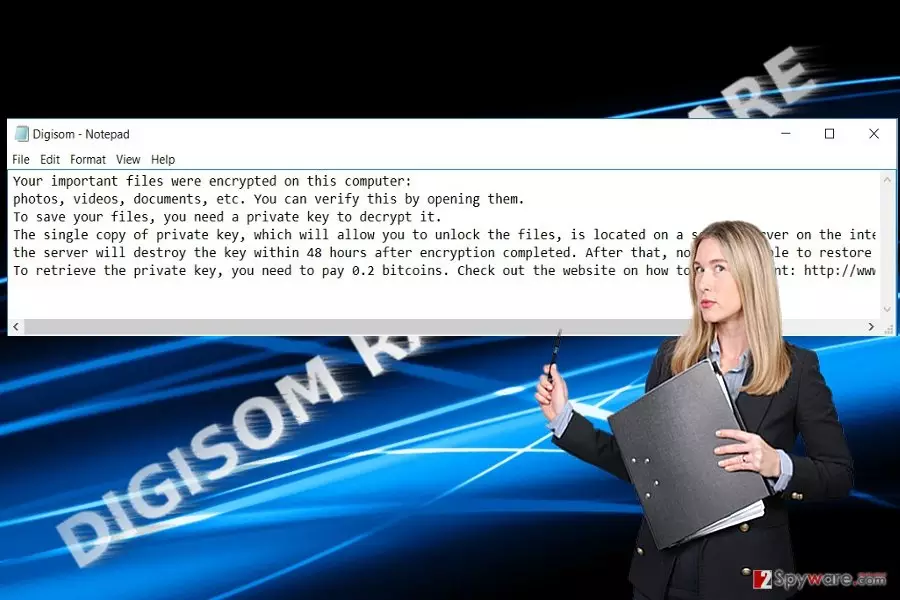
Digisom virus operates as a new file-encrypting virus. It does not differ much from other threats, as it does not only encrypt data, but also deletes them after a couple of hours. Even if this behavior might seem terrifying, there is still a solution. The virus is designed according to the manner as other crypto-malware. It utilizes asymmetric algorithm RSA to encode files[1]. It seems that the malware prefers exerting psychological terror as well as it scares users to transmit the money within 48 hours[2]. It also puts a timer which forbids users not to exit it as it may delete the encrypted files sooner. Nonetheless, there is no need to fall into depression even if you have got entangled by this cyber infection. Below the article, we provide an extensive guide how to remove Digisom permanently.
The key features of this virus do not differ much from other threats. Most likely, the malware sneaked into your computer via an infected spam email message or system vulnerability. Some variations of ransomware even occupy devices with the devices by performing DDoS attacks[3]. In this regard, Digisom malware works in a standard way. It enters the device, modifies registry files which enable it to execute on the computer without any disturbances. Before the encryption, it targets a series of potentially important files and then encodes them with the method of public cryptography, specifically, RSA algorithm. After the encryption is completed, all the files contain altered names – [original_file_name][3_random_characters].x file extension. The encrypted public key is stored in a remote Command and Control[4] server. In comparison with other threats, Digisom ransomware turns out quite into a greedy virus since it demands 2 bitcoins in exchange for the files[5]. Let us warn you not to transfer the money since it is unlikely that the crooks will transfer the files. Ransomware has become a gold mine for racketeers. It is futile to think that they will return the files even if you remit the payment. However, you might lose the money and fail to retrieve the files. Concentrate on Digisom removal.
When does the ransomware invade the device?
Crooks have invented multiple and most diverse distribution channels. Usually, they happen to be spam emails. Therefore, it is crucial not to rush opening spam attachments. Look for typos and grammar mistakes. Corrupted websites such as file sharing and torrent domains frequently serve as malware havens as well. However, cyber villains turn increasingly to legitimate websites as well. One of the recent utilized and quite undetectable technique has remained EITest. It helps forward the user to a domain with an exploit kit. Later on, it delivers the ransomware, and Digisom hijack occurs. Trojanized malware also helps accelerate the infection. In order to decrease the risk of getting infected with this malware again or a similar infection. Besides your anti-virus program, we recommend you to install FortectIntego or MalwarebytesMalwarebytes. They will help you get rid of this malware as well.
Is there a way to delete Digisom virus?
When it comes to crypto-malware, do not waste time and initiate its elimination. Anti-malware utilities will help you complete fast and effective Digisom removal. Do not forget to update it for the program to locate all related elements. It is likely that you might not remove Digisom from the first time as the malware might lock your computer screen. In that case, feel free to use the instructions provided below. There are two methods which assist you to unlock the computer screen and bonus suggestions for recovering the data. Lastly, look for suspicious tasks running in the Task Manager and end them.
Did this guide help?
4 comments
gingercream
Im sick of those ransomware viruses already...
JasonCon.
In my case, it shut down the anti-virus app.
3Doors2HV
Hurry up with the decryptor!
EmilySanders
I cant open Safe Mode settings.