

Ghokswa Browser is a misleading web browser that seems to be identical to Google Chrome from the first glimpse. It has the official website, but if you try to open it, it will redirect to google.com/chrome and provide information about Google Chrome. In fact, these two browsers look absolutely the same, but they are NOT identical whatsoever. In fact, Ghokswa Browser is deemed as adware and potentially unwanted program (PUP) due to the ability to inject targeted advertisements on the web pages, enable cookies, misuse CPU memory, and perform other affiliate marketing related deeds.
You may ask 'So, how to recognize Ghokswa Browser virus on my PC if it's identical to Google Chrome?'
In fact, to understand that you have just installed Ghokswa Browser adware is not that simple because it does not create a shortcut on the desktop or other visible means. Once the app is executed, it establishes a new folder in the Programs Files folder and corrupts Google Chrome's target line. Usually, Chromium-based web browsers that are similar to Ghokswa Browser virus once installed replace a default web browser. In this case, it will seem that you use Google Chrome as you were used to. Unfortunately, but with this pest inside, each time you will open Chrome, it's line will be redirected to Ghokswa Browser redirect virus and you will start experience various issues that were not typical before. For example:
- A supposed Chrome or fake Ghokswa Browser malware will disrupt web browsing activities because web browser is going to work very slowly.
- If earlier you did receive some pop-up ads generated by Google or other pages that you are visiting, now your web browser will exhibit tons of “Ads by Ghokswa Browser,” “Ghokswa Browser Ads,” “Powered by Ghokswa Browser,” “Brought by Ghokswa Browser,” and so on.
- Although your default homepage and the search engine will be set to google.com, it will also be corrupted by Ghokswa Browser virus, what means that search results may be altered (contain sponsored links).
- It may be difficult to browser the net without clicking on the Ghokswa Browser pop-ups. The most important issue here is related to the pages that you may be exposed to after clicking on them. Our research team has initiated a research on this fake web browser and found out that it may be related to doubtful parties, so it's a high chance that Ghokswa Browser redirects to unsafe pages in some of the cases.
- This browser is also accused of unauthorized usage of tracking cookies. Although some people don't mind disclosing browsing-related information, we don't think that presenting your PC's IP address, approximate location, email address, search queries, most frequently viewed pages, data entered while visiting them, and similar information to suspicious third parties is a good idea.
- Lastly, you may find multiple chrome.exe files running within Task Manager, what may be the cause of this browser running on the system.
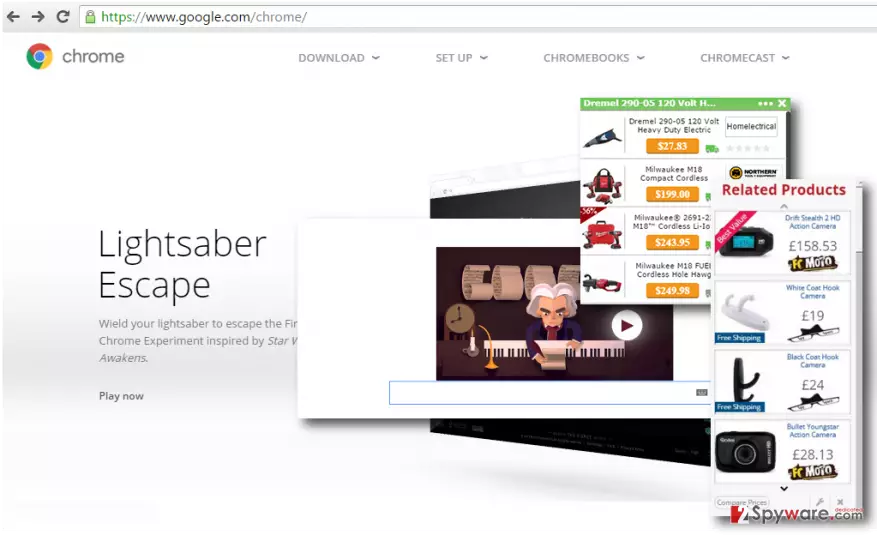
Therefore, if you have spotted any of the signs above, we would recommend you to uninstall Ghokswa Browser using a professional anti-malware, such as FortectIntego.
How can Ghokswa Browser virus infect my Google Chrome?
Browser frequently spreads via software package along with freewares. Therefore, in the majority of the cases, it is installed accidentally because users do not spot its installer that is disclosed among the list of 'optional components' and usually set by default. Additional components like this one are typically unveiled under advanced or custom installation mode. Therefore, if you are not willing to end up with Ghokswa Browser hijack, verify the expanded settings of each freeware and opt out of unwanted installers.
How can I delete Ghokswa Browser virus?
Ghokswa Browser cannot be abolished via Control Panel. It does not have an uninstaller, so to get rid of it, you will have to perform manual removal by yourself or trust a reliable malware removal tool. If you need a guide that would explain what you should do to remove Ghokswa Browser virus, you are in the right place. Ghokswa Browser removal guide is given down below.
Uninstall from Windows
Uninstall from Windows 10/8:
- Type Control Panel into the Windows search box and open the result.
- Under Programs, select Uninstall a program.


Uninstall from Windows 7/XP:
- Click on Windows Start > Control Panel (Windows XP users should click on Add/Remove Programs).
- In Control Panel, select Programs > Uninstall a program.


Remove the unwanted program:
- In the Programs and Features window, look for any recently installed suspicious entries, select them, and click Uninstall.
- If User Account Control appears, click Yes to confirm, then complete the removal.


Delete from macOS
Remove the unwanted application:
- From the menu bar, select Go > Applications.
- In the Applications folder, look for any suspicious entries, then drag them to Trash (or right-click and pick Move to Trash).


Delete leftover files and folders:
- Select Go > Go to Folder.
- Enter /Library/Application Support and remove any suspicious folders related to the unwanted program.
- Repeat the same check in the /Library/LaunchAgents and /Library/LaunchDaemons folders, deleting any suspicious entries.

- Finally, empty the Trash to permanently remove the leftovers.

Remove from Microsoft Edge
Delete unwanted extensions from MS Edge:
- Select Menu (three horizontal dots at the top-right of the browser window) and pick Extensions.
- From the list, pick the extension and click on the Gear icon.
- Click Remove.


Clear cookies and other browser data:
- Click on the Menu (three horizontal dots at the top-right of the browser window) and select Settings > Privacy, search, and services..
- Under Clear browsing data, pick Choose what to clear.
- Select Cookies and other site data and Cached images and files. (apart from passwords, although you might want to include Media licenses as well, if applicable) and click on Clear.


Restore new tab and homepage settings:
- Click the menu icon and choose Settings.
- Then find On startup section.
- Click Remove next to any suspicious startup page.
Reset MS Edge if the above steps did not work:
- Press on Ctrl + Shift + Esc to open Task Manager.
- Click on More details arrow at the bottom of the window.
- Select Details tab.
- Now scroll down and locate every entry with Microsoft Edge name in it. Right-click on each of them and select End Task to stop MS Edge from running.


Instructions for Chromium-based Edge
Delete extensions from MS Edge (Chromium):
- Open Edge and click select Settings > Extensions.
- Delete unwanted extensions by clicking Remove.


Clear cache and site data:
- Click on Menu and go to Settings.
- Select Privacy, search and services.
- Under Clear browsing data, pick Choose what to clear.
- Under Time range, pick All time.
- Select Clear now.


Reset Chromium-based MS Edge:
- Click on Menu and select Settings.
- On the left side, pick Reset settings.
- Select Restore settings to their default values.
- Confirm with Reset.
- This will disable extensions and reset startup pages but will not delete bookmarks, saved passwords, or browsing history.


Remove from Mozilla Firefox (FF)
Remove dangerous extensions:
- Open Mozilla Firefox browser and click on the Menu (three horizontal lines at the top-right of the window).
- Select Add-ons.
- In here, select the unwanted extension and click Remove.


Reset the homepage:
- Click three horizontal lines at the top right corner to open the menu.
- Choose Settings.
- Under Home, set your preferred homepage and new tab settings.
Clear cookies and site data:
- Click Menu and pick Settings.
- Go to Privacy & Security section.
- Scroll down to locate Cookies and Site Data.
- Click on Clear Data...
- Select Cookies and Site Data and Temporary cached files and pages, then click Clear.


Reset Mozilla Firefox
If clearing the browser as explained above did not help, reset Mozilla Firefox:
- Open Mozilla Firefox browser and click the Menu.
- Go to Help and then choose Troubleshooting Information.

- Under Give Firefox a tune up section, click on Refresh Firefox...
- Once the pop-up shows up, confirm the action by pressing on Refresh Firefox.



Remove from Google Chrome
Delete malicious extensions from Google Chrome:
- Open Google Chrome, click on the Menu (three vertical dots at the top-right corner) and select More tools > Extensions.
- In the newly opened window, you will see all the installed extensions. Uninstall all suspicious extensions related to the unwanted program by clicking Remove.


Clear cache and web data from Chrome:
- Click on Menu and pick Settings.
- Under Privacy and security, select Clear browsing data.
- Select Browsing history, Cookies and other site data, as well as Cached images and files.
- Click Clear data.


Change your homepage:
- Click menu and choose Settings.
- Look for a suspicious site in the On startup section.
- Click on Open a specific or set of pages and click on three dots to find the Remove option.
Reset Google Chrome:
If the previous methods did not help you, reset Google Chrome to eliminate all the unwanted components:
- Click on Menu and select Settings.
- In the Settings, scroll down and click Advanced.
- Scroll down and locate Reset and clean up section.
- Now click Restore settings to their original defaults.
- Confirm with Reset settings.


Delete from Safari
Remove dangerous extensions:
- Open Safari, click Safari in the menu at the top-left of the screen, and select Preferences.
- Go to the Extensions tab, look for any suspicious entries, and click Uninstall to remove them.


Clear history and website data:
- Click Safari in the menu and pick Clear History.
- Set Clear to all history and confirm with Clear History.


Reset Safari:
- Click Safari in the menu and select Preferences > Advanced.
- Enable Show Develop menu in menu bar.
- From the menu bar, click Develop and select Empty Caches.


Did this guide help?
Be the first to comment