

Files encrypted by Halloware ransomware might be soon decrypted
Halloware is a file-encrypting virus that uses AES-256 cryptography. However, instead of appending new file extension, malware renames files using “(Lucifer)” string. Thus, after ransomware attack, the document “File.doc” will look “(Lucifer)File.doc.”
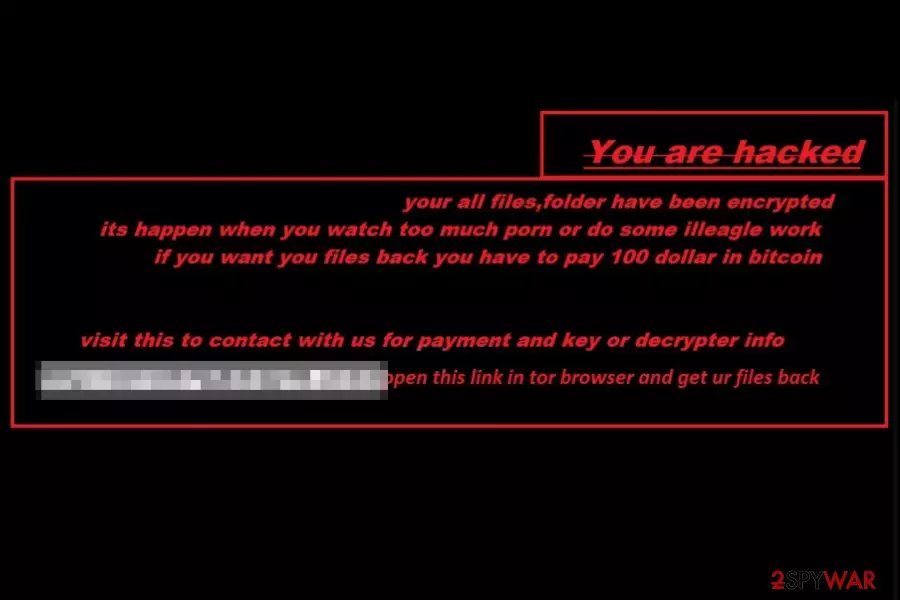
The name for the encoded files is a signature of the developers. The hacker who created this malicious program is known as Luc1F3R. Though, when all targeted files are encrypted, Halloware virus changes computer’s wallpaper with a short ransom-demanding message:
You are hacked
your all files, folders have been encrypted
it happen when you watch too much porn or do some illegal work
if you want you files back you have to pay 100 dollar in bitcoin
visit this contact with us for payment and key or decrypter info
zinrm67igbdcdy5h.onion
open this link in Tor browser and get ur files back
Additionally, the malware also displays a pop-up window with a scary clown picture. It includes a link to ransom payment website. However, the size of the ransom seems to be increased in the payment site. Instead of $100, users are asked to pay $150 in Bitcoins. However, trying to figure out how much money you need to pay is not needed. Ransomware is decryptable.
Cyber security specialists managed to track down a website that contains ransomware-related files and extracted its source code. Therefore, the decryptor should be released soon. Thus, in case of the attack, you should focus on the Halloware removal and do not waste hundred dollars.
However, ability to decrypt files is not the only obstacle that prevents Luc1F3R from receiving ransoms because ransomware does not save any information on the remote server after data encryption. Despite this fact, author of the ransomware hopes to sell malware on the dark market.
Meanwhile, victims of the ransomware are advised to get a professional security software and remove Halloware with the help of it. Scanning the system with FortectIntego, MalwarebytesMalwarebytes or your preferred security tool will quickly eliminate this cyber threat, and you will be able to use your PC normally again.

Luc1F3R offers to buy Halloware on the dark market
Selling ransomware on the dark market is not a new activity.[1] However, Luc1F3R offers to obtain Halloware for only $40.[2] However, considering the fact that ransomware is poorly written and can be decrypted, the set price is more than enough.
Currently, developer promotes its file-encrypting program not only in Dark Web community but on two Internet sites and even YouTube as well.
Programmer presents himself as a 17-year-old student from Northeast India who is responsible for a Batch-based ransomware, a Windows keylogger, and a Linux keylogger. It also claims to be a bulk spoofed email sender. Despite these self-rewards, malware researchers agree that this kid has to get more skills in order to create a dangerous ransomware and profit from selling it on the dark market.
Crypto-virus might be sent to your inbox
Halloware virus is supposed to be distributed via malicious spam emails that include an infected attachment. Thus, if users rush to open it, malware payload is downloaded and executed on the system. Therefore, users should be careful with received letters from unknown senders.
However, security experts from Bedynet.ru[3] warn that crypto-malware might be spread via malicious ads, fake software downloads or updates. It does not seem that Halloware might use exploit kits to take advantage of system vulnerabilities. Though, users are advised not only stay away from suspicious download sites and ads but keep operating system and program up-to-date.
Terminate Halloware ransomware virus
This file-encrypting virus does not the best example of ransomware. However, you should still remove Halloware using reputable and powerful anti-malware tool. The virus still consists of numerous malicious components that are installed in the system and numerous processes.
Only professional security software such as FortectIntego or MalwarebytesMalwarebytes can perform Halloware removal without damaging the system. However, if the virus prevents from installing anti-malware or disables it, follow the guide below.
Did this guide help?
Be the first to comment