

HDPDFConverterSearch is a bogus plugin that can cause erratic browser activity
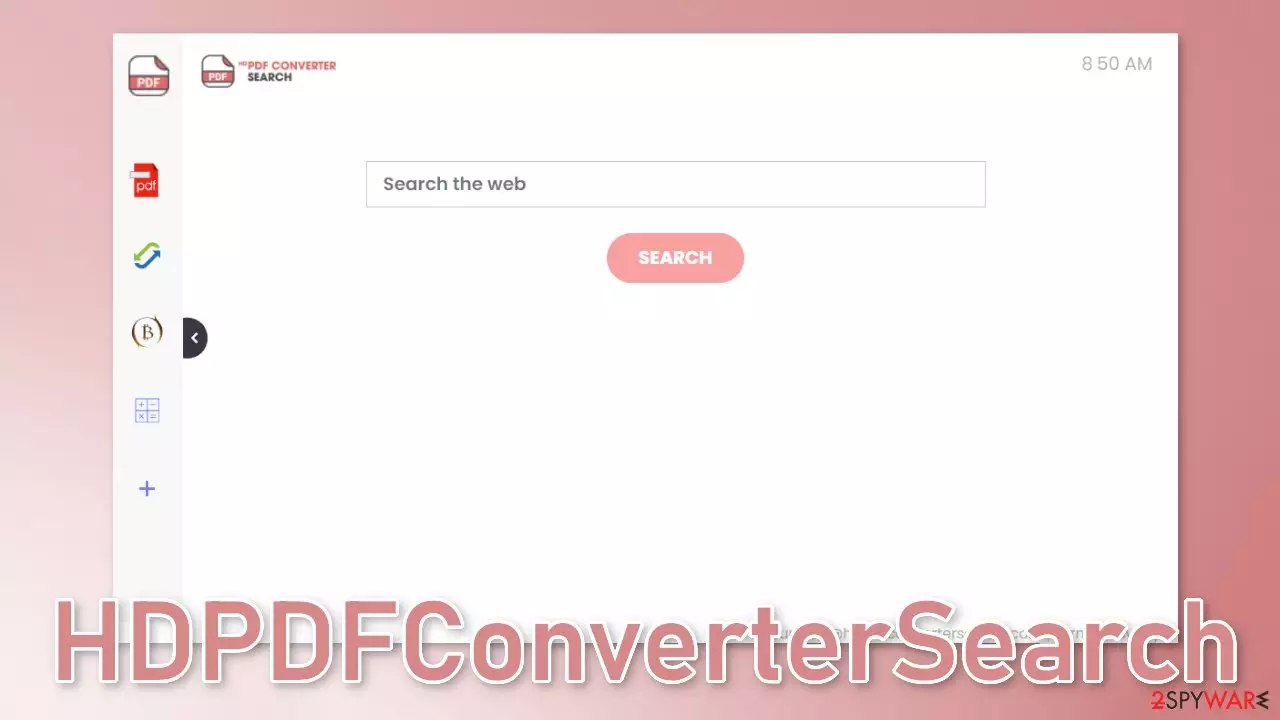
HDPDFConverterSearch is a browser hijacker that can change the main settings of the browser. It changes the homepage to portal.hdpdfconvertersearch.com and redirects search queries through feed.hdpdfconvertersearch.com to one of these search engines – Bing, Yahoo, Searchlee, or Nearbyme. While Bing and Yahoo are well-known and trusted engines, the other two are not. They do not provide special algorithms or anything else useful.
It can also cause an increased amount of commercial content, like pop-ups, banners, and redirects. Fraudsters can generate revenue with pay-per-click advertising.[1] The plugin is only beneficial to its creators. It belongs to a family of hijackers. They all have the same basic functions – a PDF file converter, calculator, currency converter, and the ability to add your favorite pages. The truth is that these functions are accessible with a click of a button almost on every browser.
| NAME | HDPDFConverterSearch |
| TYPE | Browser hijacker |
| SYMPTOMS | A different homepage, new tab address, search engine are added |
| DISTRIBUTION | Shady websites, deceptive ads, bundled software |
| DANGERS | Promotional content and injected sponsored links in the search results can lead to dangerous websites where people can get tricked into providing their personal information, downloading PUPs and malware |
| ELIMINATION | Remove the extension via browser settings; performing a scan with professional security tools is recommended |
| FURTHER STEPS | Use FortectIntego to fix any remaining damage and optimize the machine |
Distribution methods
Browser hijackers are usually spread through bogus “Download” pages and deceptive ads. Visiting shady sites on the internet can also cause issues. For example, illegal streaming platforms are rarely regulated, so they are full of deceptive ads, sneaky redirects, fake “Download” and “Play” buttons.
Another important thing to know is that freeware distribution sites are not trustworthy. Often they use software bundling to monetize their activity and they do not disclose that on the site in the hopes that most people will not notice. Unfortunately, that is what happens most of the time as people find the installation process boring and skip through the steps.
It is best to use official web stores whenever you want to install browser extensions. Apps that get listed there go through an extensive review process. However, you should still do your research, and read the reviews, look at the ratings, and the number of users the plugins have. Choose those applications that have plenty of positive feedback and thousands of users. It is also recommended to read the descriptions fully as fraudsters often make grammar or spelling mistakes.

Cookies track your browsing history
Almost every website you visit uses cookies[2] to gather information about your websites, links you click on, and purchases you make. This data can be later sold to advertising networks that use it to target you with advertisements even more. Also, if you visit many websites that do not have strong security in place, cookies can be hacked and used for malicious purposes.
If you had your browser hijacked, you most likely visited some shady sites, which means it is unknown who has access to your cookies. It can be sold to advertising networks or other third parties. There is an automatic solution to this FortectIntego, which can also fix corrupted files, system errors and improve your device's performance which is very helpful after virus infections.
Remove the extension
You can remove the add-on the manual way, so you have to go to your browser settings. We have provided instructions for the most frequently used browsers. Keep in mind that this removal method might not work if the changes are made by a potentially unwanted program hiding in your system. If this method does not work, proceed further:
Google Chrome
- Open Google Chrome, click on the Menu (three vertical dots at the top-right corner) and select More tools > Extensions.
- In the newly opened window, you will see all the installed extensions. Uninstall all the suspicious plugins that might be related to the unwanted program by clicking Remove.


MS Edge:
- Select Menu (three horizontal dots at the top-right of the browser window) and pick Extensions.
- From the list, pick the extension and click on the Gear icon.
- Click on Uninstall at the bottom.


MS Edge (Chromium)
- Open Edge and click select Settings > Extensions.
- Delete unwanted extensions by clicking Remove.


Mozilla Firefox
- Open Mozilla Firefox browser and click on the Menu (three horizontal lines at the top-right of the window).
- Select Add-ons.
- In here, select unwanted plugin and click Remove.


Safari
- Click Safari > Preferences…
- In the new window, pick Extensions.
- Select the unwanted extension and select Uninstall.


Stop uninvited guests from performing unwanted changes
Potentially unwanted applications[3] are mostly spread on freeware distribution sites with the method of software bundling.[4] It is always best to use official web stores because the risk of installing a bogus program is minimal. We know paying for software can get costly, so if you will continue to download free software there are precautionary steps you can take to prevent PUP invasion:
- Always choose the “Custom” or “Advanced” installation methods
- Read the Terms of Use and Privacy Policy
- Untick the boxes next to files you do not need
- Have professional security software installed to perform system scans regularly
Anti-malware tools can help detect such applications that perform tasks without your knowledge. They can also be used to eliminate suspicious programs with all the related files. We recommend using SpyHunterCombo Cleaner or MalwarebytesMalwarebytes because the PUP can be difficult to identify – often they get disguised as handy tools that you would not even suspect. If manual removal is what you still prefer, we have instructions for Windows and Mac machines:
Windows 10/8:
- Enter Control Panel into Windows search box and hit Enter or click on the search result.
- Under Programs, select Uninstall a program.

- From the list, find the entry of the suspicious program.
- Right-click on the application and select Uninstall.
- If User Account Control shows up, click Yes.
- Wait till uninstallation process is complete and click OK.



Windows 7/XP:
- Click on Windows Start > Control Panel located on the right pane (if you are Windows XP user, click on Add/Remove Programs).
- In Control Panel, select Programs > Uninstall a program.

- Pick the unwanted application by clicking on it once.
- At the top, click Uninstall/Change.
- In the confirmation prompt, pick Yes.
- Click OK once the removal process is finished.

Mac:
- From the menu bar, select Go > Applications.
- In the Applications folder, look for all related entries.
- Click on the app and drag it to Trash (or right-click and pick Move to Trash)


To fully remove an unwanted app, you need to access Application Support, LaunchAgents, and LaunchDaemons folders and delete relevant files:
- Select Go > Go to Folder.
- Enter /Library/Application Support and click Go or press Enter.
- In the Application Support folder, look for any dubious entries and then delete them.
- Now enter /Library/LaunchAgents and /Library/LaunchDaemons folders the same way and terminate all the related .plist files.


Did this guide help?
Be the first to comment