
Skip to content
  • Active
  • Severity: Medium
  • Browser Hijackers
  • Windows, Mac
  • Verified · Apr 2021

How to remove Hi.ru redirect

A step-by-step removal guide for affected devices. Follow the verified procedure below — most readers complete it in under 10 minutes.

Ugnius Kiguolis · The mastermind

Hi.ru is the potentially unwanted program that specializes in redirecting your online searches and changing the default settings on the browser
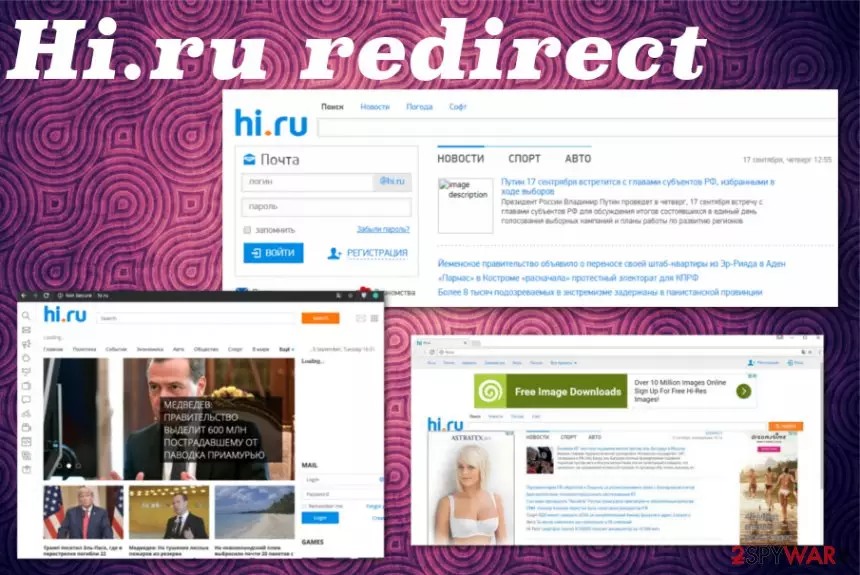
Hi.ru redirectHi.ru is the Russian website that is persistent and difficult to remove fro the machine due to the additionally installed potentially unwanted programs. This browser hijacker itself is brought to the system by a potentially unwanted program and other cyber threats focused on generating views and visits on affiliated pages, commercial content sites. All adware programs and browser hijackers like this one are related to ad-supported pages and advertisers directly, so promotional content shouldn't be a surprise.

Also, Hi.ru redirect is known to have multiple domains, different programs related to the same company, and PUP developer. Unfortunately, this is a free software promoted and distributed online with the help of advertisements with all the claims about the useful features and value.[1] This program can be downloaded by the user willingly, but all those free downloads do not adequately disclose all the included programs and software that can get installed without your consent.

All the intrusive behavior and this feature involving pre-packed programs make the user more willing to call this PUP a Hi.ru virus. If you already encounter pop-ups, banners, and all the questionable redirects, make sure to restrain from clicking on any of those and eliminate the browser hijacker as soon as possible.

Name Hi.ru 
Type  Browser hijacker
Symptoms  Redirect to shady pages, shows commercial pop-ups, interferes with online searches, affects web browsers with additional intrusive content
Distribution  Freeware installations, other PUPs, deceptive websites
Main danger  Collects and shares information about the user
Elimination  Get FortectIntego and remove Hi.ru

Nowadays, potentially unwanted programs that focus on affecting users' time online and interfering with web browsing activities are one of the more common cyber threats, so Hi.ru is not new. However, the PUP is known for more than a few years and is updated constantly.

Initial Hi.ru virus symptoms include:

  • redirects to dubious sites with phishing scams or social engineering campaigns;
  • pop-ups, pop-unders, banners with advertisements;
  • changed browser settings, default new tab, and homepage set to Hi.ru.

All the content that Hi.ru redirect delivers to your screen involves cookies, ad-tracking techniques, beacons, and other methods that allow advertisers and third-party companies to access information about you personally and your habits online. Expeerts[2] note that this data recording issue is not new but can involve more persistent and intrusive methods.

When Hi.ru gets on the system, it tracks your browsing habits, most viewed sites, searched items, and location details to make a profile and base commercial content to your needs and preferences. These personalized advertisements fill up the screen and ensure that you click on the needed redirect or pop-up.Hi.ru virusAccording to the developers of this browser, this search engine is one of the most frequently visited websites in Russia. From the first glimpse, it seems like a regular search provider that contains a search box and various links. However, there are hundreds of PC users who apparently are not Russian speakers and claim that they were tricked into visiting this page against their desire. Make sure to get a reliable tool and remove Hi.ru completely.

That's because this search page is a potentially unwanted program (PUP) that seeks to earn money by promoting third-party websites. If Hi.ru startup page is launched by the user, it starts tracking him or her for some time. After getting a required amount of data which is related to the user's interests, this page starts showing pop-up ads and banner ads that are set to promote third-party websites or programs.

Beware that such software can also be considered intrusive or potentially unwanted, and can lead you to additional problems. For example, if Hi.ru virus tricks you into contacting the technical support service which is displayed in the banner given below, you can lose your money.[3] In most of the cases, such services are useless and are set to discuss computer problems that are invented, so make sure you stay away from them.

Hi.ru redirect can infiltrate your computer with the help of other freeware because it has been actively spread in a bundle with various download managers, media players, PDF creators, etc. Therefore, you must be very careful while downloading these programs to your computer because the infiltration such a virus can cause various inconveniences.Hi.ru

Deceptive websites, promotional advertisements, and freeware installations deliver PUPs

Typically, hijacker settles down on Google Chrome, Mozilla Firefox, and Internet Explorer web browsers by replacing the start page, the default search provider, and a new tab URL on each of these browsers. Although it may look like an ordinary search provider at first, you shouldn't use any shady software that appears on the screen put of nowhere.

Especially when you get tricked into installing the software yourself with the help from deceptive pages, promotional content and other potentially unwanted programs, you should notice that shady software is not performing as it supposed to. If you already noticed any additional tools or extensions added without your permission, the system may be affected by a serious PUP. 

Make sure to remember in the future that choosing Advanced or Custom installation options is crucial if you want to avoid infiltration of redirects, hijackers, adware-type intruders. This easy but important step in your freeware installation routine because this way, you can see the list of bundled applications and de-select all unwanted or suspicious ones. 

Eliminate Hi.ru virus as soon as possible and clean the machine fully from PUP traces

If you are one of those PC users who were affected by this browser hijacker, you should stop using the affected web browser because this search engine cannot be trusted. In this case, make sure you run a full system scan with the reliable security software to perform a full Hi.ru removal on your computer.

According to PC security experts, this browser hijacker spreads in a bundle with suspicious components that can hardly be removed manually. However, you can try to remove Hi.ru from the system with the help of a detailed guide which is given below. If using it, make sure you follow every removal step attentively.

Uninstall from Windows

Uninstall from Windows 10/8:

  1. Type Control Panel into the Windows search box and open the result.
  2. Under Programs, select Uninstall a program.Uninstall from Windows 10/8

Uninstall from Windows 7/XP:

  1. Click on Windows Start > Control Panel (Windows XP users should click on Add/Remove Programs).
  2. In Control Panel, select Programs > Uninstall a program.Uninstall from Windows 7/XP

Remove the unwanted program:

  1. In the Programs and Features window, look for any recently installed suspicious entries, select them, and click Uninstall.
  2. If User Account Control appears, click Yes to confirm, then complete the removal.Uninstall the unwanted program from Windows

Delete from macOS

Remove the unwanted application:

  1. From the menu bar, select Go > Applications.
  2. In the Applications folder, look for any suspicious entries, then drag them to Trash (or right-click and pick Move to Trash).Uninstall from Mac

Delete leftover files and folders:

  1. Select Go > Go to Folder.
  2. Enter /Library/Application Support and remove any suspicious folders related to the unwanted program.
  3. Repeat the same check in the /Library/LaunchAgents and /Library/LaunchDaemons folders, deleting any suspicious entries.Delete leftover files from Mac
  4. Finally, empty the Trash to permanently remove the leftovers.

Reset Internet Explorer

Remove dangerous add-ons:

  1. Open Internet Explorer, click on the Gear icon (IE menu) on the top-right corner of the browser
  2. Pick Manage Add-ons.
  3. You will see a Manage Add-ons window. Here, look for suspicious plugins. Click on these entries and select Disable.Remove add-ons from Internet Explorer

Change your homepage if it was altered:

  1. Open IE and click on the Gear icon.
  2. Select Internet Options.
  3. In the General tab, delete the Home page address and replace it by your preferred one (for example, Google.com).
  4. Click Apply and then select OK.Reset IE homepage

Delete temporary files:

  1. Press on the Gear icon and select Internet Options.
  2. Under Browsing history, click Delete...
  3. Select relevant fields and press Delete.Clear temporary files from Internet Explorer

Reset Internet Explorer:

  1. Click on Gear icon > Internet options and select Advanced tab.
  2. Select Reset.
  3. In the new window, check Delete personal settings and select Reset.Reset Internet Explorer

Remove from Microsoft Edge

Delete unwanted extensions from MS Edge:

  1. Select Menu (three horizontal dots at the top-right of the browser window) and pick Extensions.
  2. From the list, pick the extension and click on the Gear icon.
  3. Click Remove.Remove extensions from Edge

Clear cookies and other browser data:

  1. Click on the Menu (three horizontal dots at the top-right of the browser window) and select Settings > Privacy, search, and services..
  2. Under Clear browsing data, pick Choose what to clear.
  3. Select Cookies and other site data and Cached images and files. (apart from passwords, although you might want to include Media licenses as well, if applicable) and click on Clear.Clear Edge browsing data

Restore new tab and homepage settings:

  1. Click the menu icon and choose Settings.
  2. Then find On startup section.
  3. Click Remove next to any suspicious startup page.

Reset MS Edge if the above steps did not work:

  1. Press on Ctrl + Shift + Esc to open Task Manager.
  2. Click on More details arrow at the bottom of the window.
  3. Select Details tab.
  4. Now scroll down and locate every entry with Microsoft Edge name in it. Right-click on each of them and select End Task to stop MS Edge from running.Reset MS Edge

Instructions for Chromium-based Edge

Delete extensions from MS Edge (Chromium):

  1. Open Edge and click select Settings > Extensions.
  2. Delete unwanted extensions by clicking Remove.Remove extensions from Chromium Edge

Clear cache and site data:

  1. Click on Menu and go to Settings.
  2. Select Privacy, search and services.
  3. Under Clear browsing data, pick Choose what to clear.
  4. Under Time range, pick All time.
  5. Select Clear now.Clear browser data from Chroum Edge

Reset Chromium-based MS Edge:

  1. Click on Menu and select Settings.
  2. On the left side, pick Reset settings.
  3. Select Restore settings to their default values.
  4. Confirm with Reset.
  5. This will disable extensions and reset startup pages but will not delete bookmarks, saved passwords, or browsing history.Reset Chromium Edge

Remove from Mozilla Firefox (FF)

Remove dangerous extensions:

  1. Open Mozilla Firefox browser and click on the Menu (three horizontal lines at the top-right of the window).
  2. Select Add-ons.
  3. In here, select the unwanted extension and click Remove.Remove extensions from Firefox

Reset the homepage:

  1. Click three horizontal lines at the top right corner to open the menu.
  2. Choose Settings.
  3. Under Home, set your preferred homepage and new tab settings.

Clear cookies and site data:

  1. Click Menu and pick Settings.
  2. Go to Privacy & Security section.
  3. Scroll down to locate Cookies and Site Data.
  4. Click on Clear Data...
  5. Select Cookies and Site Data and Temporary cached files and pages, then click Clear.Clear cookies and site data from Firefox

Reset Mozilla Firefox

If clearing the browser as explained above did not help, reset Mozilla Firefox:

  1. Open Mozilla Firefox browser and click the Menu.
  2. Go to Help and then choose Troubleshooting Information.Reset Firefox 1
  3. Under Give Firefox a tune up section, click on Refresh Firefox...
  4. Once the pop-up shows up, confirm the action by pressing on Refresh Firefox.Reset Firefox 2

Remove from Google Chrome

Delete malicious extensions from Google Chrome:

  1. Open Google Chrome, click on the Menu (three vertical dots at the top-right corner) and select More tools > Extensions.
  2. In the newly opened window, you will see all the installed extensions. Uninstall all suspicious extensions related to the unwanted program by clicking Remove.Remove extensions from Chrome

Clear cache and web data from Chrome:

  1. Click on Menu and pick Settings.
  2. Under Privacy and security, select Clear browsing data.
  3. Select Browsing history, Cookies and other site data, as well as Cached images and files.
  4. Click Clear data.Clear cache and web data from Chrome

Change your homepage:

  1. Click menu and choose Settings.
  2. Look for a suspicious site in the On startup section.
  3. Click on Open a specific or set of pages and click on three dots to find the Remove option.

Reset Google Chrome:

If the previous methods did not help you, reset Google Chrome to eliminate all the unwanted components:

  1. Click on Menu and select Settings.
  2. In the Settings, scroll down and click Advanced.
  3. Scroll down and locate Reset and clean up section.
  4. Now click Restore settings to their original defaults.
  5. Confirm with Reset settings.Reset Chrome 2


Did this guide help?

Be the first to comment

Spyware News
Privacy preferences

We use cookies to improve your experience and analyze traffic. Some cookies enable embedded content like videos and social posts. Choose what you allow — you can change this anytime.
