

Essential facts about OneKit application
If you have noticed the commercial offers suggesting to install a new security program, OneKit virus might have settled on the computer. There is no need to worry as this application is merely adware. Nonetheless, you should still remove OneKit because it might slow down the overall PC performance. In addition, the PUP tends to fill your browser with annoying advertisements. Besides excessive advertising, you might get misled to suspicious websites. Keep in mind that the adware spies on your activities by tracking your activities online. If you are curious to find out more, proceed further and get acquainted with OneKit removal options. FortectIntego speeds up the process.
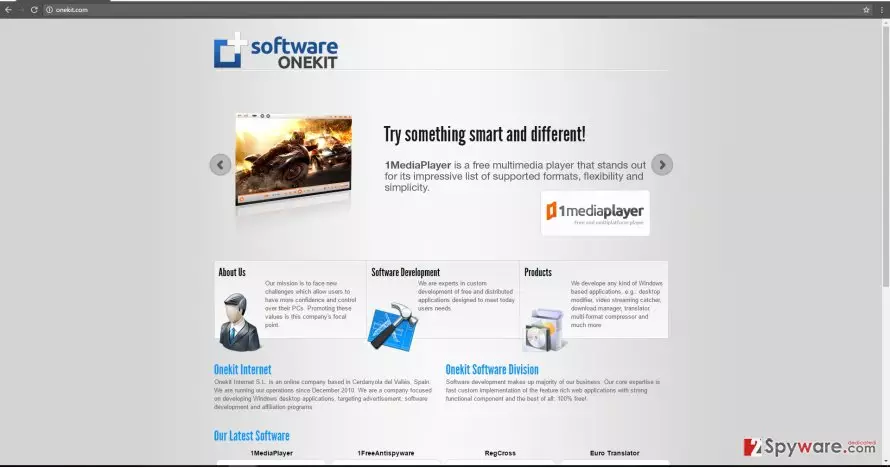
At first glance, this application might look like an ordinary application offering to improve your cyber security. Additionally, it has its affiliated website – onekit.com. After entering, you might notice diverse offers to strengthen your cyber security by installing one or another security application. Though few users might suspect the possible dangers of using this website and application, you should also be aware that this PUP is related to Software Updater adware. It might also get on your nerves by bombarding with various ads. We do not recommend installing any application while this PUP stays on your computer. Most probably, you might install a questionable tool which will not guarantee your cyber security but on the contrary – it might install malignant files.
Multiple OneKit ads might also lead you to sponsored domains. Unfortunately, the majority of adware affiliated websites use insecure and hardly protected servers. Due to this phenomenon, they might be attacked by cyber threats. Likewise, if you get misled to a gambling site or another domain with disturbing content, make sure you exit the redirect website right away. If you procrastinate, you might get assaulted by a computer virus. Therefore, OneKit redirect does not only happen to be a disturbing phenomenon but a damaging tendency as well.
When did the adware sneak into the device?
Like other samples of the same category, One Kit adware might have exploited the opportunity to sneak into the system via a free application. Due to the lack of paid attention, you overlooked the add-on which disguised the PUP. By rushing through the stages and hitting the “Install” button, you enabled OneKit hijack. In order not to repeat the same mistake again, before starting the installation of a new program, opt for “Advanced” settings. They will disclose optional programs. Rarely, they are of practical use so we suggest unchecking the add-ons so that you would not install unnecessary applications.
Quick elimination guide
There are two methods to terminate OneKit virus. One is to use an anti-spyware application, another – manual removal option. If you opt for the latter, carefully go through each stage not to miss any important detail. Otherwise, full OneKit removal might not be guaranteed. Those users, who are in a rush and do not have time to waste on such computer pests, can remove OneKit automatically. Once installed, the software will locate and exterminate all source and secondary files related with this adware. In addition, it will provide protection from other cyber threats.
Uninstall from Windows
Uninstall from Windows 10/8:
- Type Control Panel into the Windows search box and open the result.
- Under Programs, select Uninstall a program.


Uninstall from Windows 7/XP:
- Click on Windows Start > Control Panel (Windows XP users should click on Add/Remove Programs).
- In Control Panel, select Programs > Uninstall a program.


Remove the unwanted program:
- In the Programs and Features window, look for any recently installed suspicious entries, select them, and click Uninstall.
- If User Account Control appears, click Yes to confirm, then complete the removal.


Delete from macOS
Remove the unwanted application:
- From the menu bar, select Go > Applications.
- In the Applications folder, look for any suspicious entries, then drag them to Trash (or right-click and pick Move to Trash).


Delete leftover files and folders:
- Select Go > Go to Folder.
- Enter /Library/Application Support and remove any suspicious folders related to the unwanted program.
- Repeat the same check in the /Library/LaunchAgents and /Library/LaunchDaemons folders, deleting any suspicious entries.

- Finally, empty the Trash to permanently remove the leftovers.

Remove from Microsoft Edge
Delete unwanted extensions from MS Edge:
- Select Menu (three horizontal dots at the top-right of the browser window) and pick Extensions.
- From the list, pick the extension and click on the Gear icon.
- Click Remove.


Clear cookies and other browser data:
- Click on the Menu (three horizontal dots at the top-right of the browser window) and select Settings > Privacy, search, and services..
- Under Clear browsing data, pick Choose what to clear.
- Select Cookies and other site data and Cached images and files. (apart from passwords, although you might want to include Media licenses as well, if applicable) and click on Clear.


Restore new tab and homepage settings:
- Click the menu icon and choose Settings.
- Then find On startup section.
- Click Remove next to any suspicious startup page.
Reset MS Edge if the above steps did not work:
- Press on Ctrl + Shift + Esc to open Task Manager.
- Click on More details arrow at the bottom of the window.
- Select Details tab.
- Now scroll down and locate every entry with Microsoft Edge name in it. Right-click on each of them and select End Task to stop MS Edge from running.


Instructions for Chromium-based Edge
Delete extensions from MS Edge (Chromium):
- Open Edge and click select Settings > Extensions.
- Delete unwanted extensions by clicking Remove.


Clear cache and site data:
- Click on Menu and go to Settings.
- Select Privacy, search and services.
- Under Clear browsing data, pick Choose what to clear.
- Under Time range, pick All time.
- Select Clear now.


Reset Chromium-based MS Edge:
- Click on Menu and select Settings.
- On the left side, pick Reset settings.
- Select Restore settings to their default values.
- Confirm with Reset.
- This will disable extensions and reset startup pages but will not delete bookmarks, saved passwords, or browsing history.


Remove from Mozilla Firefox (FF)
Remove dangerous extensions:
- Open Mozilla Firefox browser and click on the Menu (three horizontal lines at the top-right of the window).
- Select Add-ons.
- In here, select the unwanted extension and click Remove.


Reset the homepage:
- Click three horizontal lines at the top right corner to open the menu.
- Choose Settings.
- Under Home, set your preferred homepage and new tab settings.
Clear cookies and site data:
- Click Menu and pick Settings.
- Go to Privacy & Security section.
- Scroll down to locate Cookies and Site Data.
- Click on Clear Data...
- Select Cookies and Site Data and Temporary cached files and pages, then click Clear.


Reset Mozilla Firefox
If clearing the browser as explained above did not help, reset Mozilla Firefox:
- Open Mozilla Firefox browser and click the Menu.
- Go to Help and then choose Troubleshooting Information.

- Under Give Firefox a tune up section, click on Refresh Firefox...
- Once the pop-up shows up, confirm the action by pressing on Refresh Firefox.



Remove from Google Chrome
Delete malicious extensions from Google Chrome:
- Open Google Chrome, click on the Menu (three vertical dots at the top-right corner) and select More tools > Extensions.
- In the newly opened window, you will see all the installed extensions. Uninstall all suspicious extensions related to the unwanted program by clicking Remove.


Clear cache and web data from Chrome:
- Click on Menu and pick Settings.
- Under Privacy and security, select Clear browsing data.
- Select Browsing history, Cookies and other site data, as well as Cached images and files.
- Click Clear data.


Change your homepage:
- Click menu and choose Settings.
- Look for a suspicious site in the On startup section.
- Click on Open a specific or set of pages and click on three dots to find the Remove option.
Reset Google Chrome:
If the previous methods did not help you, reset Google Chrome to eliminate all the unwanted components:
- Click on Menu and select Settings.
- In the Settings, scroll down and click Advanced.
- Scroll down and locate Reset and clean up section.
- Now click Restore settings to their original defaults.
- Confirm with Reset settings.


Delete from Safari
Remove dangerous extensions:
- Open Safari, click Safari in the menu at the top-left of the screen, and select Preferences.
- Go to the Extensions tab, look for any suspicious entries, and click Uninstall to remove them.


Clear history and website data:
- Click Safari in the menu and pick Clear History.
- Set Clear to all history and confirm with Clear History.


Reset Safari:
- Click Safari in the menu and select Preferences > Advanced.
- Enable Show Develop menu in menu bar.
- From the menu bar, click Develop and select Empty Caches.


Did this guide help?
3 comments
JohnnyWeb444
Their promoted applications looked fairly reliable to me. Wrong impression again.
KellyMcLarren
I installed one of their tools, but it repeatedly showed alerts of viruses. Scanned the PC with my previous anti-virus – no viruses. Deception all over the Internet.
Pixy
Just pay more attention what you download, folks!