

PriceGong is the adware that should help users shop, but it leads to dangerous advertisements
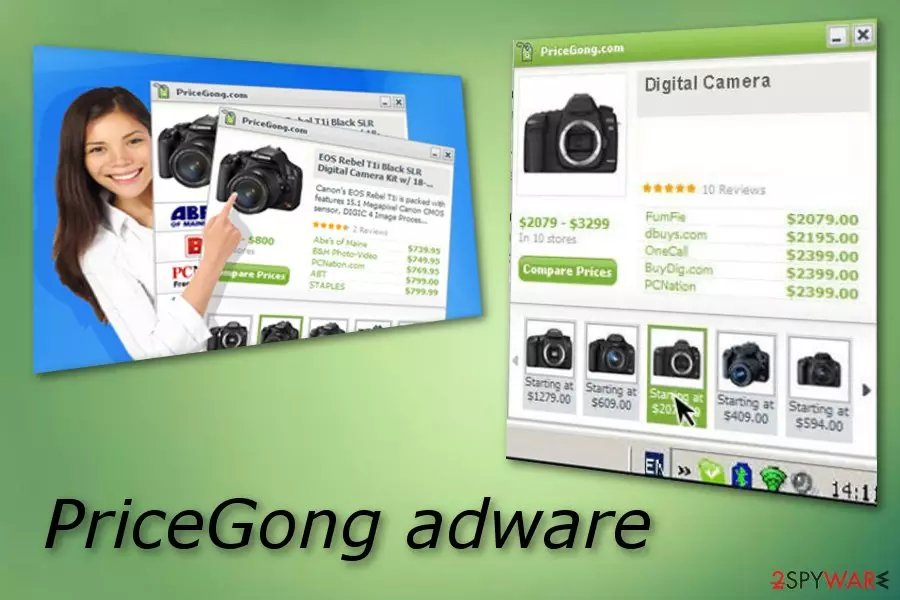
PriceGong is presented as a browser plug-in that can be used to compare the prices of various goods. According to its publisher: “When you are shopping online, PriceGong automatically recognizes which product you are looking for and will suggest a variety of attractive, alternative offers for this product. The app also offers you coupons that can help you save even more money”. However, most security experts have already added this program to the adware category[1] as the app keeps displaying its annoying advertisements announcing various offers online without a break.
| Name | PriceGong |
|---|---|
| Type | Adware |
| Sub-type | PUP |
| Tricky features | Claims to help you to save money |
| Purpose | To produce numerous ads and gain revenue from them |
| Removal | Install anti-malware tool to eliminate the damage |
The first thing which we don't like about this program is that it can be installed either manually or without any permission asked. Usually, adware such as PriceGong virus can easily infiltrate the system through bundled freeware or shareware. Once installed, this potentially unwanted program (PUP) starts its annoying activity by displaying numerous adverts.
Various advertisements can be produced in big amounts and might start overloading the computer screen frequently. Even more, if the advertisement flow keeps on going, you might start struggling to complete even very simple actions with your affected web browser. Additionally, an affected browser might face regular slowdowns and even crash downs.
Furthermore, another important reason to carry out the PriceGong removal is redirects caused by app developers while trying to increase their income. However, while working on this aim, the PUP has the ability to redirect its victims to various developer-promoted sites, some of which might turn out to be potentially dangerous. You can easily get infected with malware[2] if you keep visiting such rogue web pages.
On the final note, we must add that the adware has the ability to collect non-personal details which are related to users' browsing habits and developers use them to create “useful” advertisements to gain even more revenue. Such PUP gathers information about visited websites, bookmarks, IP addresses, pictures and videos viewed, etc.
If you want to avoid such cruel activity, you need to remove PriceGong virus from your computer system and clean affected browsers from questionable components. You can perform this process by using the manual guide given at the end of this post.
In short, you will have to uninstall the PUP via Task Manager and then reset your web browsers. Finally, install SpyHunterCombo Cleaner, MalwarebytesMalwarebytes to fix all the damage initiated by this PUP without your knowledge.

Avoid adware infections and other PUPs
According to malware researchers from NoVirus.uk[3], ad-supported programs sometimes can be downloaded from their official websites. Users usually get tricked by the nicely-looking description and decide to install the potentially unwanted program. However, be careful, developers promote their created programs as very useful ones in order to trick gullible users.
Furthermore, you can get an adware infection by visiting rogue sites. If you ever open a questionable page – be quick to eliminate it and never return. Additionally, you need to select the Custom or Advanced installation option while downloading software from the Internet. This way you will be able to opt-out of all downloads you do not want to give permission to.
Get rid of PriceGong and fix its damage
If you want to remove the virus, you will need to complete some actions on your own or install trustworthy anti-malware. Manual elimination instructions are provided below this text. You will need to remove adware-added browser extensions from web browsers such as Google Chrome, Mozilla Firefox, Internet Explorer, Microsoft Edge, and Safari.
Taking about the PriceGong removal with an anti-malware tool, you can choose one from our suggested list or pick a different tool that you are likely to use. Automatical elimination is faster and more effective. The whole process will take no longer than a couple of minutes. Make sure you reset browsers after the deletion is finished to ensure that no adware-related components are left.
Uninstall from Windows
Uninstall from Windows 10/8:
- Type Control Panel into the Windows search box and open the result.
- Under Programs, select Uninstall a program.


Uninstall from Windows 7/XP:
- Click on Windows Start > Control Panel (Windows XP users should click on Add/Remove Programs).
- In Control Panel, select Programs > Uninstall a program.


Remove the unwanted program:
- In the Programs and Features window, look for any recently installed suspicious entries, select them, and click Uninstall.
- If User Account Control appears, click Yes to confirm, then complete the removal.


Remove from Microsoft Edge
Delete unwanted extensions from MS Edge:
- Select Menu (three horizontal dots at the top-right of the browser window) and pick Extensions.
- From the list, pick the extension and click on the Gear icon.
- Click Remove.


Clear cookies and other browser data:
- Click on the Menu (three horizontal dots at the top-right of the browser window) and select Settings > Privacy, search, and services..
- Under Clear browsing data, pick Choose what to clear.
- Select Cookies and other site data and Cached images and files. (apart from passwords, although you might want to include Media licenses as well, if applicable) and click on Clear.


Restore new tab and homepage settings:
- Click the menu icon and choose Settings.
- Then find On startup section.
- Click Remove next to any suspicious startup page.
Reset MS Edge if the above steps did not work:
- Press on Ctrl + Shift + Esc to open Task Manager.
- Click on More details arrow at the bottom of the window.
- Select Details tab.
- Now scroll down and locate every entry with Microsoft Edge name in it. Right-click on each of them and select End Task to stop MS Edge from running.


Instructions for Chromium-based Edge
Delete extensions from MS Edge (Chromium):
- Open Edge and click select Settings > Extensions.
- Delete unwanted extensions by clicking Remove.


Clear cache and site data:
- Click on Menu and go to Settings.
- Select Privacy, search and services.
- Under Clear browsing data, pick Choose what to clear.
- Under Time range, pick All time.
- Select Clear now.


Reset Chromium-based MS Edge:
- Click on Menu and select Settings.
- On the left side, pick Reset settings.
- Select Restore settings to their default values.
- Confirm with Reset.
- This will disable extensions and reset startup pages but will not delete bookmarks, saved passwords, or browsing history.


Remove from Mozilla Firefox (FF)
Remove dangerous extensions:
- Open Mozilla Firefox browser and click on the Menu (three horizontal lines at the top-right of the window).
- Select Add-ons.
- In here, select the unwanted extension and click Remove.


Reset the homepage:
- Click three horizontal lines at the top right corner to open the menu.
- Choose Settings.
- Under Home, set your preferred homepage and new tab settings.
Clear cookies and site data:
- Click Menu and pick Settings.
- Go to Privacy & Security section.
- Scroll down to locate Cookies and Site Data.
- Click on Clear Data...
- Select Cookies and Site Data and Temporary cached files and pages, then click Clear.


Reset Mozilla Firefox
If clearing the browser as explained above did not help, reset Mozilla Firefox:
- Open Mozilla Firefox browser and click the Menu.
- Go to Help and then choose Troubleshooting Information.

- Under Give Firefox a tune up section, click on Refresh Firefox...
- Once the pop-up shows up, confirm the action by pressing on Refresh Firefox.



Remove from Google Chrome
Delete malicious extensions from Google Chrome:
- Open Google Chrome, click on the Menu (three vertical dots at the top-right corner) and select More tools > Extensions.
- In the newly opened window, you will see all the installed extensions. Uninstall all suspicious extensions related to the unwanted program by clicking Remove.


Clear cache and web data from Chrome:
- Click on Menu and pick Settings.
- Under Privacy and security, select Clear browsing data.
- Select Browsing history, Cookies and other site data, as well as Cached images and files.
- Click Clear data.


Change your homepage:
- Click menu and choose Settings.
- Look for a suspicious site in the On startup section.
- Click on Open a specific or set of pages and click on three dots to find the Remove option.
Reset Google Chrome:
If the previous methods did not help you, reset Google Chrome to eliminate all the unwanted components:
- Click on Menu and select Settings.
- In the Settings, scroll down and click Advanced.
- Scroll down and locate Reset and clean up section.
- Now click Restore settings to their original defaults.
- Confirm with Reset settings.


Delete from Safari
Remove dangerous extensions:
- Open Safari, click Safari in the menu at the top-left of the screen, and select Preferences.
- Go to the Extensions tab, look for any suspicious entries, and click Uninstall to remove them.


Clear history and website data:
- Click Safari in the menu and pick Clear History.
- Set Clear to all history and confirm with Clear History.


Reset Safari:
- Click Safari in the menu and select Preferences > Advanced.
- Enable Show Develop menu in menu bar.
- From the menu bar, click Develop and select Empty Caches.


Did this guide help?
Be the first to comment