

Redeemer ransomware developers ask for $3000 to decrypt locked personal files
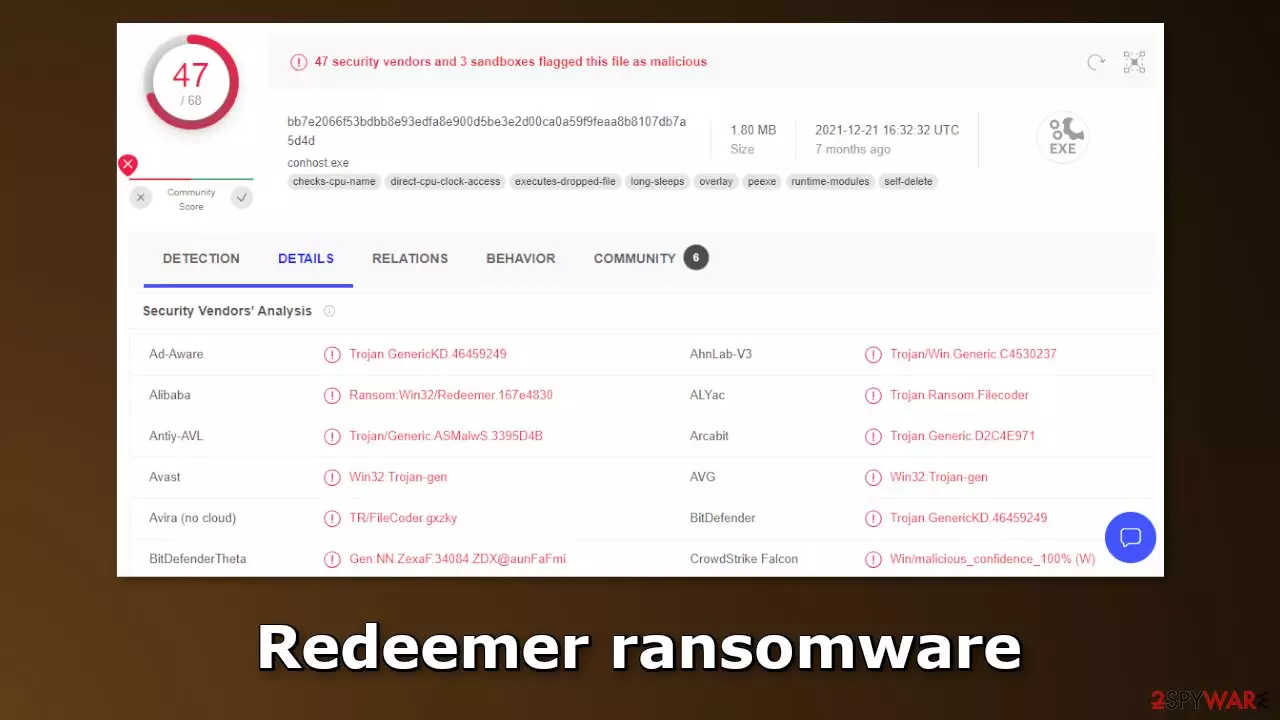
Redeemer ransomware infiltrates the system and uses complicated encryption algorithms. It is a file-locking malware that affects users' personal files, like photos, videos, and documents. The files are appended with the .redeem extension. So if a file was previously named picture.jpg, after encryption its name would change to picture.jpg.redeem.
The icons are changed as well – they turn to white pages, so thumbnails are unavailable. The main goal of these malicious programs is to extract money from victims for a decryption tool. Such an infection can be devastating because it can cause permanent data loss.
| NAME | Redeemer |
| TYPE | Ransomware, data locking virus, crypto virus |
| FILE EXTENSION | .redeem |
| RANSOM NOTE | Read Me.TXT |
| RANSOM AMOUNT | 20 XMR |
| DISTRIBUTION | Infected email attachments, peer-to-peer file sharing platforms, torrents, malicious ads |
| FILE RECOVERY | It is next to impossible to recover the files if you do not have backups or the decryption keys were not leaked; in some cases, recovery is successful with third-party software |
| ELIMINATION | Scan your machine with anti-malware software to eliminate the virus safely; this will not recover the locked files |
| SYSTEM FIX | You can avoid windows reinstallation with FortectIntego maintenance tool, which can fix damaged files and system errors |
The ransom note

The full Read Me.TXT ransom note reads as follows:
— Redeemer —
All your files have been encrypted using an advanced encryption algorithm. They cannot be decrypted without a decryption tool and a key.
In order to decrypt your files you will need to pay 20 XMR (Monero). After paying you will get a tool and a key to decrypt your files.
You can find more information about Monero on getmonero.org and you can buy it from localmonero.co or any other website or use any cryptocurrency exchange that has Monero listed.
WARNING: Do not modify the files, don't change their names and locations, otherwise they won't be able to be decrypted.
AFTER you obtain the required amount of XMR, contact equilibriumfinancialsupremecy@gmail.com and send the following key:–
Cybercriminals ask for 20 XMR which is a cryptocurrency[1] valued at about $3200 at the time of writing. This is a significant amount and we strongly advise against paying it. Threat actors choose cryptocurrencies because they provide anonymity. Also, once you send crypto to another wallet, there is no way to get it back.
Ransomware developers cannot be trusted. Many previous ransomware attack victims say that they never received the promised decryption tools after sending the payment so it is just not worth it to take that risk. Even though the data can only be decrypted with the key[2] that only the cybercriminals have, there is a third-party recovery solution that helps in some cases.
Distribution methods
Threat actors use various methods to spread ransomware. Most of the time users get infected by downloading software from fake or illegal websites. This includes peer-to-peer file-sharing platforms, Torrent websites, etc. Installing “cracked” software[3] for free can be very enticing, however, such platforms are the perfect breeding ground for all kinds of malware.
Another way that ransomware can get into the system is through email. Crooks often send out emails disguised as important messages from well-known companies. They include malicious links or infected attachments. You should never open attachments from unknown senders.
One more gateway that many people do not think about is software vulnerabilities.[4] It is extremely important to keep your operating system and software updated. Software developers regularly release security patches so you should install them as soon as possible to prevent hackers from exploiting vulnerabilities.
Use professional security tools to eliminate malicious files
The critical thing to do is disconnect the affected machine from the local network. For home users, disconnecting the ethernet cable should do the job. If this happened at your workplace, doing that might be complicated, so we have instructions for corporate environments at the bottom of this post.
If you try to recover your data first, it can result in permanent loss. It can also encrypt your files the second time. It will not stop until you remove the malicious files causing it first. You should not attempt removing the malicious program yourself unless you have experience.
Use anti-malware tools like SpyHunterCombo Cleaner or MalwarebytesMalwarebytes to scan your system. This security software should find all the related files and entries and remove them automatically for you. In some cases, malware is not letting you use antivirus in normal mode, so you need to access Safe Mode and perform a full system scan from there:
Windows 7 / Vista / XP
- Click Start > Shutdown > Restart > OK.
- When your computer becomes active, start pressing the F8 button (if that does not work, try F2, F12, Del, etc. – it all depends on your motherboard model) multiple times until you see the Advanced Boot Options window.
- Select Safe Mode with Networking from the list.
Windows 10 / Windows 8
- Right-click on the Start button and select Settings.
- Scroll down to pick Update & Security.
- On the left side of the window, pick Recovery.
- Now scroll down to find the Advanced Startup section.
- Click Restart now.
- Select Troubleshoot.
- Go to Advanced options.
- Select Startup Settings.
- Click Restart.
- Press 5 or click 5) Enable Safe Mode with Networking.
Fix system errors to prevent Windows reinstallation
Performance, stability, and usability issues, to the point where a complete Windows reinstall is required, are expected after malware infection. These types of infections can alter the Windows registry database, damage vital bootup and other sections, delete or corrupt DLL files, etc. Once a system file is damaged by malware, antivirus software is not able to repair it.
This is why FortectIntego was developed. It can fix a lot of the damage caused by an infection like this. Blue Screen errors, freezes, registry errors, damaged DLLs, etc., can make your computer completely unusable. By using this maintenance tool, you could avoid Windows reinstallation.
- Download the application by clicking on the link above
- Click on the ReimageRepair.exe
- If User Account Control (UAC) shows up, select Yes
- Press Install and wait till the program finishes the installation process
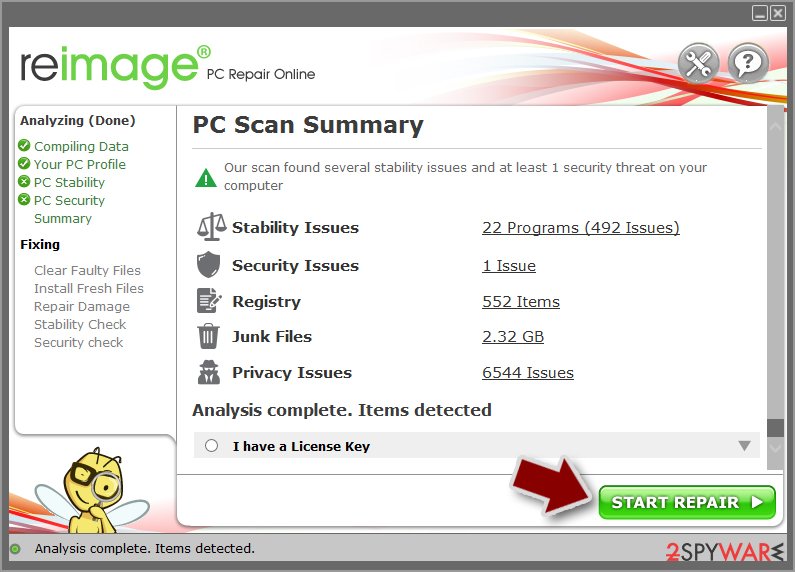
- The analysis of your machine will begin immediately
- Once complete, check the results – they will be listed in the Summary
- You can now click on each of the issues and fix them manually
- If you see many problems that you find difficult to fix, we recommend you purchase the license and fix them automatically.

File recovery options
Many people think that they can fix their files with anti-malware tools, but that is not what they are designed for. All the security tools can do is detect suspicious processes in your system and eliminate malicious files. The truth is, the files can be restored only with a decryption key or software that only the cybercriminals have.
If you did not back up your data previously, you possibly lost your files forever. You can try using data recovery software, but third-party programs cannot always decrypt the files. We suggest at least trying this method. Before proceeding, you have to copy the corrupted files and place them in a USB flash drive or another storage. And remember – only do this if you have already removed the Redeemer ransomware.
Before you begin, several pointers are essential while dealing with this situation:
- Since the encrypted data on your computer might permanently be damaged by security or data recovery software, you should first make backups of it – use a USB flash drive or another storage.
- Only attempt to recover your files using this method after you perform a scan with anti-malware software.
Install data recovery software
- Download Data Recovery Pro.
- Double-click the installer to launch it.
- Follow on-screen instructions to install the software.
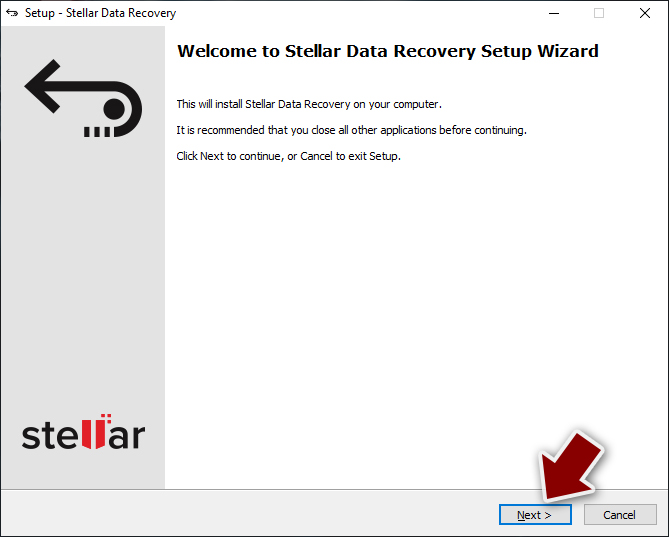
- As soon as you press Finish, you can use the app.
- Select Everything or pick individual folders where you want the files to be recovered from.
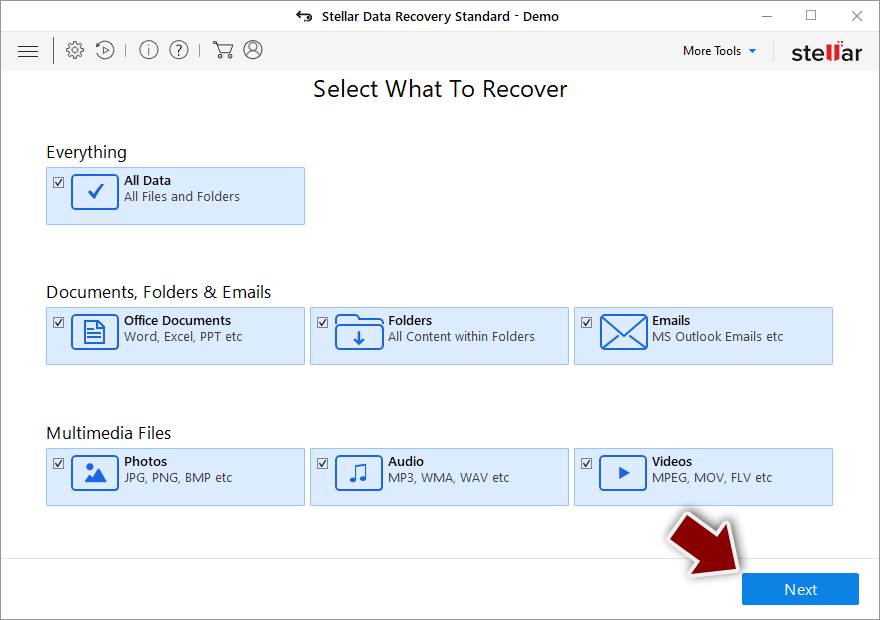
- Press Next.
- At the bottom, enable Deep scan and pick which Disks you want to be scanned.
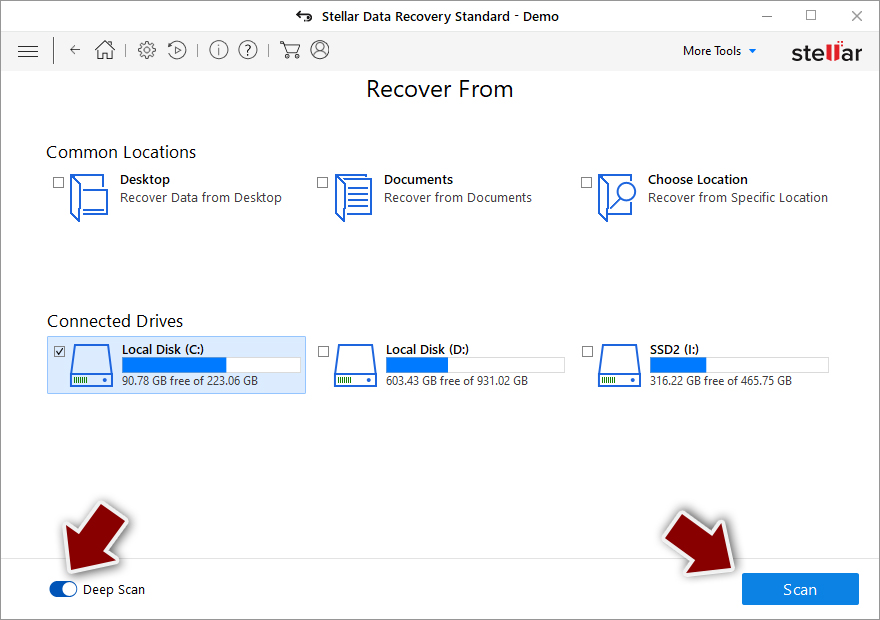
- Press Scan and wait till it is complete.
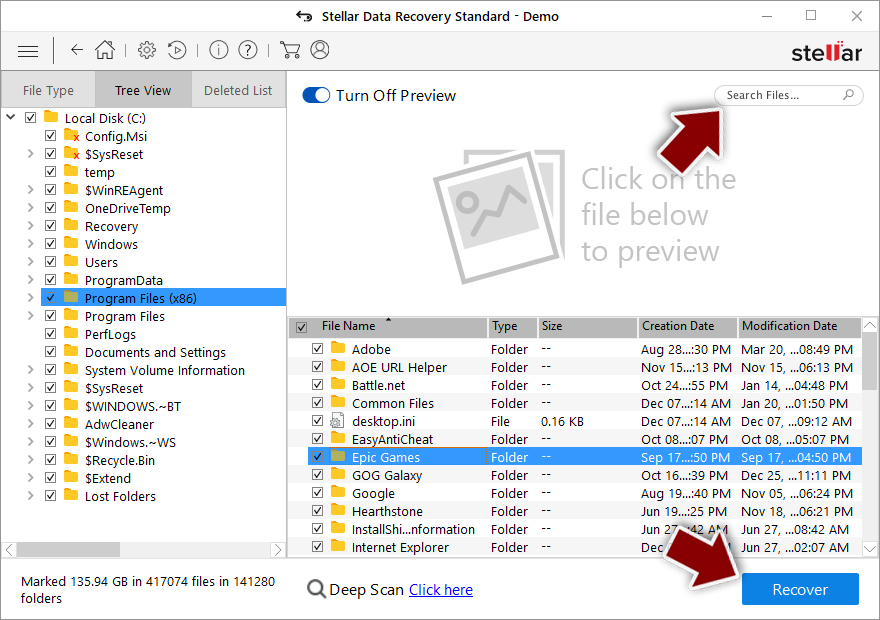
- You can now pick which folders/files to recover – don't forget you also have the option to search by the file name!
- Press Recover to retrieve your files.


Did this guide help?
Be the first to comment