

Storm – a poor example of ransomware virus
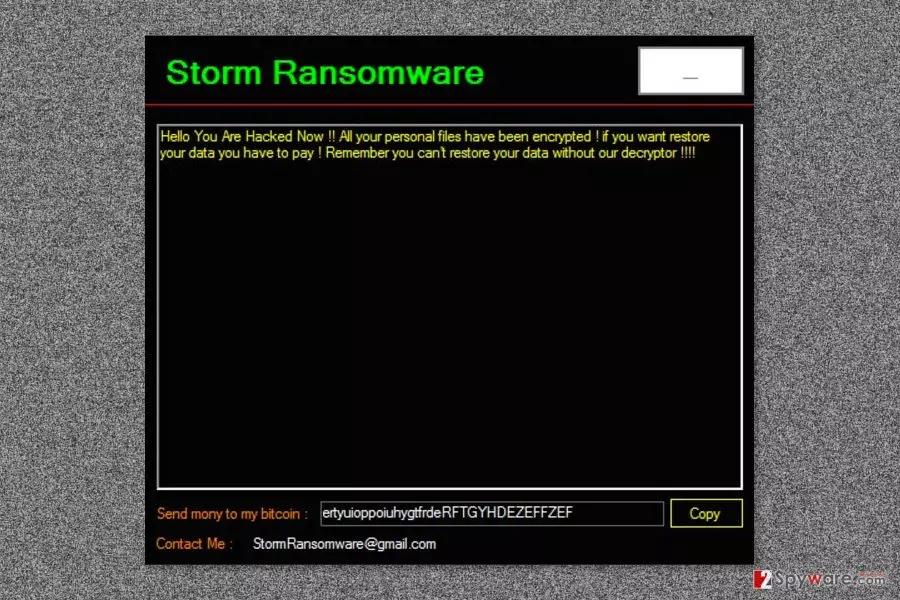
Storm ransomware is a file-encrypting virus that is created with .net compiler. After encrypting files, it demands to pay the ransom and provides contact email address StormRansomware@gmail.com. However, researchers say that this crypto-malware is not a huge threat.
Storm virus uses a hard coded password to lock files on the affected computer, so it should not be hard to guess it. Therefore, you should not be scared by the ransom note that tells that you need to pay for the decryptor. Third-party recovery software should be able to help you.
However, crooks made a terrible mistake. They provided an invalid Bitcoin address. Therefore, even if you would be one of those victims who would risk paying the ransom, you wouldn’t be able to do it. It goes without saying that after the attack, you should focus on Storm removal.
What is more, authors of Storm use Gmail email. Thus, this email might be blocked soon. Moreover, the identity of the hackers might be found as well. We believe that this ransomware is created by wannabe cyber criminals who lack programming skills and knowledge.
However, the virus mostly spreads with the help of malicious email attachments and once victim opens the obfuscated file, malware executable, which is based on Stub.exe, is downloaded on the system. It aims at the most popular file types, such as MS Office documents, pictures, databases and similar files.
Nevertheless, the virus is not a huge cyber threat; it might still affect numerous Windows OS processes. Therefore, you should not let it stay for a long on the system. Remove Storm ransomware using reputable malware removal tool, for instance FortectIntego.
If you cannot install or update your chosen security software, you should check the instructions at the end of the article. Sometimes file-encrypting viruses block access to antivirus or anti-malware. It doesn’t seem like Storm ransomware could do it, but in the case of emergency, you will know how to disable the virus and run automatic elimination.

The main ways how ransomware viruses spread
Cyber criminals might use several ways to spread malicious programs. The usage of several distribution strategies helps to attack more devices. However, you can avoid infiltration if you be aware of these methods and follow security tips.
- The main ways how crypto-malware spreads:
- spam emails and malicious content included to them (buttons, links, attachments),
- malvertising on legitimate and high-risk websites,
- fake or illegal downloads,
- exploit kits.[1]
The most popular method among cyber criminals is malspam. Hackers use social engineering tactics to trick users into clicking malicious content. Hence, you have always to double-check the information about the sender, look up for grammar mistakes and other suspicious details[2] before clicking links or opening documents.
Security experts from the NoVirus[3] note that downloading illegal or fake programs often lead to ransomware attacks too. So, you should stay away from insecure download sites. What is more, you should not visit high-risk websites and keep software updated.
Elimination instructions of the Storm virus
Nevertheless, this example of malware does not look like a real threat; you should still eliminate it properly. Storm removal has to performed using reputable malware removal program, for instance FortectIntego, SpyHunterCombo Cleaner or SpyHunterCombo Cleaner. Keep in mind that it might be impossible to locate and delete suspicious components from the system manually without causing more damage. Thus, choose the tool you trust, and scan the device!
If you cannot install security software, you can find the instructions how to disable the virus below. Once you remove Storm malware, you can check data recovery options or use backups.
Did this guide help?
Be the first to comment