

Your virus and threat protection is managed by your organization is the feature that appears in Windows defender Security Center our of nowhere
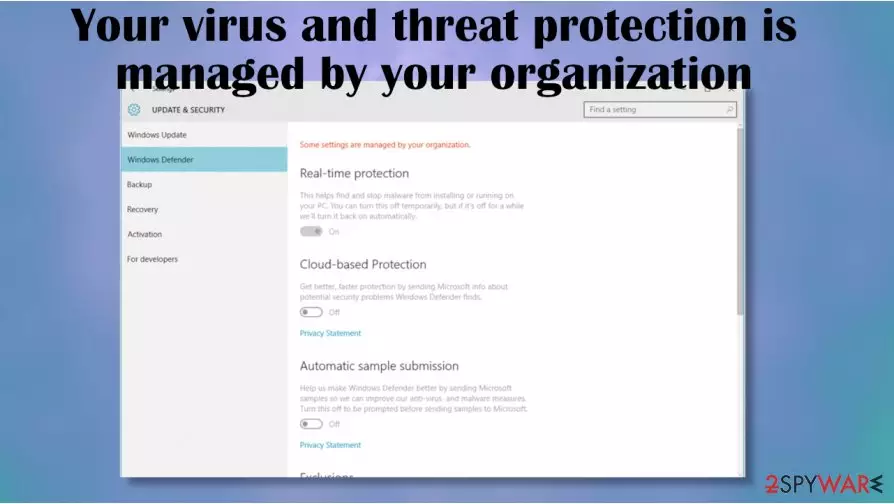
Your virus and threat protection is managed by your organization – the red message that appears in Windows Defender settings. It keeps the machine from running properly since the security scans cannot be launched via the more common solution – Windows Defender. It is possible that malware disabled this function, so you cannot find the intruder that possibly caused these issues and might encounter additional installs of threats. The particular problem is related to the Managed by your organization issue on web browser directly that interferes with your online browsing activities and the performance of the computer generally. These problems might be related to the same malware.
This problem can trigger intrusive changes on the system and show “Some settings are managed by your organization” in other Windows operating system settings parts too. Users[1] get frustrated because it is not clear why these issues occur and what can be done to fix them. However, we can assure you that Your virus and threat protection is managed by your organization is the problem that prevents the machine from operating as it supposed to, but it can be solved, and those PUPs or cyber intruders terminated.
| Name | Your virus and threat protection is managed by your organization |
|---|---|
| Type | Malware |
| Issues caused | The particular infection causes disabled threat protection functions on the Windows machine and issues with web browsing |
| Distribution | The threat that can cause such issues can spread via malicious sites and spam email attachments, software cracks |
| Relation | VirTool:Win32/DefenderTamperingRestore is one of the threats that can trigger such issue with Windows security |
| Elimination | You can remove Your virus and threat protection is managed by your organization if you find the root issue. It that it is a cyber infection- anti-malware tools are the best solution |
| Repair | Fixing issues with the system damage and corruption of files is possible with tools like FortectIntego |
Windows Defender is the defense solution for the Windows operating systems, so once the program fails computers might encounter various issues. Your virus and threat protection is managed by your organization is reportedly related to some Widows 10 updates,[2] so malware might not be the issue or root cause of the problem, but the lack of virus protection solutions can trigger many malware infection-related outcomes.
However, even though Your virus and threat protection is managed by your organization virus is not the term that could be lightly used in such cases, there are various malware pieces that trigger this setting change. Some scams or intruders like VirTool:Win32/DefenderTamperingRestore lead to issues with these security settings and keeps the machine open for additional infections.
People get frustrated because this issue can be related to:
- an actual cyber infection problem;
- a laptop supplied and managed by your company;
- you previously changing some policy settings;
- the anti-telemetry program you use that is changing settings.
The main solution for Your virus and threat protection is managed by your organization removal or fix can be determined by the root cause of the sudden change. Malware issues and various cyber infections can get cleared off when you rely on tools like SpyHunterCombo Cleaner or MalwarebytesMalwarebytes, so the program triggering unwanted and dangerous changes can get eliminated.

It seems that it is impossible to remove Your virus and threat protection is managed by your organization or the program/ malicious infection that triggered the issue. You might suffer from this change due to third-party applications, rogue security tools, so rely on proper settings and locate Virus & threat protection settings on the machine to change the settings. Once there, you should find an option Tamper Protection to switch the button to Off. You will stop other security tools from interfering with settings in the system.
However, in most of the cases that various experts[3] and analysis report that Your virus and threat protection is managed by your organization get triggered by alterations in other parts of the machine. You might find problems with updates, web browsers, time and date settings too. If so, make sure to recover the machine in general. Run FortectIntego or a different system tool and try to fix any file or function damage yourself.
Your virus and threat protection is managed by your organization can affect browsers or install web browser applications, unwanted extensions directly on Google Chrome, Mozilla Firefox, other tools. Rely on the guide below and make sure to clear those separately too.

Ways that silent malware can be spread around
These programs that can change various settings on the machine spread using all the methods under the sun. It is possible that the PUP or a more dangerous threat has already been running in the background of the device once these issues start to appear in security settings.
It the threat managed to find its way on the machine and you haven't' noticed any other issues it is most likely one of these methods:
- malicious macros on spam email attachments;
- links found in social media messages or notifications in the email;
- other infections like PUPs and browser-based intruders;
- malicious online content.
You can encounter various scam messages on the screen when visiting the unsafe page, so the installation of a possibly malicious file or application can happen without any other permission needed – when you click a certain pop-up or the redirected window.
Run an additional AV tool to remove “Your virus and threat protection is managed by your organization” – causing program
If your Windows Defender option gets tampered with it becomes difficult to remove Your virus and threat protection is managed by your organization or any associated programs manually. So browser-related issues can get solved with the instructions below that show how to reset browsing tools, but the system gets affected too.
Interfering with Windows settings or files in those system folders is not the best way to fight Your virus and threat protection is managed by your organization virus or other threats that affect the machine. You need to run a proper anti-malware tool that can be trusted and clean the machine this way. Once the PC is virus-free again – move on to system repair.
Manual repair sounds dangerous, especially when it comes to such parts of the system as a registry. This is why right after the Your virus and threat protection is managed by your organization removal using AV tools or different program, you can run a PC repair software and recover damaged files. Another tip for your PC issue would be Windows Registry modification:
- Open Registry Editor.
- Go to the following location:
HKEY_LOCAL_MACHINE\\SOFTWARE\\Policies\\Microsoft\\Windows\\Personalization
- Double-click the NoLockScreen on the right.
- Change the value from 1 to 0.
You can also try deleting other parts or altering some settings deeper in system settings but rely on the proper “Some settings are managed by your organization” fixing guide instead of doing it yourself.
Uninstall from Windows
Uninstall from Windows 10/8:
- Type Control Panel into the Windows search box and open the result.
- Under Programs, select Uninstall a program.


Uninstall from Windows 7/XP:
- Click on Windows Start > Control Panel (Windows XP users should click on Add/Remove Programs).
- In Control Panel, select Programs > Uninstall a program.


Remove the unwanted program:
- In the Programs and Features window, look for any recently installed suspicious entries, select them, and click Uninstall.
- If User Account Control appears, click Yes to confirm, then complete the removal.


Reset Internet Explorer
Remove dangerous add-ons:
- Open Internet Explorer, click on the Gear icon (IE menu) on the top-right corner of the browser
- Pick Manage Add-ons.
- You will see a Manage Add-ons window. Here, look for suspicious plugins. Click on these entries and select Disable.


Change your homepage if it was altered:
- Open IE and click on the Gear icon.
- Select Internet Options.
- In the General tab, delete the Home page address and replace it by your preferred one (for example, Google.com).
- Click Apply and then select OK.


Delete temporary files:
- Press on the Gear icon and select Internet Options.
- Under Browsing history, click Delete...
- Select relevant fields and press Delete.


Reset Internet Explorer:
- Click on Gear icon > Internet options and select Advanced tab.
- Select Reset.
- In the new window, check Delete personal settings and select Reset.


Remove from Microsoft Edge
Delete unwanted extensions from MS Edge:
- Select Menu (three horizontal dots at the top-right of the browser window) and pick Extensions.
- From the list, pick the extension and click on the Gear icon.
- Click Remove.


Clear cookies and other browser data:
- Click on the Menu (three horizontal dots at the top-right of the browser window) and select Settings > Privacy, search, and services..
- Under Clear browsing data, pick Choose what to clear.
- Select Cookies and other site data and Cached images and files. (apart from passwords, although you might want to include Media licenses as well, if applicable) and click on Clear.


Restore new tab and homepage settings:
- Click the menu icon and choose Settings.
- Then find On startup section.
- Click Remove next to any suspicious startup page.
Reset MS Edge if the above steps did not work:
- Press on Ctrl + Shift + Esc to open Task Manager.
- Click on More details arrow at the bottom of the window.
- Select Details tab.
- Now scroll down and locate every entry with Microsoft Edge name in it. Right-click on each of them and select End Task to stop MS Edge from running.


Instructions for Chromium-based Edge
Delete extensions from MS Edge (Chromium):
- Open Edge and click select Settings > Extensions.
- Delete unwanted extensions by clicking Remove.


Clear cache and site data:
- Click on Menu and go to Settings.
- Select Privacy, search and services.
- Under Clear browsing data, pick Choose what to clear.
- Under Time range, pick All time.
- Select Clear now.


Reset Chromium-based MS Edge:
- Click on Menu and select Settings.
- On the left side, pick Reset settings.
- Select Restore settings to their default values.
- Confirm with Reset.
- This will disable extensions and reset startup pages but will not delete bookmarks, saved passwords, or browsing history.


Remove from Mozilla Firefox (FF)
Remove dangerous extensions:
- Open Mozilla Firefox browser and click on the Menu (three horizontal lines at the top-right of the window).
- Select Add-ons.
- In here, select the unwanted extension and click Remove.


Reset the homepage:
- Click three horizontal lines at the top right corner to open the menu.
- Choose Settings.
- Under Home, set your preferred homepage and new tab settings.
Clear cookies and site data:
- Click Menu and pick Settings.
- Go to Privacy & Security section.
- Scroll down to locate Cookies and Site Data.
- Click on Clear Data...
- Select Cookies and Site Data and Temporary cached files and pages, then click Clear.


Reset Mozilla Firefox
If clearing the browser as explained above did not help, reset Mozilla Firefox:
- Open Mozilla Firefox browser and click the Menu.
- Go to Help and then choose Troubleshooting Information.

- Under Give Firefox a tune up section, click on Refresh Firefox...
- Once the pop-up shows up, confirm the action by pressing on Refresh Firefox.



Remove from Google Chrome
Delete malicious extensions from Google Chrome:
- Open Google Chrome, click on the Menu (three vertical dots at the top-right corner) and select More tools > Extensions.
- In the newly opened window, you will see all the installed extensions. Uninstall all suspicious extensions related to the unwanted program by clicking Remove.


Clear cache and web data from Chrome:
- Click on Menu and pick Settings.
- Under Privacy and security, select Clear browsing data.
- Select Browsing history, Cookies and other site data, as well as Cached images and files.
- Click Clear data.


Change your homepage:
- Click menu and choose Settings.
- Look for a suspicious site in the On startup section.
- Click on Open a specific or set of pages and click on three dots to find the Remove option.
Reset Google Chrome:
If the previous methods did not help you, reset Google Chrome to eliminate all the unwanted components:
- Click on Menu and select Settings.
- In the Settings, scroll down and click Advanced.
- Scroll down and locate Reset and clean up section.
- Now click Restore settings to their original defaults.
- Confirm with Reset settings.


Did this guide help?
Be the first to comment