

LatestStructured can get on Macs undetected even by Apple's own anti-malware system
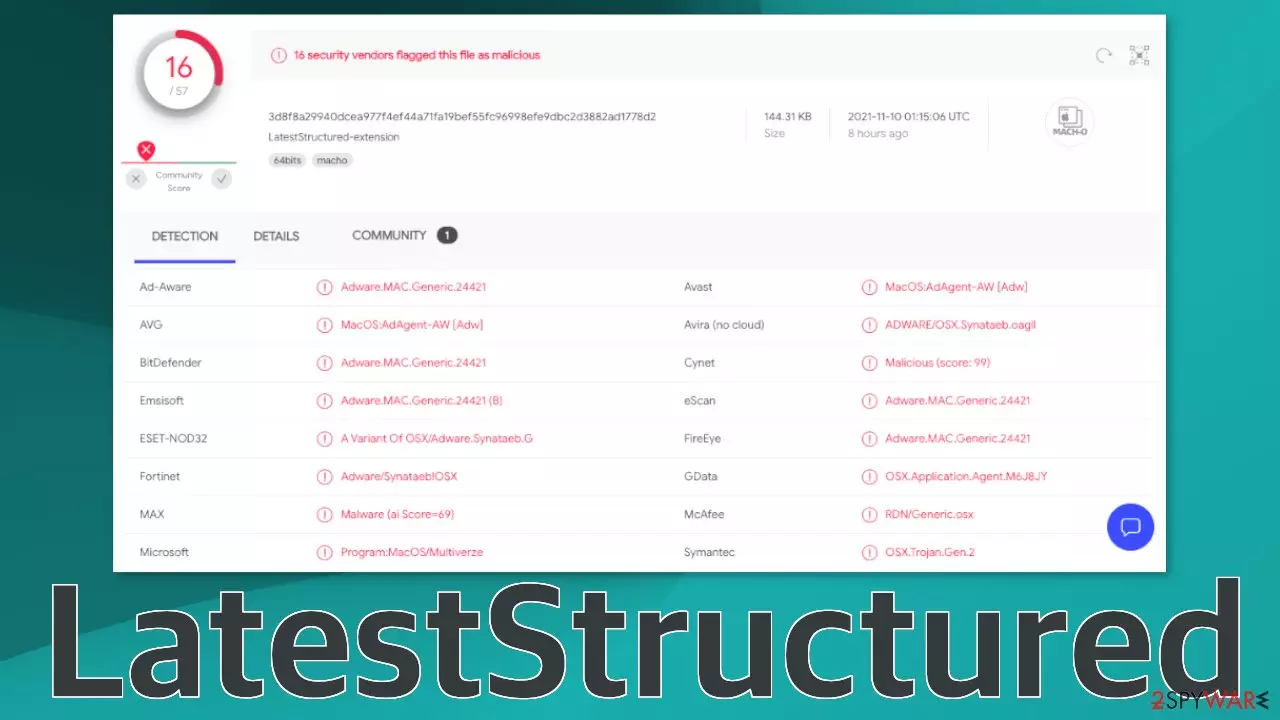
LatestStructured is the name of a virus specifically created to target Mac machines. It is considered to be a potentially unwanted program[1] that has adware and hijacking capabilities. It changes default browser settings like the homepage, new tab address, and search engine. It can also generate and place commercial content, like pop-ups, banners, surveys, and inject links that can lead to dangerous links.
Having this mac virus in your system can lead to the appearance of more PUPs and malware because it can install them automatically without your permission. Mac adware is significantly more aggressive than Windows adware. It belongs to the Adload malware family. It can initiate sneaky scripts[2] upon clicking on links placed by it and scatter its files across the system making it especially difficult to locate and eliminate manually.
Because the virus can fool Apple's security system XProtect,[3] users notice that something is wrong when it already lays its roots in the machine. By then, the malicious program has most likely gained permission to collect user data and make changes not only in the browsers but in the system as well. Users provide developers of this virus with their administrator passwords themselves because it creates a prompt that looks like a normal system prompt asking to enter the admin password.
This adware is not the only one. New versions come out quite often. Users can distinguish them by looking for an icon with a magnifying glass inside a green/teal circle in their Applications folder. All of them look the same. They just have different names. Previous versions that we wrote about are called EdgeManagement, ConnectedPlatform, and SampleSkilled. As you have probably already noticed, the names of these programs consist of two words, so that is another clue that people can keep in mind if they experience similar symptoms.
| NAME | LatestStructured |
| TYPE | Adware, browser hijacker, mac virus |
| MALWARE FAMILY | Adload |
| SYMPTOMS | Different homepage and new tab addresses; redirects to some other search engine and shady websites; decrease in performance |
| DISTRIBUTION | Fake software updates, deceptive ads, installing programs from torrent sites |
| DANGERS | Altered search results can lead to dangerous websites; pop-up ads might be promoting scams; the virus can install other PUPs or even malware in the background |
| ELIMINATION | Eliminating this Mac virus manually can be quite complicated if you do not have prior experience. The easiest and most effective way would be to open a professional security tool and scan your system to delete every related file |
| FURTHER STEPS | FortectIntego should be used to completely wipe out any data left and fix the remaining damage |
Ways Adload is spread on the Internet
The most common reason for Adload infections is the users' own carelessness. Many users think that Mac systems cannot get infected with viruses, but that is just not true. Adware developers have come up with ways to fool Apple's security system. All they had to do was to exclude one string from the code. That is why users should take their security seriously and include precautionary habits in their routine.

You should know that it is better not to trust everything you see online and click on random links and ads without making sure it is safe to do so first. We also have to discourage you from using peer-to-peer file-sharing platforms[4] because they are the most common reason for virus infections. You should especially beware of software “cracks” or keygens because they are often used to spread malware.
Latest Structured Mac adware could have also gotten into your machine as bundled software.[5] Freeware distribution sites use this technique to monetize their activity. That is why should be especially careful and always pay attention to the contents of the installation and untick the boxes next to any additional programs.
Another thing that adware developers like to use to lure in victims is Flash Player. Even though it was discontinued in 2020 and replaced by HTML5, people still believe fake warnings about it being out of date and inducements to update. You should never believe random pages that open on the Internet. Always search for an external source to verify the presented information.
So for example, if you see a message encouraging you to update some kind of software because it is preventing you from accessing content, first make sure that you have it in your system. You can verify if it needs updates by launching it, or going to the official website and downloading updates that way. Never download files from shady sites because it can lead to serious problems.
Removal of Latest Structured Mac virus
You should not do this yourself unless you know what you are doing and what kind of files you need to delete. Some of the files can have a .plist extension which is a normal settings' file, also known as a “properties file,” used by macOS applications. It contains properties and configuration settings for various programs. The app also uses various persistence techniques and drops many files across the system, making browser extension and application removal difficult.
To keep your mind at peace, we recommend using professional anti-malware tools SpyHunterCombo Cleaner or MalwarebytesMalwarebytes, which can detect unwanted programs and eradicate them. You also do not know if the virus installed any additional malicious programs, so this is the safest way to ensure the system is clean.
If you still want to try and delete it manually, proceed with these steps:
- Open Applications folder
- Select Utilities
- Double-click Activity Monitor
- Here, look for suspicious processes related to adware and use Force Quit command to shut them down
- Go back to the Applications folder
- Find LatestStructured in the list and move it to Trash.
If you are unable to shut down the related processes or can't move the app to Trash, you should look for malicious profiles and login items:
- Go to Preferences and select Accounts
- Click Login items and delete everything suspicious
- Next, pick System Preferences > Users & Groups
- Find Profiles and remove unwanted profiles from the list.
There are likely to be more .plist files hiding in the following locations – delete them all:
- Select Go > Go to Folder.
- Enter /Library/Application Support and click Go or press Enter.
- In the Application Support folder, look for any dubious entries and then delete them.
- Now enter /Library/LaunchAgents and /Library/LaunchDaemons folders the same way and terminate all the related .plist files.


The manual elimination process might not always result in full virus removal. Therefore, we still strongly suggest you perform a scan with security software.
Remove the extension gathering information
An extension to your browser is also added by LatestStructured that starts performing all sorts of unwanted tasks. It possibly collects sensitive data and sends it to tracking servers. Some of the data that could be exposed is – IP address, user name, macOS version, browser versions, computer ID, items in the “Applications” folder, a list of agents, daemons, and system configuration profiles.
You should eliminate the add-on as soon as possible after the dangerous files are eliminated from your system. You can delete cookies and cache automatically with the help of FortectIntego. It will also fix any damaged files and system errors, so you should notice an improvement in the machine's performance.
If you prefer doing this yourself without additional help, here are the instructions. You will find guides for Google Chrome and Mozilla Firefox at the bottom of this article:
- Click Safari > Preferences…
- In the new window, pick Extensions.
- Select the unwanted extension and select Uninstall.


Cookies and website data:
- Click Safari > Clear History…
- From the drop-down menu under Clear, pick all history.
- Confirm with Clear History.


The simplest and quickest solution to this is completely resetting Safari:
- Click Safari > Preferences…
- Go to Advanced tab.
- Tick the Show Develop menu in menu bar.
- From the menu bar, click Develop, and then select Empty Caches.


Remove from Mozilla Firefox (FF)
Remove dangerous extensions:
- Open Mozilla Firefox browser and click on the Menu (three horizontal lines at the top-right of the window).
- Select Add-ons.
- In here, select the unwanted extension and click Remove.


Reset the homepage:
- Click three horizontal lines at the top right corner to open the menu.
- Choose Settings.
- Under Home, set your preferred homepage and new tab settings.
Clear cookies and site data:
- Click Menu and pick Settings.
- Go to Privacy & Security section.
- Scroll down to locate Cookies and Site Data.
- Click on Clear Data...
- Select Cookies and Site Data and Temporary cached files and pages, then click Clear.


Reset Mozilla Firefox
If clearing the browser as explained above did not help, reset Mozilla Firefox:
- Open Mozilla Firefox browser and click the Menu.
- Go to Help and then choose Troubleshooting Information.

- Under Give Firefox a tune up section, click on Refresh Firefox...
- Once the pop-up shows up, confirm the action by pressing on Refresh Firefox.



Remove from Google Chrome
Delete malicious extensions from Google Chrome:
- Open Google Chrome, click on the Menu (three vertical dots at the top-right corner) and select More tools > Extensions.
- In the newly opened window, you will see all the installed extensions. Uninstall all suspicious extensions related to the unwanted program by clicking Remove.


Clear cache and web data from Chrome:
- Click on Menu and pick Settings.
- Under Privacy and security, select Clear browsing data.
- Select Browsing history, Cookies and other site data, as well as Cached images and files.
- Click Clear data.


Change your homepage:
- Click menu and choose Settings.
- Look for a suspicious site in the On startup section.
- Click on Open a specific or set of pages and click on three dots to find the Remove option.
Reset Google Chrome:
If the previous methods did not help you, reset Google Chrome to eliminate all the unwanted components:
- Click on Menu and select Settings.
- In the Settings, scroll down and click Advanced.
- Scroll down and locate Reset and clean up section.
- Now click Restore settings to their original defaults.
- Confirm with Reset settings.


Did this guide help?
Be the first to comment