

Bitcoin virus – malware that can use victims' PC resources to mine cryptocurrency for criminals
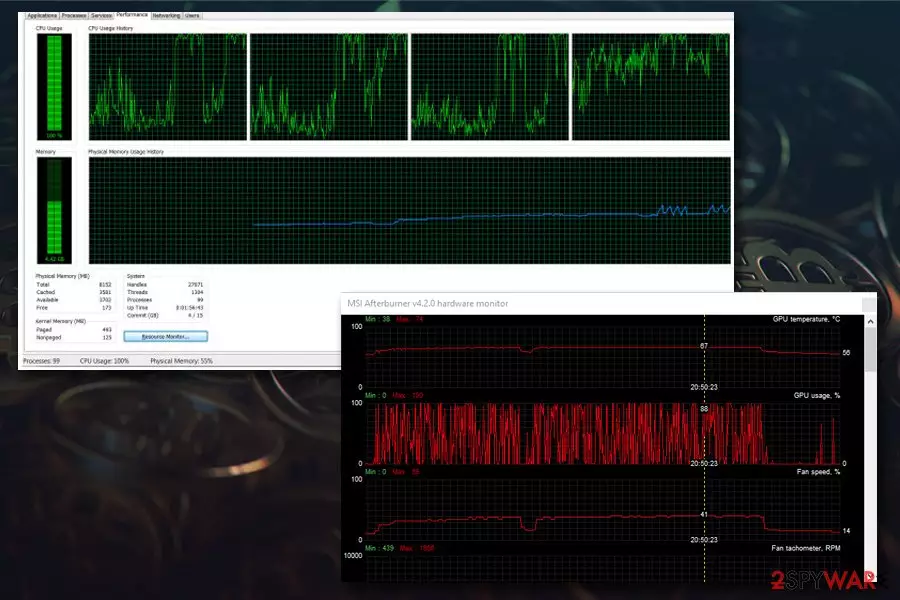
Bitcoin virus is a type of malicious program that seeks to mine cryptocurrency illegally while using victims' CPU power. In some cases, a graphics processing unit (GPU) can be utilized as well. The virus typically enters machines via a trojan horse – a backdoor virus that clears the path for coin-mining malware.
The extensive usage of computer hardware diminishes the overall performance of the device (eventually it can lead to its destruction), as well as increases the amount of electricity consumed, leading to raised electric bills. Users can detect the malware in the Task Manager as a questionable process running in the background, such as XMRig. The Miner.Bitcoinminer or similarly named infection can infiltrate Windows, Mac, and Android devices.
| Summary | |
| Name | Bitcoin virus |
|---|---|
| Type | Trojan |
| Sub-type | Cryptojacker[1] |
| Versions | CPU Miner, Vnlgp Miner, etc. |
| Currencies mined | Bitcoin, Monero, Electroneum, and others |
| Distribution | Spam emails, fraudulent messages on Skype, EternalBlue exploit, etc. |
| Symptoms | Increased CPU and GPU usage (making the PC hot), software crashes or freezes, slow overall performance of the device |
| Susceptible systems | Windows, Mac, Android |
| Elimination | Download and install an anti-malware tool to remove the virus fully |
| Sistem fix | Using the FortectIntego tool might help to recover the virus damage |
The virus is capable of harvesting various crypto, including Monero, Electroneum, Litecoin, Ethereum, although the most prominent one is Bitcoin. It is a virtual currency that was first introduced in 2008. However, the usage of this digital currency increased only in 2011. At the time of the writing, the cryptocurrency has already reached a circulation rate of more than 17 million as of late May 2018.[2]
There is no surprise that even the most reputable companies accept this currency. However, it is created not through a central monetary agency, but through the computers that perform CPU-intensive crypto calculations. Therefore, cybercriminals are always looking for new ways to take advantage of this feature by creating new versions of cryptominers.
The virus is detected under various names, including:
- Riskware.Miner
- Trojan.BitMine
- W32/CoinMiner
- Trojan.BitMine
- Trojan.BitCoinMiner
- PUA.CoinMiner, etc.
There are several variants of BitcoinMiner, as well. The most known of them are called CPU Miner and Vnlgp Miner. Unfortunately, you can hardly notice when your computer gets infected by it. According to experts, this malware attempts to hide by trying to work only when the victim is not using his/her device.
However, you can notice the virus by monitoring your PC’s speed. According to research, the use of the machine’s CPU grows up rapidly when this virus infiltrates it, so don’t ignore such changes. What is more, the Trojan horse might also be capable of opening the back door or download other malicious programs.

If the GPU of your device is used instead of CPU, you will not be able to spot it in the Task Manager. However, you will be able to see stuttering and freezing frames when performing graphics-intensive tasks, such as gaming or full HD video processing.
Some users may naturally come to the conclusion that their graphics card is about to break. Nevertheless, if you experience such symptoms, you should download software that can measure temperature and workload on your GPU, and check if the infection causes the malfunction.
There are many reasons[3] why your computer might be working slowly – incompatible software or hardware, corrupt system or software files, outdated registry entries, and similar issues. However, it is always worth scanning your machine with reputable anti-virus software first. MalwarebytesMalwarebytes, SpyHunterCombo Cleaner or similar security software will immediately detect and remove BitcoinMiner from Mac OS X or Windows.
The evolution of the virus: ransomware variant hit the surface
Bitcoin ransomware is a specific version of the cryptocurrency's malware, which can infiltrate a computer without the user’s approval and then encrypt each of his/her files. This threat has been noticed after encrypting the entire network of one medical center in the USA. However, it can also affect regular home users leaving them without access to their files.

Once it finishes the encryption of the victim’s files, the ransomware displays a warning message asking him or her to pay the ransom of 1.5 BTC. Please, do NOT pay it as you may end up with nothing! Keep in mind that you are dealing with scammers who can take money from you and leave you without a special code needed to decrypt your locked files.
In this case, you should perform a virus removal with SpyHunterCombo Cleaner MalwarebytesMalwarebytes, and try to encrypt your files with the help of these tools: Photorec and R-studio. Keep in mind that dealing with cybercriminals is never an option!
The mining malware has been noticed spreading in Russia
At the end of July 2017, it was reported that cryptocurrency mining malware infected 25% of computer users in Russia. [4] However, some sources state that this cyber infection may have infiltrated 30% of Russian computers.[5]
According to the official data, the majority of affected devices run in Windows OS. Meanwhile, Mac computers and iPhones haven’t suffered a lot from the virus.
Authorities published the information about Bitcoin mining virus[6]. However, security specialists and antivirus vendors claim that the scope of the attack is exaggerated.[7] Experts agree that in the past there were few issues with this malware, but not as vast as it is has been stated recently.

A representative from Kaspersky Labs, which is one of the leading Russian antivirus vendors, claims that if such a massive attack were held, they would have noticed it. However, since the beginning of the year, only 6% of their customers have suffered from infection.[8]
How this malware can infect your device
According to security experts, this virus is mostly spread via Skype network, but it has also been noticed on other social networks, so beware of that. Typically, this virus relies on a spam message, which claims something like „this my favorite picture of you” and includes a malicious file.
Of course, the virus seeks to convince its victims to download the file onto their computers. Certain versions of the malware were also seen being spread using the EternalBlue exploit. If you want to avoid it, stay away from such messages.
Once the victim downloads the “photo,” he not only lets malicious pieces inside the machine but allows the virus to connect the PC to its command-and-control server. When it's inside and active, the virus turns the infected machine into the Bitcoin generator. However, it can also be designed to the virus, which steals banking details, records the keystrokes, or downloads more malware on its target PC.
Bitcoin virus removal guide
If you think that your computer is infected with malware, you should scan it with updated security software, such as SpyHunterCombo Cleaner or MalwarebytesMalwarebytes. If your device is affected, your chosen security tool will remove Bitcoin virus immediately.
Make sure you check the system immediately after noticing changes in your computer’s speed because it is the only way to get rid of this threat without additional problems. The appearance of other viruses and the loss of your sensitive information can be expected when having the virus on a computer.

These programs should also help you perform Bitcoin virus removal from the system. However, sometimes viruses that are categorized as ransomware block anti-virus software to prevent their removal. If you are dealing with such a problem right now, follow the guide below.
Did this guide help?
Be the first to comment