

Sexaview.ru ads expose users to links leading to potentially dangerous websites
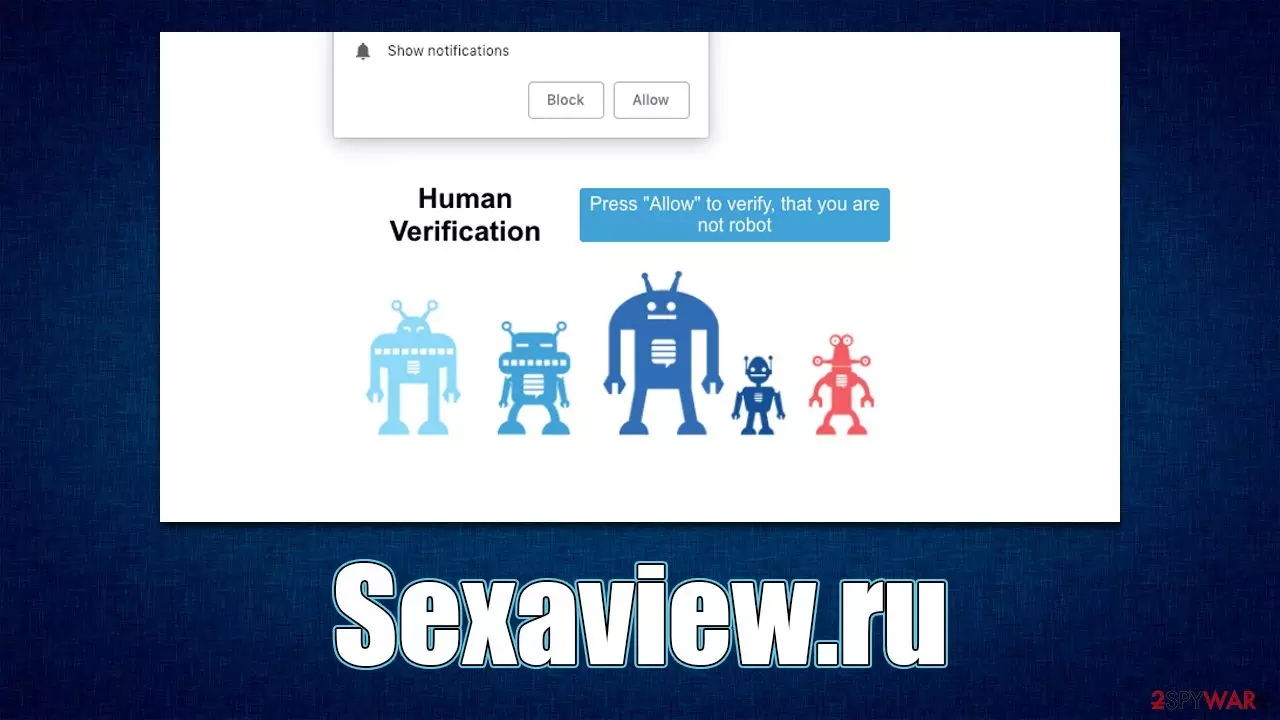
Sexaview.ru is a rogue website. Users can encounter it after being redirected from somewhere else – usually, illegal video streaming or pirated software distribution websites. In rarer cases, people might end up there due to adware installed on their systems, as those infected are more prone to encountering phishing[1] or scam messages, as well as suffer from an increased number of ads on all visited websites.
Upon entry, users are presented with a request to enable push notifications, although they do not always understand the request. The message and the picture in the background portray the prompt as something different, for example, that they need to confirm they aren't robots; hence some people might believe it's a verification process similar to a captcha.[2]
As soon as they press the “Allow” button, they allow Sexaview.ru to deliver ads directly to users' screens. They can include all sorts of misleading messages that would encourage downloading potentially dangerous software, spending money on useless services, or disclosing personal details (such as email or phone) so that commercial and malicious content can be delivered on a regular basis.
| Name | Sexaview.ru |
|---|---|
| Type | Push notifications, ads, scam, pop-ups |
| Distribution | The intrusive push notifications show up at some point after the “Allow” button within the notification prompt is pushed |
| Symptoms | Push notifications show on the desktop at random time intervals. These pop-ups show fake notices and push scams. Links can also lead to malware-laden sites |
| Risks | If you click on links provided by the website, you might end up infecting your system with malware/PUPs, disclosing your personal information to cybercriminals, or losing money for useless services |
| REmoval | Notifications can be disabled via the browser settings; in case you experience more ads and redirects to suspicious sites, you should also get rid of adware – use SpyHunterCombo Cleaner antivirus for effective removal |
| additional tips | Make sure you clean your browsers after you delete PUPs from the system. To do that automatically, you can use FortectIntego |
Symptoms
The website itself is not how people first hear of Sexaview.ru. Instead, they begin to see suspicious pop-ups that show up at random times, interrupting and disturbing their daily activities on the PC. They are not triggered by user actions, which makes the whole situation rather confusing.
Push notifications can be delivered to users on the system level, as long as the browser is running or idling in the background. This means that it does not matter what the user is doing at that point – visiting an unrelated website, streaming a YouTube video, or reading an email they just received.
The contents of these push notifications are also commonly misleading or even malicious. Sexaview.ru, Ddenkno.xyz, Wellsurfacestore.xyz, and many other push notification scam sites use insecure advertising networks, resulting in users being exposed to malicious ads.

For example, they might be told that their systems have been infected with viruses and they need to purchase security software to allegedly remove them. You should never trust these claims or even explore websites that the links might lead you to, as these places are likely to be malicious. Instead, simply remove the pop-ups as we explain below.
Remove the annoying Sexaview.ru push notifications
Initially, many people do not expect to see pop-ups that show up independently of what they are doing on their machine. The conclusion that it must be some kind of virus is reached rather quickly by many, and understandably so. Intrusive pop-up windows that include misleading messages should not be showing up on the desktop randomly.
However, in this instance, the activity is not caused by any type of infection. Since people are tricked into allowing push notifications to be shown (and the activity does not occur until much later), they can't connect the dots and believe that malware must be behind it. In truth, all you have to do to remove Sexaview.ru ads is to access browser settings and block the website from sending you push notifications.
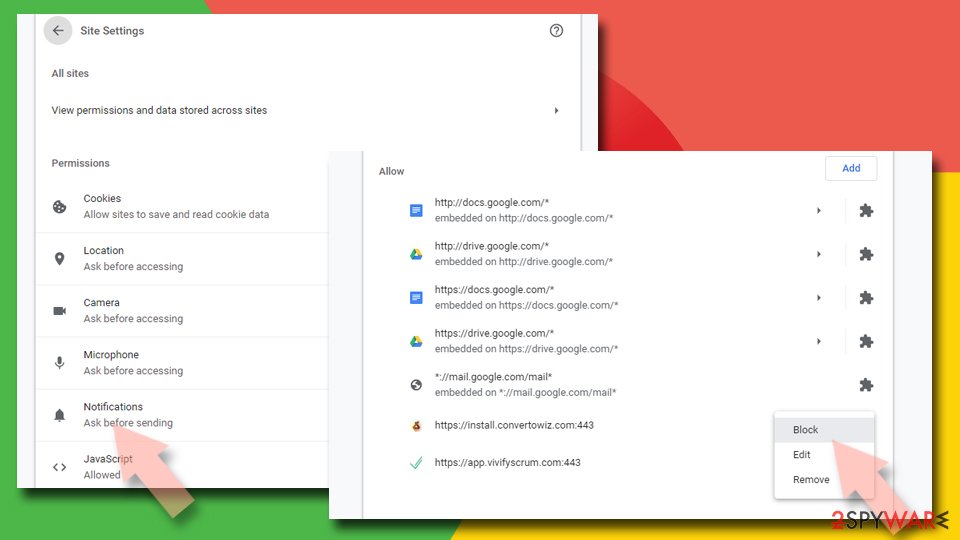
Google Chrome
- Select Menu > Settings > Advanced.
- Click on Site Settings > Notifications.
- Check the Allow section and find the address of the site.
- Select More Actions and pick Block.

Mozilla Firefox
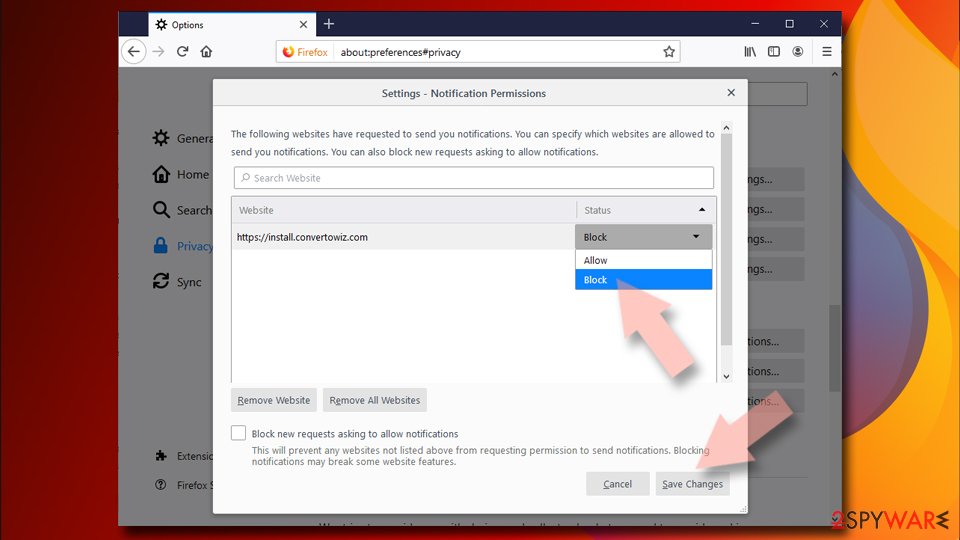
- Go to Menu and then select Options.
- Go to Privacy & Security > Notifications > Settings.
- Choose Block after picking this option from the drop-down menu.
- Confirm with Save Changes.

MS Edge (Chromium)
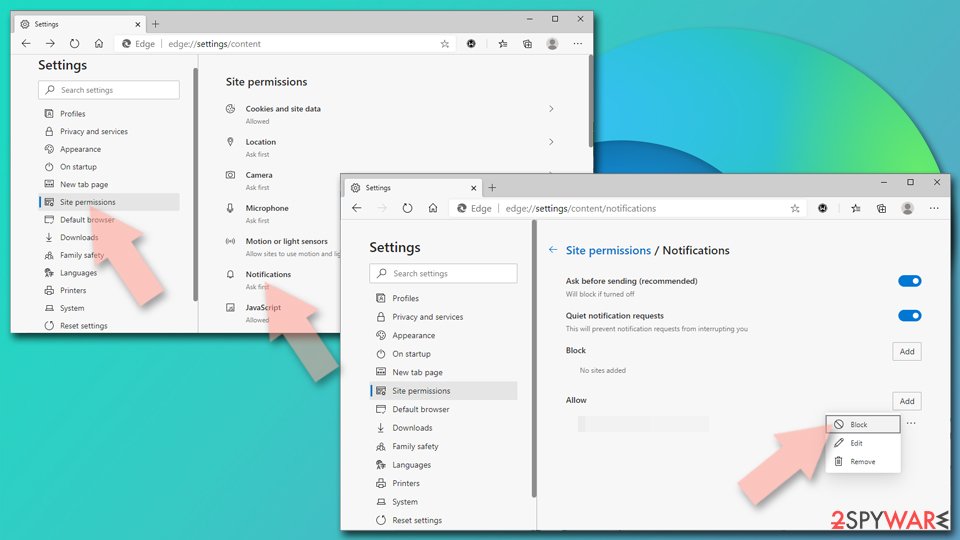
- Go to Menu and pick Settings.
- Select Site permissions.
- Click on Notifications.
- Find the site URL, and click More actions.
- Pick Block.

Internet Explorer
- Open Internet Explorer, and click on the Gear icon at the top-right of the window.
- Select Internet options and go to the Privacy tab.
- In the Pop-up Blocker section, click on Settings.
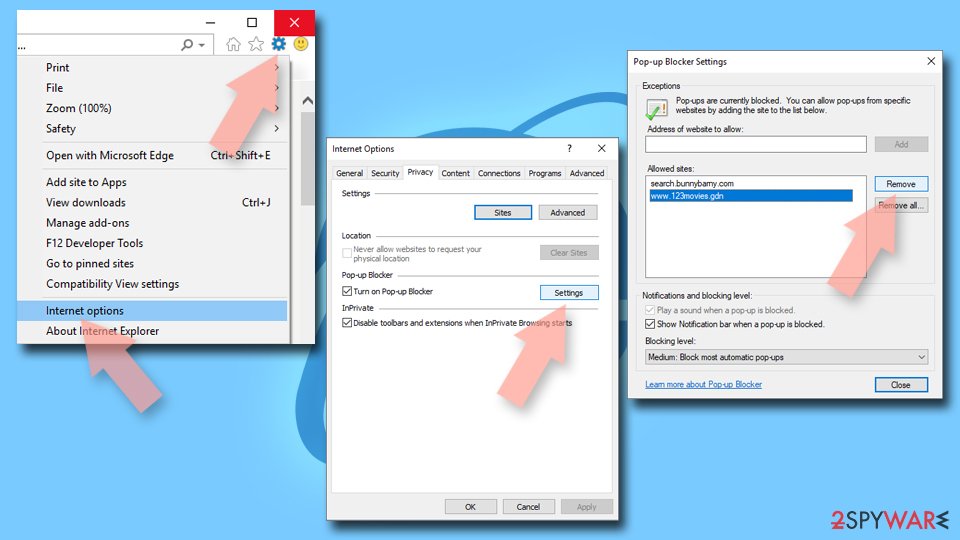
- Locate web address in question under Allowed sites and pick Remove.

Safari
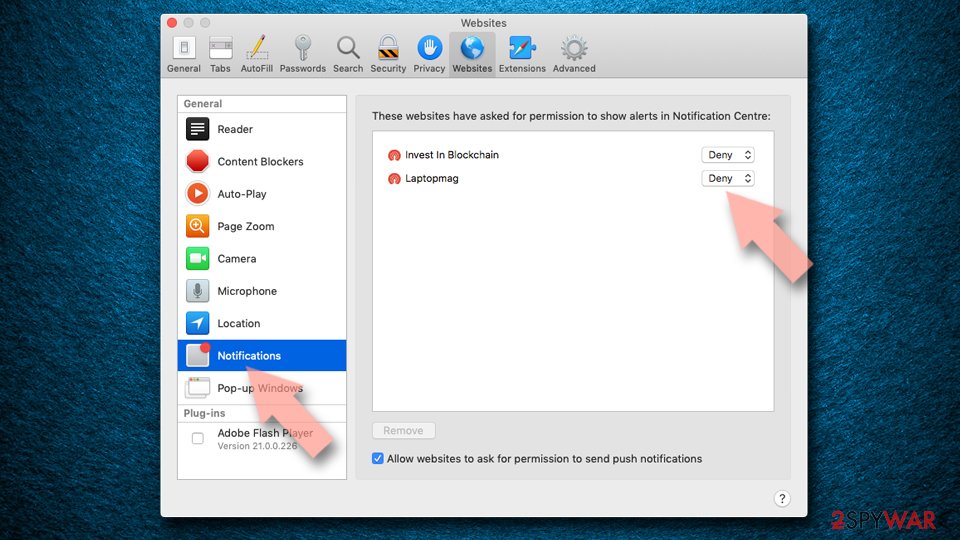
- Click on Safari > Preferences…
- Go to the Websites tab and, under General, select Notifications.
- Select the web address in question, click the drop-down menu and select Deny.

Check the system for adware and other infections
While removal of push notifications can't be done with the help of security software and needs to be performed manually, it is worth noting that additional checks should be made. Adware[3] is a type of potentially unwanted software that is distributed in software bundles, fake updates, or similar misleading methods, making users install it inadvertently.
Once on the system, adware changes several search and browser settings, rerouting users through different URLs and exposing them to various commercial material, including pop-ups, offers, deals, auto-play, in-text links, and similar ads. A more serious infection should be suspected if you notice strange mouse movements, high resource usage, never seen programs installed on your system, crashes, errors, and similar.
In order to check your computer for malware and remove it effectively, we recommend employing SpyHunterCombo Cleaner or MalwarebytesMalwarebytes security software. This would ensure that all the malware-related components are eliminated at once.
If you are experiencing crashes and errors on your device, we recommend running the FortectIntego repair tool, as these might not be a sign of malware but rather system malfunction. Besides, the app can also clean web browser data for you to stop data tracking and remove junk files for better performance. If you rather do this manually, check the instructions below.
Uninstall from Windows
Uninstall from Windows 10/8:
- Type Control Panel into the Windows search box and open the result.
- Under Programs, select Uninstall a program.


Uninstall from Windows 7/XP:
- Click on Windows Start > Control Panel (Windows XP users should click on Add/Remove Programs).
- In Control Panel, select Programs > Uninstall a program.


Remove the unwanted program:
- In the Programs and Features window, look for any recently installed suspicious entries, select them, and click Uninstall.
- If User Account Control appears, click Yes to confirm, then complete the removal.


Delete from macOS
Remove the unwanted application:
- From the menu bar, select Go > Applications.
- In the Applications folder, look for any suspicious entries, then drag them to Trash (or right-click and pick Move to Trash).


Delete leftover files and folders:
- Select Go > Go to Folder.
- Enter /Library/Application Support and remove any suspicious folders related to the unwanted program.
- Repeat the same check in the /Library/LaunchAgents and /Library/LaunchDaemons folders, deleting any suspicious entries.

- Finally, empty the Trash to permanently remove the leftovers.

Remove from Microsoft Edge
Delete unwanted extensions from MS Edge:
- Select Menu (three horizontal dots at the top-right of the browser window) and pick Extensions.
- From the list, pick the extension and click on the Gear icon.
- Click Remove.


Clear cookies and other browser data:
- Click on the Menu (three horizontal dots at the top-right of the browser window) and select Settings > Privacy, search, and services..
- Under Clear browsing data, pick Choose what to clear.
- Select Cookies and other site data and Cached images and files. (apart from passwords, although you might want to include Media licenses as well, if applicable) and click on Clear.


Restore new tab and homepage settings:
- Click the menu icon and choose Settings.
- Then find On startup section.
- Click Remove next to any suspicious startup page.
Reset MS Edge if the above steps did not work:
- Press on Ctrl + Shift + Esc to open Task Manager.
- Click on More details arrow at the bottom of the window.
- Select Details tab.
- Now scroll down and locate every entry with Microsoft Edge name in it. Right-click on each of them and select End Task to stop MS Edge from running.


Instructions for Chromium-based Edge
Delete extensions from MS Edge (Chromium):
- Open Edge and click select Settings > Extensions.
- Delete unwanted extensions by clicking Remove.


Clear cache and site data:
- Click on Menu and go to Settings.
- Select Privacy, search and services.
- Under Clear browsing data, pick Choose what to clear.
- Under Time range, pick All time.
- Select Clear now.


Reset Chromium-based MS Edge:
- Click on Menu and select Settings.
- On the left side, pick Reset settings.
- Select Restore settings to their default values.
- Confirm with Reset.
- This will disable extensions and reset startup pages but will not delete bookmarks, saved passwords, or browsing history.


Remove from Mozilla Firefox (FF)
Remove dangerous extensions:
- Open Mozilla Firefox browser and click on the Menu (three horizontal lines at the top-right of the window).
- Select Add-ons.
- In here, select the unwanted extension and click Remove.


Reset the homepage:
- Click three horizontal lines at the top right corner to open the menu.
- Choose Settings.
- Under Home, set your preferred homepage and new tab settings.
Clear cookies and site data:
- Click Menu and pick Settings.
- Go to Privacy & Security section.
- Scroll down to locate Cookies and Site Data.
- Click on Clear Data...
- Select Cookies and Site Data and Temporary cached files and pages, then click Clear.


Reset Mozilla Firefox
If clearing the browser as explained above did not help, reset Mozilla Firefox:
- Open Mozilla Firefox browser and click the Menu.
- Go to Help and then choose Troubleshooting Information.

- Under Give Firefox a tune up section, click on Refresh Firefox...
- Once the pop-up shows up, confirm the action by pressing on Refresh Firefox.



Remove from Google Chrome
Delete malicious extensions from Google Chrome:
- Open Google Chrome, click on the Menu (three vertical dots at the top-right corner) and select More tools > Extensions.
- In the newly opened window, you will see all the installed extensions. Uninstall all suspicious extensions related to the unwanted program by clicking Remove.


Clear cache and web data from Chrome:
- Click on Menu and pick Settings.
- Under Privacy and security, select Clear browsing data.
- Select Browsing history, Cookies and other site data, as well as Cached images and files.
- Click Clear data.


Change your homepage:
- Click menu and choose Settings.
- Look for a suspicious site in the On startup section.
- Click on Open a specific or set of pages and click on three dots to find the Remove option.
Reset Google Chrome:
If the previous methods did not help you, reset Google Chrome to eliminate all the unwanted components:
- Click on Menu and select Settings.
- In the Settings, scroll down and click Advanced.
- Scroll down and locate Reset and clean up section.
- Now click Restore settings to their original defaults.
- Confirm with Reset settings.


Delete from Safari
Remove dangerous extensions:
- Open Safari, click Safari in the menu at the top-left of the screen, and select Preferences.
- Go to the Extensions tab, look for any suspicious entries, and click Uninstall to remove them.


Clear history and website data:
- Click Safari in the menu and pick Clear History.
- Set Clear to all history and confirm with Clear History.


Reset Safari:
- Click Safari in the menu and select Preferences > Advanced.
- Enable Show Develop menu in menu bar.
- From the menu bar, click Develop and select Empty Caches.


Did this guide help?
Be the first to comment