

Noobilubi.com is a malicious website designed to trick users

Noobilubi.com is a suspicious website you might encounter when browsing the web on Google Chrome, Mozilla Firefox, MS Edge, or another web browser. Users are usually redirected to it after clicking a malicious link on some other website, taken away by an automatic script, or adware is forcing these redirects. Thus, it is important to check whether or not your system is infected with adware[1] or other malicious software before anything else.
As soon as they enter the Noobilubi.com site, they are caught off guard by seeing the following page elements:
- A push notification prompt that asks whether push notifications should be enabled;
- A message, usually accompanied by a thematically matching picture, actively encourages users to click the “Allow” button within the notification prompt.
This scheme is very common for push notification scams – it is used by countless other fake websites, including Qmsvnh.com, News-hubucu.cc, Ugujaco.com, and many others.
If you agree to the offer, you will immediately allow the site to send you information without restrictions. This means that crooks are able to send you ads at any time, and you won't be able to do anything about it unless you block this access. This article will explain how to do precisely that and how to find and eliminate adware from the system.
| Name | Noobilubi.com |
| Type | Push notifications, ads, pop-ups, scam |
| Distribution | Users might start seeing intrusive pop-ups at some point after they click the “Allow” button within the site's notification prompt |
| Symptoms | Intrusive pop-ups show up directly on the desktop, on top of all other opened apps or websites |
| Risks | Financial losses, installation of potentially unwanted programs/malware, personal data disclosure to unknown or malicious parties |
| Removal | Access browser settings to block push notifications. By scanning the system with SpyHunterCombo Cleaner, you can quickly check whether or not it is infected with malware or adware |
| Recovery | Potentially unwanted programs often leave cookies on the browser, which are used for tracking. To get rid of these leftover files automatically, use FortectIntego |
Can push notifications be dangerous?
Push notifications are a feature that was first introduced on desktop browsers back in 2015[2] and, since then, has become widely popular. It did not take long for crooks to realize that the feature can be used for ad delivery – all they have to do is make people subscribe to push notifications on a fabricated website.
While many people are familiar with scams like Noobilubi.com, others might get easily tricked when they are told that they need to verify they aren't bots – this is very similar to legitimate verification processes such as captcha. These social engineering[3] tricks work quite well on less IT-savvy people; they also don't know how to remove these ads due to not being sure of their origins.
Once they accept the request to receive push notifications, they usually only start receiving the unwanted pop-ups sometime later. The push notification from this site might include all sorts of scam links – get rich quick scams, fake virus infection notifications, and similar. It is not recommended to click on these links, as you might infect your system with malware, disclose your personal info, or suffer from financial losses.

Adware could be one of the main causes of phishing content encounters
No users visit malicious websites intentionally – unless they are willing to risk it on purpose to receive some type of benefit. For example, torrents, software cracks, and similar websites often host malicious links or invisible scrips with the help of which users are then rerouted to other sites.
Alternatively, adware could be one of the main reasons for unwanted browser redirects. This type of software is spread via suspicious methods, such as software bundling or fake updates, which makes many people unaware of its presence. Thus, if you notice increased ad activity, we strongly recommend you scan your system with SpyHunterCombo Cleaner or MalwarebytesMalwarebytes. It would ensure that all the malicious components are eliminated at once.
After that, you should also take care of your browsers to secure your privacy. Cookies, for example, are used by third parties to track various user data – they can remain even after PUPs are eliminated. You can do this quickly and efficiently with FortectIntego PC repair and maintenance utility, which can also fix crashes, errors, and other issues.
Get rid of Noobilubi.com pop-ups
Potentially unwanted programs might cause ads and redirects: if you have scanned your system with security software, you should be safe. However, this would not get rid of Noobilubi.com ads – you would have to block its access manually via browser settings. Below you will find all the steps you need to take in order to stop the scam messages from coming to your screen on a regular basis.
Google Chrome
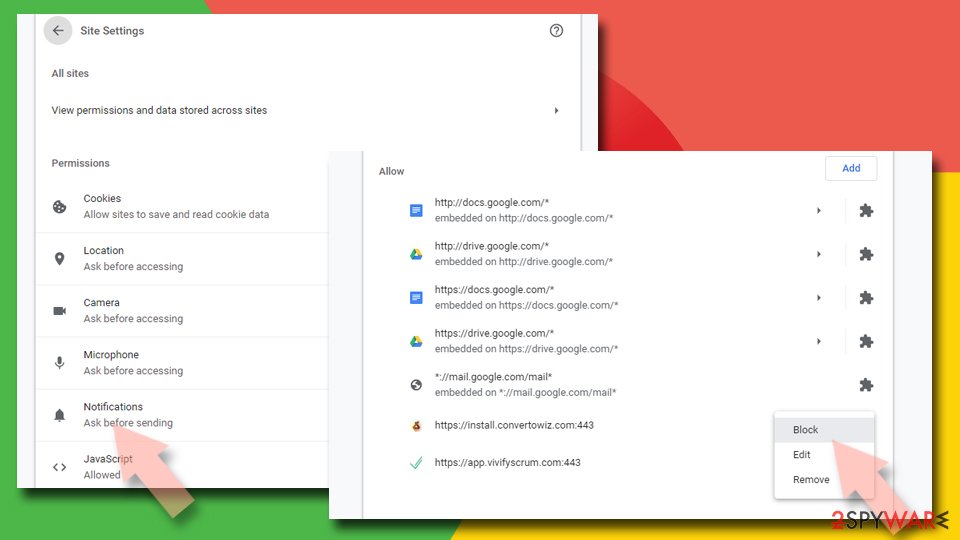
- Open the Google Chrome browser and go to Menu > Settings.
- Scroll down and click on Advanced.
- Locate the Privacy and security section and pick Site Settings > Notifications.
- Look at the Allow section and look for a suspicious URL.
- Click the three vertical dots next to it and pick Block. This should remove unwanted notifications from Google Chrome.

Google Chrome (Android)
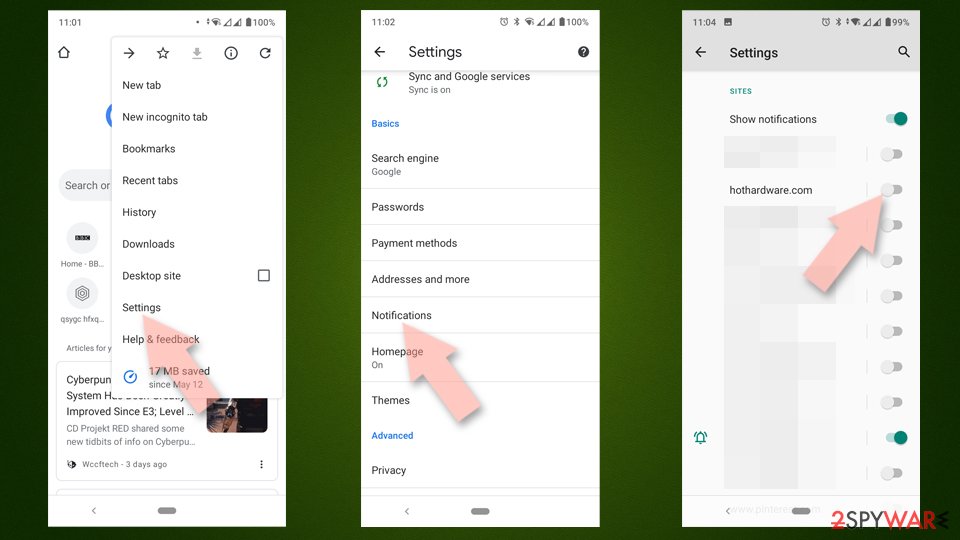
- Open Google Chrome and tap on Settings (three vertical dots).
- Select Notifications.
- Scroll down to the Sites section.
- Locate the unwanted URL and toggle the button to the left (Off position).

Mozilla Firefox
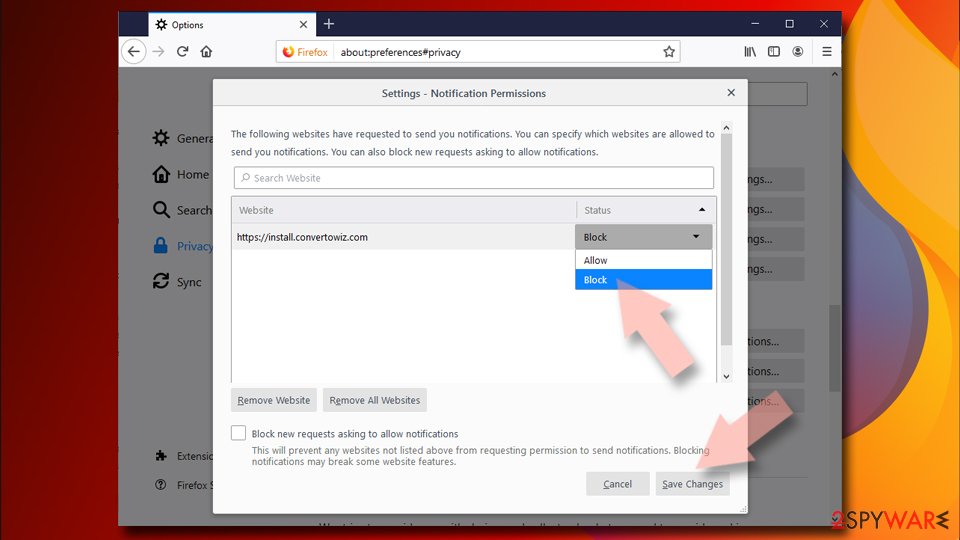
- Open Mozilla Firefox and go to Menu > Options.
- Click on Privacy & Security section.
- Under Permissions, you should be able to see Notifications. Click the Settings button next to it.
- In the Settings – Notification Permissions window, click on the drop-down menu by the URL in question.
- Select Block and then click on Save Changes. This should remove unwanted notifications from Mozilla Firefox.

Safari
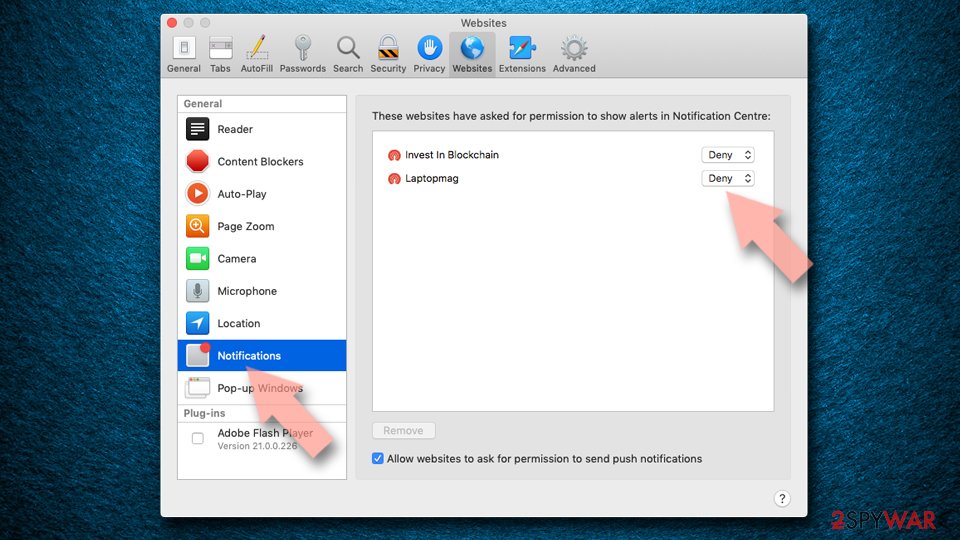
- Click on Safari > Preferences…
- Go to the Websites tab and, under General, select Notifications.
- Select the web address in question, click the drop-down menu and select Deny.

MS Edge
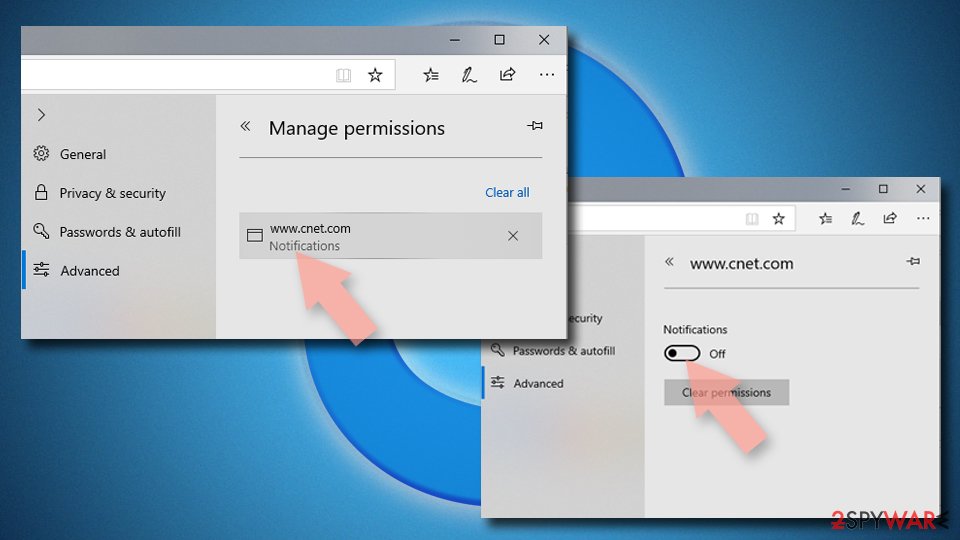
- Open Microsoft Edge, and click the Settings and more button (three horizontal dots) at the top-right of the window.
- Select Settings and then go to Advanced.
- Under Website permissions, pick Manage permissions and select the URL in question.
- Toggle the switch to the left to turn notifications off on Microsoft Edge.

MS Edge (Chromium)
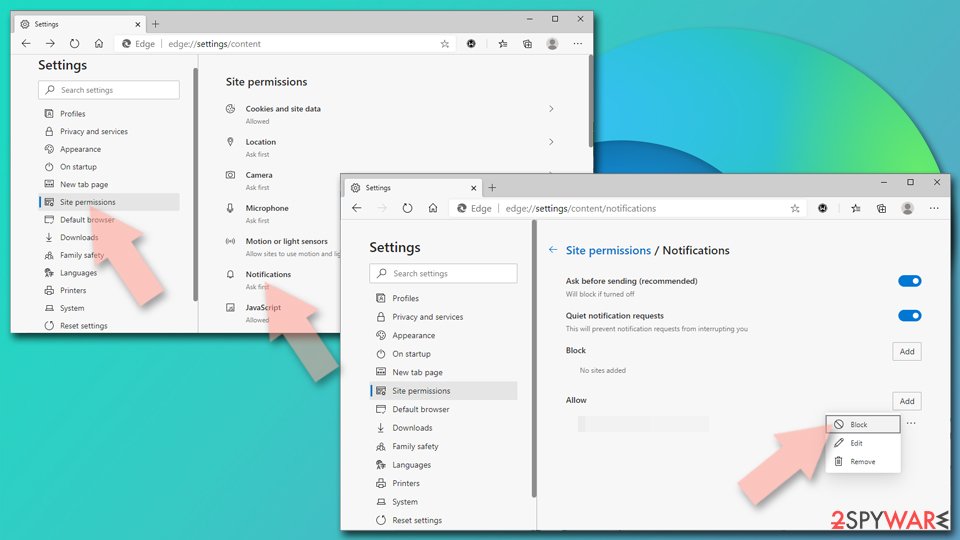
- Open Microsoft Edge, and go to Settings.
- Select Site permissions.
- Go to Notifications on the right.
- Under Allow, you will find the unwanted entry.
- Click on More actions and select Block.

Internet Explorer
- Open Internet Explorer, and click on the Gear icon at the top-right of the window.
- Select Internet options and go to the Privacy tab.
- In the Pop-up Blocker section, click on Settings.
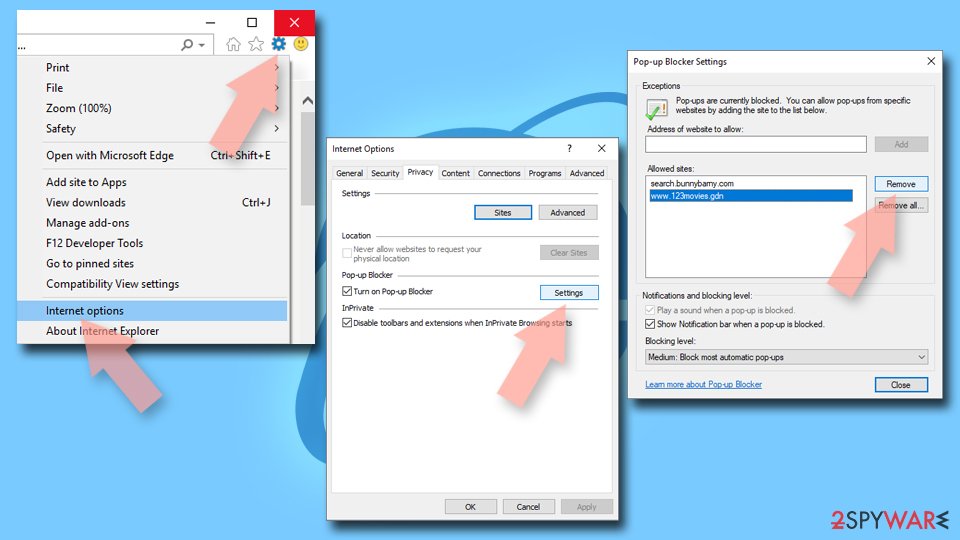
- Locate the web address in question under Allowed sites and pick Remove.

Did this guide help?
Be the first to comment