

Is Runsomewere virus really serious?
Runsomewere virus is a new crypto-ransomware which follows the footsteps of other, already established cyber threats including Hidden Tear, EDA2 and Jigsaw virus. Various security providers detect this virus under different names. Atros4.BAIR, Trojan.GenericKD.3758603, Ransom.Cryptear.Gen!c and Ransom_CRYPTEAR.SM are just a few of them. This only suggests that the virus may be spreading via different channels, though its true distribution strategies have not been officially confirmed. We can only presume that the virus developers employ the typical ransomware distribution techniques — software bundles and spam emails. What certainly know though that once it accesses the computer (either brought by a Trojan or downloaded as an email attachment) Runsomewere malware drops its executable called Runsome.exe which is the file responsible for initiating data encryption process. The primary targets of this virus are poorly protected or unstable Windows operating systems, but we should never turn down the possibility of OS X systems getting infected, too. Besides, there are thousands of other cyber parasites that are waiting to infect your computer online. So, it is important to keep both of these operating systems updated according to the latest security standards and protected with top-notch antivirus equipment such as FortectIntego or SpyHunterCombo Cleaner for Macs. Nevertheless, even if after taking all the security measures the parasite still manages to enter the system and lock the files, remove Runsomewere straight away. You can use the same antivirus tools to do this task.
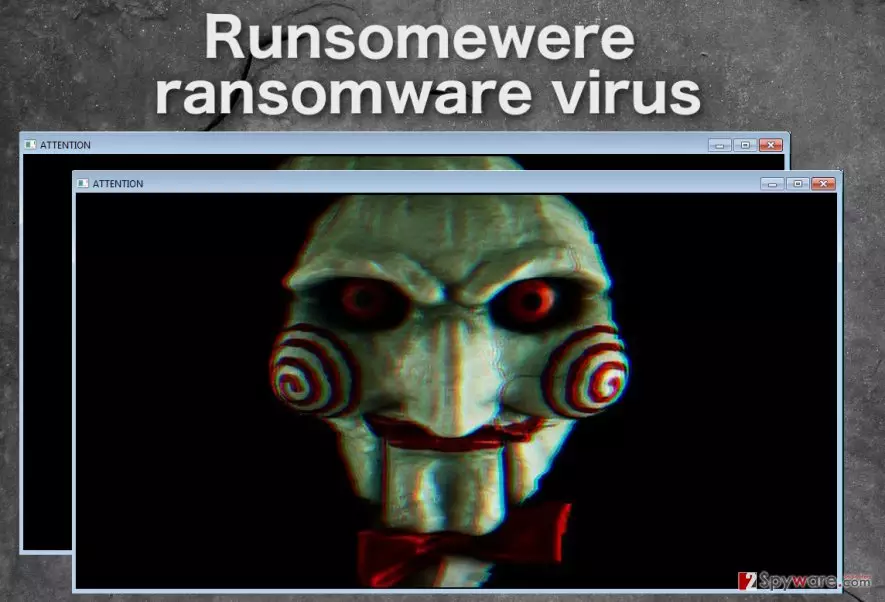
Runsomewere works like most crypto-viruses, so it should not be regarded as less dangerous only because its seemingly misspelled title suggests so. It locks data within hours, and after the encryption done, it appends .locked extensions to the affected files. Please note that since the virus is still under development, the extensions might change with each new version. So far we have no information about the ransom note, the payment system or the amount of ransom that the hackers demand in exchange for the files. We can make something of the Jigsaw PNG file that the virus drops on the infected computer. This file featuring an image of the famous character from the horror movie “Saw” replaces the regular desktop picture which is a typical thing Jigsaw ransomware and some of its later variants do. Is Runsomewere a Jigsaw follow-up? Time will tell. As for now, you should focus on Runsomewere removal and file recovery in case you currently find yourself with this parasite on your computer.
How contagious is this virus?
As you are already aware, Runsomewere is still a “freshly-baked” virus, so virus analysts can only speculate about its distribution capabilities. Presumably, though, this virus infects computers through malicious spam. Cybercriminals behind Runsomewere may have a full arsenal of deceptive emails that they spread around with the ransomware attached to them. These emails employ persuasion and deception techniques to get the users to download infected attachments. So, the virus is not contagious. Its infiltration success largely depends on you, whether you are cautious enough not to get tricked by one of the scammers emails. So we encourage you to keep yourself informed and avoid downloading suspicious email attachments.
Methods of Runsomewere removal:
Though more advanced users may try to approach Runsomewere virus elimination manually, it is not recommended for the regular home users. This virus is a mix of complex codes which are designed to aggravate the Runsomewere removal. This means that the virus may even try to block your antivirus from running the system scan or initiate other actions of resistance. If you can’t remove Runsomewere due to this reason, follow the guidelines below, decontaminate the virus and repeat the scan.
Did this guide help?
Be the first to comment