

New version of GlobeImposter emerges — this time it is called Sexy ransomware
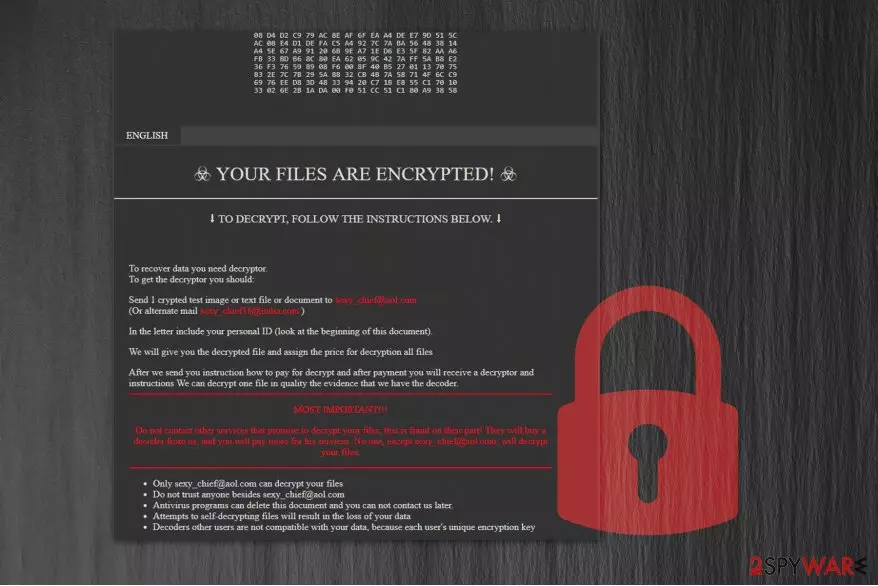
Sexy ransomware is a name of the latest ransomware released by the same cybercriminals as the notorious GlobeImposter. Just like its predecessor, it performs data encryption just like any other file-encrypting virus of this strain and appends .sexy file extension. Shortly after, hackers indicate sexy_chief@aol.com e-mail address and ask to send one encoded file to determine the price for the decryption of all data.
The developers of Sexy ransomware also try to intimidate the victims by repeatedly saying that they shouldn’t trust anyone except sexy_chief@aol.com. Also, the malevolent people warn that any attempts to decrypt the files will result in the loss of data.
However, do not hurry to pay the ransom. If you contacted other victims that are suffering from different variants of Globe Imposter and have agreed to make the transaction, they would assure you that the criminals are only swindling money from gullible people. Thus, do not fall into the trap of malevolent people and remove Sexy virus right now.
You can eliminate the file-encrypting virus manually or automatically. If you scroll down, you will find a detailed Sexy removal guide at the end of this article. Additionally, you can get rid of it with the help of a professional security software like FortectIntego or SpyHunterCombo Cleaner.

Note, that there is a similar PayDay ransomware that uses the same file extension as well. It demands to pay R$950 in BTC and urges to contact the criminals via CatSexy@protonmail.com. Even though they are not directly linked, be aware that ransomware has a tendency to be upgraded weekly and cause even more damage to the computers. Thus, you should stay away from any suspicious programs or ads that you may encounter while browsing.
Ransomware distribution techniques
If you wonder how the malware infiltrated on your system, the answer is simple — via spam e-mails[1] or your tendency to click on suspicious ad-supported content.
Researchers from BedyNet.ru[2] note that the most commonly employed distribution method, malspam campaigns, are widely known for the computer users. However, they are still reckless and keep opening suspicious e-mails. That is the reason why hackers keep creating new ransomware versions.
For those who are not aware how malware spreads via malicious e-mail letters — hackers send messages that impersonate invoices or other important documents from well-known companies like DHL, UPS, etc. People, who do not carefully monitor their online behavior, open the infected e-mail and download an executable of the ransomware.
Besides, you can also trigger an automatic installation of the malicious program by clicking on various ads that are displayed on unreliable websites. Therefore, we strongly recommend you to avoid any types of ad-supported programs or content promoted on suspicious pages[3].
Learn how to terminate Sexy ransomware from your PC
We offer you two Sexy removal options: manual and automatic elimination. However, we feel obligated to warn you that ransomware is the most harmful type of a virus you can get infected with. They also have an ability to infiltrate high-risk computer infections such as Trojans which are used to view and collect your browsing-related data, steal credentials or exploit system vulnerabilities.
It is tough to detect all components of the file-encrypting virus since hackers program them to hide their traces. Therefore, the safest way to remove Sexy virus is to employ a professional security software that will uninstall it from your system entirely.
Download it from the authorized developers and perform a full computer scan. Shortly after, you will be happy to be ransomware-free. Note, that it won’t decrypt your data. Thus you will need to use alternative recovery methods which are presented together with the manual termination guide at the end of this article.
Did this guide help?
Be the first to comment