

Best-Converter can control various preferences and the behavior of the machine because it is a browser hijacker
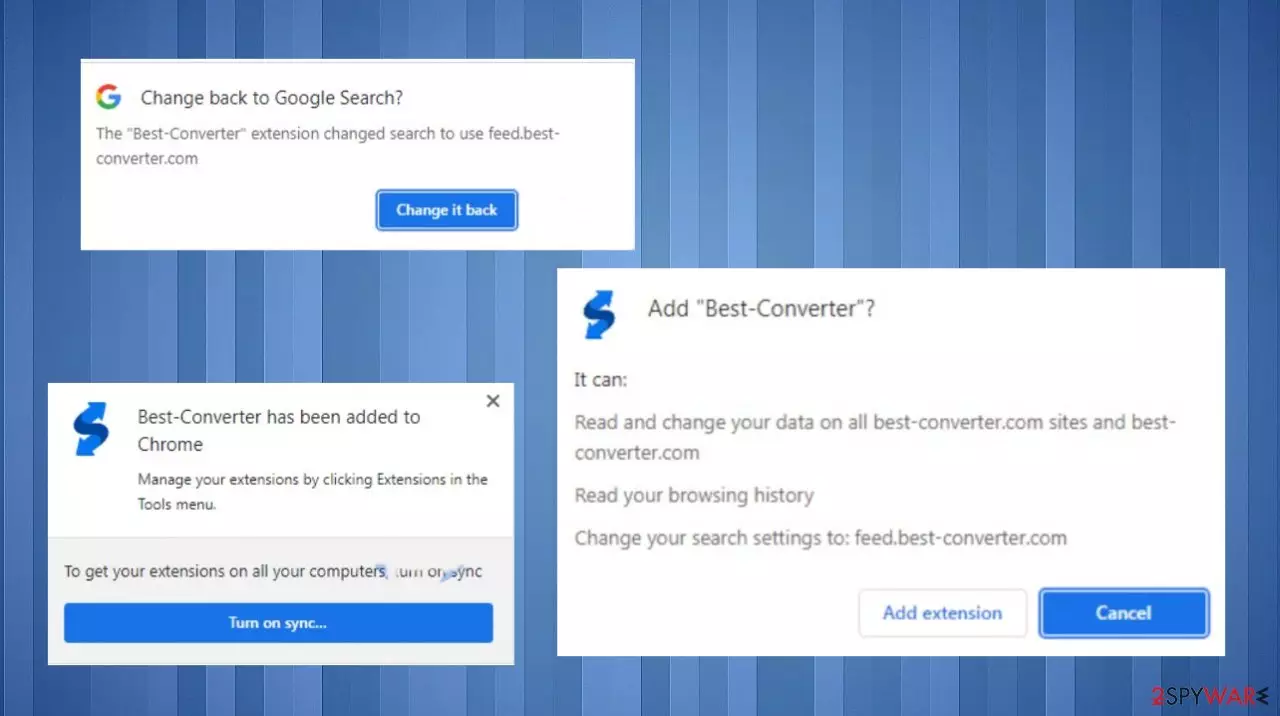
Best-Converter redirects search attempts to false engines and other sites, so the browser hijacker significantly affects the speed and performance of the machine. The main goal of such browser-based intruders is to control what content users are seeing, so the promotional material can be injected into the browser.
There are various potentially unwanted programs, but the main issue about them is silent, stealthy distribution. Even though these applications are not malicious or considered to be malware, there are major issues related to the changes made by the Best-Converter browser hijacker itself or additional applications. The intruder can add other programs on the machine to ensure persistence and launch other activities.
The browser hijacker is a manipulation program that changes startup, homepage, default search engine, and other preferences on the browsing applications. The thing that irritates people is that the program keeps users from accessing common content.
| Name | Best-Converter |
|---|---|
| Type | Browser hijacker, redirect |
| Category | Potentially unwanted programs |
| Distribution | Freeware installations, deceptive ads, sites, other apps |
| Damage | Exposure to malicious online content, data tracking,[1] changes on the browser |
| Site | feed.best-converter.com |
| Elimination | Removal should include the full system scan using AV tools |
| Recovery | Try launching the FortectIntego for system file repair options |
Best-Converter browser hijacker is one of many other browser-based manipulators. There are tons of similar programs that might even look identical and can be related to the same developer. PUP creators and distributors focus on redirecting users, so these changes to the homepage, new tab, search engine settings ensure that the goal is achieved.
You might experience promotional ads and pop-ups related to:
These tools redirect search attempts through the Searchlee or Nearbyme.io engines that are, possibly sponsoring the distribution of this Best-Converter browser hijacker and the activities this PUP causes in general. The behavior cannot be easily stopped because the program controls all the issues from the background.
Removing the potentially unwanted hijacker
The most common symptoms related to these silent PUP-type intruders are speed and performance issues because even though the program is running only in the background, these symptoms related to browsing online might not even appear. However, the processes that the infection triggers diminish the speed.

You need to react to any occurred symptoms that link the performance problems to the existence of this Best-Converter browser hijacker directly. The worst thing is the persistence, so SpyHunterCombo Cleaner or MalwarebytesMalwarebytes should help you with that since these applications directly search for the PUPs on the machine, and the infection can be removed.
In most cases, people cannot pinpoint the time the hijacker managed to end up on their machine, so you might need to find the responsible freeware installing yourself. In addition to dropping the PUP, you know about the installation might have also included other applications, and AV tools sometimes fail to detect applications that are not considered malware.[2] Try to manually take care of the issue.
Instructions for Windows 10/8 machines:
- Enter Control Panel into Windows search box and hit Enter or click on the search result.
- Under Programs, select Uninstall a program.

- From the list, find the entry of the suspicious program.
- Right-click on the application and select Uninstall.
- If User Account Control shows up, click Yes.
- Wait till uninstallation process is complete and click OK.



If you are Windows 7/XP user, proceed with the following instructions:
- Click on Windows Start > Control Panel located on the right pane (if you are Windows XP user, click on Add/Remove Programs).
- In Control Panel, select Programs > Uninstall a program.

- Pick the unwanted application by clicking on it once.
- At the top, click Uninstall/Change.
- In the confirmation prompt, pick Yes.
- Click OK once the removal process is finished.

Issues caused by the browser-based intruders
Best Converter search engine can appear useful and functioning because it offers various features that could encourage people to use the application on the daily basis and as the primary search engine. Unfortunately, these tactics are only there to trick people into thinking that the search engine is valuable.
There is nothing good about the browser hijacker because it redirects your browser search queries and affects search results by injecting the sponsored material there, listing advertisements instead of normal content related to the things you searched for in the first place. There are advertisements that generate revenue and collect data about your habits online. There are too many issues that allow us to call this program a browser hijacker or the general PUP.
If the particular program is already installed on the machine, you may experience changes in activities and when the Best-Converter intruder has enough time to run on the machine, the behavior of the computer can be significantly affected due to additional processes. Experts[3] note that these are not malicious in general, but there are third-party applications in the mix.
These infections can generate revenue via those pop-up ads, banners, reroutes. However, there are issues with personalized ads that occur once the service is related to the PUP, and the Best-Converter browser hijacker itself collects information about you and your habits while browsing online.
Details regarding your most searched items, visited sites, and preferences when using the search engine can be helpful for the developers of the program and commercial content creators. You need to take that control back and avoid clicking on any attractive ads because the further those redirects take you, the more malicious content can occur on the screen. The program is not dangerous, but the sooner it leaves the machine the better because other applications related to the Best-Converter browser hijacker or activities running in the background get terminated.
Delete from macOS
Remove the unwanted application:
- From the menu bar, select Go > Applications.
- In the Applications folder, look for any suspicious entries, then drag them to Trash (or right-click and pick Move to Trash).


Delete leftover files and folders:
- Select Go > Go to Folder.
- Enter /Library/Application Support and remove any suspicious folders related to the unwanted program.
- Repeat the same check in the /Library/LaunchAgents and /Library/LaunchDaemons folders, deleting any suspicious entries.

- Finally, empty the Trash to permanently remove the leftovers.

Remove from Microsoft Edge
Delete unwanted extensions from MS Edge:
- Select Menu (three horizontal dots at the top-right of the browser window) and pick Extensions.
- From the list, pick the extension and click on the Gear icon.
- Click Remove.


Clear cookies and other browser data:
- Click on the Menu (three horizontal dots at the top-right of the browser window) and select Settings > Privacy, search, and services..
- Under Clear browsing data, pick Choose what to clear.
- Select Cookies and other site data and Cached images and files. (apart from passwords, although you might want to include Media licenses as well, if applicable) and click on Clear.


Restore new tab and homepage settings:
- Click the menu icon and choose Settings.
- Then find On startup section.
- Click Remove next to any suspicious startup page.
Reset MS Edge if the above steps did not work:
- Press on Ctrl + Shift + Esc to open Task Manager.
- Click on More details arrow at the bottom of the window.
- Select Details tab.
- Now scroll down and locate every entry with Microsoft Edge name in it. Right-click on each of them and select End Task to stop MS Edge from running.


Instructions for Chromium-based Edge
Delete extensions from MS Edge (Chromium):
- Open Edge and click select Settings > Extensions.
- Delete unwanted extensions by clicking Remove.


Clear cache and site data:
- Click on Menu and go to Settings.
- Select Privacy, search and services.
- Under Clear browsing data, pick Choose what to clear.
- Under Time range, pick All time.
- Select Clear now.


Reset Chromium-based MS Edge:
- Click on Menu and select Settings.
- On the left side, pick Reset settings.
- Select Restore settings to their default values.
- Confirm with Reset.
- This will disable extensions and reset startup pages but will not delete bookmarks, saved passwords, or browsing history.


Remove from Mozilla Firefox (FF)
Remove dangerous extensions:
- Open Mozilla Firefox browser and click on the Menu (three horizontal lines at the top-right of the window).
- Select Add-ons.
- In here, select the unwanted extension and click Remove.


Reset the homepage:
- Click three horizontal lines at the top right corner to open the menu.
- Choose Settings.
- Under Home, set your preferred homepage and new tab settings.
Clear cookies and site data:
- Click Menu and pick Settings.
- Go to Privacy & Security section.
- Scroll down to locate Cookies and Site Data.
- Click on Clear Data...
- Select Cookies and Site Data and Temporary cached files and pages, then click Clear.


Reset Mozilla Firefox
If clearing the browser as explained above did not help, reset Mozilla Firefox:
- Open Mozilla Firefox browser and click the Menu.
- Go to Help and then choose Troubleshooting Information.

- Under Give Firefox a tune up section, click on Refresh Firefox...
- Once the pop-up shows up, confirm the action by pressing on Refresh Firefox.



Remove from Google Chrome
Delete malicious extensions from Google Chrome:
- Open Google Chrome, click on the Menu (three vertical dots at the top-right corner) and select More tools > Extensions.
- In the newly opened window, you will see all the installed extensions. Uninstall all suspicious extensions related to the unwanted program by clicking Remove.


Clear cache and web data from Chrome:
- Click on Menu and pick Settings.
- Under Privacy and security, select Clear browsing data.
- Select Browsing history, Cookies and other site data, as well as Cached images and files.
- Click Clear data.


Change your homepage:
- Click menu and choose Settings.
- Look for a suspicious site in the On startup section.
- Click on Open a specific or set of pages and click on three dots to find the Remove option.
Reset Google Chrome:
If the previous methods did not help you, reset Google Chrome to eliminate all the unwanted components:
- Click on Menu and select Settings.
- In the Settings, scroll down and click Advanced.
- Scroll down and locate Reset and clean up section.
- Now click Restore settings to their original defaults.
- Confirm with Reset settings.


Delete from Safari
Remove dangerous extensions:
- Open Safari, click Safari in the menu at the top-left of the screen, and select Preferences.
- Go to the Extensions tab, look for any suspicious entries, and click Uninstall to remove them.


Clear history and website data:
- Click Safari in the menu and pick Clear History.
- Set Clear to all history and confirm with Clear History.


Reset Safari:
- Click Safari in the menu and select Preferences > Advanced.
- Enable Show Develop menu in menu bar.
- From the menu bar, click Develop and select Empty Caches.


Did this guide help?
Be the first to comment