

Customsearch.info – a custom search engine with browser-hijacking features
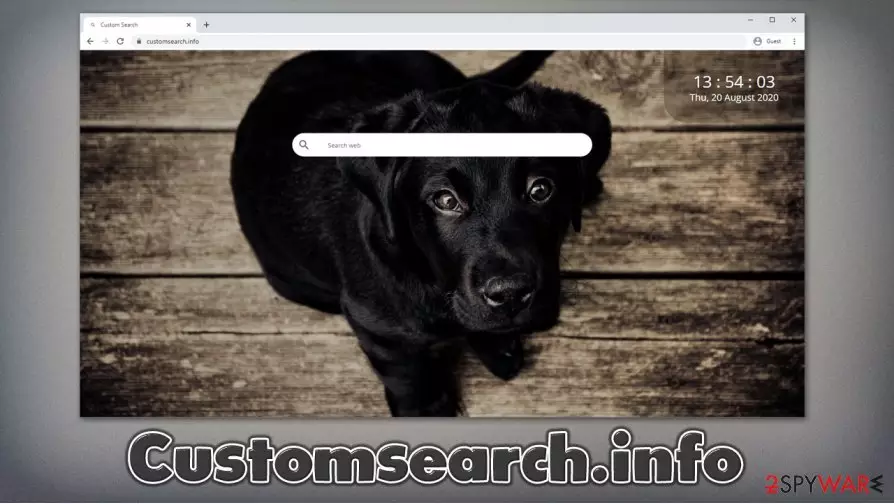
Customsearch.info is an address that users might see on their Google Chrome, Mozilla Firefox, Safari, or another web browser unexpectedly. This is because a Custom Search extension was installed on the browser without asking for permission – potentially unwanted programs are usually spread in deceptive manner, including software bundle packages or misleading advertisements/fake updates.
Once installed, the app will change the settings of the web browser by setting hxxps://customsearch.info as a homepage and new tab address, and apply a customized search engine. Thus, users who have their browsers hijacked are forced to browse the web via an alternative search provider – Customsearch.info redirects all searches to Yahoo. However, unlike genuine Yahoo results, the hijacker will insert multiple sponsored links (marked as “Ads”) at the top for users to click and earn revenue for the developers.
| Name | Customsearch.info |
| Type | Browser hijacker, potentially unwanted program |
| Related | Custom Search browser extension |
| Distribution | In most cases, users install the PUP unintentionally when downloading other software from the internet (software bundling), although sometimes they might be tricked by an attractive ad or deceptive prompt |
| Risks | Installation of other potentially unwanted programs or malware, personal information disclosure to unknown parties, monetary losses |
| Elimination | You can uninstall potentially unwanted applications by following our manual guide below or by scanning the device with powerful anti-malware software |
| Optional steps | If you are unable to eliminate some of the extensions, you can reset the relevant browsers, as explained below. If you found more unwanted apps or malware on your computer, user FortectIntego repair tool to fix performance issues that they might have caused |
While browser hijackers such as Customsearch.info are not considered a major security threat, it is important to note that they have plenty to hide. Custom Search toolbar is just another app that was duplicated from Nebula Search, Blast Search, Storm Search, Mazy Search, and many others. In other words, the developer keeps distributing the same app under different names – one of many suspicious (but typical) behaviors.
However, there are many more deceptive features of Customsearch.info browser hijacker, which include:
- Changing users' search provider and homepage without permission;
- Preventing users from searching the web via the preferred engine;
- Inserting sponsored links and ads into the top of the search results;
- Tracking and anonymous, as well as personal, information;
- Being difficult to eliminate due to various persistence techniques.
Information gathering practices are not uncommon, although absolutely unnecessary when it comes to browser hijackers or other PUPs. Keep in mind that your data is valuable, and it can be sold for profits. In the meantime, you might be targeted by various ad campaigns, and they might be extremely persistent and annoying.
Some people might even refer to the hijacker as the Customsearch.info virus, as it can appear unexpectedly. While not technically correct, this term can be understandable, considering that users find their web browser settings completely changed: a new search engine applied, and searches being redirected to Yahoo.
Software bundling or deceptive advertisements are one of the most common methods that browser hijackers are distributed – these techniques typically result in unintentional installation. Without a doubt, you should not tolerate such deceptive behavior and remove Customsearch.info from your browser.

However, Customsearch.info removal might sometimes be much more complicated than you would expect from a regular browser extension. First of all, the homepage, new tab, and search engine changes might not be directly linked to the Custom Search extension but rather a program installed on the device.
In such a case, instead of performing regular Customsearch.info uninstall by right-clicking on the extension, you will have to look for suspicious programs installed on your machine – we explain how below.
Additionally, the PUP might set the “Managed by your organization” function on your browser – it is a new trick used by browser hijacker developers in order to prevent users from removing unwanted extensions. If that occurs, experts[1] highly recommend you scan the device with anti-malware, reset web browsers, and use system repair tools such as FortectIntego for best results.
Learn to install applications correctly
While potentially unwanted applications can be installed deliberately without knowing about their features, most installations occur behind users' backs. One of the main culprits for such occurrence is software bundling – a technique that is used by most freeware[2] distributors and developers. It allows the pay-per-install[3] monetization principle (which is not always used for dubious purposes, by the way) to be practiced, so third-parties are extremely interested in users installing additional apps. Unfortunately, they are often going out of their ways in order to achieve the desired effect and do not adequately show the optional components within the installer.
Therefore, you should always pay close attention to your downloads – here are a few tips that might help you:
- If possible, avoid third-party sites and download apps from the official sources only;
- Do not get tricked by fake “Download” buttons (this is especially prevalent on torrent and other insecure sites);
- Once the installation wizard shows up, do not click “Next” until you are done with the process;
- If prompted, always pick Advanced/Custom instead of Recommended/Quick settings to stay in control of the installation process;
- Read through the instructions carefully and remove ticks from checkboxes, decline all the offers and read the fine print text;
- Install powerful anti-malware software capable of detecting PUPs.

Customsearch.info removal instructions
As mentioned above, Customsearch.info removal should not cause major difficulties to most. However, if the app was installed through an insecure source (such as software crack), it could have set the “Managed by your organization” status, which would prevent users from modifying their browser settings. In such a case, you should remove Customsearch.info by resetting your web browser – check the instructions below.
If the hijack was caused by an installed program, you should follow the guide below to eliminate it manually. Alternatively, you could simply scan your computer with powerful anti-malware software – it will find all the unwanted entries within various folders of your system and uninstall the Customsearch.info virus automatically.
Uninstall from Windows
Uninstall from Windows 10/8:
- Type Control Panel into the Windows search box and open the result.
- Under Programs, select Uninstall a program.


Uninstall from Windows 7/XP:
- Click on Windows Start > Control Panel (Windows XP users should click on Add/Remove Programs).
- In Control Panel, select Programs > Uninstall a program.


Remove the unwanted program:
- In the Programs and Features window, look for any recently installed suspicious entries, select them, and click Uninstall.
- If User Account Control appears, click Yes to confirm, then complete the removal.


Delete from macOS
Remove the unwanted application:
- From the menu bar, select Go > Applications.
- In the Applications folder, look for any suspicious entries, then drag them to Trash (or right-click and pick Move to Trash).


Delete leftover files and folders:
- Select Go > Go to Folder.
- Enter /Library/Application Support and remove any suspicious folders related to the unwanted program.
- Repeat the same check in the /Library/LaunchAgents and /Library/LaunchDaemons folders, deleting any suspicious entries.

- Finally, empty the Trash to permanently remove the leftovers.

Reset Internet Explorer
Remove dangerous add-ons:
- Open Internet Explorer, click on the Gear icon (IE menu) on the top-right corner of the browser
- Pick Manage Add-ons.
- You will see a Manage Add-ons window. Here, look for suspicious plugins. Click on these entries and select Disable.


Change your homepage if it was altered:
- Open IE and click on the Gear icon.
- Select Internet Options.
- In the General tab, delete the Home page address and replace it by your preferred one (for example, Google.com).
- Click Apply and then select OK.


Delete temporary files:
- Press on the Gear icon and select Internet Options.
- Under Browsing history, click Delete...
- Select relevant fields and press Delete.


Reset Internet Explorer:
- Click on Gear icon > Internet options and select Advanced tab.
- Select Reset.
- In the new window, check Delete personal settings and select Reset.


Remove from Microsoft Edge
Delete unwanted extensions from MS Edge:
- Select Menu (three horizontal dots at the top-right of the browser window) and pick Extensions.
- From the list, pick the extension and click on the Gear icon.
- Click Remove.


Clear cookies and other browser data:
- Click on the Menu (three horizontal dots at the top-right of the browser window) and select Settings > Privacy, search, and services..
- Under Clear browsing data, pick Choose what to clear.
- Select Cookies and other site data and Cached images and files. (apart from passwords, although you might want to include Media licenses as well, if applicable) and click on Clear.


Restore new tab and homepage settings:
- Click the menu icon and choose Settings.
- Then find On startup section.
- Click Remove next to any suspicious startup page.
Reset MS Edge if the above steps did not work:
- Press on Ctrl + Shift + Esc to open Task Manager.
- Click on More details arrow at the bottom of the window.
- Select Details tab.
- Now scroll down and locate every entry with Microsoft Edge name in it. Right-click on each of them and select End Task to stop MS Edge from running.


Instructions for Chromium-based Edge
Delete extensions from MS Edge (Chromium):
- Open Edge and click select Settings > Extensions.
- Delete unwanted extensions by clicking Remove.


Clear cache and site data:
- Click on Menu and go to Settings.
- Select Privacy, search and services.
- Under Clear browsing data, pick Choose what to clear.
- Under Time range, pick All time.
- Select Clear now.


Reset Chromium-based MS Edge:
- Click on Menu and select Settings.
- On the left side, pick Reset settings.
- Select Restore settings to their default values.
- Confirm with Reset.
- This will disable extensions and reset startup pages but will not delete bookmarks, saved passwords, or browsing history.


Remove from Mozilla Firefox (FF)
Remove dangerous extensions:
- Open Mozilla Firefox browser and click on the Menu (three horizontal lines at the top-right of the window).
- Select Add-ons.
- In here, select the unwanted extension and click Remove.


Reset the homepage:
- Click three horizontal lines at the top right corner to open the menu.
- Choose Settings.
- Under Home, set your preferred homepage and new tab settings.
Clear cookies and site data:
- Click Menu and pick Settings.
- Go to Privacy & Security section.
- Scroll down to locate Cookies and Site Data.
- Click on Clear Data...
- Select Cookies and Site Data and Temporary cached files and pages, then click Clear.


Reset Mozilla Firefox
If clearing the browser as explained above did not help, reset Mozilla Firefox:
- Open Mozilla Firefox browser and click the Menu.
- Go to Help and then choose Troubleshooting Information.

- Under Give Firefox a tune up section, click on Refresh Firefox...
- Once the pop-up shows up, confirm the action by pressing on Refresh Firefox.



Remove from Google Chrome
Delete malicious extensions from Google Chrome:
- Open Google Chrome, click on the Menu (three vertical dots at the top-right corner) and select More tools > Extensions.
- In the newly opened window, you will see all the installed extensions. Uninstall all suspicious extensions related to the unwanted program by clicking Remove.


Clear cache and web data from Chrome:
- Click on Menu and pick Settings.
- Under Privacy and security, select Clear browsing data.
- Select Browsing history, Cookies and other site data, as well as Cached images and files.
- Click Clear data.


Change your homepage:
- Click menu and choose Settings.
- Look for a suspicious site in the On startup section.
- Click on Open a specific or set of pages and click on three dots to find the Remove option.
Reset Google Chrome:
If the previous methods did not help you, reset Google Chrome to eliminate all the unwanted components:
- Click on Menu and select Settings.
- In the Settings, scroll down and click Advanced.
- Scroll down and locate Reset and clean up section.
- Now click Restore settings to their original defaults.
- Confirm with Reset settings.


Delete from Safari
Remove dangerous extensions:
- Open Safari, click Safari in the menu at the top-left of the screen, and select Preferences.
- Go to the Extensions tab, look for any suspicious entries, and click Uninstall to remove them.


Clear history and website data:
- Click Safari in the menu and pick Clear History.
- Set Clear to all history and confirm with Clear History.


Reset Safari:
- Click Safari in the menu and select Preferences > Advanced.
- Enable Show Develop menu in menu bar.
- From the menu bar, click Develop and select Empty Caches.


Did this guide help?
Be the first to comment