

Apple.com-scan.live is the scareware designed to trick Mac users into installing some rogue system tools
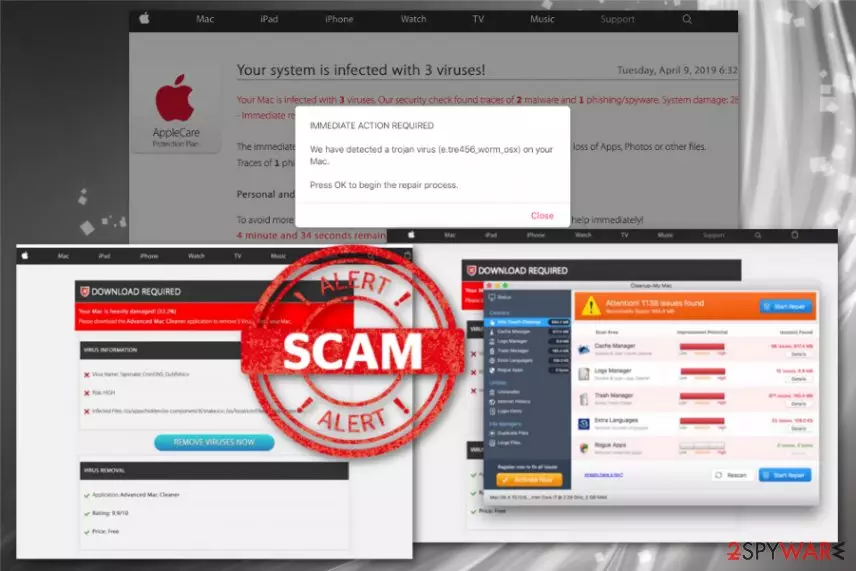
Apple.com-scan.live is the potentially unwanted program that shows in-browser messages claiming that the system is infected with viruses. However, this is not true, and these alerts are designed to deliver predetermined information about the malware infections to promote questionable optimization or security programs. This pop-up browser alert is a part of a scam that displays “DOWNLOAD REQUIRED” and “REMOVE VIRUSES NOW” messages to scare people into downloading the suggested software by clicking on those buttons.
Message delivered by Apple.com-scan.live scam states that the system is infected or even damaged and to avoid any further harm, you need to download the promoted software. Unfortunately, dubious software like Cleanup-My Mac that gets installed in this campaign gives no value to your machine. Although many people think their MacOS device is immune to malware, Mac viruses are real threats.[1] However, there is no need to have system optimizers or clean up tools, especially when these applications only deliver fake scan results. All this behavior regarding the system alerts and intrusive commercial content is caused by the PUP that got installed on your device without permission or knowledge.
| Name | Apple.com-scan.live |
|---|---|
| Type | Scam |
| Category | Adware/ Potentially unwanted program |
| Tactics | Tricks people into downloading rogue software by claiming your mac device is infected with malware |
| Affected operating system | Mac OS |
| Symptoms | A computer becomes slower, questionable applications get installed without permission, redirects, pop-ups appear on the screen more occasional |
| Distribution | Deceptive ads, websites, software bundles |
| Possible damage | Tracks and collects information about the user. Can affect the system significantly with registry changes and extra installations |
| Removal tips | Employ reputable anti-malware tools and clean the machine fully from Apple.com-scan.live related content |
| Similar Apple scams | Apple.com-cleaning-os.live; Apple.com-speed-macos.live; Apple.com-fixing.live; Apple.com-clean-os.live; Apple.com-repair-os.live; Apple.com-improve-macos.live |
Apple.com-scan.live is the social engineering attack-based potentially unwanted program that affects your device and Safari, Google Chrome, Mozilla Firefox, or any other browsers with intrusive behaviors, commercial content and additionally installed programs.[2]
Frustrating Apple.com-scan.live virus behavior also scares people into thinking their device got affected by malware. The main purpose is to trick users into installing questionable programs or tools with the following message:
DOWNLOAD REQUIRED
Your Mac is heavily damaged! (33.2%)
Please download the Cleanup-My Mac application to remove 3 Viruses from your Mac.
VIRUS INFORMATION
Virus Name: Tapsnake; CronDNS; Dubfishicv
Risk: HIGH
Infected Files: /os/apps/hidden/os-component/X/snake.icv; /os/local/conf/keyboard/retype.icv…
REMOVE VIRUSES NOW
VIRUS REMOVAL
Application: Cleanup-My Mac
Rating: 9.9/10
Price: Free
or
REMOVE VIRUSES NOW
We have detected a trojan virus (e.tre456_worm_osx) on your Mac.
Press OK to begin the repair process.
Apple.com-scan.live promotes various system optimizers, but all of them are not giving any value for the system. Tools claim to detect malware, remove threats, clean junk files, manage applications and fix issues regarding the boot time. However, all those features are offered for the full licensed version of this program that should be purchased.
Unfornutately, these rogue system tools have no useful features because the predetermined system scan results show false names of the malware. In most cases, Apple.com-scan.live adware is the only unwanted and intrusive program that affects your machine.

Alerts and messages delivered by this intruder can even cause Apple.com-scan.live full-screen messages that keep you from exiting the window and tricks into pressing buttons what leads to redirects and different unwanted behavior. Unfortunately, frustration caused by this intrusive commercial content is not the only issue regarding those redirects or the redirects, pop-ups in general.
Since Apple.com-scan.live is the adware-type program it associates many advertisers, sponsors, and commercial content creators. This is one of the more prominent potentially unwanted program symptoms. Malvertising means that all the content delivered on your screen has the purpose of creating views and generating revenue for the sponsor.[3]
However, this relation also indicates that Apple.com-scan.live developers, associated third-parties can track and collect information about you. Experts[4] inform that this data includes:
- IP addresses;
- location;
- browsing preferences;
- search queries;
- most visited websites.
You should remove Apple.com-scan.live as soon as you can because those details collected about you get used later on for creating personalized advertisements and fill up your screen with even more commercial material. Your browsing habits and things you are interested in allows advertisers to make sure that their promotional ads trick you into visiting the site or even purchasing their products.
However, the more time on the computer you give for the PUP, the more additional alterations can be made. Make sure to get the reputable anti-malware tool and scan the machine fully. This is the best method for Apple.com-scan.live removal because programs like FortectIntego can check different parts of the computer for all the components of this PUP.
Adware comes to the system without any permission
Potentially unwanted programs like adware or browser hijackers come to the system with the help of software bundling or different deceptive techniques like intrusive ads and pages. Also, p2p services, torrent sites, or questionable content on social platforms can deliver this type of program on your machine.
You should be very careful online because various pop-up ads and redirects may expose you to malicious content. However, paying attention is especially important when it comes to freeware installations and updating your software from less than reputable sources.
You may find cost-free software online and various programs on websites that offer free downloads of their products. Nevertheless, software bundling is the method that most freeware distributors use. Program installer suggests other applications and this information often is addressed in EULA or Privacy policy of the source. So check the source before getting anything from the internet.
Make sure to delete Apple.com-scan.live and all the other stealthily installed programs from the machine
Remember that this potentially unwanted program installs other tools and applications with or without your permission and knowledge, so remove Apple.com-scan.live using the automatic virus elimination method. This solution when you employ an anti-malware program for the job gives the advantage of terminating all possible threats.
Automatic Apple.com-scan.live removal using anti-malware tools is advisable because this way any computer user with less experience can terminate this cyber threat completely form the machine and possibly fix the virus damage. Just make sure to choose the reputable source and tool.
Delete from macOS
Remove the unwanted application:
- From the menu bar, select Go > Applications.
- In the Applications folder, look for any suspicious entries, then drag them to Trash (or right-click and pick Move to Trash).


Delete leftover files and folders:
- Select Go > Go to Folder.
- Enter /Library/Application Support and remove any suspicious folders related to the unwanted program.
- Repeat the same check in the /Library/LaunchAgents and /Library/LaunchDaemons folders, deleting any suspicious entries.

- Finally, empty the Trash to permanently remove the leftovers.

Remove from Mozilla Firefox (FF)
Remove dangerous extensions:
- Open Mozilla Firefox browser and click on the Menu (three horizontal lines at the top-right of the window).
- Select Add-ons.
- In here, select the unwanted extension and click Remove.


Reset the homepage:
- Click three horizontal lines at the top right corner to open the menu.
- Choose Settings.
- Under Home, set your preferred homepage and new tab settings.
Clear cookies and site data:
- Click Menu and pick Settings.
- Go to Privacy & Security section.
- Scroll down to locate Cookies and Site Data.
- Click on Clear Data...
- Select Cookies and Site Data and Temporary cached files and pages, then click Clear.


Reset Mozilla Firefox
If clearing the browser as explained above did not help, reset Mozilla Firefox:
- Open Mozilla Firefox browser and click the Menu.
- Go to Help and then choose Troubleshooting Information.

- Under Give Firefox a tune up section, click on Refresh Firefox...
- Once the pop-up shows up, confirm the action by pressing on Refresh Firefox.



Remove from Google Chrome
Delete malicious extensions from Google Chrome:
- Open Google Chrome, click on the Menu (three vertical dots at the top-right corner) and select More tools > Extensions.
- In the newly opened window, you will see all the installed extensions. Uninstall all suspicious extensions related to the unwanted program by clicking Remove.


Clear cache and web data from Chrome:
- Click on Menu and pick Settings.
- Under Privacy and security, select Clear browsing data.
- Select Browsing history, Cookies and other site data, as well as Cached images and files.
- Click Clear data.


Change your homepage:
- Click menu and choose Settings.
- Look for a suspicious site in the On startup section.
- Click on Open a specific or set of pages and click on three dots to find the Remove option.
Reset Google Chrome:
If the previous methods did not help you, reset Google Chrome to eliminate all the unwanted components:
- Click on Menu and select Settings.
- In the Settings, scroll down and click Advanced.
- Scroll down and locate Reset and clean up section.
- Now click Restore settings to their original defaults.
- Confirm with Reset settings.


Delete from Safari
Remove dangerous extensions:
- Open Safari, click Safari in the menu at the top-left of the screen, and select Preferences.
- Go to the Extensions tab, look for any suspicious entries, and click Uninstall to remove them.


Clear history and website data:
- Click Safari in the menu and pick Clear History.
- Set Clear to all history and confirm with Clear History.


Reset Safari:
- Click Safari in the menu and select Preferences > Advanced.
- Enable Show Develop menu in menu bar.
- From the menu bar, click Develop and select Empty Caches.


Did this guide help?
Be the first to comment