
AntiSpyware Pro 2009: what it is and how to remove it
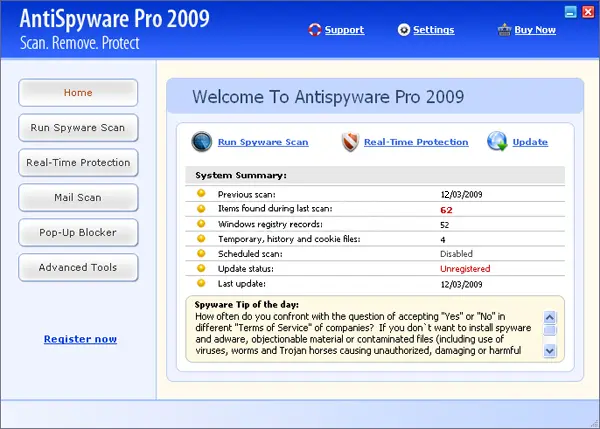
AntiSpyware Pro 2009 is a rogue anti-spyware application. At first glance, this is a perfectly normal program.
Facts checked October 6, 2026. Removal steps tested on Windows 11 (26H2) and checked against Microsoft's and the browser makers' current documentation. Sections marked as our earlier report are the original text: they describe the threat as it was then and have not been reviewed since. The 2026 status, the removal steps and the questions are current.
Automatic
Get a free scan and check if your PC is infected.
Fortect finds malware, unwanted programs and the Windows damage they leave behind, and repairs it in one pass.
Programs like AntiSpyware Pro 2009 usually arrive in groups; a free scan lists the companions that are easy to miss.
Do it yourself · free Remove AntiSpyware Pro 2009 yourself 5 steps, about 15 minutes, no software needed.
Start the steps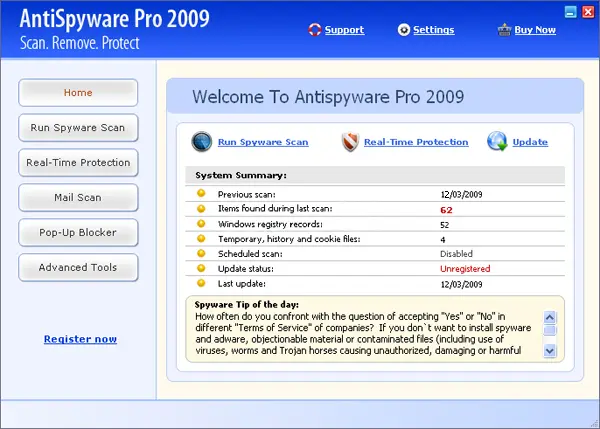
AntiSpyware Pro 2009: summary
| Distribution | Software bundling, fake Flash Player updates, deceptive ads, high-risk sites, file-sharing platforms |
|---|---|
| Damage | Severe malware infections, privacy issues, monetary losses |
| name | AntiSpyware Pro 2009 |
| Type | Fake security software, PUP, rogue antispyware tool |
| Purpose | Convince users that their devices are infected with malware and that the only way to get rid of it is to purchase the fake tools worthless paid version |
| Detection names | No Microsoft detection name is known |
| Removal | Scan the PC with security software to find and remove the malware and anything installed with it. Fortect scans Windows for malware and repairs the system files and settings it damaged. Remove it nowTo use the full-featured product, you have to purchase a license for Fortect. The scan is free. |
Show 6 more facts
| Name | AntiSpyware Pro 2009 |
|---|---|
| Symptoms | An unknown program in Installed apps |
| Evidence | One write-up by a security site; details still limited |
| Program | AntiSpyware Pro 2009 |
| First seen | 26 April 2021 |
| Facts checked | 6 October 2026 |
Is AntiSpyware Pro 2009 a real security program?
From our report of Apr 2021 · not reviewed since
AntiSpyware Pro 2009 – fake security tool that shows predetermined scan results
AntiSpyware Pro 2009 is a rogue anti-spyware application.
At first glance, this is a perfectly normal program. However, just like most fake anti-spyware applications, it reports misleading scan results and floods the system with obsessive alert notifications. The main goal of this parasite is to collect money from naive and inexperienced users.
After the infection, this potentially unwanted program performs a fake system scan and reports various malware or security problems. It is worth mentioning that all those infections were made up in order to scare the user. The only true infection is AntiSpywarePro2009.
Usually, AntiSpywarePro 2009 enters the system using trojan viruses, such as notorious Zlob or Vundo. It might also be downloaded and installed manually from corrupt, high-risk, and other shady websites. Don't purchase the full version of this rogue anti-malware software because it won't help you remove those imaginary infections.
It wasn't created to locate any real cyber threats like Trojans, ransomware, etc. Needless to say, it cannot remove any of them. This fake security tool was developed to trick gullible people into purchasing the non-operational paid version of the program.
Otherwise, it may decrease system performance dramatically and put you and your private data in great danger.
It may be impossible to uninstall this potentially unwanted program manually as, in some cases, it can't be found on the Add/Remove Programs lists in the Control Panel. Thus to safely remove it, you have to use reliable anti-malware software such as or .
This infection may have altered system files and settings to establish persistence. These changes might result in various abnormal PC behavior.
From our report of Apr 2021 · not reviewed since
Avoid additional installs from software bundles
Software bundling is a widely used technique to spread potentially unwanted programs.
They are usually downloaded from third-party software vendors, but any could use this method, so you have to be very careful when installing any new software.
Never pick the Recommended, Quick, Standard installation options as then you can't control what is installed on your device. Choose the Custom or Advanced one instead and deselect all pre-ticked boxes opting in for installation of every additional app within the bundle.
From our report of Apr 2021 · not reviewed since
More from our earlier report on AntiSpyware Pro 2009
- Scan your infected computer with a reliable security tool to remove this PUP
- Perform system diagnostics with the system tune-up software to fix all the damage that the fake tool has made
How to remove AntiSpyware Pro 2009
Nothing it reports is real.
These steps remove it and undo a payment if you made one.
Step 1: Do not pay, and undo a payment if you made one
Nothing that AntiSpyware Pro 2009 says it found needs fixing by AntiSpyware Pro 2009. Close its windows and do not enter card details.
If you bought it, contact your bank or card issuer about a dispute and cancel any renewal, keeping the receipt e-mail as evidence. Uninstalling it from Windows 11 or Windows 10 removes the program but leaves the subscription running.
Full procedure with screenshots: What to do after paying a scammer
Step 2: Uninstall AntiSpyware Pro 2009
AntiSpyware Pro 2009 is removed like any other program, from the list of installed apps. In Windows 11 that is Settings > Apps > Installed apps, in Windows 10 Settings > Apps > Apps & features, and in both you can also use Control Panel > Programs and Features.
Select AntiSpyware Pro 2009, click Uninstall and follow the uninstaller to the end. Then look at the entries just above and below it when the list is sorted by date: bundled programs install at the same minute.
Full procedure with screenshots: Uninstall a program or app in Windows On uGetFix
Step 3: Remove it from startup
Press Ctrl + Shift + Esc to open Task Manager and select Startup apps (Windows 11) or the Startup tab (Windows 10). Disable entries you do not recognise, especially ones with no publisher or with a name that copies a Windows component.
Right-click an entry and choose Open file location to see where it runs from: programs in
%AppData%or%Temp%deserve a closer look. Some entries are not listed there but in the registry Run keys, which the procedure below shows how to check.Full procedure with screenshots: Stop apps from opening at startup On uGetFix
Step 4: Delete the folders left behind
Uninstalling often leaves the program's folders, and some threats reinstall themselves from them.
Press Windows + R, type
%LocalAppData%and press Enter, then do the same for%AppData%and %ProgramData%, and look for folders named after AntiSpyware Pro 2009, its publisher or created on the day the problem started.Delete those folders, and check
C:\Program FilesandC:\Program Files (x86)too.If Windows says a file is in use, end it in Task Manager or delete the folder after a restart in Safe Mode. The folders are the same in Windows 11 and Windows 10.
Full procedure with screenshots: Remove what malware leaves behind in Windows
Step 5: Scan the PC, then run the offline scan
A scan finds the parts of AntiSpyware Pro 2009 that the manual steps cannot see. In Windows Security > Virus & threat protection > Scan options, start a Full scan and quarantine what it reports.
Follow it with Microsoft Defender Antivirus (offline scan) > Scan now, which restarts the PC and checks the disk while Windows and the malware are not running.
It takes about 15 minutes and works the same in Windows 11 and Windows 10. If either scan finds something, run the full scan again after removal until it comes back clean.
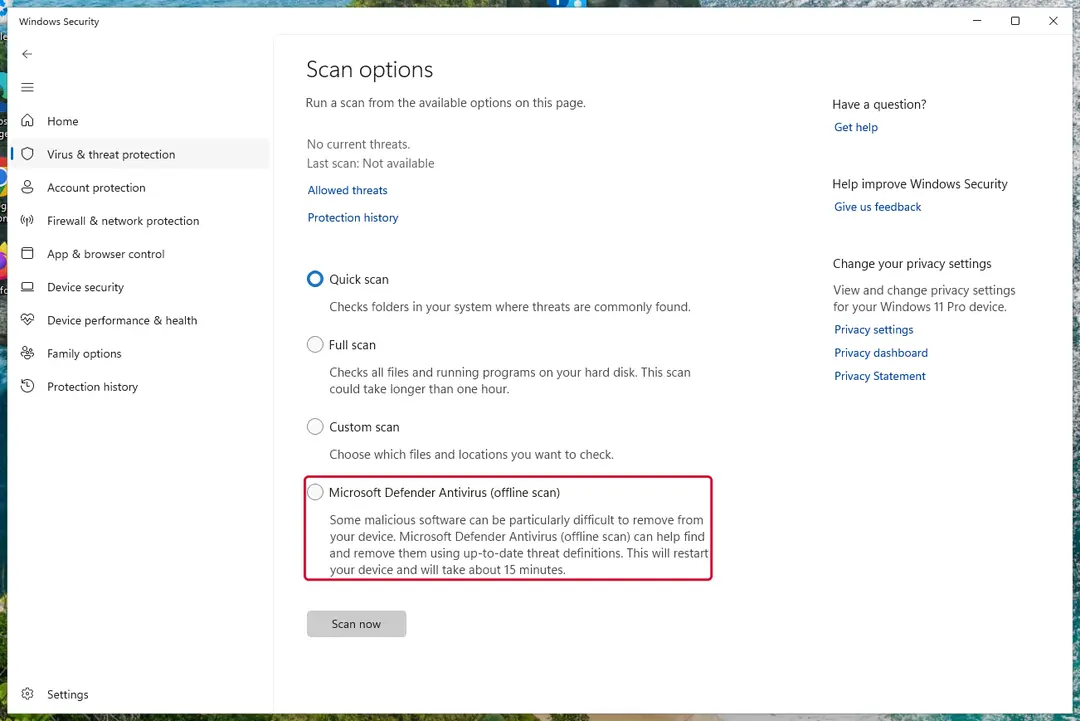
Windows 11: Windows Security > Virus & threat protection > Scan options. Full procedure with screenshots: Run a Microsoft Defender Offline scan
Instructions for each browser and system
The detailed steps for every browser and system this guide covers. Open the one you use.
Uninstall from Windows
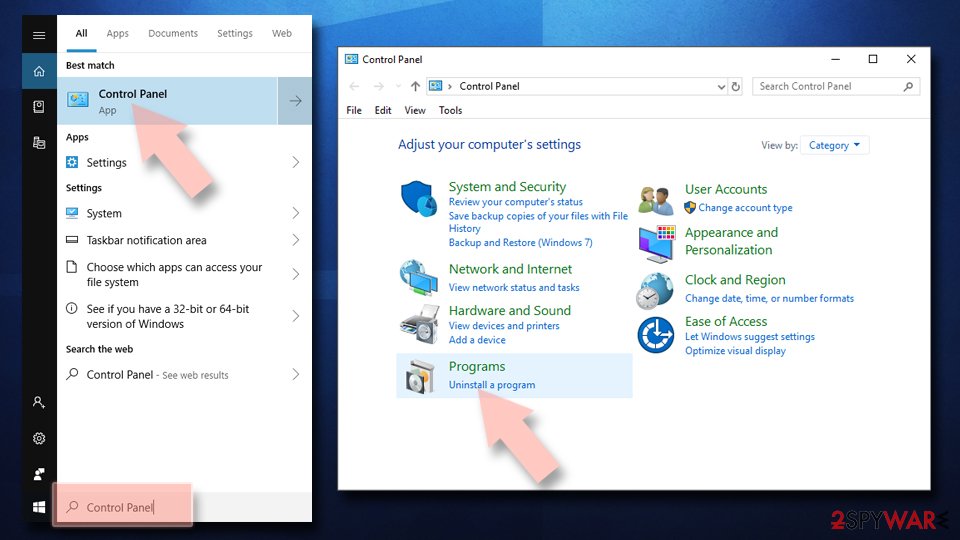
Uninstall from Windows 10/8:
- Type Control Panel into the Windows search box and open the result.
- Under Programs, select Uninstall a program.
Uninstall from Windows 7/XP:
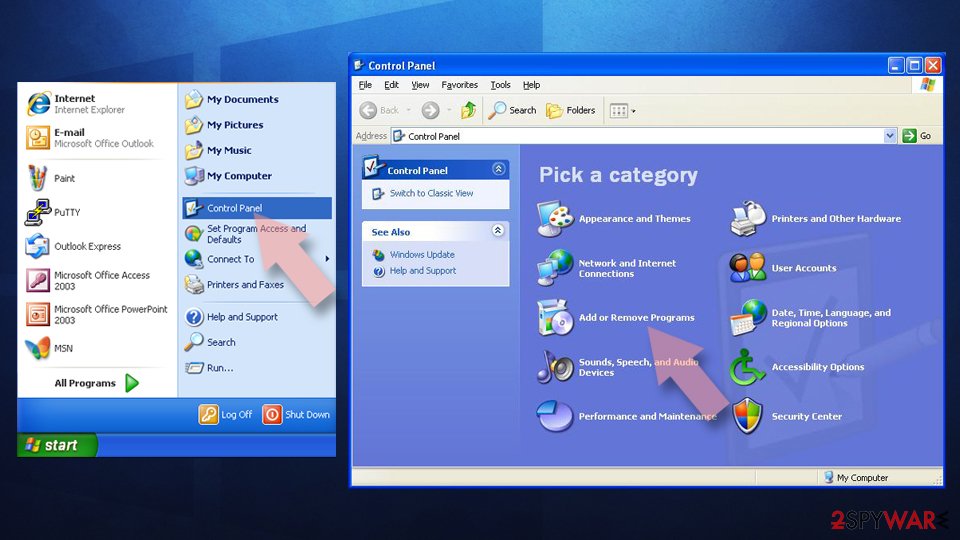
- Click on Windows Start > Control Panel (Windows XP users should click on Add/Remove Programs).
- In Control Panel, select Programs > Uninstall a program.
Remove the unwanted program:
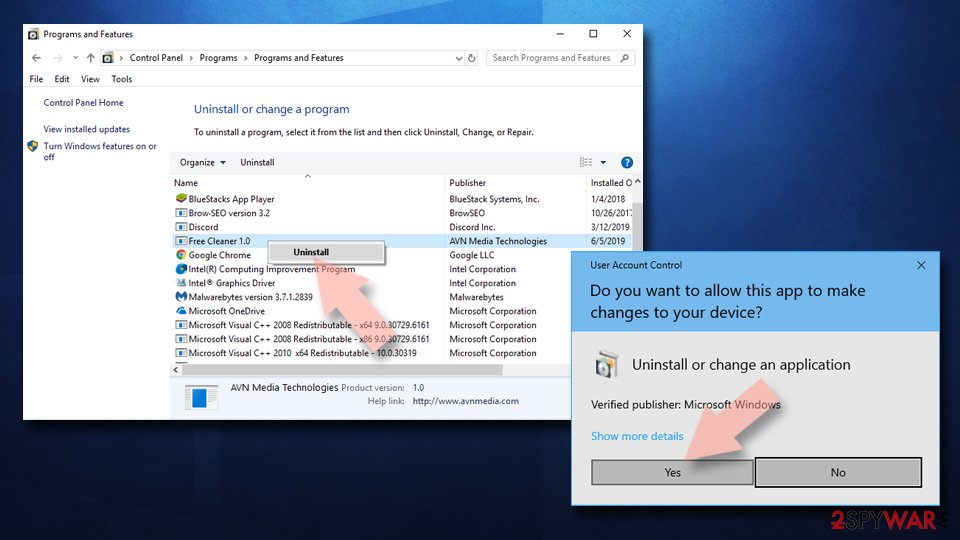
- In the Programs and Features window, look for any recently installed suspicious entries, select them, and click Uninstall.
- If User Account Control appears, click Yes to confirm, then complete the removal.
Access your website securely from any location
When you work on the domain, site, blog, or different project that requires constant management, content creation, or coding, you may need to connect to the server and content management service more often. The best solution for creating a tighter network could be a dedicated/fixed IP address.
If you make your IP address static and set to your device, you can connect to the CMS from any location and do not create any additional issues for the server or network manager that needs to monitor connections and activities. VPN software providers like can help you with such settings and offer the option to control the online reputation and manage projects easily from any part of the world.
Recover files after data-affecting malware attacks
While much of the data can be accidentally deleted due to various reasons, malware is one of the main culprits that can cause loss of pictures, documents, videos, and other important files.
More serious malware infections lead to significant data loss when your documents, system files, and images get encrypted. In particular, ransomware is is a type of malware that focuses on such functions, so your files become useless without an ability to access them.
Even though there is little to no possibility to recover after file-locking threats, some applications have features for data recovery in the system. In some cases, can also help to recover at least some portion of your data after data-locking virus infection or general cyber infection.
From our report of Apr 2021 · not reviewed since
Remove AntiSpyware Pro 2009 virus with a couple of easy steps
AntiSpyware Pro 2009 is a worthless piece of software that was created to draw out small amounts of money from gullible people by convincing them that their devices have serious malware infections and that the only way to eliminate them is to purchase the programs paid version.
In reality, the only thing that needs to be removed from your PC is AntiSpyware Pro 2009. Do that by performing a full system scan with a trustworthy anti-malware tool that will identify, isolate, and terminate the fake antispyware software.
Questions about AntiSpyware Pro 2009
Can I safely uninstall AntiSpyware Pro 2009?
If you did not install AntiSpyware Pro 2009 yourself and it is not part of your hardware or a program you rely on, yes. Uninstalling an unwanted program does not harm Windows.
Before you do, search the exact name and publisher to be sure it is not a driver tool, a printer utility or a game launcher with an odd name. Then remove it from Settings, Apps, Installed apps.
Ignore any offers or warnings in its uninstaller about losing protection or performance. Afterwards check Startup apps and your browsers for leftovers, and restart once to confirm that it does not reinstall itself.
AntiSpyware Pro 2009 will not uninstall. What can I do?
First restart the PC and try again, because the program may have been running and locked its own files. If the uninstaller is missing or fails, start Windows in Safe Mode, where most third-party programs do not start, and remove AntiSpyware Pro 2009 from Installed apps there.
If it still refuses, delete its startup entry and its scheduled task, restart, and try once more. A program that actively prevents removal is behaving like malware, so finish with a Microsoft Defender offline scan. Avoid third-party uninstallers offered on search ads; several of them are unwanted programs themselves.
Is my card safe after buying AntiSpyware Pro 2009?
Treat it as exposed. The order page belongs to the seller of AntiSpyware Pro 2009, and you cannot know how the number is stored or shared. Ask your bank for a replacement card, which is usually free, and dispute the original charge as a misrepresented product.
Until the new card arrives, check your account daily for small or foreign transactions. If the bank offers alerts for every card payment, turn them on. Keep the receipt and screenshots, because they support the dispute.
Is Windows Security enough to protect me from programs like AntiSpyware Pro 2009?
For most home users, yes, especially with Potentially unwanted app blocking turned on in Windows Security > App & browser control > Reputation-based protection settings. That setting blocks many scareware installers before they run.
No security tool stops every scam, though, because programs like AntiSpyware Pro 2009 are usually installed by the user after a frightening message. The habit that helps most is simple: ignore any website or pop-up that claims to have scanned your PC, and never call a number shown in a warning.
Do I need to reinstall Windows to get rid of AntiSpyware Pro 2009?
Usually not. A thorough clean-up is enough when the offline scan finds nothing afterwards and you do not see antiSpyware Pro 2009 in the list of installed apps again. A reset is the safer choice if an attacker had remote control, if security tools were switched off, or if detections come back after every clean-up.
Windows 11 can reset itself without a USB stick under Settings > System > Recovery > Reset this PC. Copy documents and photos out first and scan the copies. A reset does not change passwords or undo stolen data, so the account steps still apply.
AntiSpyware Pro 2009 will not uninstall. What can I do?
Close it in Task Manager first, then uninstall it from Settings > Apps > Installed apps (in Windows 10, Apps & features). If it blocks this or restarts itself, start Windows in Safe Mode, where third-party programs do not start automatically, and uninstall from there.
Afterwards run a Microsoft Defender offline scan and delete any leftover folder named after AntiSpyware Pro 2009 in C:\Program Files or %AppData%. If nothing works, Windows can be reset while keeping your personal files, which removes the program together with any settings it changed.
What if I paid AntiSpyware Pro 2009?
Contact your bank or card issuer the same day, explain that the payment went to a fake security program and ask for a chargeback. Keep screenshots of antiSpyware Pro 2009 in the list of installed apps, the payment receipt and any e-mails.
If you gave card details in the program, ask the bank to block and replace the card. Then uninstall the program and run a full scan in Windows Security. If you also called a number and let someone connect to your PC, uninstall the remote-access tool they used and change your passwords from another device.
What could the caller do while connected to my PC?
Anything you could do. Callers working with fake alerts like AntiSpyware Pro 2009 typically show you Windows logs as "proof", install their own remote tool for later, and steer you to online banking or a gift card purchase. Some add a password to Windows or lock the PC if you refuse to pay.
Remove every remote access program you did not install yourself, check Settings > Accounts > Other users for new accounts, and change important passwords from a clean device. If you cannot be sure what was changed, a reset of Windows is the safe choice.
Is AntiSpyware Pro 2009 an antivirus?
No. It looks like one, with a shield, a scan and a list of threats, but AntiSpyware Pro 2009 is a rogue antivirus: its scans are designed to find something every time, and every fix leads to a payment page.
A real antivirus detects the same threats consistently, removes them without asking for money first and does not block other security tools. Windows 11 and Windows 10 already include Microsoft Defender in Windows Security, which is enough for most home users. Remove AntiSpyware Pro 2009 and keep Defender on.
Will Fortect remove AntiSpyware Pro 2009?
Fortect scans Windows for malware and unwanted programs and repairs the system files and settings they change, and its free scan shows what it finds on your PC before you decide anything.
For AntiSpyware Pro 2009, follow the plan above as well: the browser steps take back permissions and settings that no scanner treats as a threat, and uninstalling the program that brought it removes the source.
Run Microsoft Defender's full scan and, if anything was found, its offline scan as a second opinion. If the symptoms are gone after the plan and both scans are clean, there is nothing more to do.
Sources
- FTC: How to recognize, remove and avoid malware (read October 6, 2026)
- Microsoft Learn: Microsoft Defender Offline (read October 6, 2026)
- Microsoft Learn: How Microsoft names malware (read October 6, 2026)