
Personal Guard 2009: what it is and how to remove it
Personal Guard 2009 is a misleading security application that reports false or exaggerated system security threats and displays fake security alerts to make you think your computer is infected with spyware, Trojans, adware, and other malicious software. The bogus program can be manually installed or enter the system secretly with the help of Trojan viruses.
Facts checked October 6, 2026. Removal steps tested on Windows 11 (26H2) and checked against Microsoft's and the browser makers' current documentation. Sections marked as our earlier report are the original text: they describe the threat as it was then and have not been reviewed since. The 2026 status, the removal steps and the questions are current.
Automatic
Get a free scan and check if your PC is infected.
Fortect finds malware, unwanted programs and the Windows damage they leave behind, and repairs it in one pass.
If Personal Guard 2009 keeps coming back after uninstalling, a scan can find what reinstalls it.
Do it yourself · free Remove Personal Guard 2009 yourself 5 steps, about 15 minutes, no software needed.
Start the steps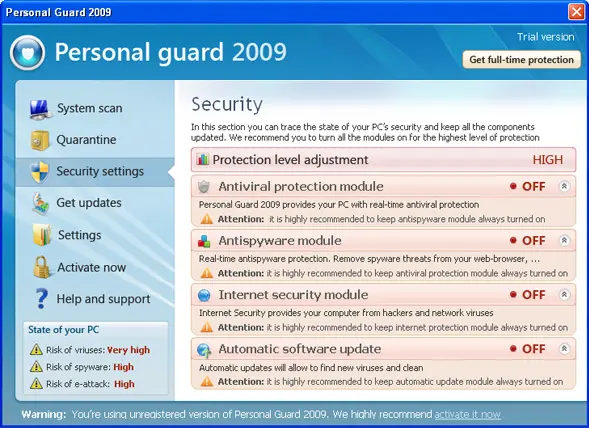
Personal Guard 2009: summary
| Name | Personal Guard 2009 |
|---|---|
| Type | Malware, rogue antispyware, scam |
| Infiltration | Already installed trojans, fake online scanners that report about virus infections, fake updates, etc. |
| Operation | Shows fake virus notifications and disables normal Windows functions; asks to buy a full license in order to get rid of the allegedly installed malware; malware itself |
| Dangers | Installation of other malware, personal information disclosure, monetary losses |
| Detection names | No Microsoft detection name is known |
| Removal | Scan the PC with security software to find and remove the malware and anything installed with it. Fortect scans Windows for malware and repairs the system files and settings it damaged. Remove it nowTo use the full-featured product, you have to purchase a license for Fortect. The scan is free. |
Show 7 more facts
| Distribution | Not recorded in the old report |
|---|---|
| Damage | Not recorded in the old report |
| Symptoms | An unknown program in Installed apps |
| Evidence | One write-up by a security site; details still limited |
| Program | Personal Guard 2009 |
| First seen | 26 April 2021 |
| Facts checked | 6 October 2026 |
Is Personal Guard 2009 a real security program?
From our report of Apr 2021 · not reviewed since
Personal Guard 2009 is a malicious program that claims to be an effective anti-malware
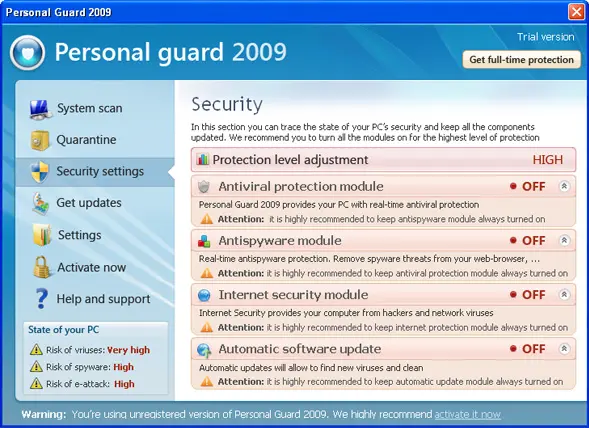
Personal Guard 2009 is a misleading security application that reports false or exaggerated system security threats and displays fake security alerts to make you think your computer is infected with spyware, Trojans, adware, and other malicious software. The bogus program can be manually installed or enter the system secretly with the help of Trojan viruses.
When active, the deceptive application will prompt you to pay for a full version of the program to remove computer threats that do not even exist. Do not waste your money or time with this proposition, as it is merely a scam. Please uninstall this malicious app from your PC upon detection.
Most of the time, PersonalGuard2009 is installed via Trojans that are already present on the host machine or fake online anti-malware scanners. However, it can be downloaded and manually installed via software bundle packages or similar methods, where users believe that the program is genuine and will protect them from various security threats.
However, you should not install this program, as it's nothing more but a scam. It will then display a list of computer threats and infections.
However, the scan results are false (they either take innocent system/application files and flag them as malicious or come up with fictitious threats that do not exist at all), so you can easily ignore them. Furthermore, this parasite will constantly display fake security alerts and notifications from the Windows taskbar. Here is one of the messages that you could expect to see when infected with the virus:
The program will also impersonate Windows Security Center and state that your antivirus software is disabled. These are all mere tricks that are used by many programs of similar kinds, such as WiniFixer, My Security Shield, or Antivirus 2009.
What is more, the bogus program will block antivirus software and certain security websites. If you find that your computer is infected with this parasite, please use the removal guide below to eliminate all the annoying notifications. You can use for a quick solution.
Besides, the malware might disable some of the Windows features or prevent you from visiting certain websites, so cleaning browsers is also very important. For that, use the instructions provided below or employ to do it for you.
From our report of Apr 2021 · not reviewed since
Do not get tricked by fake security programs
In the 2000s, malware was almost everywhere, since security solutions and IT infrastructure was not as developed as today.
As a result, malware business was booming. Third-party security programs weren't usually free, and Windows Defender (previously known as Microsoft Security Essentials) was almost useless when it came to protection from various online threats.
That is when rogue anti-spyware programs were extremely prevalent, as users would install them believing that they are free tools that could protect them from intrusions. Unfortunately, many of such programs were malicious themselves, causing all the havoc on the PC that they deemed to protect.
Thus, be vigilant and choose your software carefully. By using a modern security solution, you are almost certainly going to be warned about a rogue, generic malware or a potentially unwanted program. Also, don't ignore warnings from your security tool and avoid visiting high-risk websites altogether.
From our report of Apr 2021 · not reviewed since
More from our earlier report on Personal Guard 2009
- If you can't uninstall the program in a regular way through the Control Panel, access Safe Mode and perform a full system scan with anti-malware
- Rogue antispyware can alter Windows operation and damage its functions or files; to remediate your PC and fix virus damage automatically, use
- Your web-surfing is now in unprotected mode, so you cannot browse the Web safely.
- Save your PC from unwanted threats.
- Let Personal Guard 2009 help you.
How to remove Personal Guard 2009
Nothing it reports is real.
These steps remove it and undo a payment if you made one.
Step 1: Do not pay, and undo a payment if you made one
Personal Guard 2009 reports problems to sell a licence: the "threats" or "errors" it lists are invented or harmless leftovers. If you already paid, ask your card issuer to dispute the charge and cancel the subscription both in the seller's account and through your bank.
If you called a phone number it showed and let someone connect, treat the PC as remotely accessed and remove the remote tool. Uninstalling it from Windows 11 or Windows 10 does not cancel a subscription by itself.
Full procedure with screenshots: What to do after paying a scammer
Step 2: Uninstall Personal Guard 2009
Open Settings > Apps > Installed apps in Windows 11, or Settings > Apps > Apps & features in Windows 10.
Sort the list by install date and find Personal Guard 2009, then choose Uninstall from the three-dot menu next to it (in Windows 10, click the entry and then Uninstall).
Remove anything else installed on the same day that you do not recognise, because such programs usually arrive together in one installer. If the uninstaller opens a browser page with an offer or a survey, close it: the program is removed either way.
Full procedure with screenshots: Uninstall a program or app in Windows On uGetFix
Step 3: Remove it from startup
Whatever Personal Guard 2009 installed usually starts with Windows.
Open Task Manager with Ctrl + Shift + Esc, go to Startup apps in Windows 11 or the Startup tab in Windows 10, and disable what you do not know, starting with entries that have an empty Publisher column.
Open file location on the right-click menu shows the file, which helps you decide and tells you what to delete later. Disabling is safe: if something you need stops working, switch it back on.
Full procedure with screenshots: Stop apps from opening at startup On uGetFix
Step 4: Delete the folders left behind
What the uninstaller leaves behind is usually in the user folders. Open File Explorer, switch on View > Show > Hidden items (in Windows 10 View > Hidden items), and go through
%LocalAppData%,%AppData%, %ProgramData% and the two Program Files folders.Sort by Date modified and delete folders that appeared together with the problem and belong to no program you use. Folders with random names that hold
.exe,.dll, .js or .ps1 files are the strongest sign.Full procedure with screenshots: Remove what malware leaves behind in Windows
Step 5: Scan the PC, then run the offline scan
Open Windows Security > Virus & threat protection > Scan options, run a Full scan and remove everything it finds. Then select Microsoft Defender Antivirus (offline scan) and click Scan now: the PC restarts and scans before Windows loads, which finds files that hide while Windows runs.
Save your work first, because the offline scan takes about 15 minutes. Both scans are built into Windows 11 and Windows 10, and a second scanner from another vendor is a useful extra opinion.
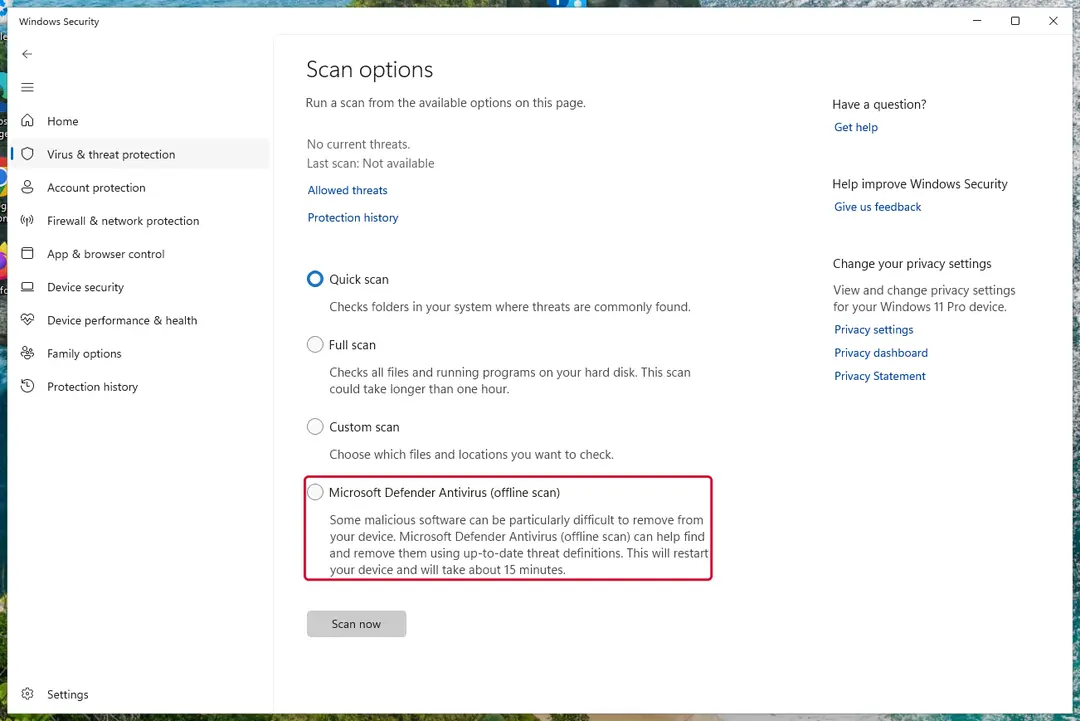
Windows 11: Windows Security > Virus & threat protection > Scan options. Full procedure with screenshots: Run a Microsoft Defender Offline scan
Instructions for each browser and system
The detailed steps for every browser and system this guide covers. Open the one you use.
Uninstall from Windows
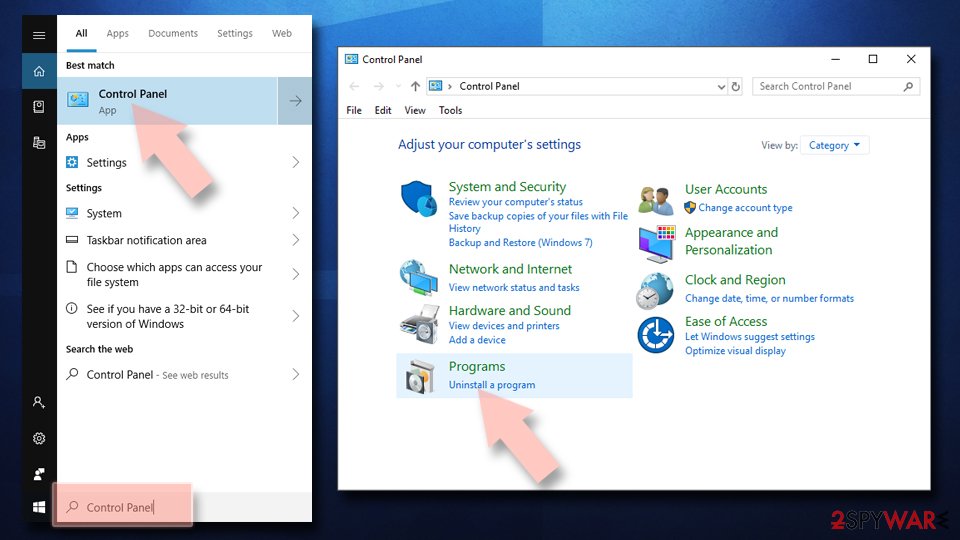
Uninstall from Windows 10/8:
- Type Control Panel into the Windows search box and open the result.
- Under Programs, select Uninstall a program.
Uninstall from Windows 7/XP:
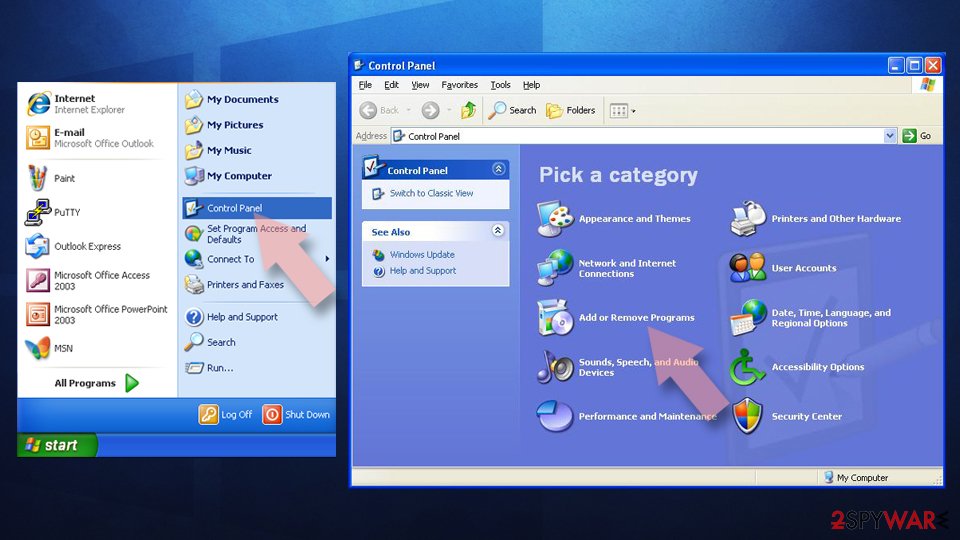
- Click on Windows Start > Control Panel (Windows XP users should click on Add/Remove Programs).
- In Control Panel, select Programs > Uninstall a program.
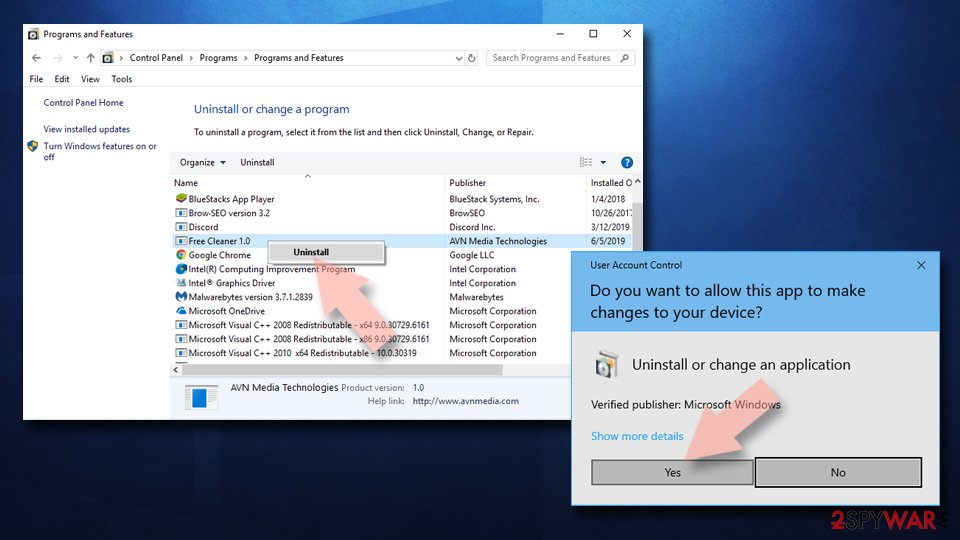
Remove the unwanted program:
- In the Programs and Features window, look for any recently installed suspicious entries, select them, and click Uninstall.
- If User Account Control appears, click Yes to confirm, then complete the removal.
Remove from Google Chrome
Delete malicious extensions from Google Chrome:
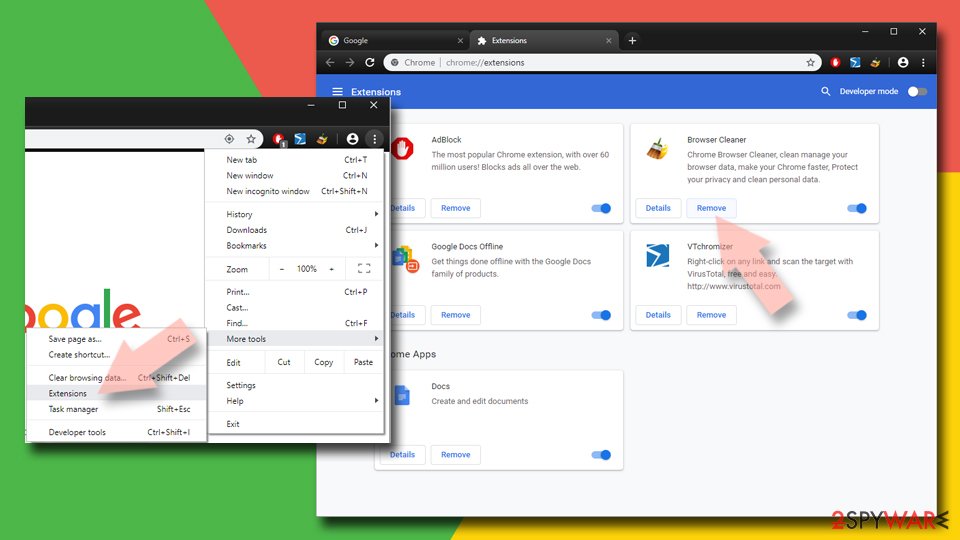
- Open Google Chrome, click on the Menu (three vertical dots at the top-right corner) and select More tools > Extensions.
- In the newly opened window, you will see all the installed extensions. Uninstall all suspicious extensions related to the unwanted program by clicking Remove.
Clear cache and web data from Chrome:
- Click on Menu and pick Settings.
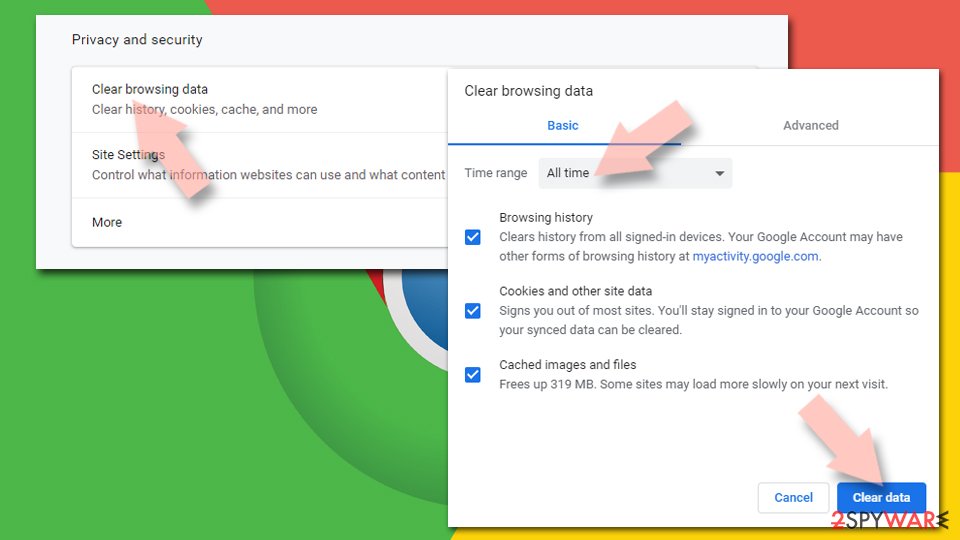
- Under Privacy and security, select Clear browsing data.
- Select Browsing history, Cookies and other site data, as well as Cached images and files.
- Click Clear data.
Change your homepage:
- Click menu and choose Settings.
- Look for a suspicious site in the On startup section.
- Click on Open a specific or set of pages and click on three dots to find the Remove option.
Reset Google Chrome:
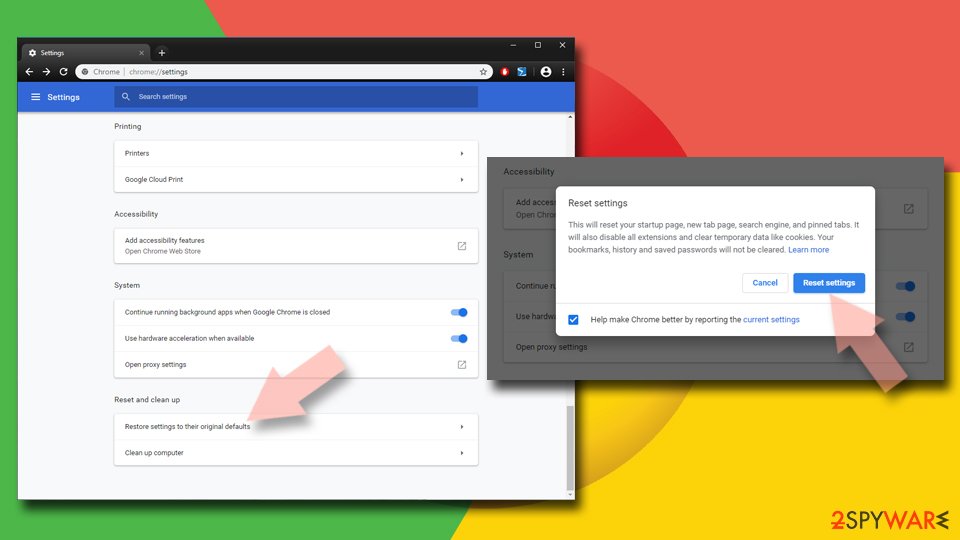
If the previous methods did not help you, reset Google Chrome to eliminate all the unwanted components:
- Click on Menu and select Settings.
- In the Settings, scroll down and click Advanced.
- Scroll down and locate Reset and clean up section.
- Now click Restore settings to their original defaults.
- Confirm with Reset settings.
Remove from Microsoft Edge
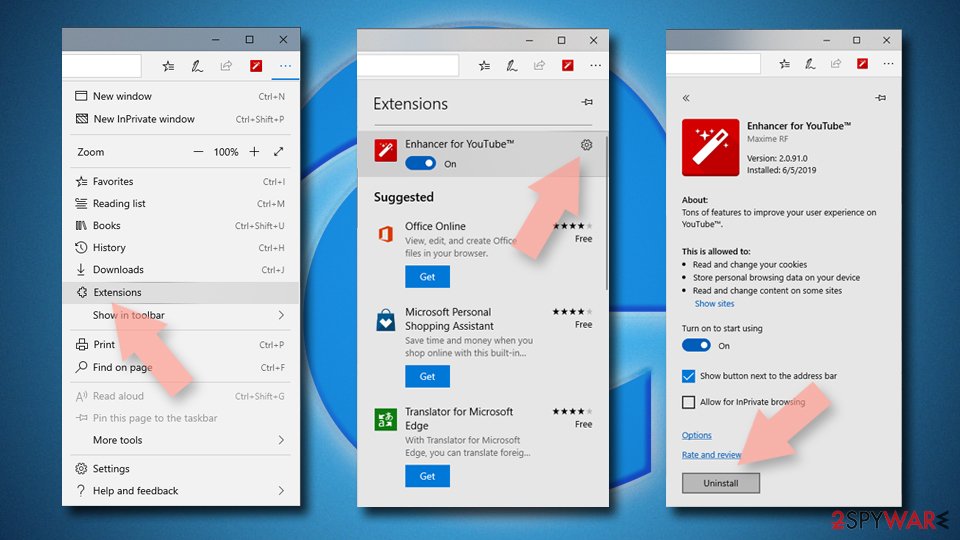
Delete unwanted extensions from MS Edge:
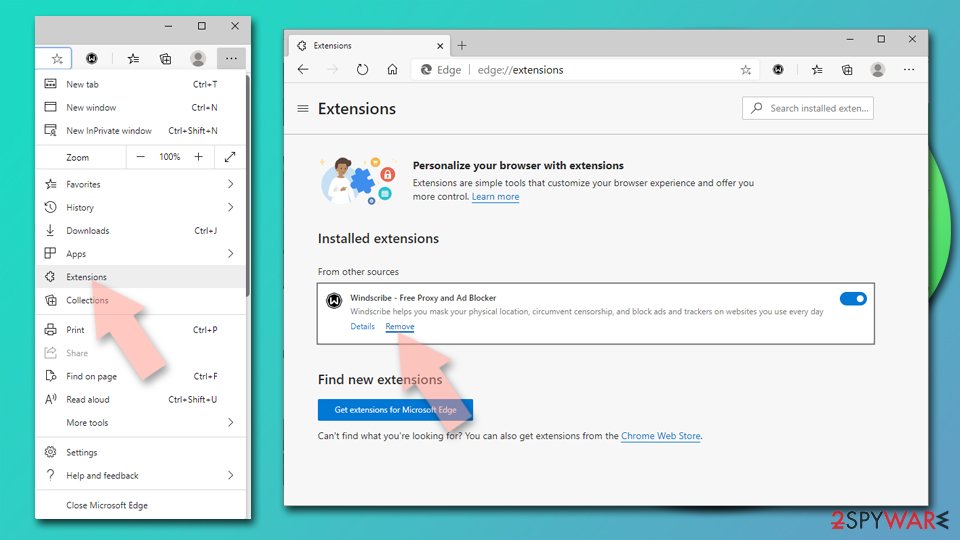
- Select Menu (three horizontal dots at the top-right of the browser window) and pick Extensions.
- From the list, pick the extension and click on the Gear icon.
- Click Remove.
Clear cookies and other browser data:
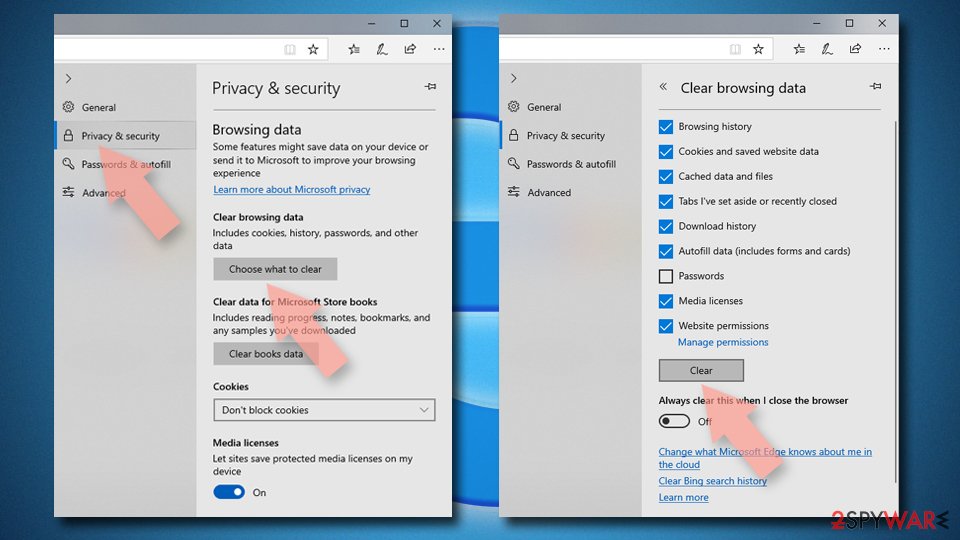
- Click on the Menu (three horizontal dots at the top-right of the browser window) and select Settings > Privacy, search, and services..
- Under Clear browsing data, pick Choose what to clear.
- Select Cookies and other site data and Cached images and files. (apart from passwords, although you might want to include Media licenses as well, if applicable) and click on Clear.
Restore new tab and homepage settings:
- Click the menu icon and choose Settings.
- Then find On startup section.
- Click Remove next to any suspicious startup page.
Reset MS Edge if the above steps did not work:
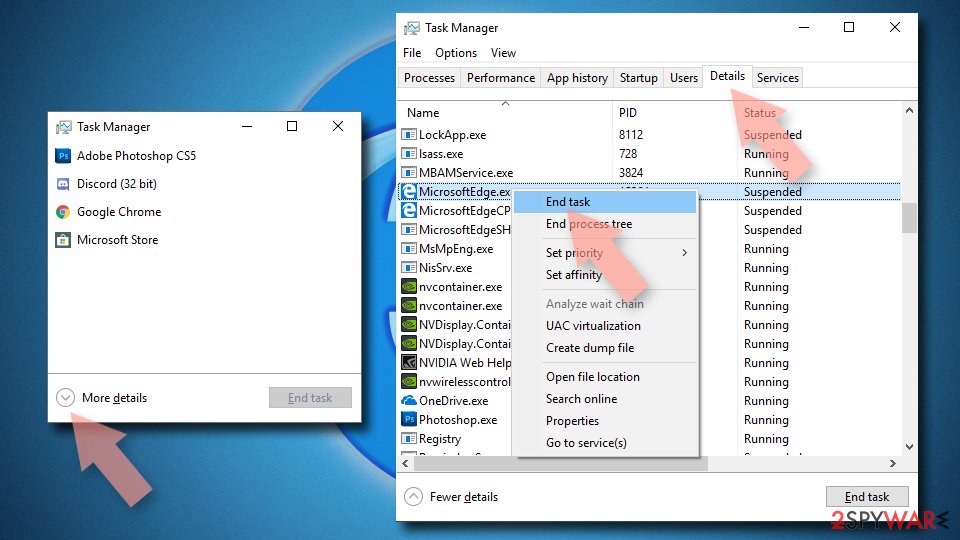
- Press on Ctrl + Shift + Esc to open Task Manager.
- Click on More details arrow at the bottom of the window.
- Select Details tab.
- Now scroll down and locate every entry with Microsoft Edge name in it. Right-click on each of them and select End Task to stop MS Edge from running.
Delete extensions from MS Edge (Chromium):
- Open Edge and click select Settings > Extensions.
- Delete unwanted extensions by clicking Remove.
Clear cache and site data:
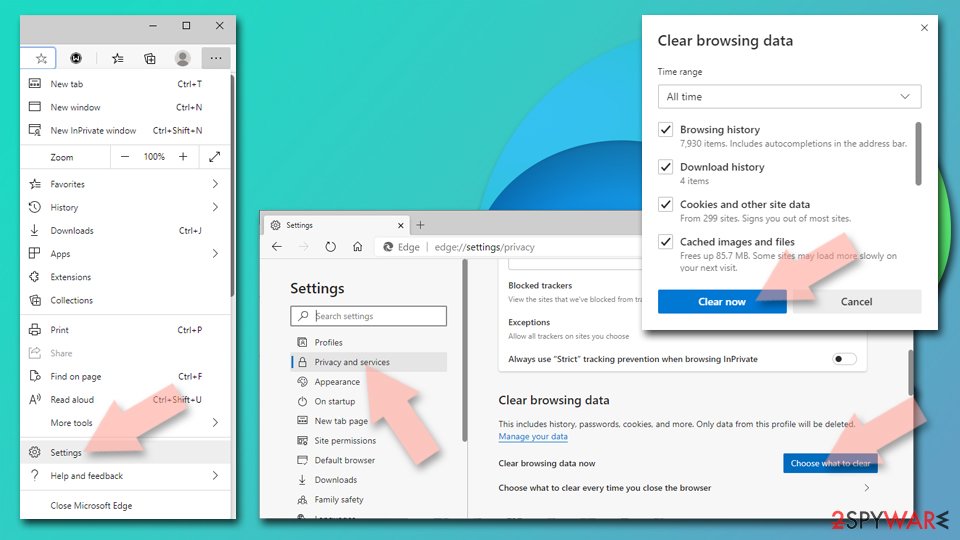
- Click on Menu and go to Settings.
- Select Privacy, search and services.
- Under Clear browsing data, pick Choose what to clear.
- Under Time range, pick All time.
- Select Clear now.
Reset Chromium-based MS Edge:
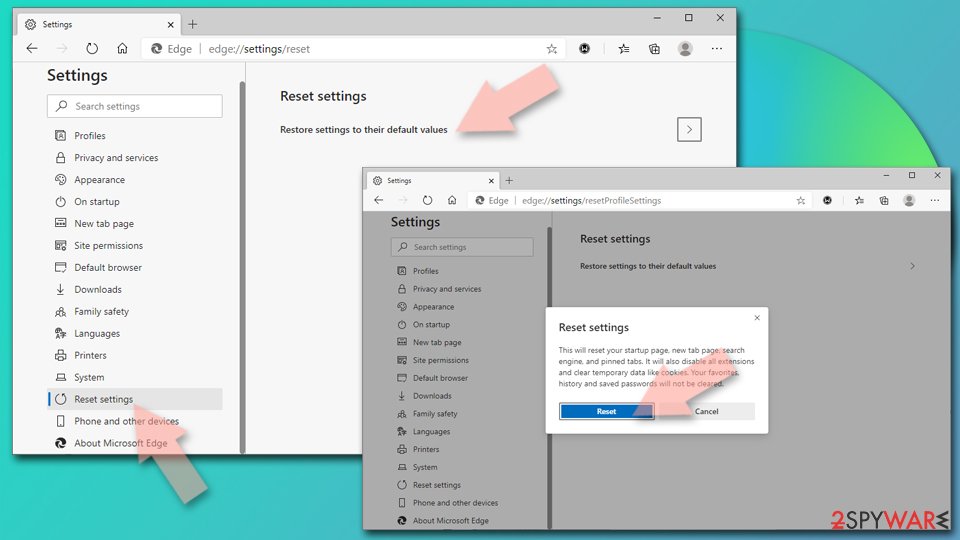
- Click on Menu and select Settings.
- On the left side, pick Reset settings.
- Select Restore settings to their default values.
- Confirm with Reset.
- This will disable extensions and reset startup pages but will not delete bookmarks, saved passwords, or browsing history.
Remove from Mozilla Firefox (FF)
Remove dangerous extensions:
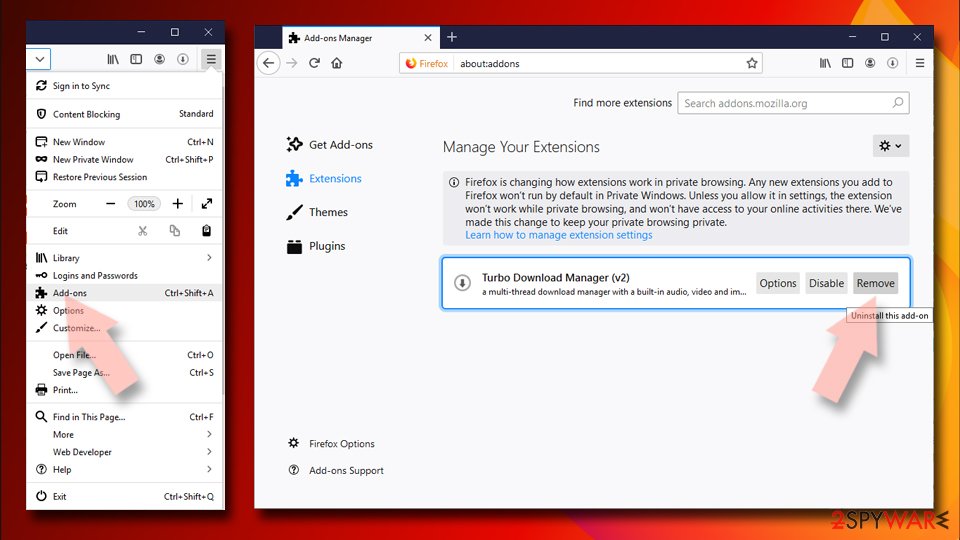
- Open Mozilla Firefox browser and click on the Menu (three horizontal lines at the top-right of the window).
- Select Add-ons.
- In here, select the unwanted extension and click Remove.
Reset the homepage:
- Click three horizontal lines at the top right corner to open the menu.
- Choose Settings.
- Under Home, set your preferred homepage and new tab settings.
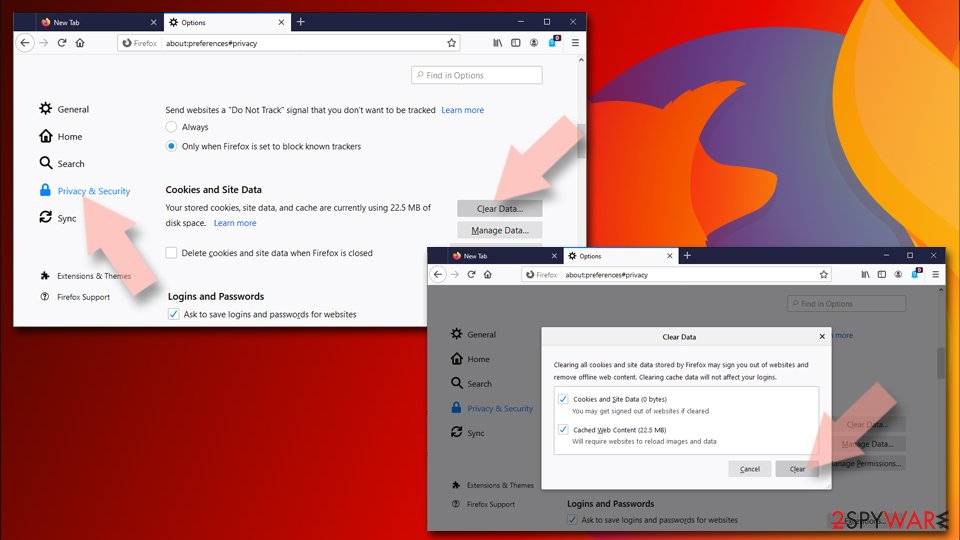
Clear cookies and site data:
- Click Menu and pick Settings.
- Go to Privacy & Security section.
- Scroll down to locate Cookies and Site Data.
- Click on Clear Data...
- Select Cookies and Site Data and Temporary cached files and pages, then click Clear.
Reset Mozilla Firefox
If clearing the browser as explained above did not help, reset Mozilla Firefox:
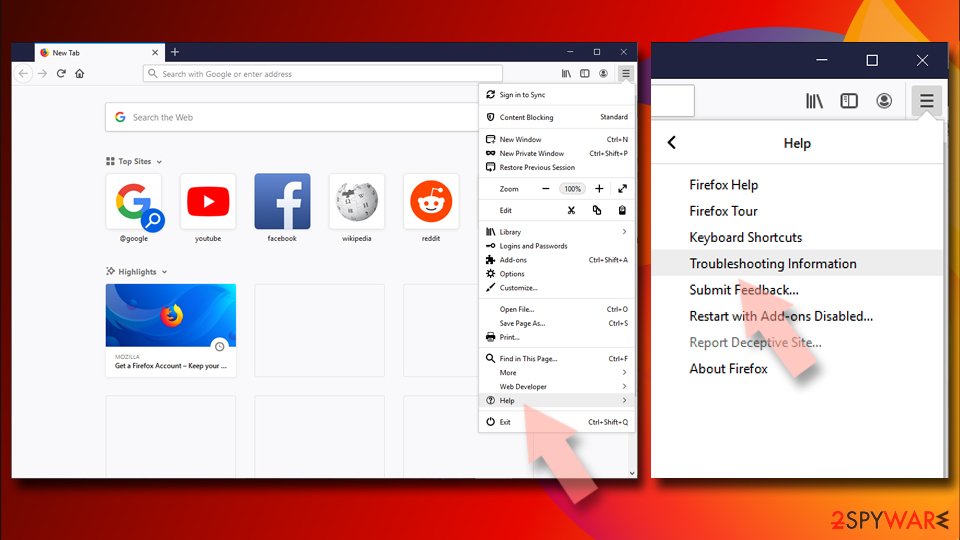
- Open Mozilla Firefox browser and click the Menu.
- Go to Help and then choose Troubleshooting Information.
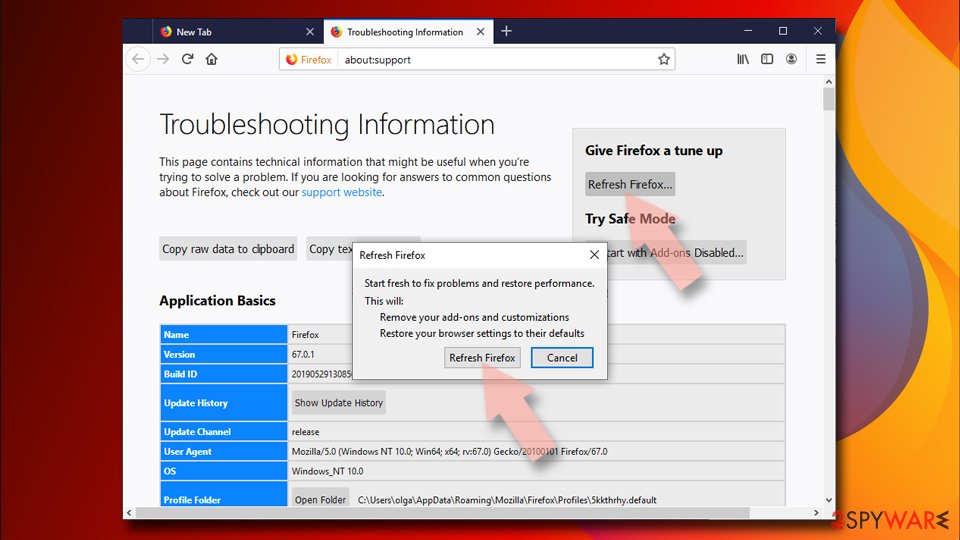
- Under Give Firefox a tune up section, click on Refresh Firefox...
- Once the pop-up shows up, confirm the action by pressing on Refresh Firefox.
Delete from Safari
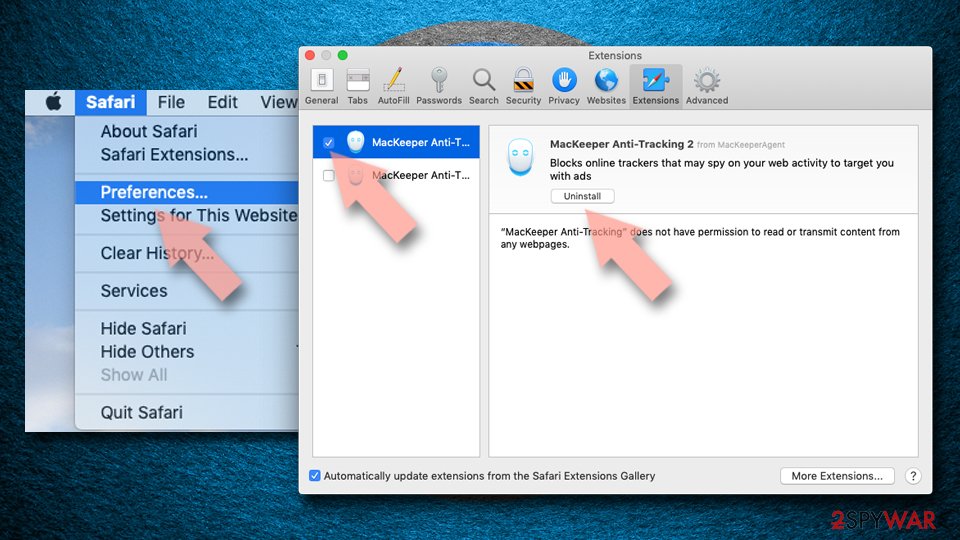
Remove dangerous extensions:
- Open Safari, click Safari in the menu at the top-left of the screen, and select Preferences.
- Go to the Extensions tab, look for any suspicious entries, and click Uninstall to remove them.
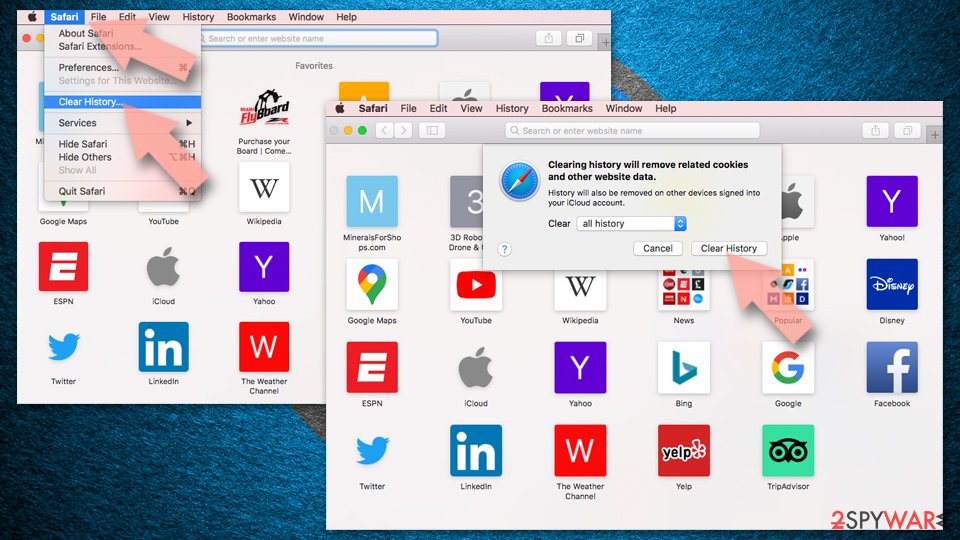
Clear history and website data:
- Click Safari in the menu and pick Clear History.
- Set Clear to all history and confirm with Clear History.
Reset Safari:
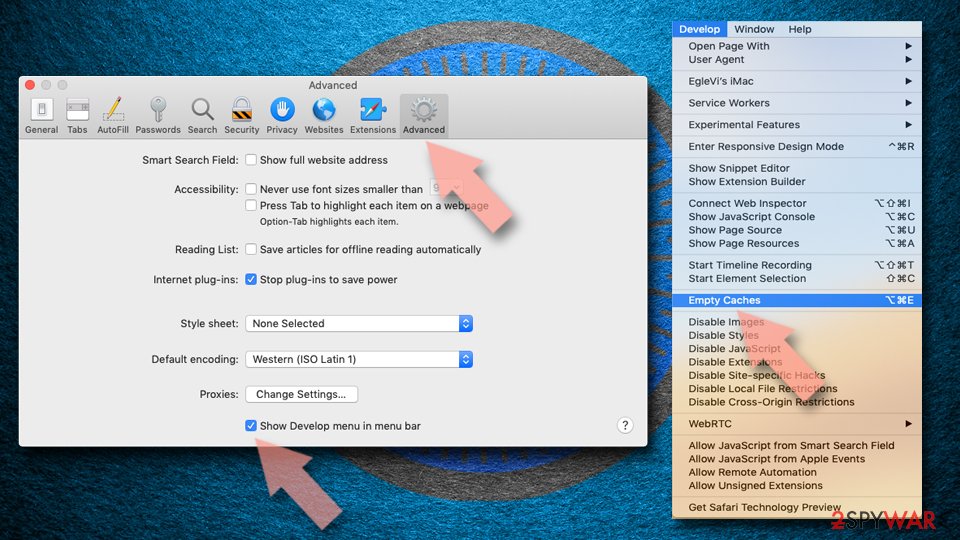
- Click Safari in the menu and select Preferences > Advanced.
- Enable Show Develop menu in menu bar.
- From the menu bar, click Develop and select Empty Caches.
Delete from macOS
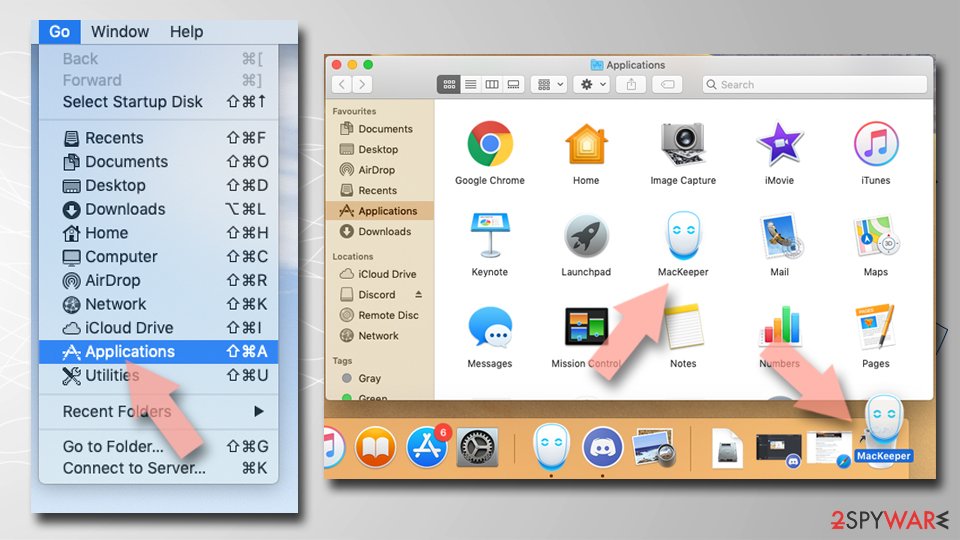
Remove the unwanted application:
- From the menu bar, select Go > Applications.
- In the Applications folder, look for any suspicious entries, then drag them to Trash (or right-click and pick Move to Trash).
Delete leftover files and folders:
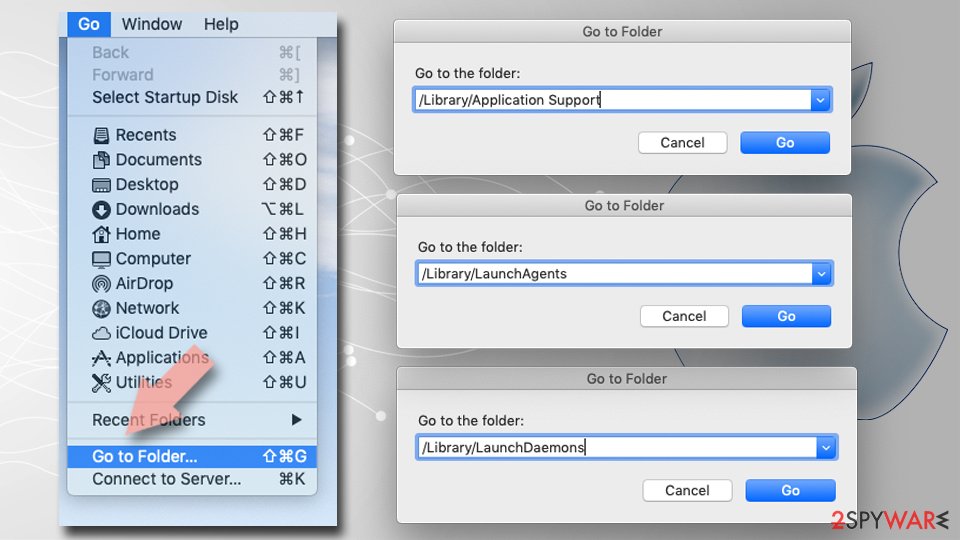
- Select Go > Go to Folder.
- Enter /Library/Application Support and remove any suspicious folders related to the unwanted program.
- Repeat the same check in the /Library/LaunchAgents and /Library/LaunchDaemons folders, deleting any suspicious entries.
- Finally, empty the Trash to permanently remove the leftovers.
Do not let government spy on you
The government has many issues in regards to tracking users' data and spying on citizens, so you should take this into consideration and learn more about shady information gathering practices.
Avoid any unwanted government tracking or spying by going totally anonymous on the internet.
You can choose a different location when you go online and access any material you want without particular content restrictions. You can easily enjoy internet connection without any risks of being hacked by using VPN.
Control the information that can be accessed by government any other unwanted party and surf online without being spied on. Even if you are not involved in illegal activities or trust your selection of services, platforms, be suspicious for your own security and take precautionary measures by using the VPN service.
Backup files for the later use, in case of the malware attack
Computer users can suffer from data losses due to cyber infections or their own faulty doings.
Ransomware can encrypt and hold files hostage, while unforeseen power cuts might cause a loss of important documents. If you have proper up-to-date backups, you can easily recover after such an incident and get back to work. It is also equally important to update backups on a regular basis so that the newest information remains intact - you can set this process to be performed automatically.
When you have the previous version of every important document or project you can avoid frustration and breakdowns. It comes in handy when malware strikes out of nowhere. Use for the data restoration process.
From our report of Apr 2021 · not reviewed since
Delete Personal Guard 2009
Many rogue antispyware programs act exceptionally aggressively to avoid being removed.
For example, some of such viruses disable the Windows registry editor or the task manager. Some of them actively detect and prevent the execution of genuine anti-malware tools. Hence, removing such programs can be quite difficult, especially if you are not proficient in the IT field.
If the entry is completely missing or you receive an error, we strongly advise you to perform a scan with a security application. Cleaning your web browsers is also advisable as their settings could have been changed by the virus.
Questions about Personal Guard 2009
Is Personal Guard 2009 a virus?
Most programs that appear the way Personal Guard 2009 did are not viruses in the strict sense. They are potentially unwanted programs:
- real software that arrives bundled with other downloads and then shows offers
- changes browser settings
- starts with Windows
Some are harmless, some are annoying and a few carry adware. What makes it worth removing is that you did not choose it.
Uninstall it from Installed apps and check the startup list and the browsers for anything added the same day. If it refuses to uninstall or returns after a restart, treat it as more serious and run a Microsoft Defender offline scan.
Personal Guard 2009 will not uninstall. What can I do?
First restart the PC and try again, because the program may have been running and locked its own files. If the uninstaller is missing or fails, start Windows in Safe Mode, where most third-party programs do not start, and remove Personal Guard 2009 from Installed apps there.
If it still refuses, delete its startup entry and its scheduled task, restart, and try once more. A program that actively prevents removal is behaving like malware, so finish with a Microsoft Defender offline scan. Avoid third-party uninstallers offered on search ads; several of them are unwanted programs themselves.
I called the number from Personal Guard 2009. What now?
End the call and do not let them reconnect. If they installed a remote-access tool, disconnect the PC from the internet and uninstall that tool from Installed apps. Change passwords for e-mail, banking and anything you typed during the call, using another device.
If you paid, contact the bank today for a chargeback. Report the number to the authorities in your country. The program behind personal Guard 2009 in the list of installed apps still needs removing: follow the plan in this guide, then run a full scan in Windows Security.
I entered my card number in Personal Guard 2009. What should I do?
Call your card issuer using the number on the back of the card, report the purchase as fraud and ask for a new card. Ask them to block further charges from the same merchant. Watch your statements for small test charges, which often come before larger ones.
If you used a password on the order page or the same e-mail for the purchase, change that password and expect phishing e-mails that mention the purchase. Your bank can also tell you whether the merchant is linked to other fraud reports.
Should I reset my PC because of Personal Guard 2009?
Only if the signs point to deeper access. Reset when you see personal Guard 2009 in the list of installed apps again after removal, when Windows Security cannot start or update, when remote access tools you did not install keep appearing, or when you simply cannot trust the PC any more.
Otherwise, the plan in this guide plus an offline scan is enough. If you do reset, choose Remove everything and Cloud download for a fresh copy of Windows, restore only documents and photos, and reinstall programs from their official sites. Change important passwords from the clean system afterwards.
I let a technician connect to my PC because of Personal Guard 2009. Is it safe now?
Not until you check. While connected, the caller could install other programs, create a user account or look at saved passwords. Disconnect from the internet, uninstall the remote access program and anything else installed during the call, and run a full scan and the Microsoft Defender offline scan.
From another device, change your e-mail and banking passwords and turn on two-step verification. If the caller opened your online banking, call the bank today. A reset of Windows is the safest option if you cannot tell what was done.
What is Personal Guard 2009?
Personal Guard 2009 is fake security software, sometimes called a rogue antivirus or scareware. The program, Personal Guard 2009, shows invented or exaggerated problems to make you pay for a licence, and some versions send you to phone "support".
It does not protect the PC, and the threats it lists are not a reason to pay. Fake security programs usually arrive through fake virus warnings on websites, extra offers in free installers or ads for faster PCs. Uninstall it and use the free protection built into Windows instead.
Will the seller of Personal Guard 2009 refund me if I ask?
Sometimes, but do not depend on it and do not let them steer the process. If you contact the seller, do it in writing and keep the replies. Never install software, share your screen or give banking details to get a refund.
The more reliable route is your card issuer or PayPal: a chargeback or dispute for a product sold with false claims. If the seller or anyone claiming to represent them calls you first about a refund, treat it as a scam and hang up.
Do I need to buy antivirus after removing Personal Guard 2009?
No. Windows 11 and Windows 10 include Microsoft Defender in Windows Security, which provides real-time protection, scheduled scans, the offline scan and protection against unwanted apps at no cost. Keep it switched on and updated, and turn on Reputation-based protection under App & browser control.
If you prefer a third-party product, buy it from the vendor's own site after reading independent test results, never from a pop-up or a phone call. The lesson of Personal Guard 2009 is that security offers which arrive unasked are the ones to avoid.
Will Fortect remove Personal Guard 2009?
Fortect scans Windows for malware and unwanted programs and repairs the system files and settings they change, and its free scan shows what it finds on your PC before you decide anything.
For Personal Guard 2009, follow the plan above as well: the browser steps take back permissions and settings that no scanner treats as a threat, and uninstalling the program that brought it removes the source.
Run Microsoft Defender's full scan and, if anything was found, its offline scan as a second opinion. If the symptoms are gone after the plan and both scans are clean, there is nothing more to do.
Sources
- FTC: How to recognize, remove and avoid malware (read October 6, 2026)
- Microsoft Learn: Microsoft Defender Offline (read October 6, 2026)
- Microsoft Learn: How Microsoft names malware (read October 6, 2026)