
Coordinator Plus ads: what it is and how to remove it
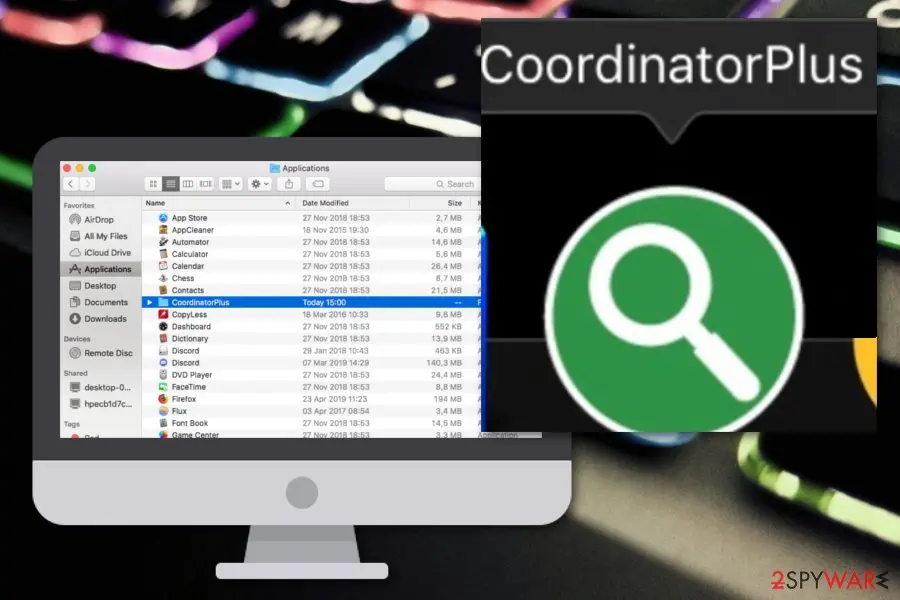
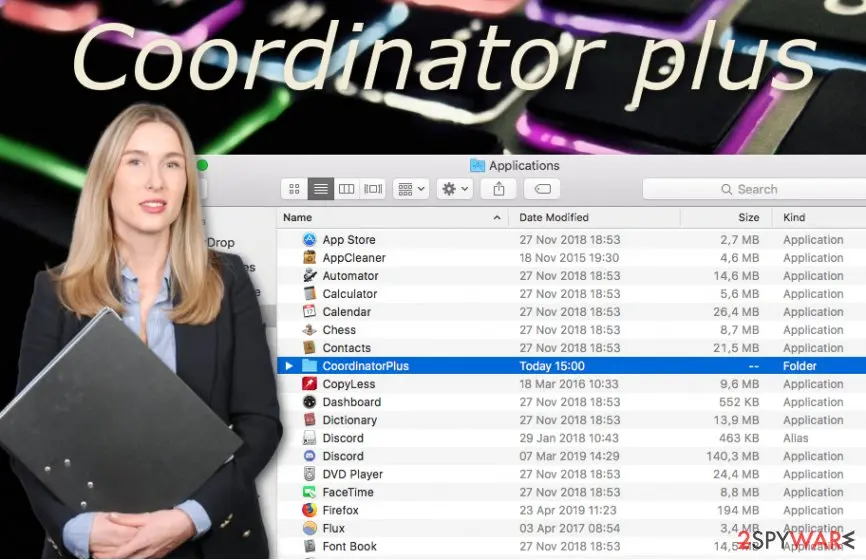
Coordinator Plus is included in the adware program list as its main goal is to deliver intrusive notifications. The app uses stealth techniques such as "bundling" to end up on Mac computers' toolbars and you might also see the PUP placed in a folder in the Applications section.
Facts checked October 6, 2026. Removal steps checked against Apple's current documentation and the security vendors' reports. We have not run the malware on a Mac. Sections marked as our earlier report are the original text: they describe the threat as it was then and have not been reviewed since. The 2026 status, the removal steps and the questions are current.
Automatic
Get a free scan and check if your Mac is infected.
Fortect for Mac scans for malware and unwanted programs, and its free scan shows what it finds before you decide anything.
A scan of the PC is a quick way to confirm that nothing installed is behind the softonic.com redirects.
Do it yourself · free Remove Coordinator Plus ads yourself 4 steps, about 12 minutes, no software needed.
Start the steps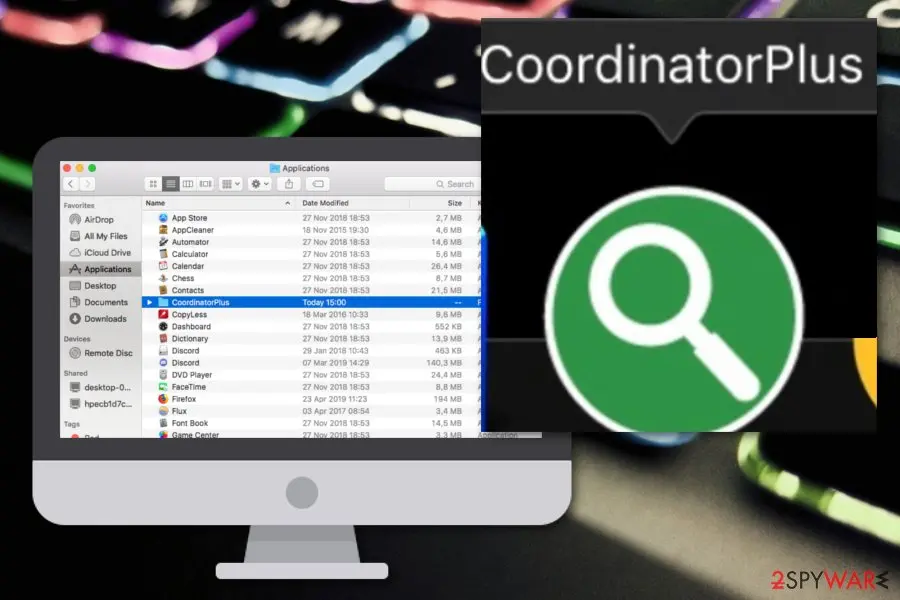
Coordinator Plus ads: summary
| Distribution | Such adware programs are mostly delivered by using stealth techniques such as software bundling through websites such as softonic.com, download.com, or cnet.com |
|---|---|
| Name | Coordinator Plus |
| Type | Potentially unwanted program |
| Sub-type | Adware/Mac virus |
| Target | This suspicious threat is known to be targeting Mac computer systems and their users. The adware can also appear on any type of web browsers such as Google Chrome, Mozilla Firefox, and Safari |
| Relations found | According to users reports, they have experienced the default browser search engine turning to Yahoo which gives speculation that Coordinator Plus virus might be related with Yahoo redirect virus |
| Removal | Scan the Mac with security software to find the malware and anything installed with it. Fortect for Mac scans for malware and unwanted programs. Remove it nowTo use the full-featured product, you have to purchase a license for Fortect. The scan is free. |
Show 10 more facts
| Income | The developers aim to gather monetary benefits while promoting the cost-per-click technique that provides income within each click on a particular ad |
|---|---|
| Detection names | No Microsoft detection name is known |
| Damage | Not recorded in the old report |
| Symptoms | Redirects to an unknown domain |
| Evidence | 5 write-ups by security sites; details still limited |
| Domains | softonic.com |
| Ads shown as | Redirects through ad pages |
| Browsers | Chrome, Edge and Firefox |
| First seen | 1 November 2019 |
| Facts checked | 6 October 2026 |
Is Coordinator Plus ads dangerous?
From our report of Nov 2019 · not reviewed since
Coordinator Plus - an adware program that might be related to Yahoo redirect virus
Coordinator Plus is included in the adware program list as its main goal is to deliver intrusive notifications.
The app uses stealth techniques such as "bundling" to end up on Mac computers' toolbars and you might also see the PUP placed in a folder in the Applications section. An Apple user claims Coordinator Plus virus sneaks into the machine unknowingly and locks the screen temporarily.
Nevertheless, the person states that he/she has found the default search engine changed to Yahoo which can give a hint of the adware's relation with some type of Yahoo redirect virus.
Coordinator Plus is not dangerous malware but definitely a manipulative program. It tries to look innocent whereas it truly hides the aim of collecting income via intrusive advertising. The developers of this app support the cost-per-click technique which brings monetary benefits within each click on their ads.
Coordinator Plus virus Mac might flood your computer screen with fake offers and deals that can try to trick you to spend money on a useless product or service. In addition, by aware of various surveys that ask for personal information as revealing private data to strangers never has been a good idea.
Furthermore, Coordinator Plus can start redirecting you to unknown domains. Technically, this type of activity is provoked to take users to affiliate sources filled with purchasable products, however, there is a risk that the ad-supported program might take you to a potentially dangerous location filled with malicious components.
Nevertheless, malicious redirecting is a common way how some users get their computer systems infected with dangerous malware, e.g. Trojan horses, spyware, or ransomware. Coordinator Plus removal is a necessary step here if you want to decrease the risk of getting caught by some type of malicious infection.
To be able to complete all of these activities at once, Coordinator Plus will supposedly affect your web browsers too. You might find that the homepage and new tab URL zone has been changed to some unknown ones. Additionally, the adware can add browser helper objects such as extensions and plug-ins to your browser settings.
Continuously, Coordinator Plus might use tracking cookies to record information related to your browsing sessions and send it to other parties for income or use it in targeted advertising campaigns. This way third-parties are capable of figuring out what types of offers are relevant at the moment and creating similar-looking deals that will supposedly attract users.
However, keeping Coordinator Plus on your Mac computer or any type of web browsers such as Google Chrome, Mozilla Firefox, Internet Explorer, Microsoft Edge, and Safari is not a good idea as due to the intensity of all activities, you might start experiencing frequent browser freezes, shutdowns, basic computer slowdowns, etc.
You can remove Coordinator Plus from your Mac and browsers by relying on the automatical or manual technique. After you get rid of the adware program, you need to ensure that no suspicious content has been left on your computer. For this purpose, try using a program such as and perform a thorough system scan with it.
How Coordinator Plus ads got into your browser
From our report of Nov 2019 · not reviewed since
Technology specialists from ZonderVirus.nl state that adware programs are such sneaky threats that they can appear on one's PC without even noticing.
However, this still never happens without the person's interaction. Usually, people make mistakes while choosing the Quick/Recommended installation technique over the Advanced/Custom one.
The Advanced option allows taking full control of all incoming objects where the Quick mode automatically installs additional content without giving you a chance to opt-out of it. PUPs often get delivered through this method when the person is likely to download software and services from websites such as softonic.com, download.com, or cnet.com.
Continuously, adware programs might camouflage as fake player updates when you are visiting a third-party domain that has been flagged as unsafe by your web browser or antivirus program. If you ever get any doubts about a particular upgrade that you have been provided with, you should check the official website of the program and find out if there truly were any updates released recently.
One more thing. You should ALWAYS keep your antivirus software updated as outdated products become more vulnerable to malware attacks and just do not fulfill their functionality. Besides, make sure that the tool you are running on your Mac or Windows computer is a reliable one and not just a rogue security application.
Check your browser and PC
- Address:
softonic.com
How to remove Coordinator Plus ads
How to remove Coordinator Plus from a Mac
Remove the app and what starts it, then check the browsers.
Step 1: Delete apps and downloads you did not intend to install
Open the Applications folder and your Downloads folder. Drag any app you did not install, and any disk image (
.dmg), installer (.pkg) or archive (.zip) that came from Coordinator Plus or a site you do not trust, to the Bin, then empty the Bin.Also check
~/Library/Application Supportfor a folder with the same name as the app you removed.Step 2: Remove unknown login items and background items
Open System Settings > General > Login Items & Extensions. Under Open at Login and Allow in the Background, switch off or remove anything you do not recognize, especially items whose developer is shown as an unknown name or that appeared on the day you ran the command.
Then open Finder, choose Go > Go to Folder and check
~/Library/LaunchAgents,/Library/LaunchAgentsand /Library/LaunchDaemons for property list (.plist) files you did not add. Drag suspicious ones to the Bin, then restart the Mac.Step 3: Check the browsers for extensions and changed settings
In Safari open Settings > Extensions and General (homepage). In Chrome open
chrome://extensions, in Firefoxabout:addons.Remove any extension you did not add, and reset the homepage and search engine if they changed. Browsers hold saved passwords and cookies, which is why the password step comes first.
Step 4: Quit what is running that you do not recognize
Open Activity Monitor (in Applications > Utilities, or search for it with Command + Space).
In the CPU or Network tab, look for a process you did not install or whose name is random, select it, click the stop button (the octagon with an X) and choose Quit or Force Quit.
Note the name first: you will look for the same name in the next steps. Malware that comes back after a restart is handled in the next two steps.
Instructions for each browser and system
The detailed steps for every browser and system this guide covers. Open the one you use.
Remove from Google Chrome
To reverse Google Chrome back to its previous position, take a look at the following guidelines
Delete malicious extensions from Google Chrome:
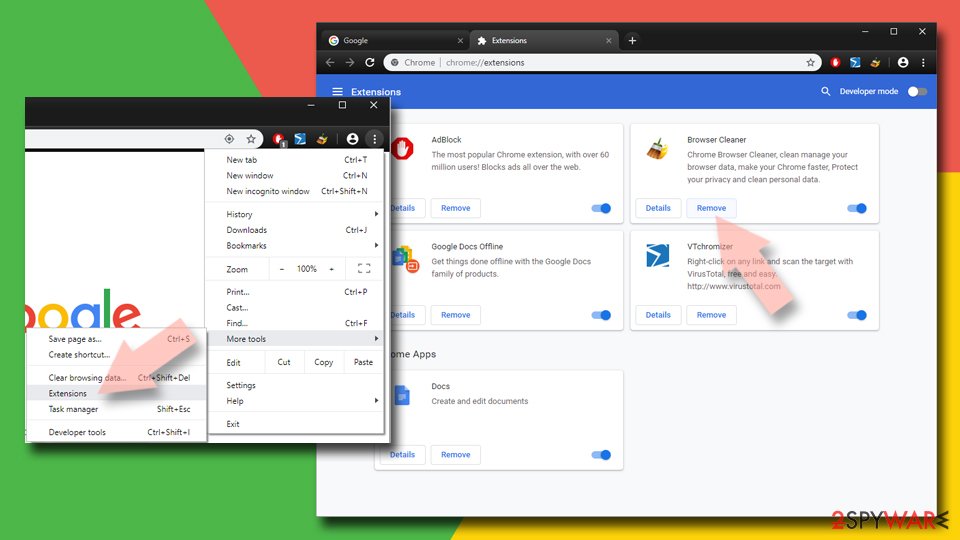
- Open Google Chrome, click on the Menu (three vertical dots at the top-right corner) and select More tools > Extensions.
- In the newly opened window, you will see all the installed extensions. Uninstall all suspicious extensions related to the unwanted program by clicking Remove.
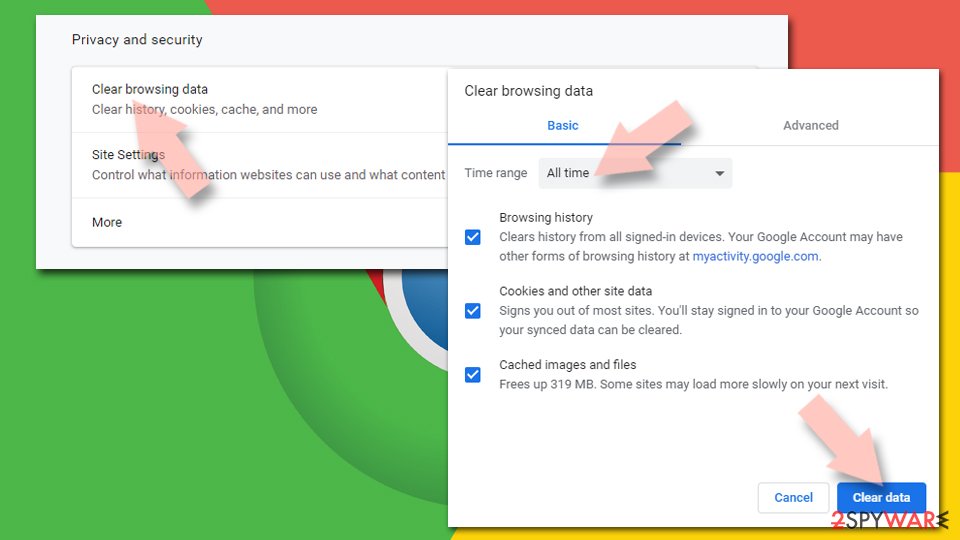
Clear cache and web data from Chrome:
- Click on Menu and pick Settings.
- Under Privacy and security, select Clear browsing data.
- Select Browsing history, Cookies and other site data, as well as Cached images and files.
- Click Clear data.
Change your homepage:
- Click menu and choose Settings.
- Look for a suspicious site in the On startup section.
- Click on Open a specific or set of pages and click on three dots to find the Remove option.
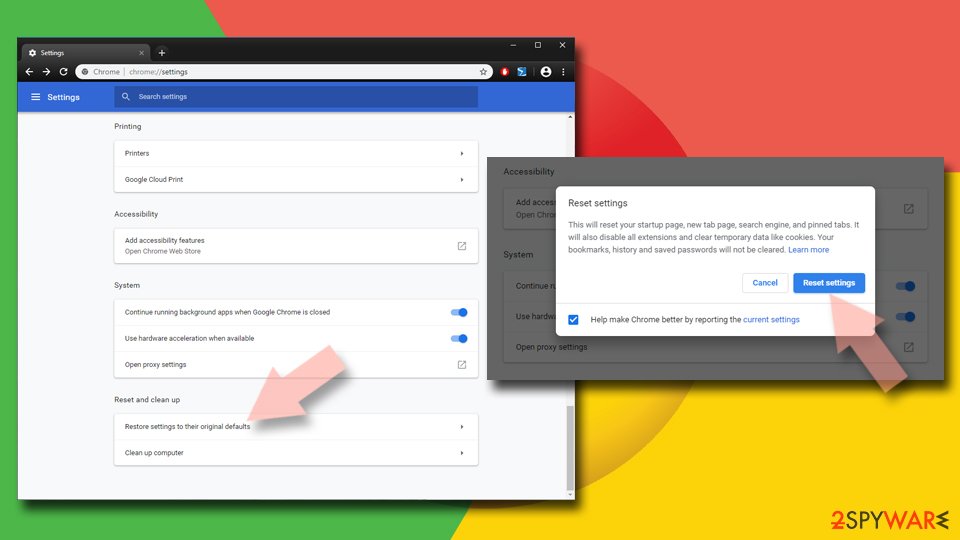
Reset Google Chrome:
If the previous methods did not help you, reset Google Chrome to eliminate all the unwanted components:
- Click on Menu and select Settings.
- In the Settings, scroll down and click Advanced.
- Scroll down and locate Reset and clean up section.
- Now click Restore settings to their original defaults.
- Confirm with Reset settings.
Remove from Mozilla Firefox (FF)
To get rid of questionable products from your Mozilla Firefox web browser, try out the following steps
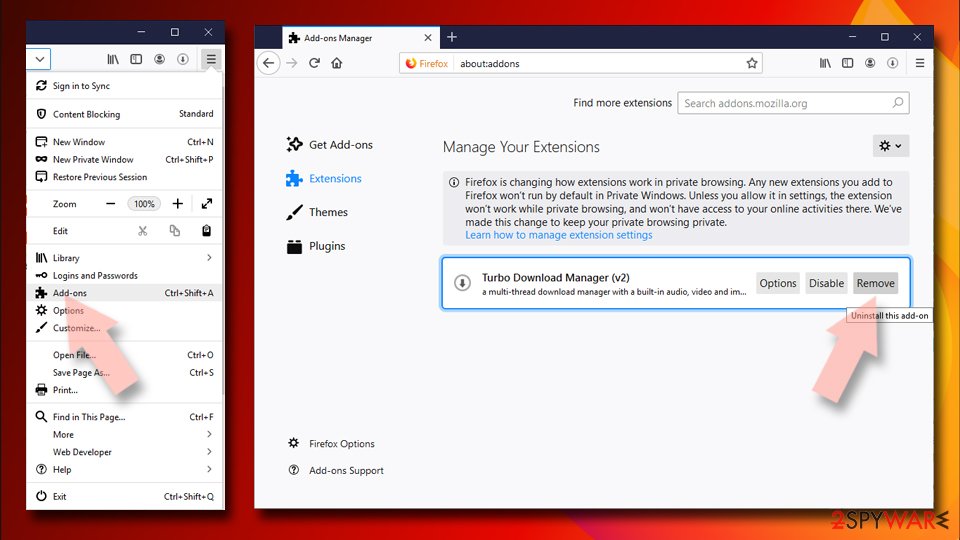
Remove dangerous extensions:
- Open Mozilla Firefox browser and click on the Menu (three horizontal lines at the top-right of the window).
- Select Add-ons.
- In here, select the unwanted extension and click Remove.
Reset the homepage:
- Click three horizontal lines at the top right corner to open the menu.
- Choose Settings.
- Under Home, set your preferred homepage and new tab settings.
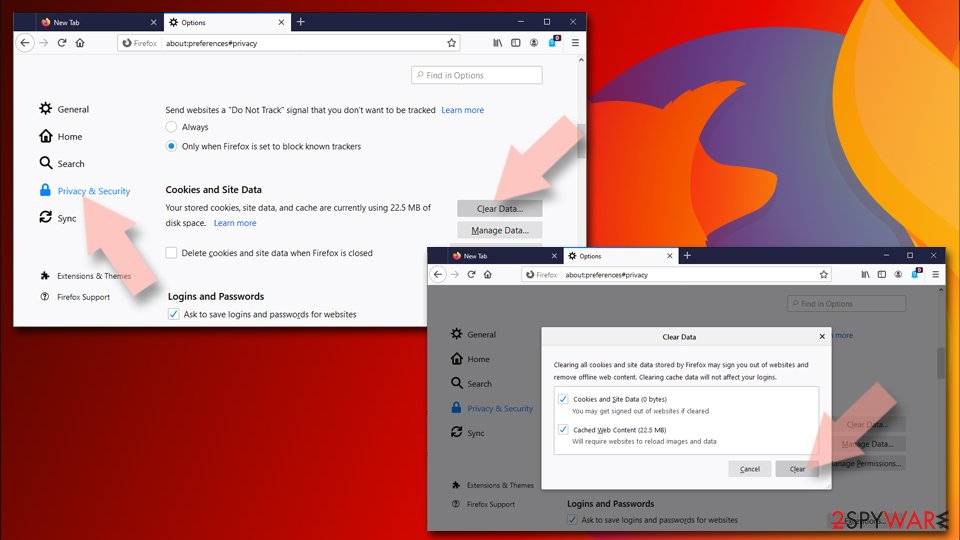
Clear cookies and site data:
- Click Menu and pick Settings.
- Go to Privacy & Security section.
- Scroll down to locate Cookies and Site Data.
- Click on Clear Data...
- Select Cookies and Site Data and Temporary cached files and pages, then click Clear.
Reset Mozilla Firefox
If clearing the browser as explained above did not help, reset Mozilla Firefox:
- Open Mozilla Firefox browser and click the Menu.
- Go to Help and then choose Troubleshooting Information.
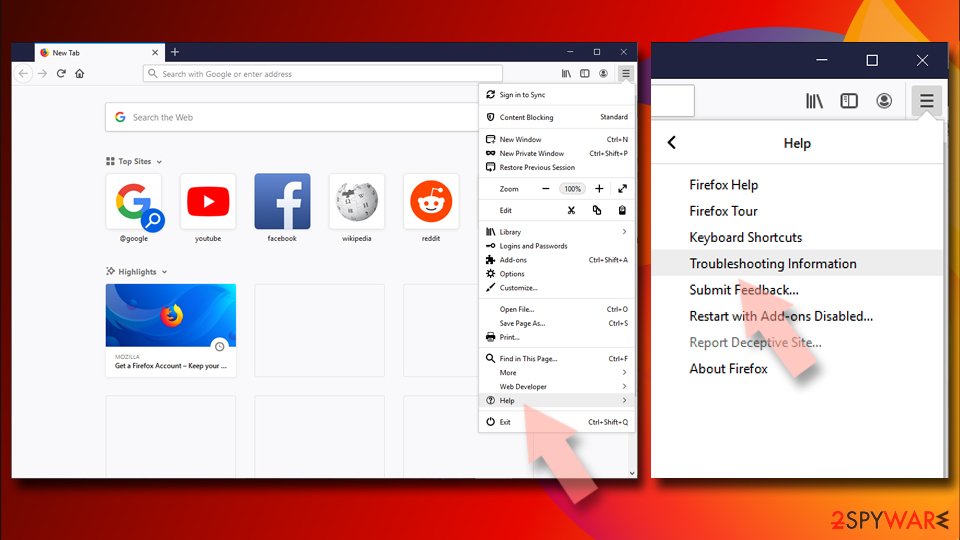
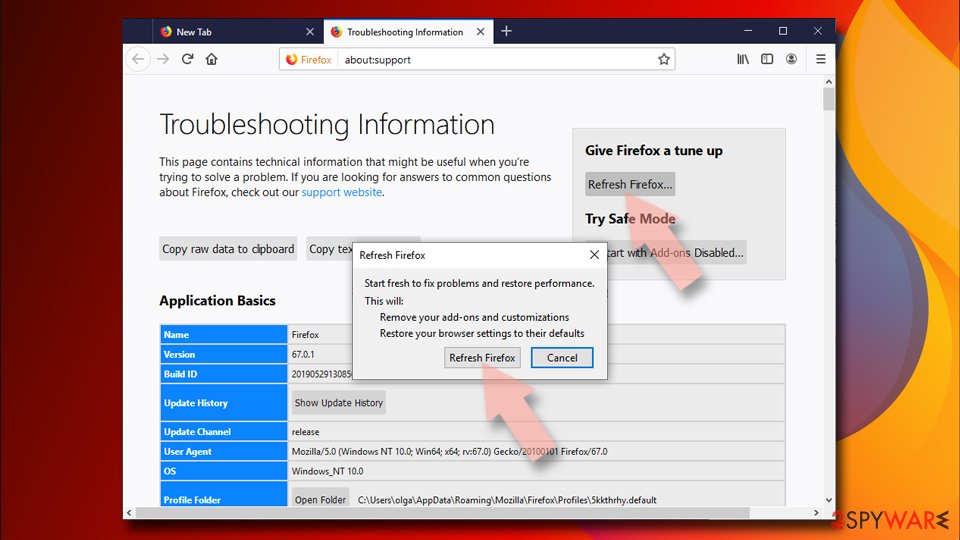
- Under Give Firefox a tune up section, click on Refresh Firefox...
- Once the pop-up shows up, confirm the action by pressing on Refresh Firefox.
Delete from Safari
To clean Safari after the adware attack, use these guiding steps
Remove dangerous extensions:
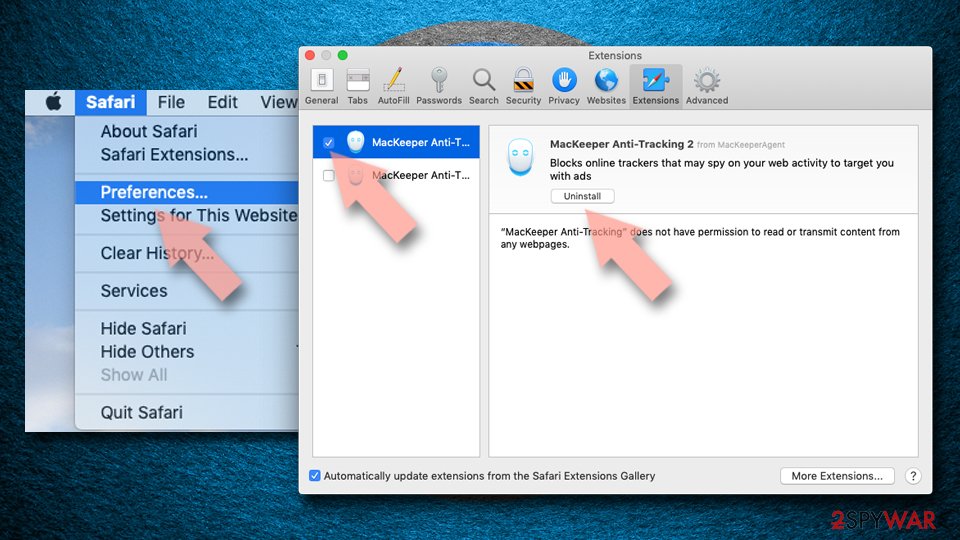
- Open Safari, click Safari in the menu at the top-left of the screen, and select Preferences.
- Go to the Extensions tab, look for any suspicious entries, and click Uninstall to remove them.
Clear history and website data:
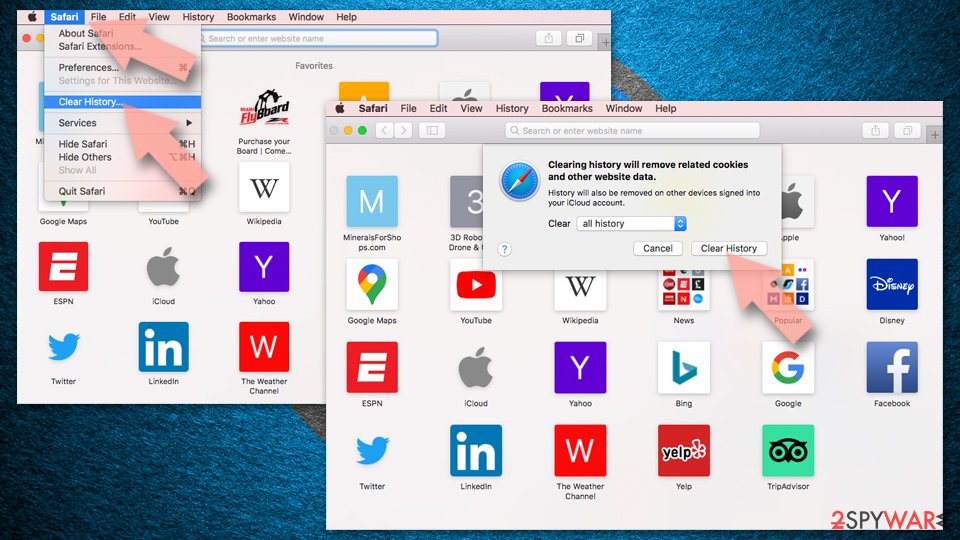
- Click Safari in the menu and pick Clear History.
- Set Clear to all history and confirm with Clear History.
Reset Safari:
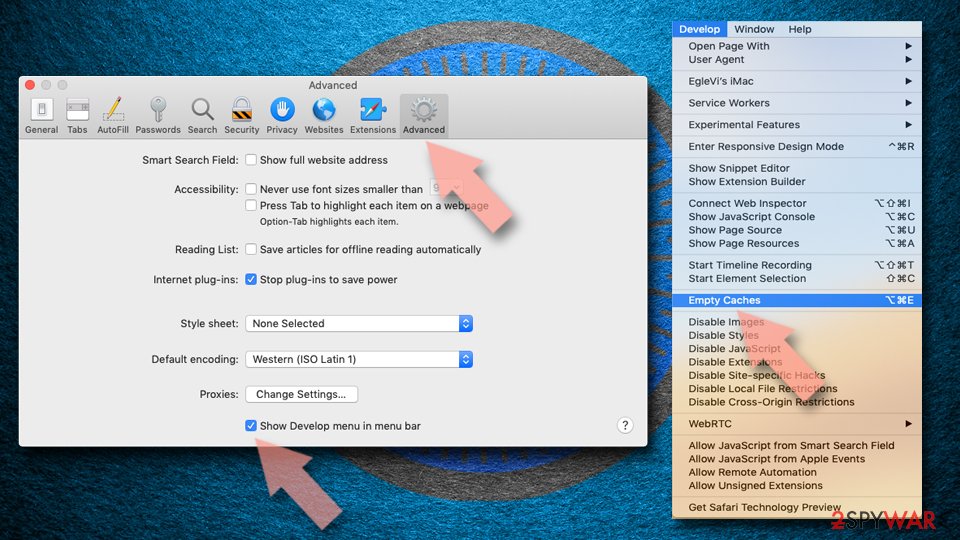
- Click Safari in the menu and select Preferences > Advanced.
- Enable Show Develop menu in menu bar.
- From the menu bar, click Develop and select Empty Caches.
Delete from macOS
To remove suspicious applications from macOS, employ these instructions
Remove the unwanted application:
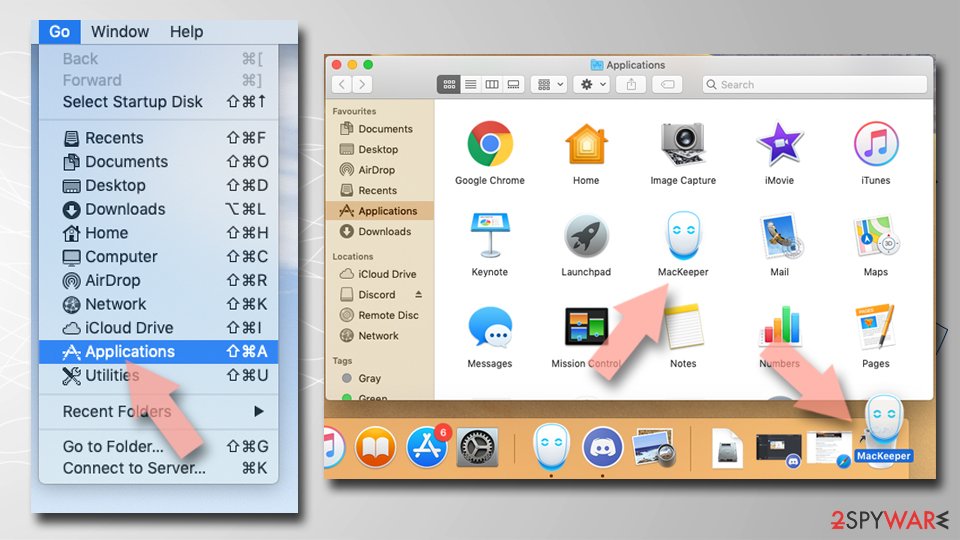
- From the menu bar, select Go > Applications.
- In the Applications folder, look for any suspicious entries, then drag them to Trash (or right-click and pick Move to Trash).
Delete leftover files and folders:
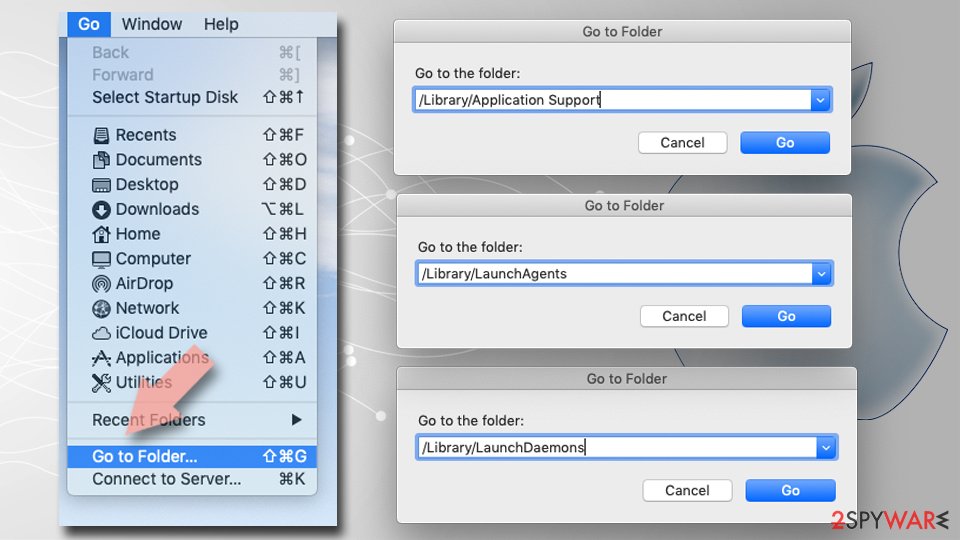
- Select Go > Go to Folder.
- Enter /Library/Application Support and remove any suspicious folders related to the unwanted program.
- Repeat the same check in the /Library/LaunchAgents and /Library/LaunchDaemons folders, deleting any suspicious entries.
- Finally, empty the Trash to permanently remove the leftovers.
Access your website securely from any location
When you work on the domain, site, blog, or different project that requires constant management, content creation, or coding, you may need to connect to the server and content management service more often. The best solution for creating a tighter network could be a dedicated/fixed IP address.
If you make your IP address static and set to your device, you can connect to the CMS from any location and do not create any additional issues for the server or network manager that needs to monitor connections and activities. VPN software providers like can help you with such settings and offer the option to control the online reputation and manage projects easily from any part of the world.
Recover files after data-affecting malware attacks
While much of the data can be accidentally deleted due to various reasons, malware is one of the main culprits that can cause loss of pictures, documents, videos, and other important files.
More serious malware infections lead to significant data loss when your documents, system files, and images get encrypted. In particular, ransomware is is a type of malware that focuses on such functions, so your files become useless without an ability to access them.
Even though there is little to no possibility to recover after file-locking threats, some applications have features for data recovery in the system. In some cases, can also help to recover at least some portion of your data after data-locking virus infection or general cyber infection.
From our report of Nov 2019 · not reviewed since
Removal guidelines for Coordinator Plus virus Mac
Coordinator Plus removal can be carried out with the help of manual or automatical guidelines.
However, employing reliable tools gives you a bigger chance of discovering all bogus content hidden on your machine. Besides, this method works as the best for users who are running into a big lack of time or just do not have enough experience and skills in the threat removal field.
Below we have provided some step-by-step instructions for cleaning both macOS and infected web browsers such as Google Chrome, Mozilla Firefox, and Safari. These guidelines will allow you to remove Coordinator Plus effectively, however, make sure that you understand each step and carry out all of the instructions carefully in order to reach the best results possible.
Besides, Coordinator Plus virus Mac might easily renew itself if you leave any infected registries or files in the system. So, it is very important to get rid of not only the application but also all other additional content that it has brought.
Questions about Coordinator Plus ads
softonic.com opens when I click links. What causes it?
When every click leads to softonic.com first, an extension or a script on the page is rewriting the links. If it happens only on one site, that site uses aggressive ads; close it and use another source. If it happens everywhere, open the browser in a private window, where extensions are normally off, and try again.
No redirect in the private window means one of your extensions is responsible: remove the ones you do not know. A redirect in the private window too means the cause is outside the extensions, such as a notification permission, a changed search setting or a program installed on the PC. The removal steps in this guide cover each of those.
Should I worry about redirects to softonic.com?
Worry less about softonic.com itself and more about what keeps sending you there. A single redirect from a free streaming or download site is normal and harmless once the tab is closed.
Repeated redirects on sites that used to work fine mean something in the browser or in Windows changed, often an extension or program installed alongside other software. It may also collect the pages you visit. Remove the cause with the steps in this guide, and do not act on anything the redirected pages ask:
- no Allow clicks
- no downloads
- no calls
If you already did one of those, the matching section of this guide explains what to do next.
Why does Coordinator Plus show me ads?
Because that is its whole purpose. Coordinator Plus is an adware extension, and its operators are paid for every ad it displays and every click it gets. In this case the ads take the form of redirects through ad pages.
They are chosen by ad networks that accept almost any advertiser, which is why so many look like warnings or prizes. The ads are not a sign that your PC is broken or infected with something worse; they are a sign that something on it, or in the browser, has permission to advertise. Removing that permission or program stops them.
Do I have to clean every browser?
Yes, if you use more than one. We saw Coordinator Plus in Chrome, Edge and Firefox, and each browser keeps its own extensions, notification permissions and settings. Chrome and Edge share the same extension format, so one installer can add the same adware to both, while Firefox has its own add-ons.
Check every browser on the PC, including ones you rarely open. If you sync a browser with an account, clean it while signed in, so that the removal reaches your other computers rather than the adware returning from them.
How do I know the ads come from Coordinator Plus?
Look for redirects to softonic.com. That is the trace Coordinator Plus leaves, and it shows up as redirects through ad pages. Ads that appear on every site, including ones that never carried ads before, point to something on your PC or in the browser rather than to the sites themselves.
A quick test is a private window, where extensions are off by default: if the ads disappear there, an extension is responsible. If they appear even with the browser closed, the source is a notification permission or a program in Windows.
Can adware slow down my PC?
Yes. Adware runs in the background, loads ad scripts, opens extra tabs and contacts its servers, all of which use processor time, memory and bandwidth. Ad-heavy extensions also slow down every page, because they inspect and change it before you see it.
The effect is strongest on older PCs and when several adware programs arrived together. After removal, restart the PC and check Task Manager for anything still using a lot of resources that you do not recognise. Speed usually returns to normal once the ads stop.
An ad showed a phone number and I called it. What now?
The number belongs to scammers, not to Microsoft or an antivirus company. If you only talked, hang up and do not call back. If you let them connect to the PC, disconnect it from the internet, uninstall the remote access program they used, such as AnyDesk, TeamViewer, ScreenConnect or UltraViewer, and run a full and offline scan.
If you paid or gave bank details, call your bank at once on the number printed on your card. Change any passwords you typed while they were connected, and report the call.
Does adware steal passwords?
Ordinary adware is built to show ads, not to steal logins, and most of it never touches saved passwords. The line is blurry, though. Extensions that can read every page could capture what you type, and adware ads sometimes lead to phishing pages that ask for passwords directly.
If you entered credentials on a page reached through an ad, change that password from a clean device and turn on two-step verification. Otherwise, removing adware extension and clearing cookies is usually enough.
Why didn't my antivirus catch Coordinator Plus?
Many security products do not block adware or notification sites by default, because users often agreed to them, even through a misleading prompt. Notification spam installs nothing at all, so there is no file to detect.
In Windows 11 you can make Microsoft Defender block potentially unwanted apps: open Windows Security > App & browser control > Reputation-based protection settings and turn on Potentially unwanted app blocking. If notifications caused the pop-ups, no scanner will report them; the fix is in the browser's site settings.
Will Fortect remove Coordinator Plus?
Fortect for Mac scans for malware and unwanted programs, and its free scan shows what it finds on your Mac before you decide anything.
For Coordinator Plus, follow the plan on this page as well: removing a launch item or an app is done in macOS itself, and a scanner cannot undo what was typed or entered on the infected Mac, such as saved passwords that were copied.
Change your passwords from another device first, and if the page tells you to erase the Mac, a scan is not a substitute. The free scan costs nothing and the full-featured product needs a license.
Sources
- Apple Discussions: coordinatorplus app (read October 6, 2026)
- Wikipedia: HTTP cookie (read October 6, 2026)
- ZonderVirus: ZonderVirus.nl (read October 6, 2026)
- Google Chrome Help: Use notifications to get alerts (no longer online) (read October 6, 2026)
- FTC: How to recognize, remove and avoid malware (read October 6, 2026)