
GSpace Discover adware: what it is and how to remove it
GSpace Discover is a Windows program from BGO Software Engineering that security write-ups class as adware and a potentially unwanted program. It shows pop-ups and redirects, usually arrives bundled with other software, and can be removed with Windows' own uninstall and a scan, as the steps below show.
Facts checked October 6, 2026. Removal steps tested on Windows 11 (26H2) and checked against Microsoft's and the browser makers' current documentation.
Automatic
Get a free scan and check if your PC is infected.
Fortect finds malware, unwanted programs and the Windows damage they leave behind, and repairs it in one pass.
If GSpace Discover keeps coming back after uninstalling, a scan can find what reinstalls it.
Do it yourself · free Remove GSpace Discover yourself 4 steps, about 12 minutes, no software needed.
Start the steps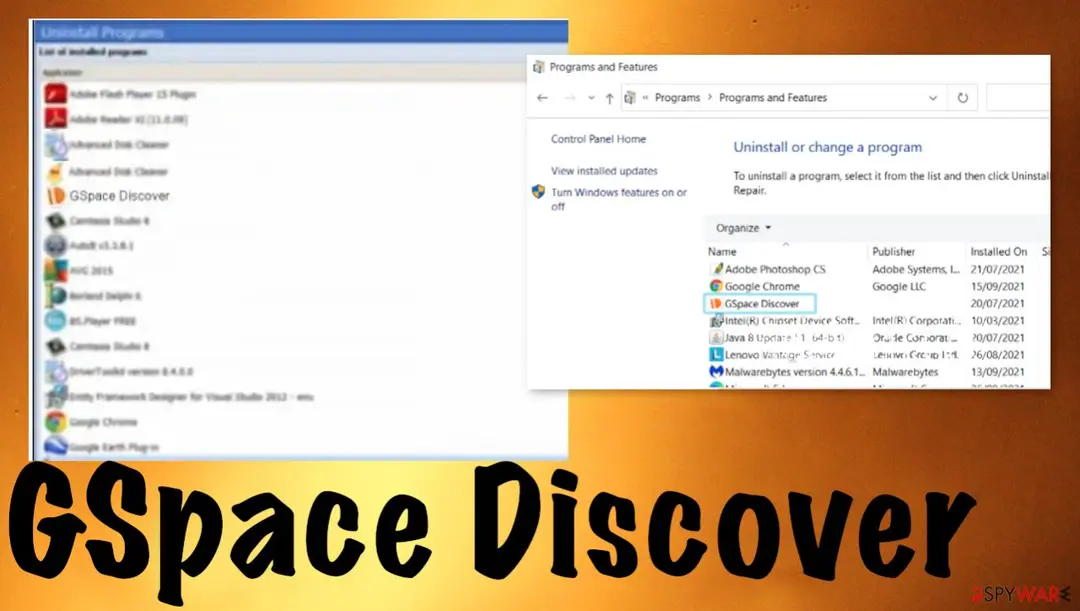
GSpace Discover: summary
| Type | Adware, classed as a potentially unwanted program; Windows; not ransomware and not described as a virus |
|---|---|
| Risk | Medium: its ads can lead to tech support scams, fake updates, phishing and more unwanted programs |
| Symptoms | Pop-ups, banners and redirects, a changed home page or search engine, and a program called GSpace Discover in the installed list |
| How to get rid of it | Uninstall it in Installed apps, uninstall what came with it, stop unknown startup entries, scan, then clean the browser (steps below) |
| Our check (6 October 2026) | Desk check of written sources only; we did not install it and found no vendor site, so the program is not cleared |
| First seen | Reported in September 2021 (MalwareTips 27 September, our guide 29 September); the newest write-up we found is from February 2022 |
| Removal | Scan the PC with security software to find and remove the malware and anything installed with it. Fortect scans Windows for malware and repairs the system files and settings it damaged. Remove it nowTo use the full-featured product, you have to purchase a license for Fortect. The scan is free. |
Show 11 more facts
| Microsoft detection | No Microsoft detection name is known: we found none in the sources we read, and we did not run the program through Defender |
|---|---|
| Developer named | BGO Software Engineering (MalwareTips, EnigmaSoft) |
| Version seen | 1.5.0.3 (MalwareTips, September 2021) |
| Name | GSpace Discover |
| Evidence | Reports from affected users; details still limited |
| Program | GSpace Discover |
| Publisher | BGO Software Engineering |
| Category | Adware |
| Distribution | Typically bundled installers and ads |
| Damage | Money paid for exaggerated results, needless registry changes |
| Facts checked | 6 October 2026 |
Facts checked on 6 October 2026 from three written sources:
- MalwareTips
- EnigmaSoft
- our own 2021 guide
We did not install GSpace Discover, so what it does on a PC comes from those sources, and we could not confirm process names, folders or detection names.
What GSpace Discover is and how it behaves
GSpace Discover is a Windows program from a developer named BGO Software Engineering that shows advertising. Security write-ups class it as adware and as a potentially unwanted program (PUP): not a virus that destroys files, but software you did not ask for that earns money from the ads it shows.
- 1
It arrives with something else
Write-ups say it is offered through ads or bundled with other software, so many people cannot say where it came from. Enigma Software adds fake installers to the list.
- 2
It installs as a normal program
MalwareTips saw it listed as an installed program, version 1.5.0.3. Our own 2021 screenshot shows the same thing: a "GSpace Discover" row in Programs and Features, with no publisher shown and an install date of 20 July 2021.
- 3
It shows ads
The ads appear as pop-ups, banners and redirects to other pages, at intervals and in places they should not be, including pages that have nothing to do with the site you are on.
- 4
The ads lead somewhere worse
MalwareTips says the ads promote unwanted programs, Chrome extensions, adult dating sites and tech support scams. Enigma adds phishing pages and gambling sites, and fake update pop-ups are among the reported symptoms.
- Type
- Adware, classed as a potentially unwanted program (Enigma Software, MalwareTips)
- Developer named
- BGO Software Engineering (both write-ups)
- Version seen
- 1.5.0.3 (MalwareTips, September 2021)
- Platform
- Windows. The sources describe a Windows program and none describes a Mac, Android or iPhone version
- How it earns
- Enigma Software thinks the operators are paid per ad view and per click; that is its reading of the business, not a published statement
- What it does not do
- No source we read says it encrypts files, locks the screen or asks for money, so it is not ransomware
Our old guide said it "takes advantage of the computer processes" and "controls online traffic". The sources we could read describe something narrower: a program that shows ads, sometimes by redirecting pages. We keep to that.
Is GSpace Discover safe? Why it is flagged
What we checked on 6 October 2026
GSpace Discover is a program, not a website, so there is no page to open in a test browser, and we did not install it. What follows is what we could confirm and what we could not.
GSpace Discover · desk check · 6 October 2026
- It is described the same way by independent sourcesMalwareTips (27 September 2021) and Enigma Software (page updated 4 February 2022) both call it adware, both name BGO Software Engineering as the developer, and our own 2021 guide agrees on the symptoms.
- Installer and program runNot run. We did not install it, so the ads, the files and the processes it creates are taken from the write-ups, not from our own test.
- Official websiteWe found no vendor page in the sources we read, and did not test any domain for it.
- Newest reportsThe newest write-ups we found date from 2021 and early 2022. We cannot say whether it is still being distributed in 2026, or under the same name.
- Process names, install folder, detection namesNone of the sources we read gives them, so we do not guess them. Use the program name in Installed apps instead.
Not cleared This is a desk check of written sources, not a run of the program. Adware often behaves differently by country, device, referrer and time, so nothing here shows that it is harmless, and nothing shows that it is gone.
What changed since our 2021 guide
20 July 2021
The entry in our screenshot
The Programs and Features screenshot from our 2021 guide shows GSpace Discover with an install date of 20 July 2021 and an empty publisher column, next to ordinary programs such as Google Chrome and Malwarebytes.
27 to 29 September 2021
Write-ups appear
MalwareTips published its removal guide on 27 September 2021 and we published ours two days later. Both describe pop-up ads, redirects and an installed program.
February 2022
Enigma Software classes it
Enigma Software's report, last updated on 4 February 2022, calls it adware and a PUP spread through manipulative ads, fake installers and software bundles.
October 2026
No newer write-up found
We found nothing newer than 2022 in our search. This page keeps the removal steps and replaces the Windows 7 and XP steps with Windows 11 and 10 ones.
How to tell it is on your PC
The hard part is that nothing may point to it. You may see ads and redirects without any toolbar or extension you can blame, and the program itself sits in the installed list under a plain name.
| What you notice | What it can mean | Where to look |
|---|---|---|
| Pop-ups, banners or ads on pages that normally have none | Adware is injecting advertising | Installed apps: look for GSpace Discover and anything installed the same day |
| A page opens that you did not ask for, or a link goes somewhere else | A redirect from the adware | The browser's extension list and the address the page ends on |
| Fake update or "your PC is at risk" windows | A scare page promoted by the ads | Close it; do not click the buttons. Check updates in Settings instead |
| Home page, new tab page or search engine changed | A browser setting was changed | Browser settings, section On startup and Search engine |
| The PC is slower or something runs all the time | A background program using resources | Task Manager, tab Processes and Startup apps |
| No program, toolbar or extension you can name | The program is listed under its own name, not as an extension | Sort Installed apps by install date and read every entry from that day |
Names to search for in Installed apps
- GSpace Discover
- BGO Software Engineering
- version 1.5.0.3
The program may have another name on your PC. Look for anything you do not remember installing, especially from the day the ads began.
The real risks, from most to least serious
The program itself is described as a nuisance rather than a destroyer. The danger is mostly in where its ads send you.
- High
Tech support scams and fake updates
MalwareTips lists tech support scams and fake update pop-ups among the content the ads lead to. If one of them made you call a number, pay, or give someone remote access, treat that as a separate problem and follow the steps for it first.
- Medium
Other unwanted programs and extensions
The ads promote more unwanted programs and Chrome extensions, so clicking them can add more adware to the same PC. Phishing and gambling pages are named by Enigma Software.
- Medium
Browsing data
Enigma Software says ads of this kind may carry tracking code that collects browsing activity and device details and sends them to the operators. We could not run the program, so we cannot say what GSpace Discover itself collects.
- Low
Slow PC and changed browser settings
Background programs use memory and processor time, and adware may change the home page, new tab page or search engine.
- Low
Claims we could not confirm
Our 2021 text said such software can edit registry entries and startup settings and can lead to a complete takeover of the PC. We found no source that shows GSpace Discover doing this, so we do not claim it. The response is the same either way: remove the program, then scan.
How GSpace Discover got installed
Nobody picks an adware program on purpose. It comes inside something else, and the installer screens are built so that agreeing to everything installs everything.
- 1
You download something free
Bundled installers collect several programs under one download. Free-software sites, torrent pages and pirated-software sites are common places to meet them, and anything other than the maker's own site or an app store raises the risk.
- 2
You choose Quick or Recommended
A quick installation accepts the extras without showing them. A Custom or Advanced installation lists each extra with a tick box, so you can untick what you did not come for.
- 3
The extra installs with the program you wanted
Adware developers use bundling to ship their program next to better-known software, so the only visible change may be one more row in the installed list.
- 4
Ads begin later
People rarely connect the ads to the install, which is why the older write-ups call the program "silent" and why many readers cannot tell which program is behind the ads.
How to uninstall GSpace Discover
Uninstall it, then remove what keeps it starting with Windows.
Nothing it flagged needs fixing.
Step 1: Uninstall GSpace Discover
GSpace Discover is removed like any other program, from the list of installed apps. In Windows 11 that is Settings > Apps > Installed apps, in Windows 10 Settings > Apps > Apps & features, and in both you can also use Control Panel > Programs and Features.
Select GSpace Discover, click Uninstall and follow the uninstaller to the end. Then look at the entries just above and below it when the list is sorted by date: bundled programs install at the same minute.
Full procedure with screenshots: Uninstall a program or app in Windows On uGetFix
Step 2: Remove it from startup
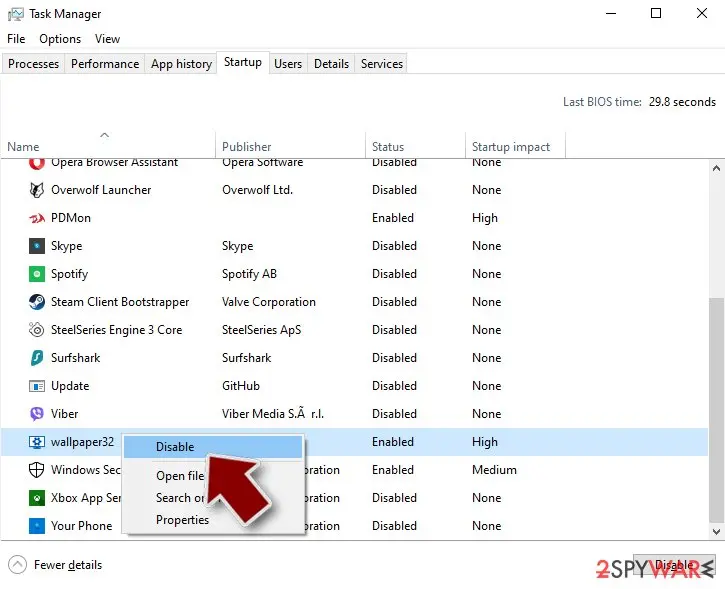
Press Ctrl + Shift + Esc to open Task Manager and select Startup apps (Windows 11) or the Startup tab (Windows 10). Disable entries you do not recognise, especially ones with no publisher or with a name that copies a Windows component.
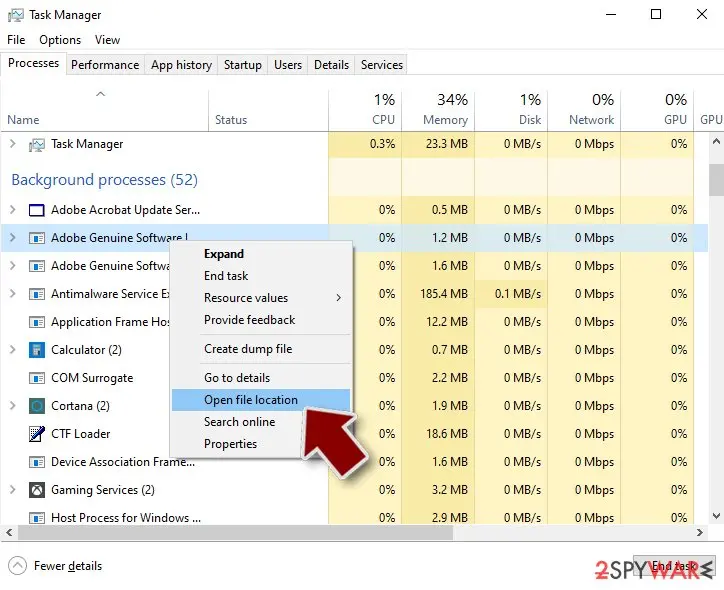
Right-click an entry and choose Open file location to see where it runs from: programs in
%AppData%or%Temp%deserve a closer look. Some entries are not listed there but in the registry Run keys, which the procedure below shows how to check.Full procedure with screenshots: Stop apps from opening at startup On uGetFix
Step 3: Delete the folders left behind
Uninstalling often leaves the program's folders, and some threats reinstall themselves from them.
Press Windows + R, type
%LocalAppData%and press Enter, then do the same for%AppData%and %ProgramData%, and look for folders named after GSpace Discover, its publisher or created on the day the problem started.Delete those folders, and check
C:\Program FilesandC:\Program Files (x86)too.If Windows says a file is in use, end it in Task Manager or delete the folder after a restart in Safe Mode. The folders are the same in Windows 11 and Windows 10.
Full procedure with screenshots: Remove what malware leaves behind in Windows
Step 4: Scan the PC, then run the offline scan
A scan finds the parts of GSpace Discover that the manual steps cannot see. In Windows Security > Virus & threat protection > Scan options, start a Full scan and quarantine what it reports.
Follow it with Microsoft Defender Antivirus (offline scan) > Scan now, which restarts the PC and checks the disk while Windows and the malware are not running.
It takes about 15 minutes and works the same in Windows 11 and Windows 10. If either scan finds something, run the full scan again after removal until it comes back clean.
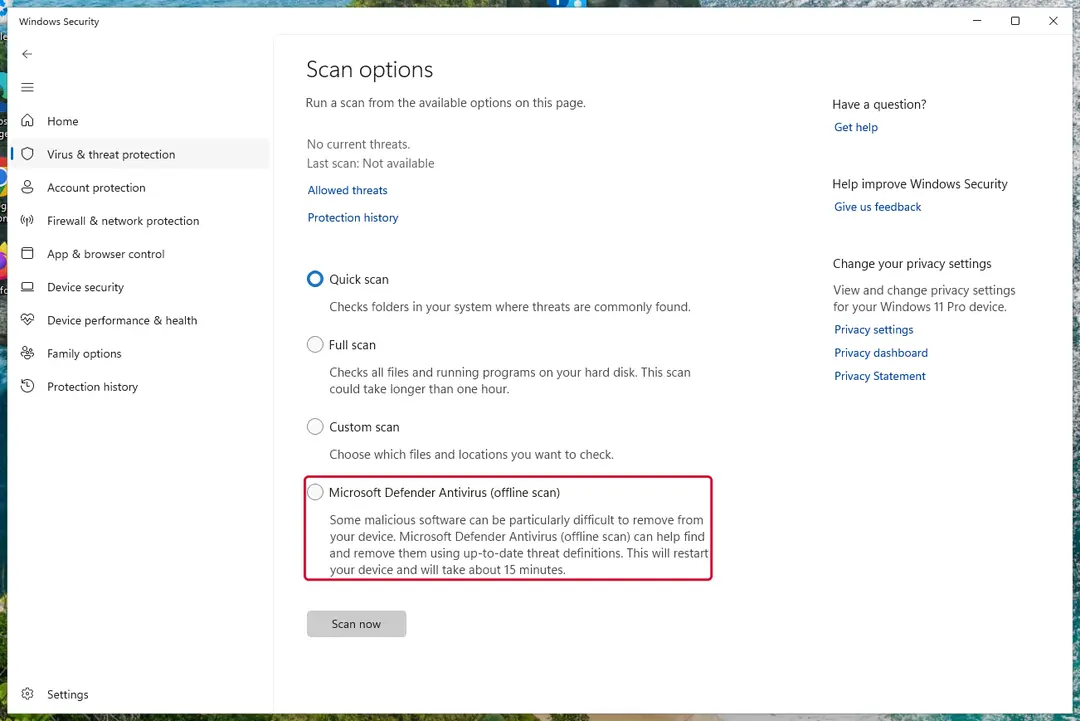
Windows 11: Windows Security > Virus & threat protection > Scan options. Full procedure with screenshots: Run a Microsoft Defender Offline scan
After removal and prevention
Remove GSpace Discover from Windows 11 and 10
Start with Windows' own uninstall. Most adware of this kind has a normal uninstall entry, and removing it first makes the later scan simpler.
- 1
Open the list of programs
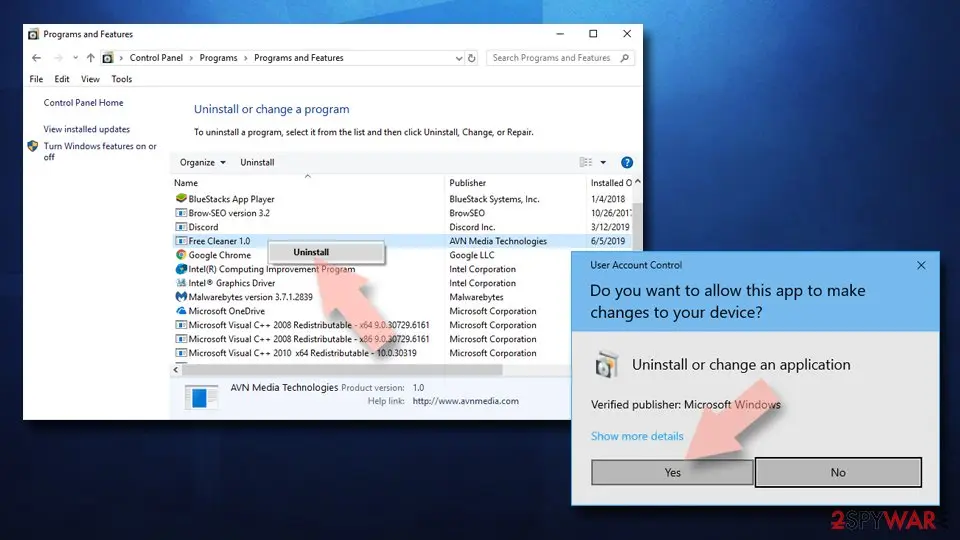
Press Windows + I to open Settings, then choose Apps > Installed apps (Windows 11) or Apps > Apps & features (Windows 10). The old Control Panel route, Control Panel > Programs > Uninstall a program, also still works.
- 2
Find the program
Search for GSpace Discover. If it is not there, sort the list by install date and read every entry from the day the ads began.
- 3
Uninstall it
Select the entry, choose Uninstall and confirm. If User Account Control asks, click Yes, then follow the uninstaller and wait for it to finish (Uninstall a program or app in Windows On uGetFix).
- 4
Uninstall what came with it
Remove every other program from that day that you did not choose. The ads promote other unwanted programs, so one bundled installer can leave several.
- 5
Stop what still starts
Open Task Manager (see the next section), go to Startup apps and disable any entry you cannot account for (Stop apps from opening at startup On uGetFix).
- 6
Scan the PC
Open Windows Security > Virus & threat protection, run a Full scan, then the Microsoft Defender Antivirus (offline scan) (Run a Microsoft Defender Offline scan). Both are built into Windows.
- 7
Restart and look again
Restart, open Installed apps and check that the program is gone. Then open the browser and see whether the ads have stopped.
If the ads continue with no program left in the list, the cause is probably in the browser (an extension, a changed setting or a site you allowed to send notifications) and not in Windows. The browser section below covers it.
Other removal guides name Malwarebytes, HitmanPro and AdwCleaner as second-opinion scanners. MalwareTips uses all three; we did not test them for this program, so they are a choice, not a requirement. If you add one, run only one at a time and install it from its maker's own site.
If it keeps running: check Task Manager
If the program is gone from the list but you still suspect something is running, Task Manager shows what is running and where it lives. Do this before deleting anything.
- 1
Open Task Manager
Press Ctrl + Shift + Esc. If you only see a short list, click More details.
- 2
Find what you do not recognise
Look on Processes and Details for a name you cannot place. Sort by CPU or memory to see what is working hardest. The sources do not give a process name for GSpace Discover, so search the name you find before you act on it.
- 3
Open its folder
Right-click the entry and choose Open file location. The folder tells you which program it belongs to; a path inside Program Files that matches an installed program is usually fine, and a path in a temporary or Downloads folder deserves a closer look.
- 4
End the task
Go back to the process, right-click it and choose End task.
- 5
Deal with the folder after uninstalling
Uninstall the program first (see above), then delete the leftover folder only if it clearly belongs to GSpace Discover. Do not empty a folder you cannot identify; our 2021 advice to delete the contents of the folder of a "malicious" process was too broad for that reason.
- 6
Disable it at startup
Open Startup apps (Windows 11) or the Startup tab (Windows 10), right-click the entry and choose Disable.
If the ads continue: clean the browser
Reset a browser only after you removed the program, and note that a reset signs you out of some sites and turns extensions off. Bookmarks and saved passwords stay.
| Browser | Where | What to do |
|---|---|---|
| Google Chrome | Menu (three dots) > Extensions > Manage extensions | Remove any extension you did not choose. Then open Settings > Search engine and set Google or your own choice as the default, and check On startup. To reset, open chrome://settings/resetProfileSettings and click Reset settings. |
| Microsoft Edge | Menu (three dots) > Settings > Reset settings | Choose Restore settings to their default values, read the list and click Reset. Your favorites, history and saved passwords are kept. |
| Mozilla Firefox | Menu (three lines) > Help > More troubleshooting information | Click Refresh Firefox and confirm. It keeps bookmarks, passwords and open tabs, and puts your old profile in a folder named Old Firefox Data on the desktop, which you can delete when done. |
Then open each browser's notification permissions and remove any site you do not recognise (Stop website notifications and pop-ups); a page that was allowed once can keep sending pop-ups after the program is gone.
Internet Explorer ended in 2022 and Safari and macOS steps do not apply, since every source describes GSpace Discover as a Windows program.
How to keep unwanted programs off your PC
Do
- Download programs from the maker's own site or the Microsoft Store, and stay away from free-download portals, torrent pages and pirated software.
- Pick Custom or Advanced installation every time and untick every extra program, toolbar or "offer" you did not come for.
- Read the licence and privacy text on the screen that mentions additional software; that is where bundled programs are disclosed.
- Keep Microsoft Defender on and its updates current: Windows Security > Virus & threat protection.
- Back up your documents with File History or OneDrive before a big cleanup, so a failed removal cannot cost you your files.
- A VPN hides your IP address from the sites you visit; it does not stop a bundled installer and does not replace a scan.
Don't
- Install a program because a pop-up or an ad told you your PC is at risk.
- Press Next through every screen of an installer, especially one called Quick or Recommended.
- Click the ads, fake update windows or "call this number" pages the adware shows.
- Delete folders or edit the registry from a forum post if you cannot say what they are.
- Run a second security program permanently to "fix" ads; one built-in scanner plus one on-demand second opinion is enough.
Questions about GSpace Discover
What is GSpace Discover?
GSpace Discover is a Windows program from a developer called BGO Software Engineering that shows unwanted advertising. Enigma Software and MalwareTips classify it as adware and as a potentially unwanted program, meaning software that most people did not choose and that earns money from ads. It usually arrives bundled with other software or through ads and fake installers.
It shows pop-ups, banners and redirects, and these ads can lead to scams, fake updates and other unwanted programs. No source we read says it encrypts files or steals them. It appears in the installed programs list under its own name.
Is GSpace Discover a virus?
GSpace Discover is not described as a virus, but as adware and a potentially unwanted program. A virus spreads itself and damages files, and the sources we read do not report that for this program.
It is still worth removing, because its ads are the real danger: they can lead to tech support scams, phishing and more unwanted software. We did not run the program ourselves, so this answer follows MalwareTips and Enigma Software. Treat "not a virus" as a statement about what it does, not as a reason to leave it installed.
How do I uninstall GSpace Discover on Windows 11 or 10?
Open Settings, go to Apps and then Installed apps (Windows 11) or Apps & features (Windows 10), search for GSpace Discover, select it and choose Uninstall. Confirm the User Account Control prompt and follow the uninstaller.
Then uninstall anything else that arrived the same day, disable unknown entries in Startup apps and run a Full scan and the Microsoft Defender offline scan in Windows Security. Restart and check the list again. If the ads continue, clean the browser: remove unknown extensions and reset settings.
Why do I see ads when no program or extension is listed?
Ads with no visible source usually mean the adware is installed under its own name rather than as a browser extension, or a site in your browser was allowed to send notifications. Look in Installed apps sorted by install date, and read every program from the day the ads began.
Then check the browser's extensions and its notification permissions. Our 2021 text noted that people often notice only the extra toolbars or extensions and miss the main program, and that is still the best explanation for the confusion.
How did GSpace Discover get on my PC?
It most likely came bundled with another download or through an ad. MalwareTips says such programs are offered through ads or bundled with other software, and Enigma Software names manipulative ads, fake installers and software bundles. Free-download sites, torrent pages and pirated software are common sources.
A Quick or Recommended installation accepts the extras without showing them, while Custom or Advanced lists them with tick boxes. We cannot tell which installer put it on your PC, so look at what else was installed the same day.
Is it safe to click the ads it shows?
No, do not click them. According to MalwareTips and Enigma Software, ads from this adware promote unwanted programs, extensions, adult dating sites, tech support scams, phishing and gambling pages, and fake update windows. Closing the pop-up is safe; pressing its buttons is not.
If you already clicked and installed something, uninstall it and scan the PC. If you gave out a password, change it from another device. If you paid or gave remote access, contact your bank and follow our steps for tech support scams.
Does GSpace Discover steal passwords or personal data?
No source we read says GSpace Discover steals passwords, and we did not run it to check. Enigma Software warns that ads of this type may carry tracking code that collects browsing activity and device details, and that is a general warning, not a measurement of this program.
The bigger risk is a page you reach through its ads, which can ask for a password or card. If you entered one on a page you reached through an ad, change it from another device and turn on two-step verification.
Do I need an anti-malware program to remove it?
No, you can remove it with what Windows has built in, and an extra scanner is optional. Uninstall it in Installed apps, then run a Full scan and the Microsoft Defender offline scan in Windows Security.
MalwareTips uses Malwarebytes, HitmanPro and AdwCleaner as second opinions, and you may add one if ads remain, but we did not test them against this program. Install a scanner only from its maker's own site and run one at a time. Do not buy a paid product because a free scan result frightened you.
Can GSpace Discover infect a Mac or a phone?
We found no source that describes a version for Mac, Android or iPhone, so we treat it as a Windows program. Our old guide had Safari and macOS removal blocks, but these were shared text used on many pages and were not specific to this program.
If you see ads on a Mac or a phone, the cause is a different program or a browser setting, and the Windows steps here do not apply. Check the device's own list of installed apps and the browser's extensions and notification permissions.
Will Fortect remove GSpace Discover?
Fortect scans Windows for malware and unwanted programs and repairs the system files and settings they change, and its free scan shows what it finds on your PC before you decide anything.
For GSpace Discover, follow the plan above as well: the browser steps take back permissions and settings that no scanner treats as a threat, and uninstalling the program that brought it removes the source.
Run Microsoft Defender's full scan and, if anything was found, its offline scan as a second opinion. If the symptoms are gone after the plan and both scans are clean, there is nothing more to do.
Sources
- MalwareTips: How to remove GSpace Discover adware (27 September 2021) (read October 6, 2026)
- EnigmaSoft: GSpace Discover removal report (updated 4 February 2022) (read October 6, 2026)
- Our 2021 guide to GSpace Discover (2-spyware.com) (read October 6, 2026)