
Olympushigh.top ads: what it is and how to remove it
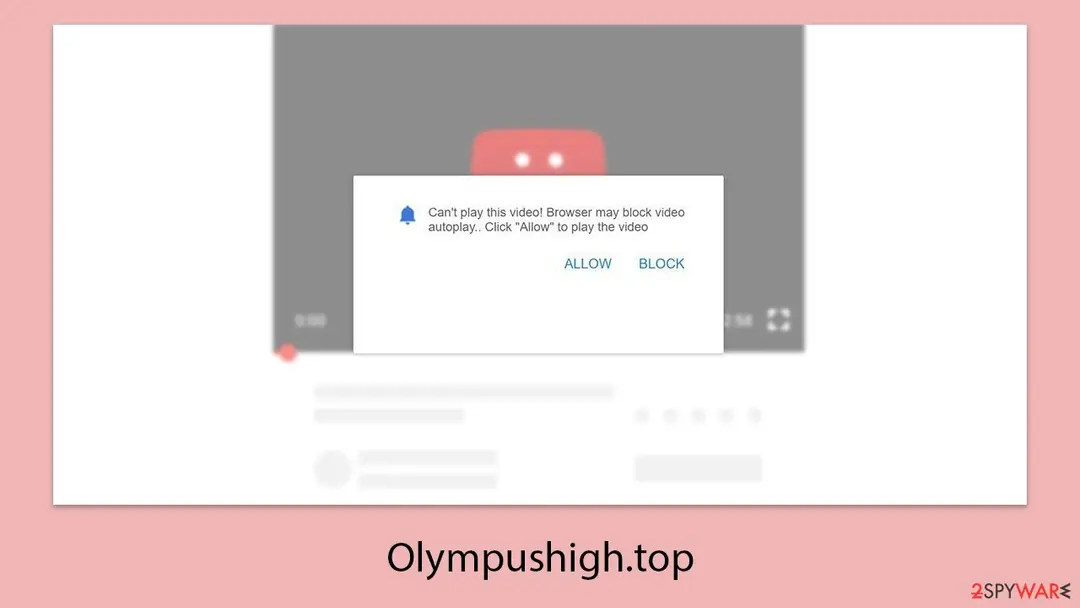
Olympushigh.top is a questionable website that users might come across while visiting unreliable platforms, such as torrent sites or illegal streaming pages. Once redirected, visitors are often met with a deceptive prompt urging them to click the "Allow" button in a notification request.
Facts checked October 7, 2026. Removal steps tested on Windows 11 (26H2) and checked against Microsoft's and the browser makers' current documentation. Sections marked as our earlier report are the original text: they describe the threat as it was then and have not been reviewed since. The 2026 status, the removal steps and the questions are current.
Automatic
Get a free scan and check if your PC is infected.
Fortect finds malware, unwanted programs and the Windows damage they leave behind, and repairs it in one pass.
A quick scan confirms that the olympushigh.top notifications did not lead to anything being installed.
Do it yourself · free Remove Olympushigh.top ads yourself 2 steps, about 6 minutes, no software needed.
Olympushigh.top ads: summary
| Distribution | Users allow push notifications after they click the "Allow" button within the prompt on the website |
|---|---|
| Damage | You might suffer from monetary losses, install malware or potentially unwanted programs, or disclose sensitive data to cybercriminals |
| Name | Olympushigh.top |
| Type | Push notifications, ads, pop-ups, scam |
| Symptoms | Once enabled, notifications from malicious websites would bring misleading or other suspicious content to your screen. These links could lead to malware-laden, scam, phishing, or similar malicious sites |
| Detection names | No Microsoft detection name is known |
| Removal | Scan the PC with security software to find and remove the malware and anything installed with it. Fortect scans Windows for malware and repairs the system files and settings it damaged. Remove it nowTo use the full-featured product, you have to purchase a license for Fortect. The scan is free. |
Show 7 more facts
| Evidence | One write-up by a security site; details still limited |
|---|---|
| Domains | olympushigh.top |
| Ads shown as | Desktop notifications |
| Browsers | Chrome, Edge and Firefox |
| Installed on the PC | Nothing; a browser notification permission only |
| First seen | 6 November 2024 |
| Facts checked | 7 October 2026 |
Is Olympushigh.top ads dangerous?
From our report of Nov 2024 · not reviewed since
Olympushigh.top - a fraudulent website that deceives users into enabling spam notifications
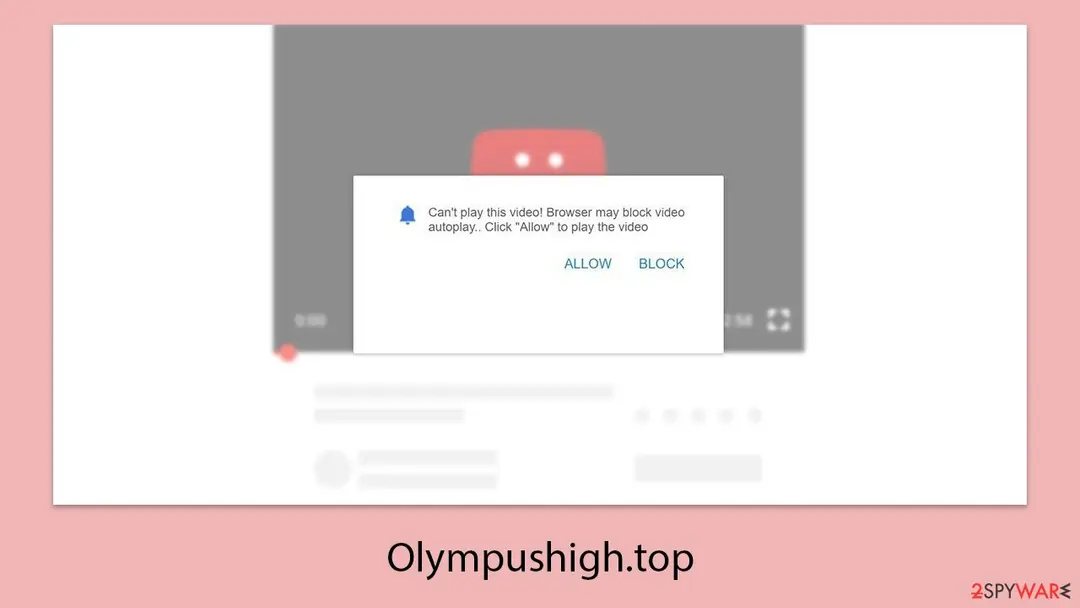
Olympushigh.top is a questionable website that users might come across while visiting unreliable platforms, such as torrent sites or illegal streaming pages.
Once redirected, visitors are often met with a deceptive prompt urging them to click the "Allow" button in a notification request.
Agreeing to this action would mean granting permission for Olympushigh.top to send notifications, leading to intrusive ads appearing later on. These pop-ups can be particularly disruptive as they may overlay all active programs and could even force users out of full-screen mode.
The main risk is that users might be exposed to various phishing content, including scams that promise fast money, fake virus warnings, and similar misleading information. This can potentially lead to significant security and privacy concerns. For this reason, it is advisable to avoid engaging with ads or links generated by Olympushigh.top and instead follow steps to remove them.
From our report of Nov 2024 · not reviewed since
The way users accidentally end up on scam websites
The internet's vastness makes it difficult to fully prevent and manage online scams.
Due to its constantly evolving nature, fraudulent sites like Olympushigh.top can emerge at any moment, drawing in unsuspecting users swiftly.
A major contributor to the success of these scams is the presence of rogue advertising networks and inadequately controlled websites. Platforms known for distributing pirated content, such as torrent sites, are especially notorious for their risks. These sites frequently host infected files, misleading "Download" buttons, malicious advertisements, and other dangerous elements that can lead visitors to phishing pages or result in malware infections, including ransomware.
Additionally, adware plays a significant role in redirecting users to phishing sites. This type of deceptive software runs quietly in the background, causing various browsing disturbances. It may, for instance, display ads over other content using an invisible layer or inject unwanted hyperlinks into text. As long as such an infection remains on a device, users face numerous ways they could be redirected to potentially harmful sites like Olympushigh.top.
From our report of Nov 2024 · not reviewed since
Tricks used by scammers
Many websites use similar wording and images to trick users into allowing push notification spam, often featuring identical layouts and functionality.
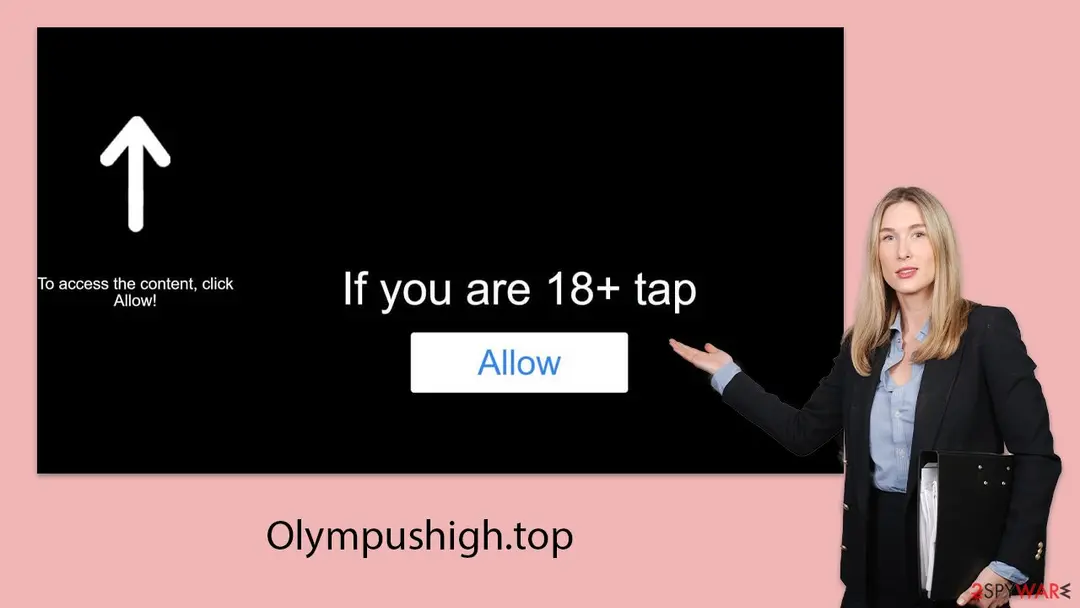
Websites like Olympushigh.top present prompts with messages that, while varying slightly in phrasing, ultimately have the same goal:
These prompts can be understandably confusing. Most internet users are accustomed to verification requests, such as proving their age or selecting specific images for CAPTCHA tests. However, these prompts are far from genuine verification procedures, despite efforts by malicious actors to make them appear legitimate.
It's crucial to understand that these push notification requests are solely designed to gain permission to send notifications via the browser's API, regardless of the claim or image shown. In reality, clicking "Allow" does not grant access to any promised content or action but instead allows the website to deliver unwanted notifications directly to the user.
- If you are 18+, click Allow
- Click Allow to verify that you are not a robot
- Tap Allow to continue
- Click "Allow" to claim your prize
- Click Allow to start the download, and so forth.
From our report of Nov 2024 · not reviewed since
More from our earlier report on Olympushigh.top
- Access browser settings to stop intrusive push notifications.
- After that, make sure that your system is not infected with adware or malware - scan it with
- Additionally, this tool can repair any compromised system components
Check your browser and PC
- Address:
olympushigh.top
How to remove Olympushigh.top ads
How to stop Olympushigh.top notifications
Do this in every browser you use, and in every profile inside it: each keeps its own list of sites allowed to send notifications.
Nothing has to be uninstalled for the notifications themselves.
Which browser shows the ads?
Step 1: Remove olympushigh.top from Chrome's notification list
Open More (the three dots) > Settings > Privacy and security > Site settings > Notifications, or paste
chrome://settings/content/notificationsinto the address bar.Under Allowed to send notifications, open the menu next to
olympushigh.topand choose Remove or Block, and do the same for any other address you do not recognise.Next to Not allowed to send notifications, click Add and enter olympushigh.top, so the site cannot ask again. The menus are the same in Chrome on Windows 11 and Windows 10, and each Chrome profile keeps its own list.
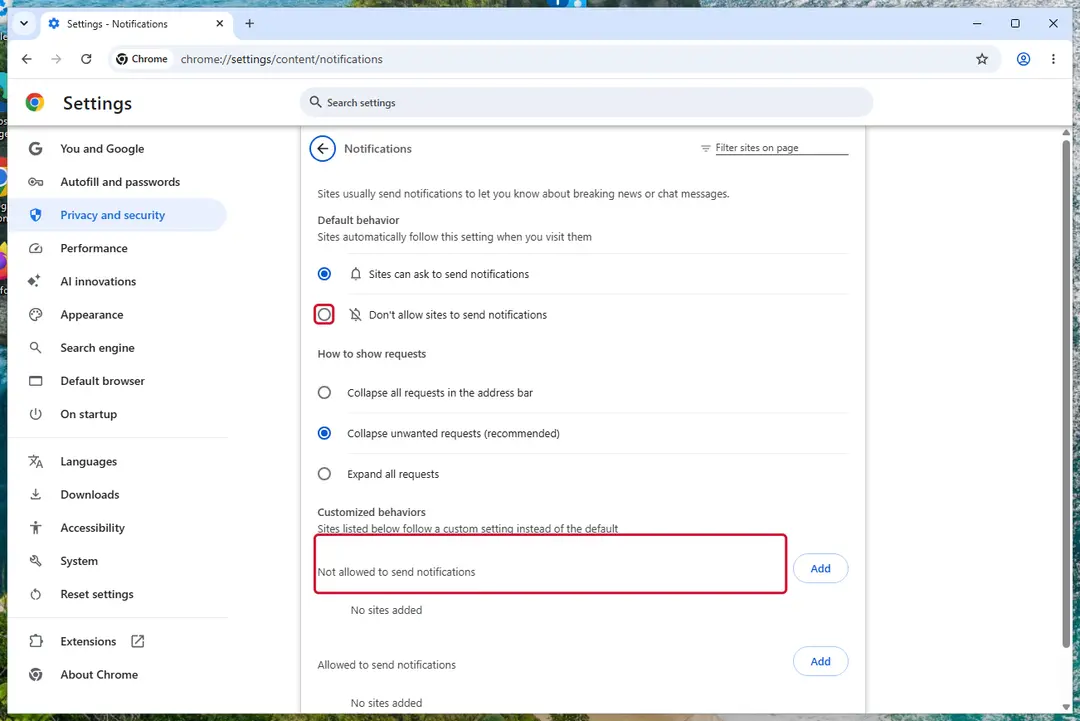
Chrome on Windows 11: Settings > Privacy and security > Site settings > Notifications. Full procedure with screenshots: Stop website notifications and pop-ups
Step 1: Remove olympushigh.top from Edge's notification list
Edge stores its own permission list, separate from Chrome's, and it is often the browser behind these pop-ups on Windows 11 and Windows 10.
Go to Settings > Privacy, search, and services > Site permissions > All permissions > Notifications, or paste
edge://settings/content/notifications. Removeolympushigh.topfrom Allowed, then add it under Not allowed to send notifications. Notifications that show the Edge logo come from this list.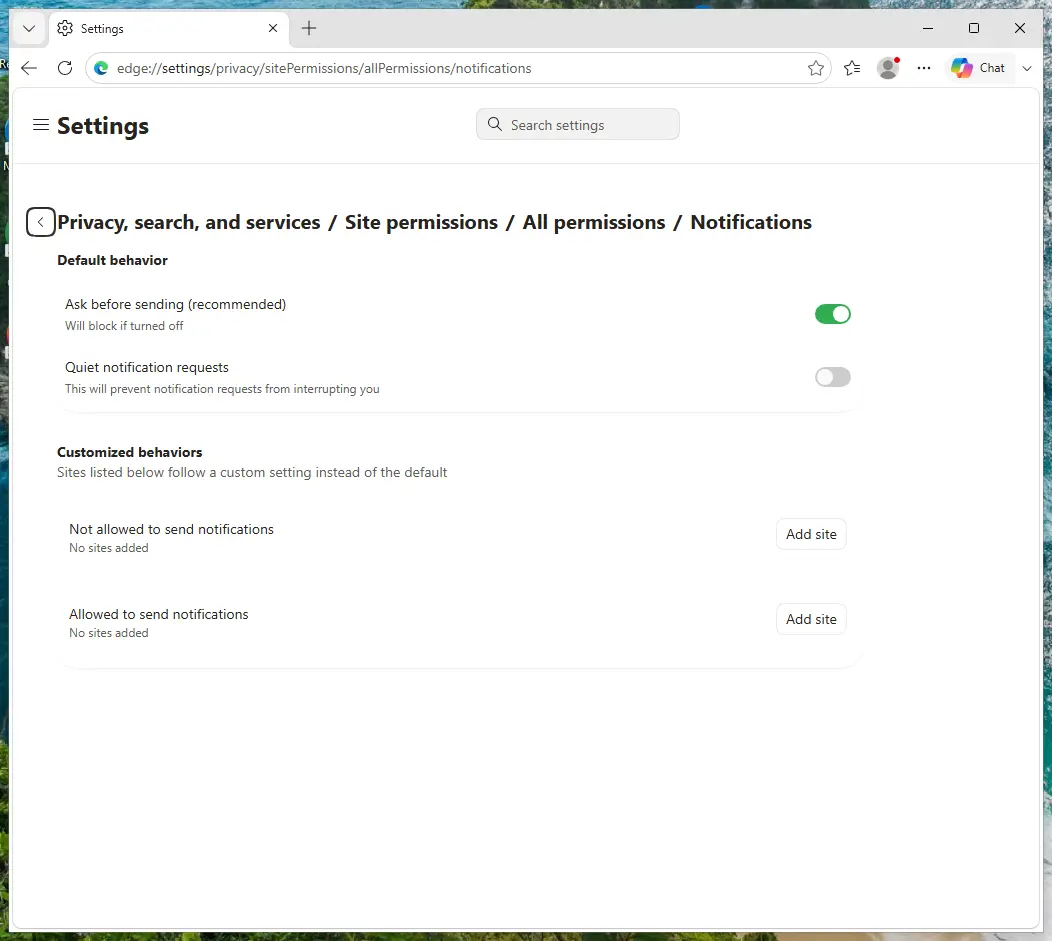
Edge on Windows 11: Site permissions > All permissions > Notifications. Full procedure with screenshots: Stop website notifications and pop-ups
Step 1: Remove olympushigh.top from Firefox's notification permissions
In Firefox the permission sits in Settings > Permissions and data > Notifications (in older versions Privacy & Security > Notifications > Settings). Select
olympushigh.topin the list, click Remove Website, and confirm with Save Changes.Firefox only shows these notifications while it is open, so if they stopped after closing Firefox, this is the browser to clean. The steps are the same on Windows 11 and Windows 10.
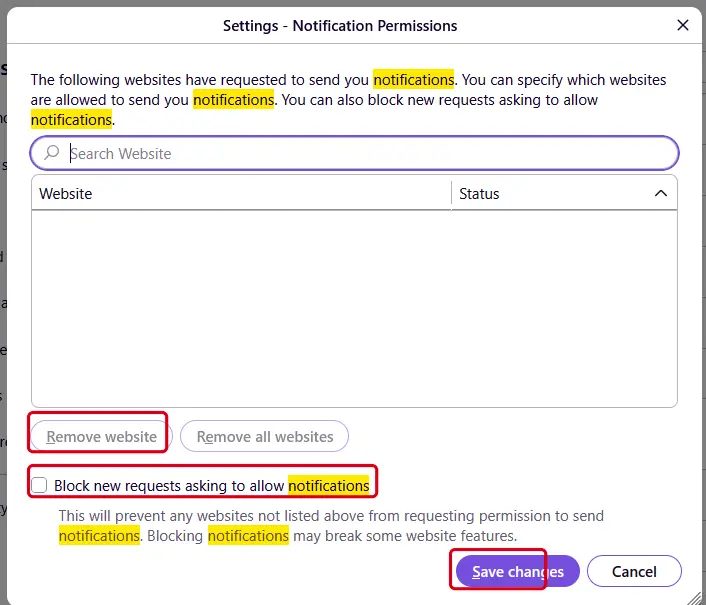
Firefox on Windows 11: the Notification Permissions window. Full procedure with screenshots: Stop website notifications and pop-ups
Then, whichever browser you use
Step 2: Scan the PC if you downloaded anything from the ads
Most people who only saw the notifications can skip this step. If a notification or the page it opened made you download or run a file, delete the file and run a full scan, then a Microsoft Defender Offline scan.
In Windows 11 and Windows 10 open Windows Security > Virus & threat protection > Scan options, select Microsoft Defender Antivirus (offline scan) and click Scan now. The PC restarts and the scan takes about 15 minutes, so save your work first.

Windows 11: Windows Security > Virus & threat protection > Scan options. Full procedure with screenshots: Run a Microsoft Defender Offline scan
More removal instructions
For programs installed on the PC and older browsers. Open the one you need.
Remove Olympushigh.top ads
Many users might mistakenly believe that the sudden appearance of intrusive pop-ups is due to a virus, but that isn't entirely correct.
Although it is possible that adware or malware could be present on your device, these aren't the direct reasons behind the push notifications from Olympushigh.top.
Push notifications are a legitimate browser feature and cannot be entirely eliminated. However, you can modify your browser settings to block websites from sending notification prompts in the future. Thankfully, preventing a site from delivering notifications is nearly as straightforward as allowing them. You only need to go into your browser's settings and take a few simple steps.
MS Edge (Chromium)
- Open the Google Chrome browser and go to Menu > Settings.
- Locate the Privacy and security section and pick Site Settings > Notifications.
- Look at the Allow section and look for a suspicious URL.
- Click the three vertical dots next to it and pick Block. This should remove unwanted notifications from Google Chrome.
- Open Mozilla Firefox and go to Menu > Options.
- Click on Privacy & Security section.
- Under Permissions, you should be able to see Notifications. Click the Settings button next to it.
- In the Settings – Notification Permissions window, click on the drop-down menu by the URL in question.
- Select Block and then click on Save Changes. This should remove unwanted notifications from Mozilla Firefox.
- Open Microsoft Edge, and go to Settings.
- Select Site permissions.
- Go to Notifications on the right.
- Under Allow, you will find the unwanted entry.
- Click on More actions and select Block.
- Click on Safari > Preferences...
- Go to the Websites tab and, under General, select Notifications.
- Select the web address in question, click the drop-down menu and select Deny.
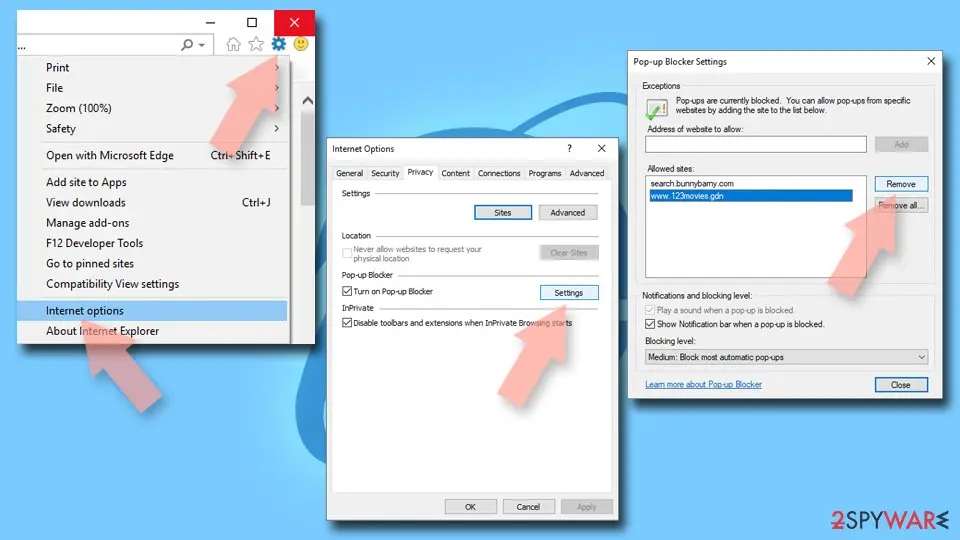
- Open Internet Explorer, and click on the Gear icon at the top-right of the window.
- Select Internet options and go to the Privacy tab.
- In the Pop-up Blocker section, click on Settings.
- Locate the web address in question under Allowed sites and pick Remove.
How can adware be related to push notification scams?
Users may often find themselves redirected to phishing sites like Olympushigh.top after clicking on links from other webpages.
Platforms that host torrents and sites offering illegal software downloads are frequent sources of these redirections, potentially leading users to harmful sites. Sometimes, these automatic redirects happen without any user action, triggered by hidden malicious scripts embedded in the pages.
Adware or other unwanted programs can also cause similar issues, running undetected in the background. This typically occurs when users unknowingly download adware while seeking free software from third-party websites.
To safeguard your device, it is recommended to use strong anti-malware tools such as or . Before running a scan, make sure your anti-malware software is updated with the latest virus definitions. Most security programs have settings for automatic updates, which should be enabled for the best protection.
After removing any detected malware, using the tool to clean up cookies and tracking elements from your browser is wise. This can also help repair potential damage to system files caused by the infection, ensuring your device remains secure and performs optimally.
Protect your privacy - employ a VPN
There are several ways how to make your online time more private - you can access an incognito tab.
However, there is no secret that even in this mode, you are tracked for advertising purposes. There is a way to add an extra layer of protection and create a completely anonymous web browsing practice with the help of VPN. This software reroutes traffic through different servers, thus leaving your IP address and geolocation in disguise.
Besides, it is based on a strict no-log policy, meaning that no data will be recorded, leaked, and available for both first and third parties. The combination of a secure web browser and VPN will let you browse the Internet without a feeling of being spied or targeted by criminals.
No backups? No problem. Use a data recovery tool
If you wonder how data loss can occur, you should not look any further for answers - human errors, malware attacks, hardware failures, power cuts, natural disasters, or even simple negligence.
In some cases, lost files are extremely important, and many straight out panic when such an unfortunate course of events happen. Due to this, you should always ensure that you prepare proper data backups on a regular basis.
If you were caught by surprise and did not have any backups to restore your files from, not everything is lost. is one of the leading file recovery solutions you can find on the market - it is likely to restore even lost emails or data located on an external device.
Questions about Olympushigh.top ads
How do I stop notifications from olympushigh.top?
Remove its permission in the browser. The bottom line of each notification names the browser, so open that browser's notification settings and look under Allowed. Remove olympushigh.top and any other site you do not recognise.
In Chrome and Edge this is under the site settings for notifications; in Firefox it is under Settings, Permissions and data, Notifications. Do this in every browser profile, because each one keeps its own list.
Restart the browser and wait a few minutes. If a message still arrives, read its bottom line again: the sending address can differ from the site you remember, and that is the entry still left in the list.
I clicked a notification from olympushigh.top. What should I do?
If you only opened the page and closed it, nothing else is needed besides removing the permission from olympushigh.top. If the page asked for card details, a phone number or a password and you entered them, act on that: call the bank to block the card, or change the password from another device.
If it offered a download, delete the file unopened, or uninstall it from Installed apps if you ran it, then run a full scan. If you called a number shown on the page, follow the steps for callers in this guide. Finally, remove the permission so that no more messages arrive.
What is Olympushigh.top?
Olympushigh.top is a push-notification spam site, a kind of adware. It earns money by showing desktop notifications, and each view, click or redirect pays whoever runs it. It is not something people usually choose; it arrives through a free download, a fake button or a misleading prompt.
Olympushigh.top does not encrypt files or take control of Windows, but its ads are sold to anyone, including scam operators, so they can lead to fake virus warnings and unwanted downloads. The steps in this guide remove it from Windows and from each browser.
Why does olympushigh.top keep showing up?
There are two possible reasons. If it appears as desktop notifications, a browser on this PC was given permission to receive them from olympushigh.top, usually through a misleading prompt. That permission stays until you remove it in the browser's site settings.
If it appears as tabs or redirects, an ad on a site you visit is opening it, or an extension or program on the PC is. Test a private window: if olympushigh.top never appears there, an extension is the likely cause. The plan above covers each case.
Do I have to change settings in every browser?
Only in the browsers that allowed olympushigh.top, but checking all of them takes a minute and is worth it. We saw the notifications in Chrome, Edge and Firefox. Chrome and Edge keep their notification lists under site settings, and Firefox under Privacy & Security > Permissions.
Remove olympushigh.top and any other unfamiliar site from each list, then turn off new notification requests if you do not need them. Remember that every browser profile has its own list, so a second profile can keep the messages coming after you clean the first.
Are the pop-ups I see really from Olympushigh.top?
Compare them with the details in the table above. Olympushigh.top produces desktop notifications, and the clearest sign of it is notifications from olympushigh.top. Other adware looks similar, so check the name of the sending site at the bottom of a notification, the address in the tab that opened, or the newest entries on the extensions page.
If those match, this guide fits. If you see a different name, the same kind of steps apply, but remove the item you actually find rather than guessing.
Can I turn off the pop-ups in Windows settings instead?
You can hide them, but that is not the fix. In Windows 11, Settings > System > Notifications lets you switch off notifications for a whole browser, which silences the spam together with every useful notification from that browser.
The site keeps its permission and can still send messages when you switch them back on. It is better to remove the specific site in the browser's own notification settings and block new requests. That stops the messages at the source and leaves the rest of your notifications working.
Is it safe to click Block or Allow on a notification prompt?
Clicking Block is safe; it only tells the browser not to show notifications from that site. Clicking Allow is not dangerous to your files either, but it gives the site a channel to your desktop that spam sites abuse at once.
The prompt itself is part of the browser, so you can trust its buttons. What you cannot trust is the text on the page around it. If a page explains why you must click Allow, choose Block or close the tab.
Can an adware pop-up infect my PC just by appearing?
No. A pop-up, a notification or a new tab is only a web page or a message. It cannot run programs on Windows by itself, provided the browser and Windows are up to date. Infection needs a step from you:
- running a downloaded file
- installing an extension
- giving a stranger remote access
That is why scam pages work so hard to make you click. Close such pages with the tab's X or by closing the browser, not with buttons inside the page, which may start a download.
Will Fortect remove Olympushigh.top?
No program removes Olympushigh.top itself, because there is nothing on the PC to remove: the notifications come through a permission saved in the browser, and only the browser's settings take it away, as the steps above show.
What Fortect can do is check the rest of Windows. Its free scan looks for malware, unwanted programs and damaged system files, which is useful if you clicked the ads, downloaded something from the pages they opened, or are not sure what else changed on the PC.
If the scan finds nothing and the notifications stopped after you removed the permission, this problem is solved. Use Microsoft Defender as a second opinion whenever you have downloaded files from pages like these.
Sources
- Google Chrome Help: Use notifications to get alerts (no longer online) (read October 7, 2026)
- FTC: How to recognize, remove and avoid malware (read October 7, 2026)
- Microsoft Learn: Microsoft Defender Offline (read October 7, 2026)
- Microsoft Learn: How Microsoft names malware (read October 7, 2026)