
PUP.Optional.InstallCore ads: what it is and how to remove it
PUP.Optional.InstallCore is a detection name for a family of potentially unwanted programs that are defined by their distribution method - software bunding. This technique includes combining several components into a single software package and then using deception to make users install them unintentionally.
Facts checked October 7, 2026. Removal steps tested on Windows 11 (26H2) and checked against Microsoft's and the browser makers' current documentation. Sections marked as our earlier report are the original text: they describe the threat as it was then and have not been reviewed since. The 2026 status, the removal steps and the questions are current.
Automatic
Get a free scan and check if your PC is infected.
Fortect finds malware, unwanted programs and the Windows damage they leave behind, and repairs it in one pass.
Programs like PUP.Optional.InstallCore usually arrive in groups; a free scan lists the companions that are easy to miss.
Do it yourself · free Remove PUP.Optional.InstallCore ads yourself 4 steps, about 12 minutes, no software needed.
Start the steps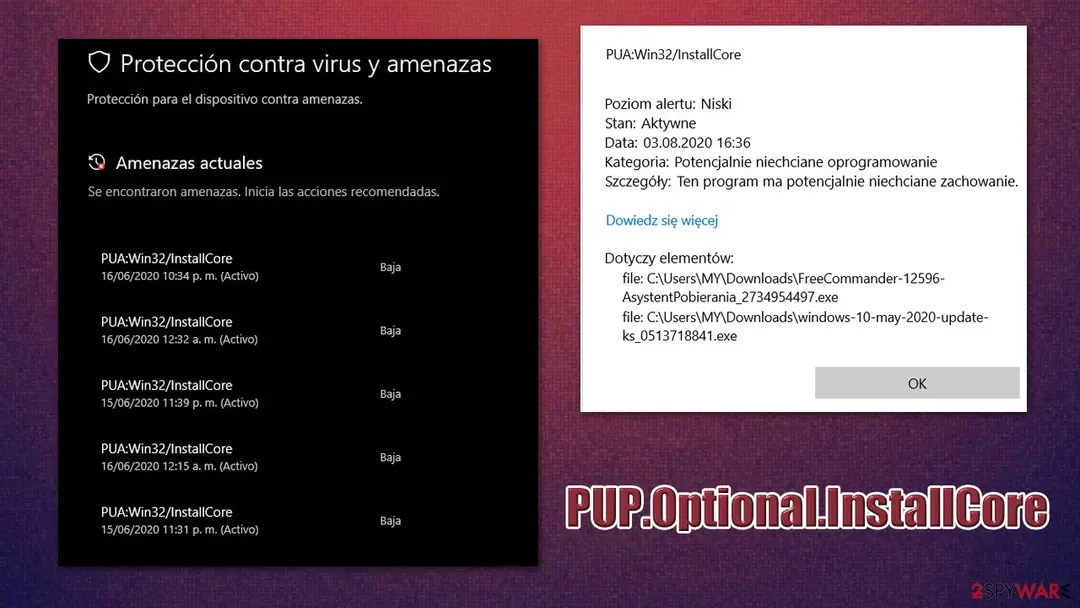
PUP.Optional.InstallCore ads: summary
| Damage | Can redirect to potentially dangerous sites and help infiltrate the system with malware |
|---|---|
| Name | PUP.Optional.InstallCore |
| Type | Adware |
| Also known as | InstallCore |
| Spreading methods | Enters the system together with third-party software or via malicious online ads |
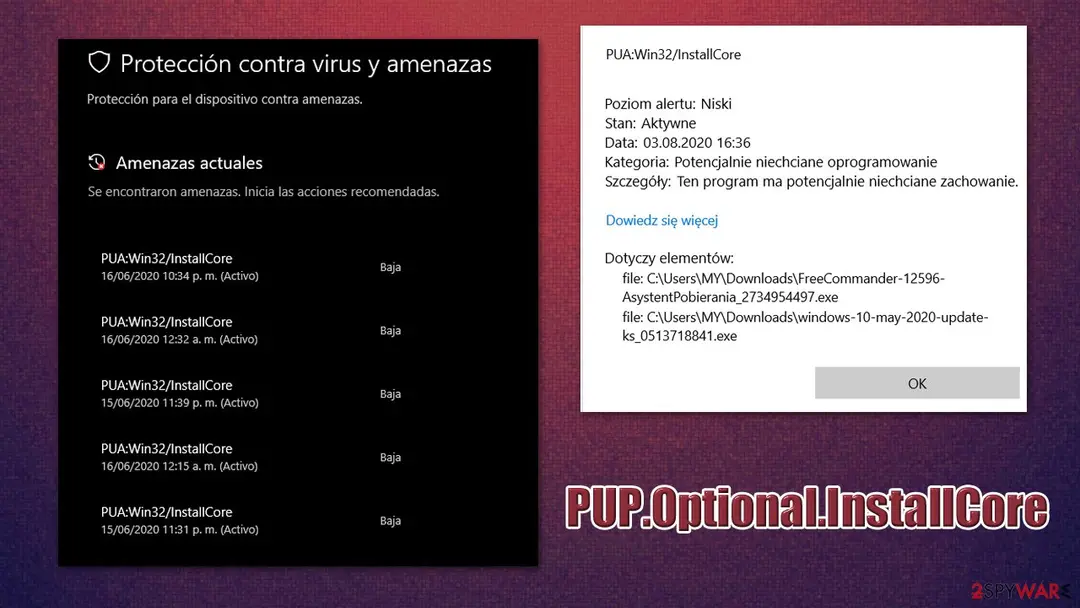
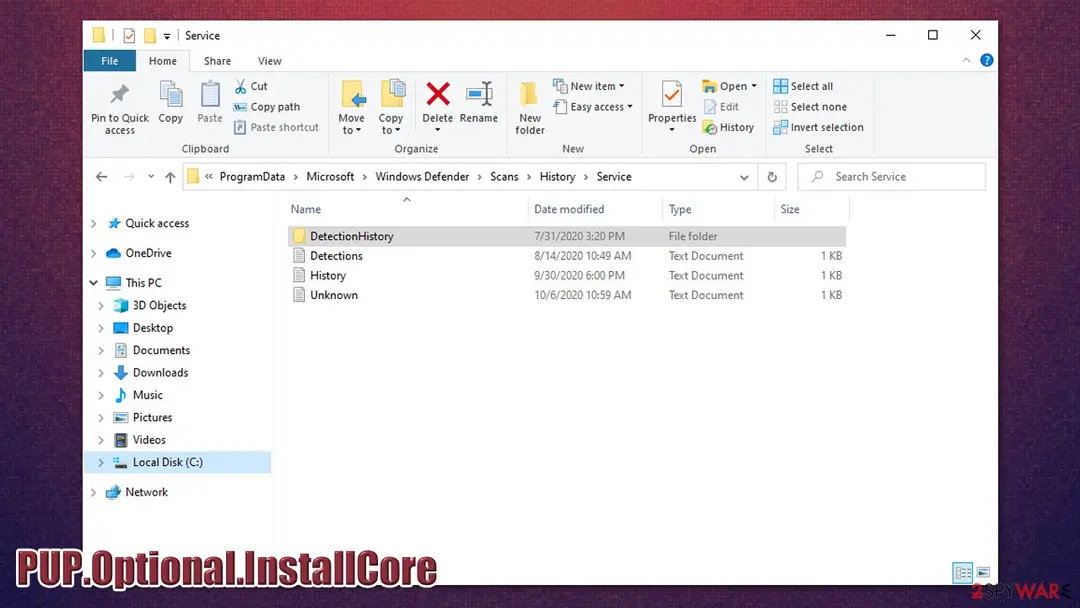
| Additional issues | Users complained that the adware does not go away after it is deleted by Windows Defender. This issue is related to a bug within the program which can be easily fixed by deleting Detection history |
| Removal | Scan the PC with security software to find and remove the malware and anything installed with it. Fortect scans Windows for malware and repairs the system files and settings it damaged. Remove it nowTo use the full-featured product, you have to purchase a license for Fortect. The scan is free. |
Show 7 more facts
| Detection names | No Microsoft detection name is known |
|---|---|
| Distribution | Not recorded in the old report |
| Symptoms | An unknown program in Installed apps |
| Evidence | 4 write-ups by security sites; details still limited |
| Program | PUP.Optional.InstallCore |
| First seen | 4 June 2021 |
| Facts checked | 7 October 2026 |
Is PUP.Optional.InstallCore ads dangerous?
From our report of Jun 2021 · not reviewed since
PUP.Optional.InstallCore – software bundlers that install optional components on Windows and Mac systems
PUP.Optional.InstallCore is a detection name for a family of potentially unwanted programs that are defined by their distribution method - software bunding.
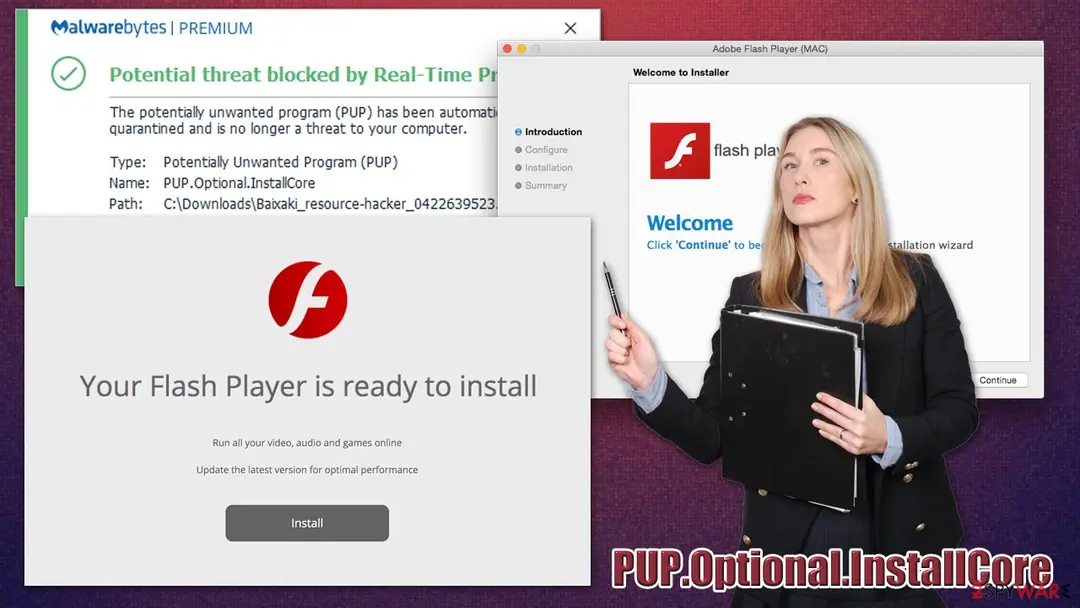
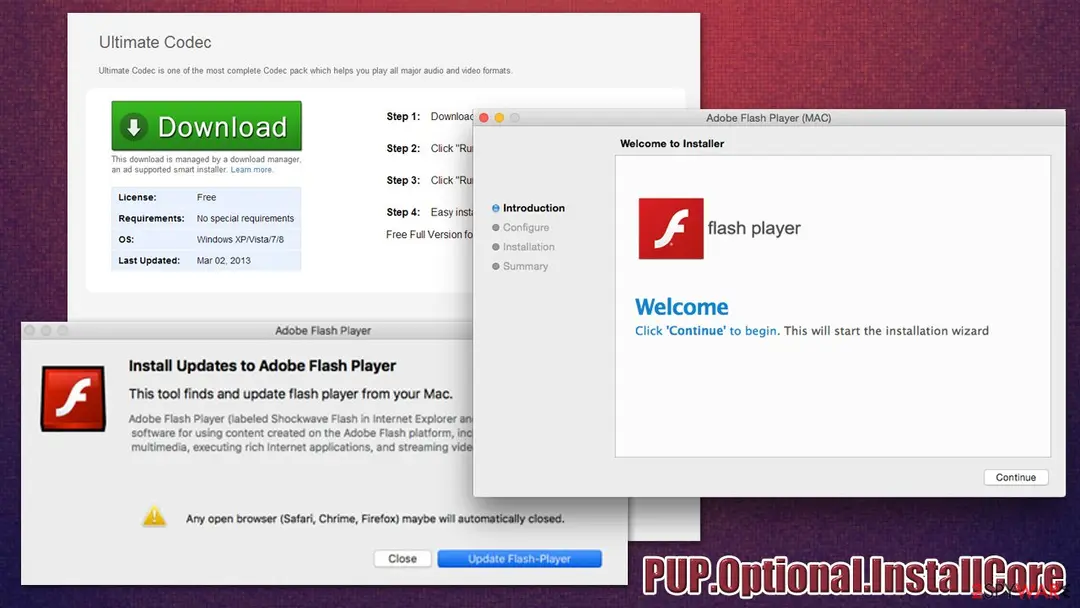
This technique includes combining several components into a single software package and then using deception to make users install them unintentionally. Alternatively, people might also come across this PUP after being tricked by fake update prompts of legitimate apps, e.g., Java or Flash Player.
Once inside the system, adware would change various settings of Google Chrome, Mozilla Firefox, Safari, MS Edge, or another web browser, and deliver pop-ups, deals, offers, banners, coupons, and other intrusive advertisements. In the background, the PUP would track users' information related to their online activities and trade/sell it to third parties.
PUP.Optional.InstallCore adware is also known to be stuck in Windows Defender detection loops - the problem became consistent since the Windows 10 v2004 release. Allegedly, the program deletes the threat, and then it comes back as soon as the next system scan is initiated.
This also significantly decreases the performance of the PC, as it slows it down and greatly affects loading times. To fix these issues, refer to tips provided in the bottom section of the article.
According to the experts, InstallCore can perform the following actions once it settles on the PC:
PUP.Optional.InstallCore ads might cause browsing-related issues as well since your browser finds it challenging to maintain high-speed processes. Moreover, the infection might modify search results. In other words, more advertising links surface among the search results which are less than reliable.
Furthermore, speaking of its redirect tendency, you might struggle to reach the wanted websites, or more specifically, from the first attempt. Before you succeed in entering the site of your interest, you have to ward off the emerging new tabs.
Moreover, exiting them on time might become crucially important regarding the probability of their promotes sites harboring malware . That is why you should remove PUP.Optional.InstallCore before it roots deeper into the system and makes the elimination procedure impossible.
Since this PUP is an adware-type program, your patience might be tested. InstallCore ads appear on every visited website. Besides, they also appear quite often and tend to cover your screen.
If you are in a hurry and want to find the piece of information quickly, you might get infuriated since the emerging pop-ups significantly occupy your browser. As a result, website buffering takes considerably more time.
You should also be aware that the program might install additional irrelevant applications, such as:
Though the majority of them are quite harmless, some of the installed programs might contain malicious files. They may act as mediators for more aggressive malware to invade your computer. That is why you should continue reading to know how to prevent such hijacks in the future.
Don't forget to complete the PUP.Optional.InstallCore removal right now if you notice that your system is infected. Additionally, to fix system files, registry, ad other system components after the infection is eliminated, employ .
- Redirects to gaming and gambling sites
- Launches pop-up ads in new tabs
- Records browsing-related information
- Toolbars;
- Other ad-supported programs;
- Plug-ins;
- Browser extensions;
- System optimization software.
From our report of Jun 2021 · not reviewed since
More from our earlier report on PUP.Optional.InstallCore
- To recover your computer system core settings back to normal, use the system diagnostics tool
How PUP.Optional.InstallCore ads got into your browser
From our report of Jun 2021 · not reviewed since
The most common infiltration method for adware programs is called bundling.
In other terms, if you tend to install third-party tools without close inspection, the PUP might come hidden inside the installer of the software. Usually, the primary distribution sources of adware are the following:
Once you download one of them, you are unaware that "bonus" add-ons come along with them. As a result of reckless installation, the attachments get installed. However, if you instead of commonly chosen "Quick/Recommended" settings, select "Advanced/Custom," then you can reveal all pre-checked attachments and un-tick them one by one to avoid PUP.
- Audio editors;
- Video converters;
- Fake Java updates.
How to remove PUP.Optional.InstallCore ads
How to remove the PUP.Optional.InstallCore extension
Do the browser steps in every browser and profile on the PC, then check Windows for the program that installed the extension.
Step 1: Remove extensions you did not add
In Chrome open
chrome://extensions, in Edgeedge://extensions, and in Firefox the menu > Extensions and themes.Remove every extension you do not remember adding, especially search, new tab, coupon, PDF, weather or video downloader add-ons. Check every browser and every profile, because each keeps its own list.
If an extension has no Remove button or comes back, a browser policy holds it (see "Managed by your organization" in the procedure below). The pages are the same on Windows 11 and Windows 10.
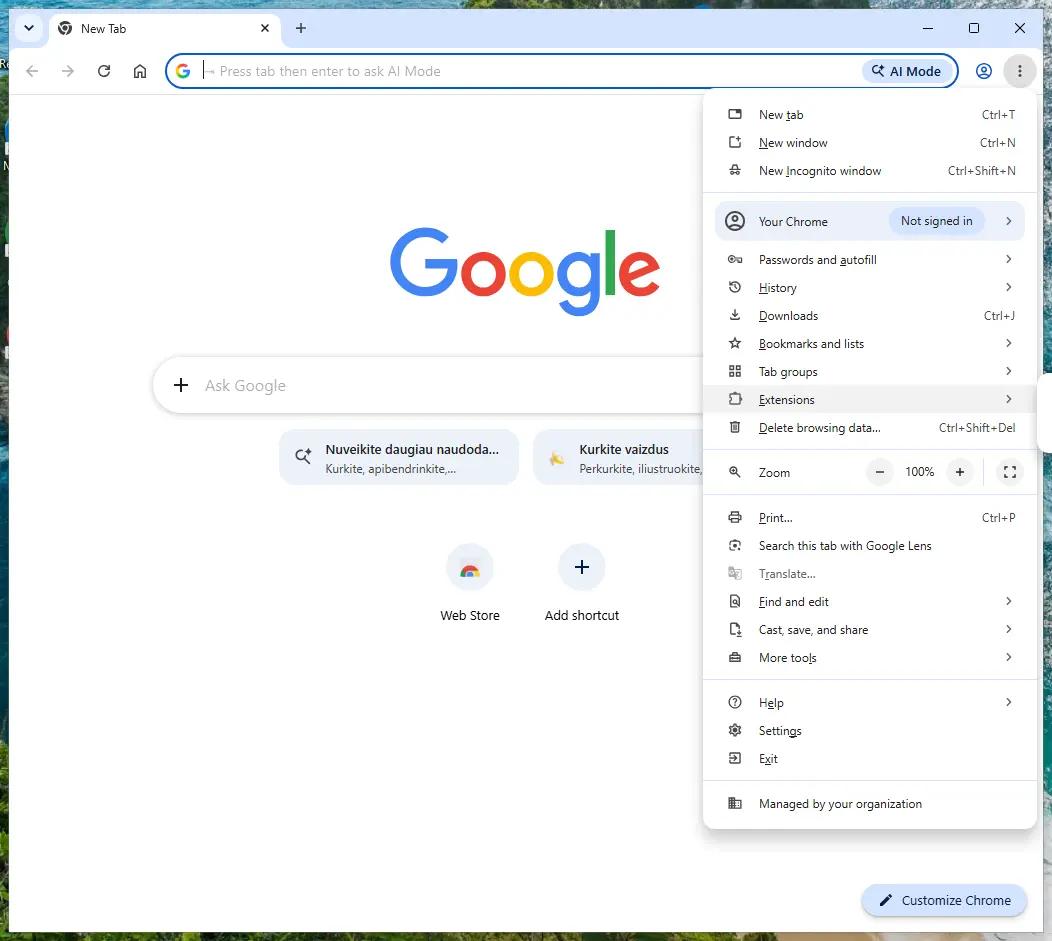
Chrome on Windows 11: More > Extensions > Manage extensions. Full procedure with screenshots: Remove a browser extension
Step 2: Uninstall PUP.Optional.InstallCore
PUP.Optional.InstallCore is removed like any other program, from the list of installed apps. In Windows 11 that is Settings > Apps > Installed apps, in Windows 10 Settings > Apps > Apps & features, and in both you can also use Control Panel > Programs and Features.
Select PUP.Optional.InstallCore, click Uninstall and follow the uninstaller to the end. Then look at the entries just above and below it when the list is sorted by date: bundled programs install at the same minute.
Full procedure with screenshots: Uninstall a program or app in Windows On uGetFix
Step 3: Reset the browser
A reset removes what the steps above could miss:
- changed start pages
- site permissions
- hidden settings
In Chrome open Settings > Reset settings > Restore settings to their original defaults; in Edge Settings > Reset settings; in Firefox Help > More troubleshooting information > Refresh Firefox.
Tip: Bookmarks and saved passwords stay, while extensions are turned off and the search engine and start page return to the defaults.
Reset every browser on the PC, including Edge, which Windows 11 and Windows 10 always have.
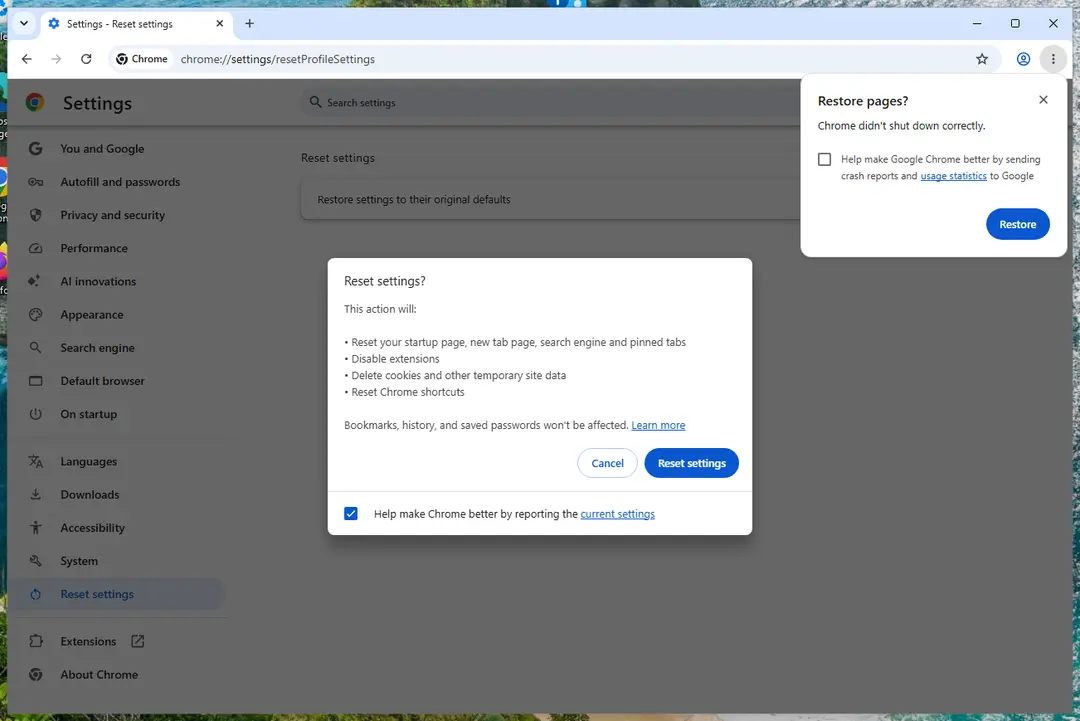
Chrome on Windows 11: Settings > Reset settings. Full procedure with screenshots: Reset a browser and fix a hijacked search engine
Step 4: Scan the PC, then run the offline scan
A scan finds the parts of PUP.Optional.InstallCore that the manual steps cannot see. In Windows Security > Virus & threat protection > Scan options, start a Full scan and quarantine what it reports.
Follow it with Microsoft Defender Antivirus (offline scan) > Scan now, which restarts the PC and checks the disk while Windows and the malware are not running.
It takes about 15 minutes and works the same in Windows 11 and Windows 10. If either scan finds something, run the full scan again after removal until it comes back clean.
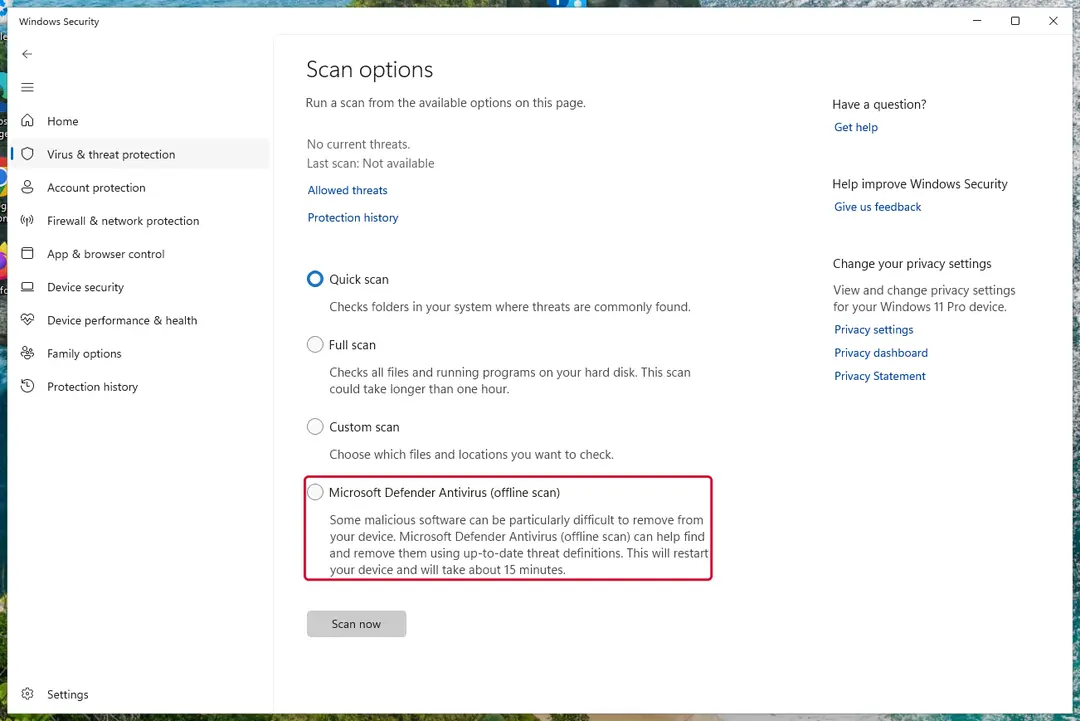
Windows 11: Windows Security > Virus & threat protection > Scan options. Full procedure with screenshots: Run a Microsoft Defender Offline scan
Instructions for each browser and system
The detailed steps for every browser and system this guide covers. Open the one you use.
Uninstall from Windows
Follow the detailed guide showing how to get rid of adware from Windows:
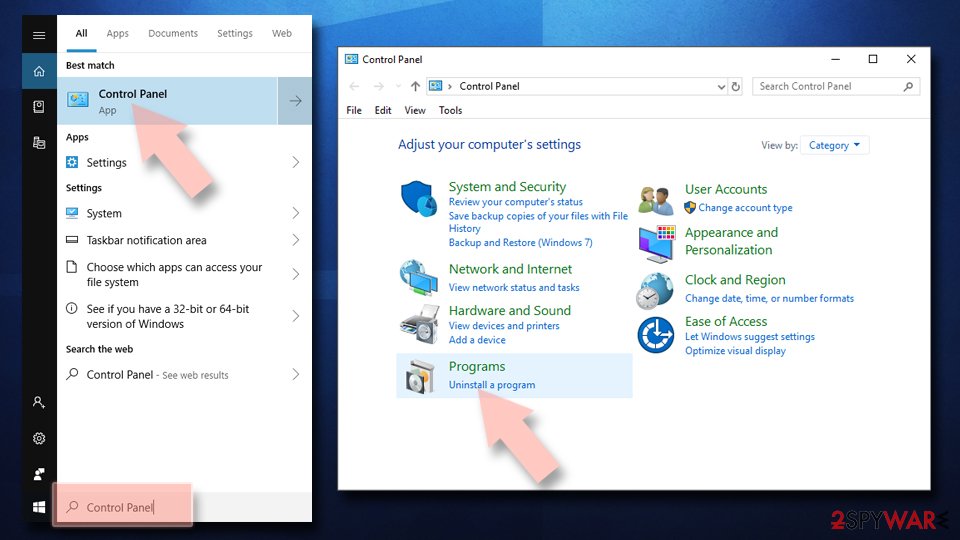
Uninstall from Windows 10/8:
- Type Control Panel into the Windows search box and open the result.
- Under Programs, select Uninstall a program.
Uninstall from Windows 7/XP:
- Click on Windows Start > Control Panel (Windows XP users should click on Add/Remove Programs).
- In Control Panel, select Programs > Uninstall a program.
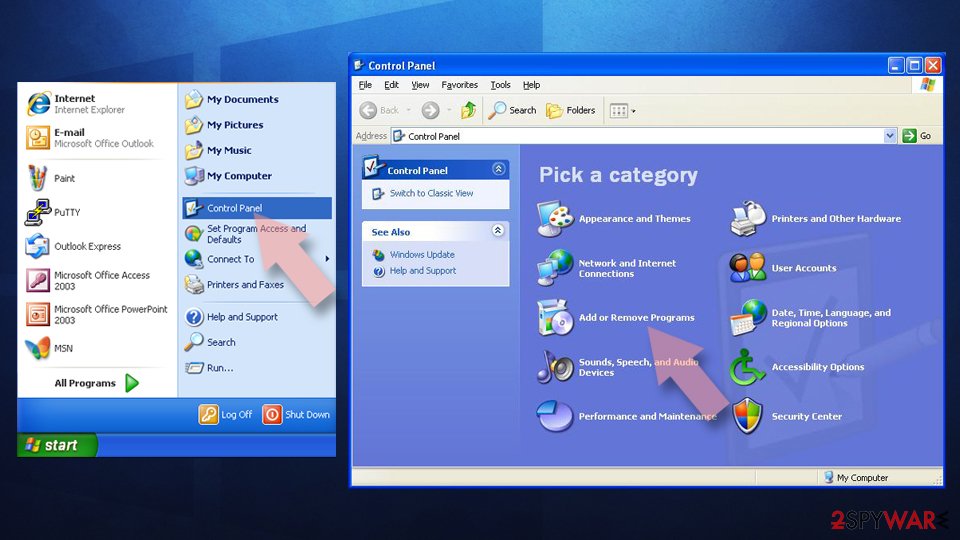
Remove the unwanted program:
- In the Programs and Features window, look for any recently installed suspicious entries, select them, and click Uninstall.
- If User Account Control appears, click Yes to confirm, then complete the removal.
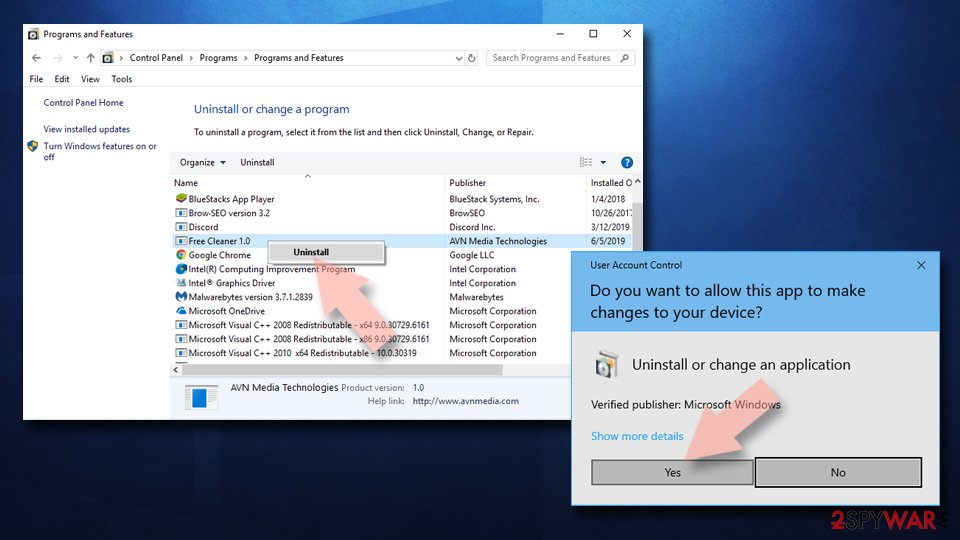
Remove from Google Chrome
Delete malicious extensions from Google Chrome:
- Open Google Chrome, click on the Menu (three vertical dots at the top-right corner) and select More tools > Extensions.
- In the newly opened window, you will see all the installed extensions. Uninstall all suspicious extensions related to the unwanted program by clicking Remove.
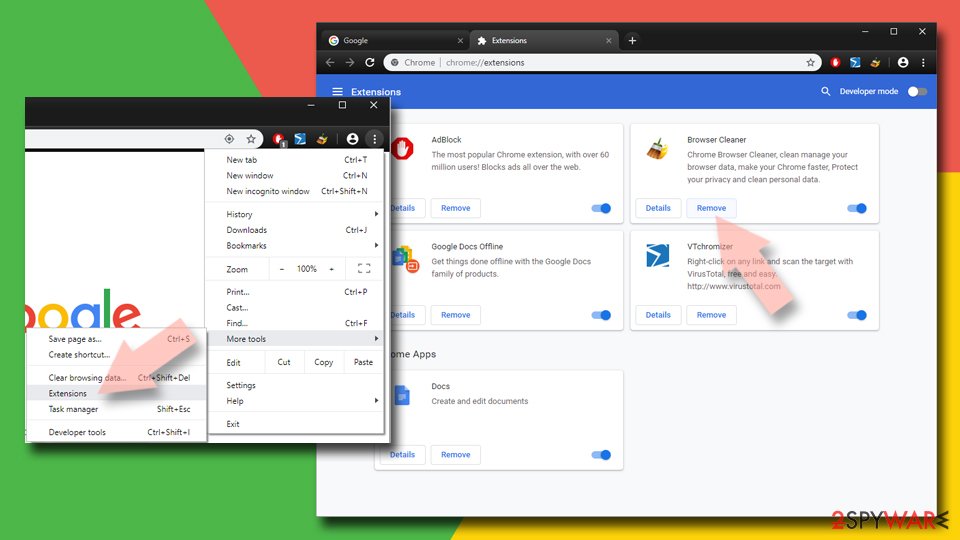
Clear cache and web data from Chrome:
- Click on Menu and pick Settings.
- Under Privacy and security, select Clear browsing data.
- Select Browsing history, Cookies and other site data, as well as Cached images and files.
- Click Clear data.
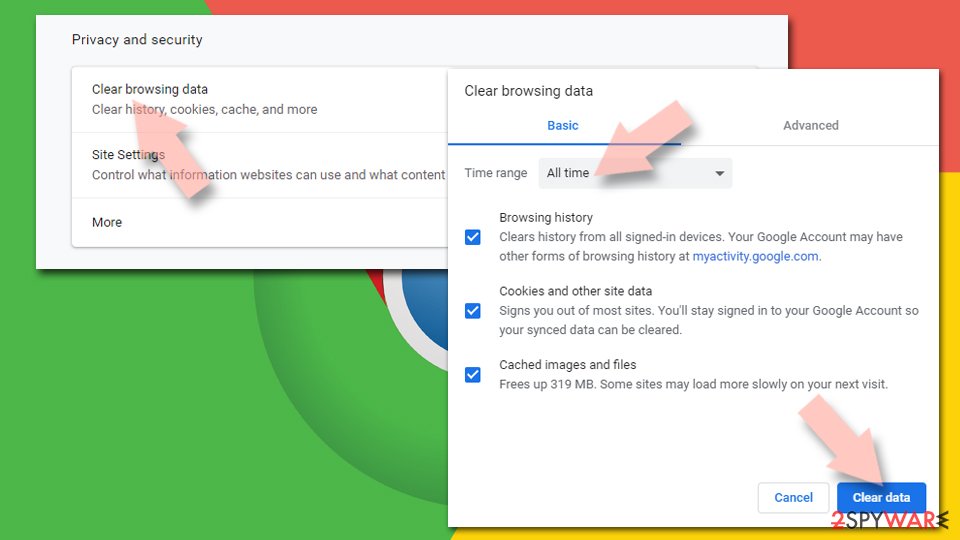
Change your homepage:
- Click menu and choose Settings.
- Look for a suspicious site in the On startup section.
- Click on Open a specific or set of pages and click on three dots to find the Remove option.
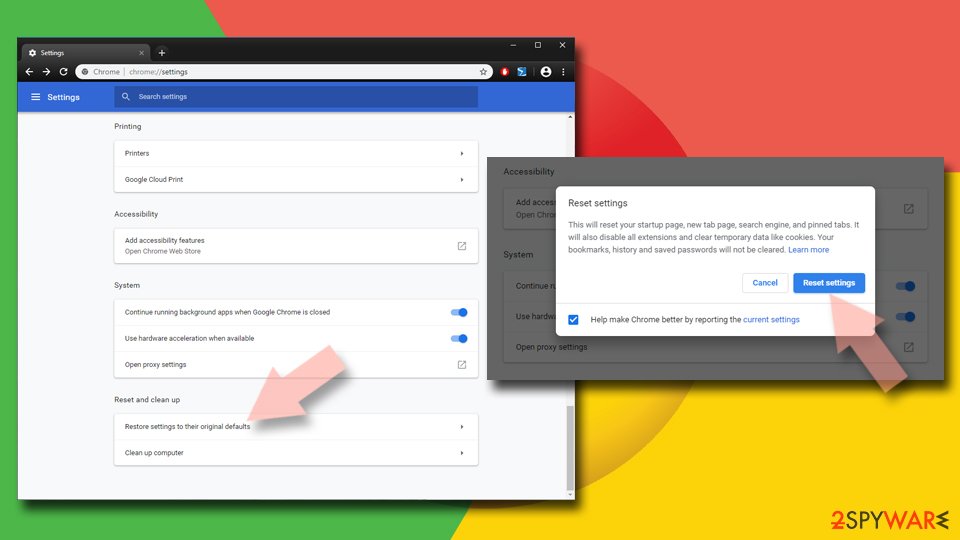
Reset Google Chrome:
If the previous methods did not help you, reset Google Chrome to eliminate all the unwanted components:
- Click on Menu and select Settings.
- In the Settings, scroll down and click Advanced.
- Scroll down and locate Reset and clean up section.
- Now click Restore settings to their original defaults.
- Confirm with Reset settings.
Remove from Microsoft Edge
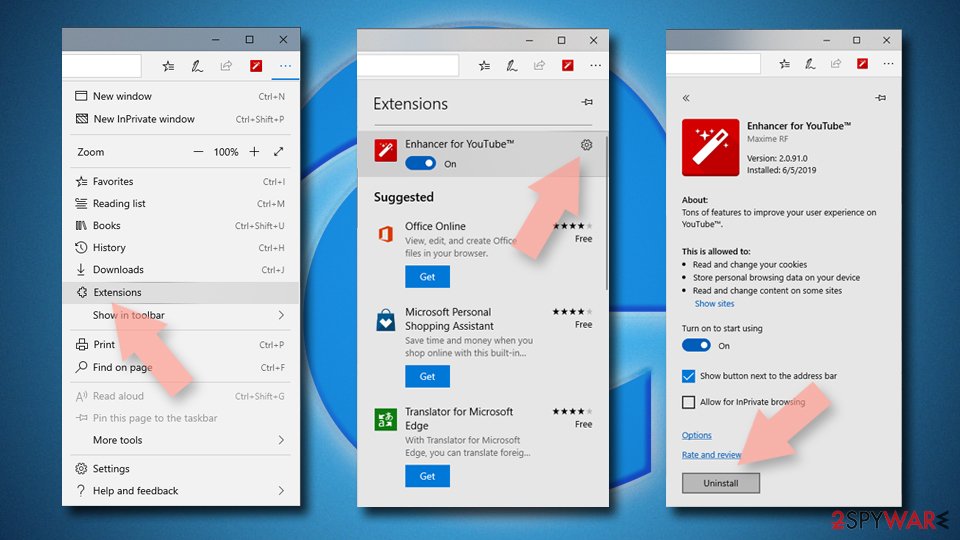
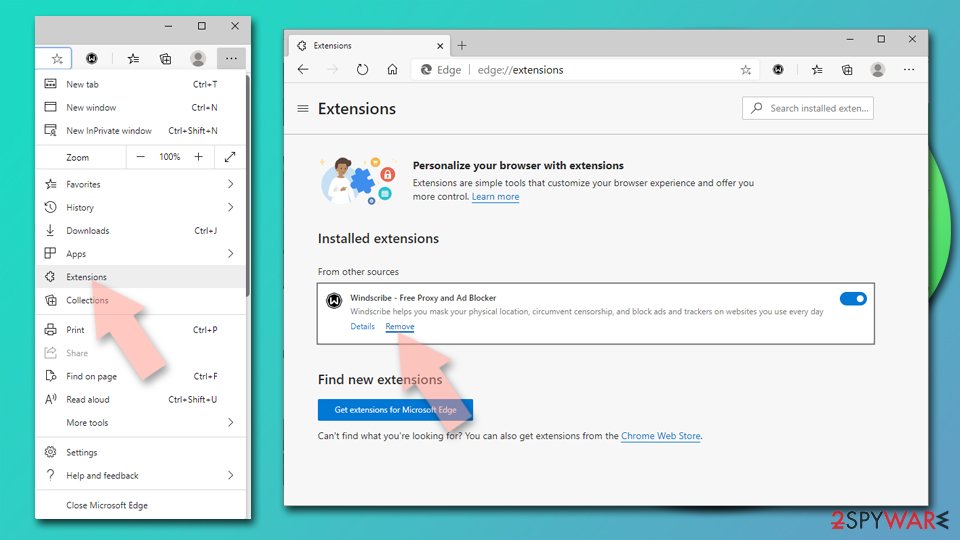
Delete unwanted extensions from MS Edge:
- Select Menu (three horizontal dots at the top-right of the browser window) and pick Extensions.
- From the list, pick the extension and click on the Gear icon.
- Click Remove.
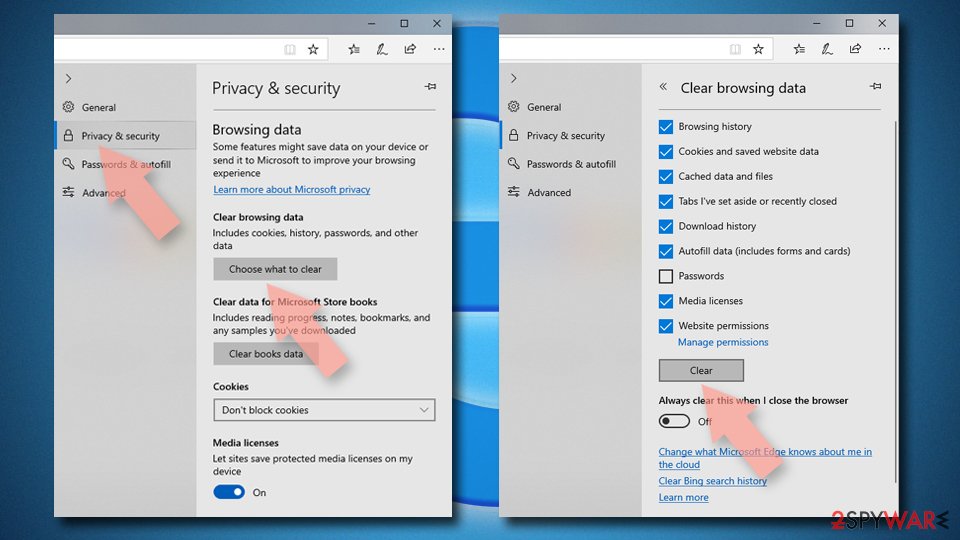
Clear cookies and other browser data:
- Click on the Menu (three horizontal dots at the top-right of the browser window) and select Settings > Privacy, search, and services..
- Under Clear browsing data, pick Choose what to clear.
- Select Cookies and other site data and Cached images and files. (apart from passwords, although you might want to include Media licenses as well, if applicable) and click on Clear.
Restore new tab and homepage settings:
- Click the menu icon and choose Settings.
- Then find On startup section.
- Click Remove next to any suspicious startup page.
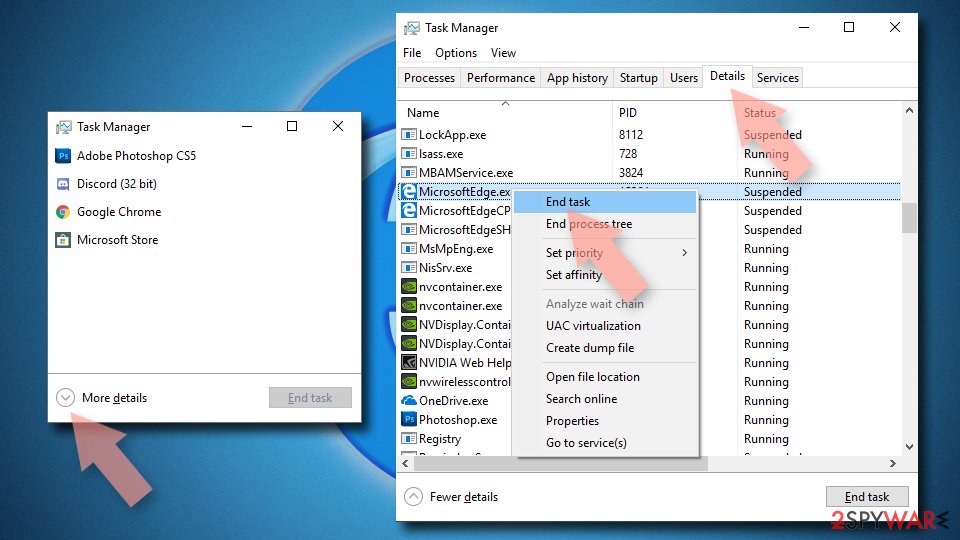
Reset MS Edge if the above steps did not work:
- Press on Ctrl + Shift + Esc to open Task Manager.
- Click on More details arrow at the bottom of the window.
- Select Details tab.
- Now scroll down and locate every entry with Microsoft Edge name in it. Right-click on each of them and select End Task to stop MS Edge from running.
Delete extensions from MS Edge (Chromium):
- Open Edge and click select Settings > Extensions.
- Delete unwanted extensions by clicking Remove.
Clear cache and site data:
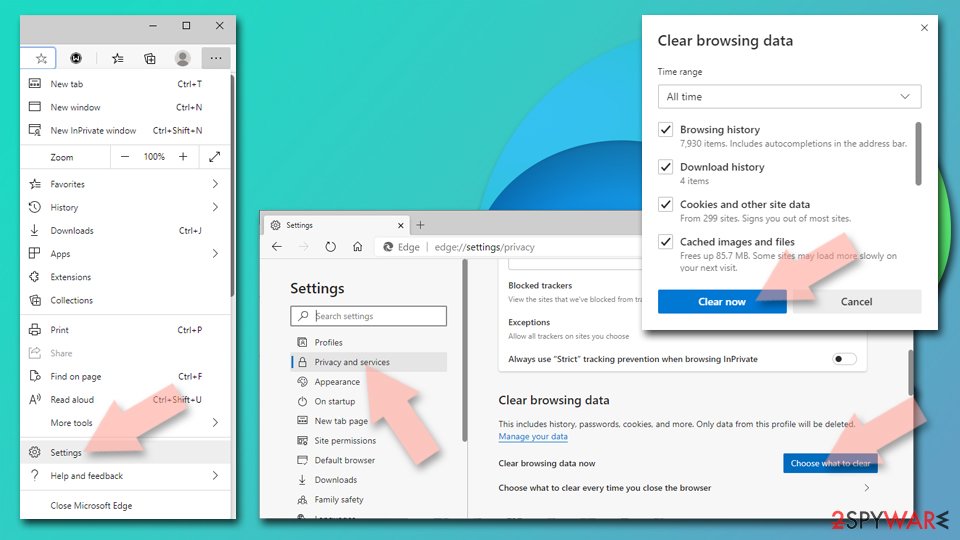
- Click on Menu and go to Settings.
- Select Privacy, search and services.
- Under Clear browsing data, pick Choose what to clear.
- Under Time range, pick All time.
- Select Clear now.
Reset Chromium-based MS Edge:
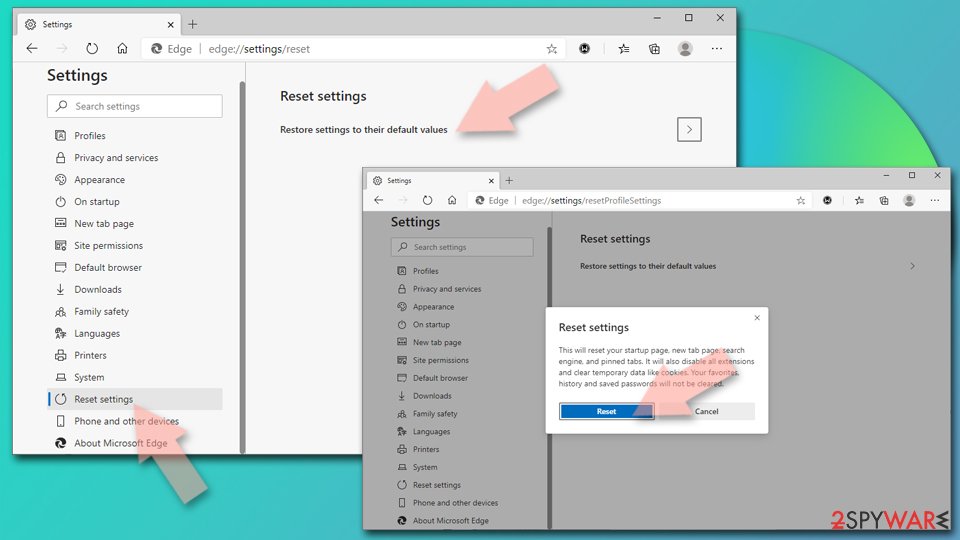
- Click on Menu and select Settings.
- On the left side, pick Reset settings.
- Select Restore settings to their default values.
- Confirm with Reset.
- This will disable extensions and reset startup pages but will not delete bookmarks, saved passwords, or browsing history.
Remove from Mozilla Firefox (FF)
You should search for all suspicious extensions and other entries and delete them. This way you will clean Chrome from annoying ads and redirects.
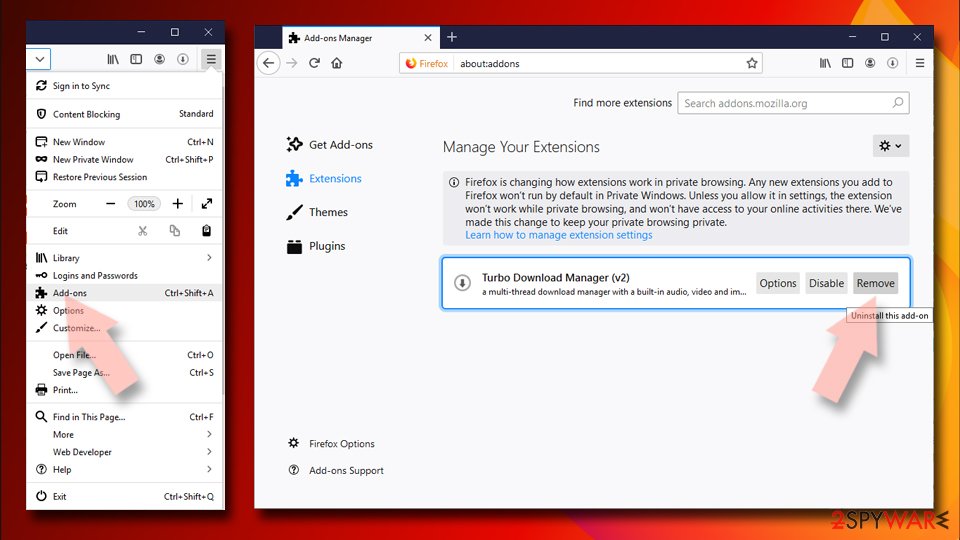
Remove dangerous extensions:
- Open Mozilla Firefox browser and click on the Menu (three horizontal lines at the top-right of the window).
- Select Add-ons.
- In here, select the unwanted extension and click Remove.
Reset the homepage:
- Click three horizontal lines at the top right corner to open the menu.
- Choose Settings.
- Under Home, set your preferred homepage and new tab settings.
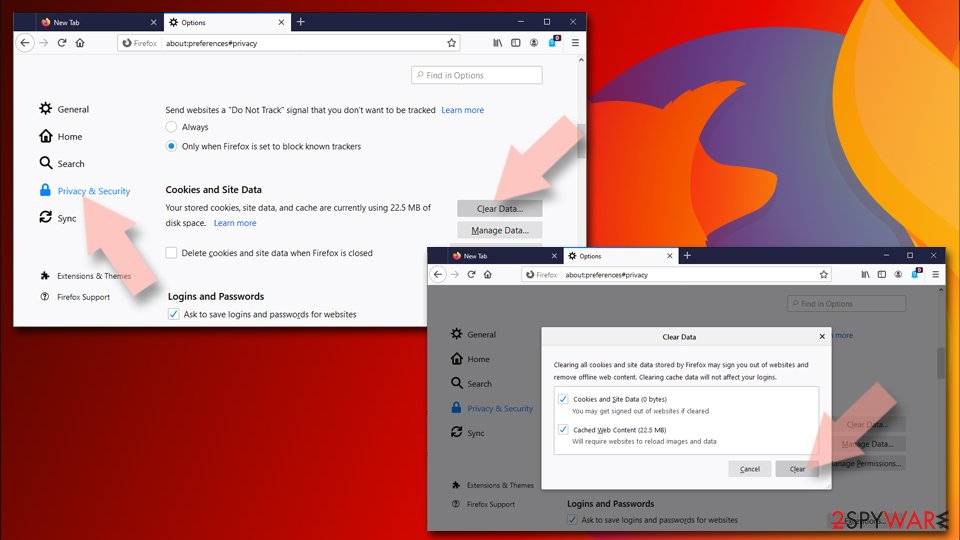
Clear cookies and site data:
- Click Menu and pick Settings.
- Go to Privacy & Security section.
- Scroll down to locate Cookies and Site Data.
- Click on Clear Data...
- Select Cookies and Site Data and Temporary cached files and pages, then click Clear.
Reset Mozilla Firefox
If clearing the browser as explained above did not help, reset Mozilla Firefox:
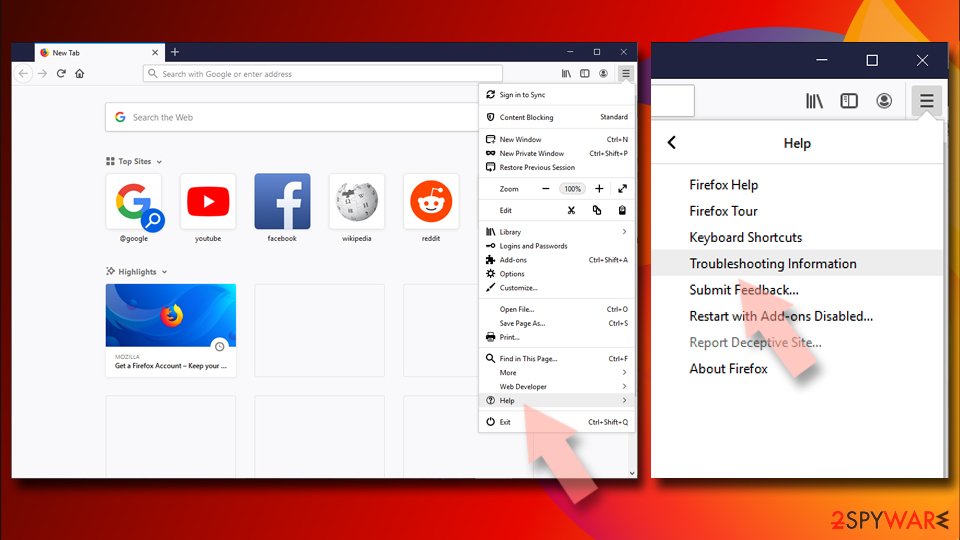
- Open Mozilla Firefox browser and click the Menu.
- Go to Help and then choose Troubleshooting Information.
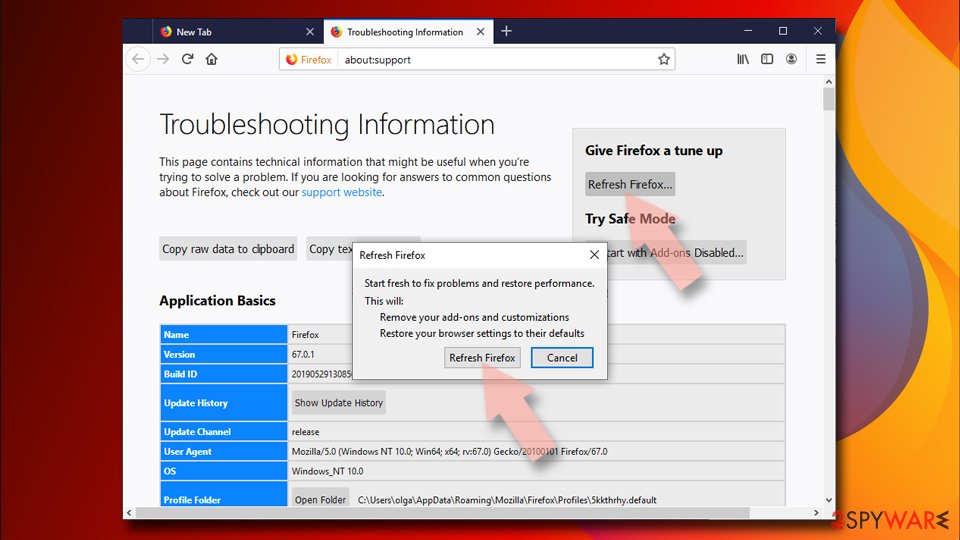
- Under Give Firefox a tune up section, click on Refresh Firefox...
- Once the pop-up shows up, confirm the action by pressing on Refresh Firefox.
Delete from Safari
Remove dangerous extensions:
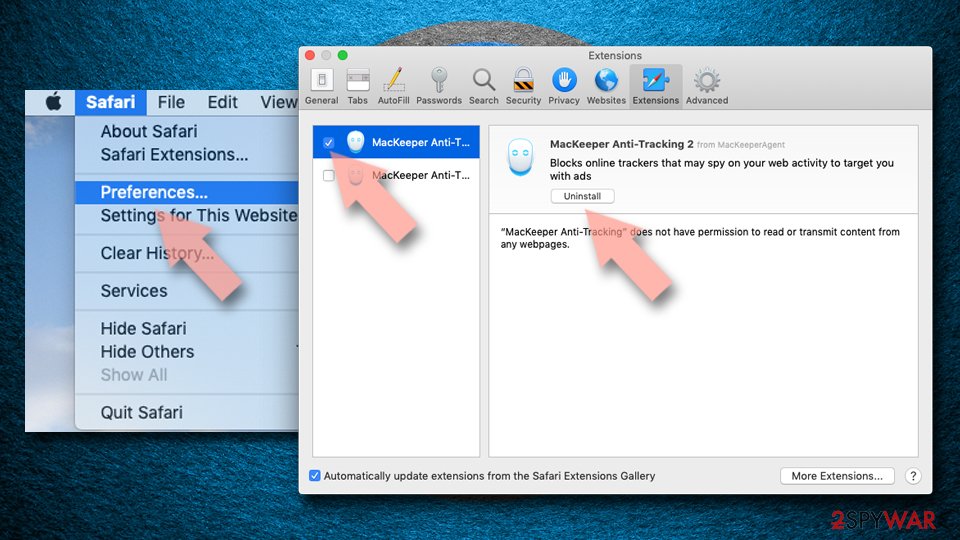
- Open Safari, click Safari in the menu at the top-left of the screen, and select Preferences.
- Go to the Extensions tab, look for any suspicious entries, and click Uninstall to remove them.
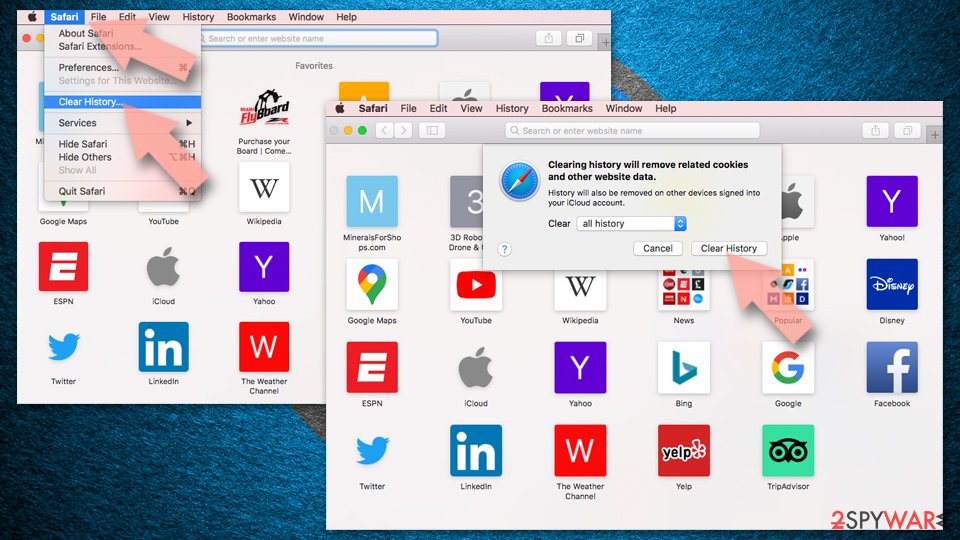
Clear history and website data:
- Click Safari in the menu and pick Clear History.
- Set Clear to all history and confirm with Clear History.
Reset Safari:
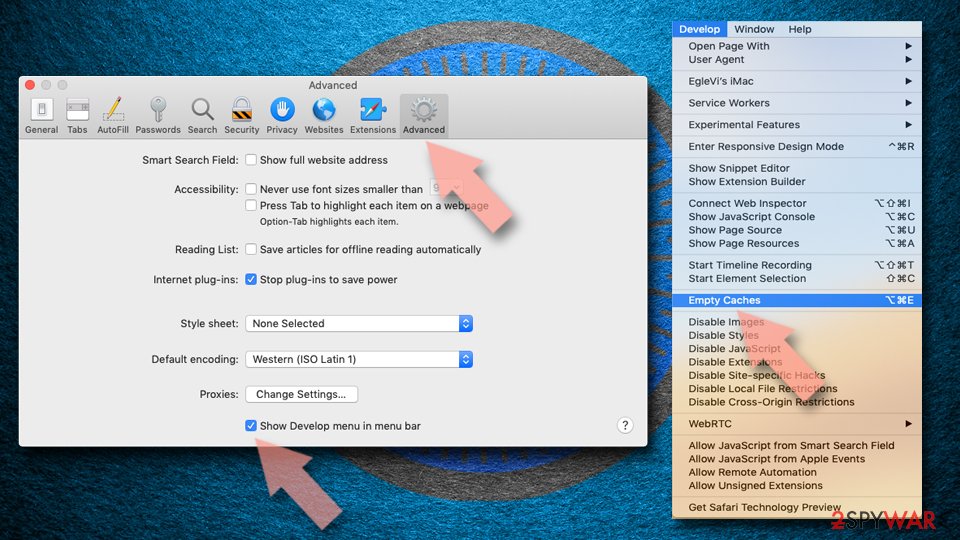
- Click Safari in the menu and select Preferences > Advanced.
- Enable Show Develop menu in menu bar.
- From the menu bar, click Develop and select Empty Caches.
Delete from macOS
Mac OS users are also targeted by this PUP. Clear the browsing data and scan the device to delete all of its components completely.
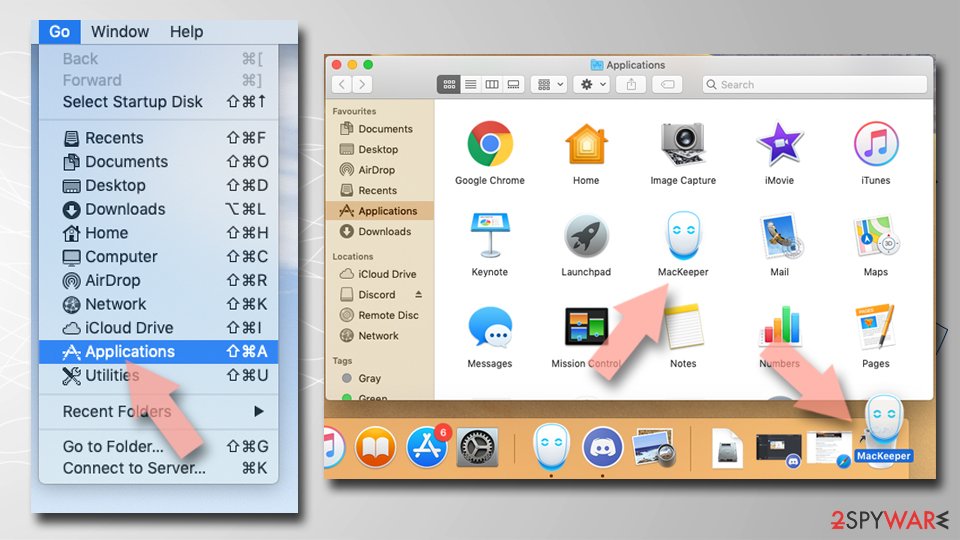
Remove the unwanted application:
- From the menu bar, select Go > Applications.
- In the Applications folder, look for any suspicious entries, then drag them to Trash (or right-click and pick Move to Trash).
Delete leftover files and folders:
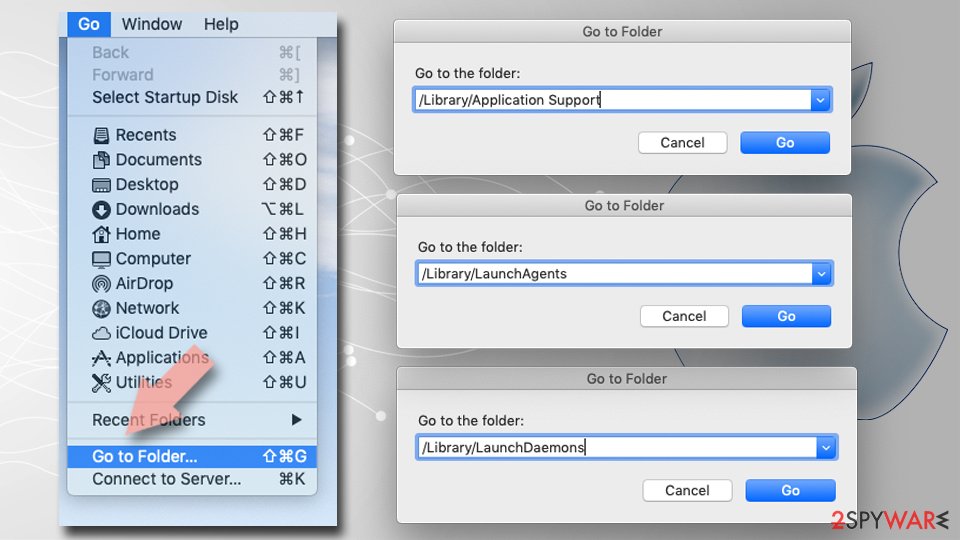
- Select Go > Go to Folder.
- Enter /Library/Application Support and remove any suspicious folders related to the unwanted program.
- Repeat the same check in the /Library/LaunchAgents and /Library/LaunchDaemons folders, deleting any suspicious entries.
- Finally, empty the Trash to permanently remove the leftovers.
Access your website securely from any location
When you work on the domain, site, blog, or different project that requires constant management, content creation, or coding, you may need to connect to the server and content management service more often. The best solution for creating a tighter network could be a dedicated/fixed IP address.
If you make your IP address static and set to your device, you can connect to the CMS from any location and do not create any additional issues for the server or network manager that needs to monitor connections and activities. VPN software providers like can help you with such settings and offer the option to control the online reputation and manage projects easily from any part of the world.
Recover files after data-affecting malware attacks
While much of the data can be accidentally deleted due to various reasons, malware is one of the main culprits that can cause loss of pictures, documents, videos, and other important files.
More serious malware infections lead to significant data loss when your documents, system files, and images get encrypted. In particular, ransomware is is a type of malware that focuses on such functions, so your files become useless without an ability to access them.
Even though there is little to no possibility to recover after file-locking threats, some applications have features for data recovery in the system. In some cases, can also help to recover at least some portion of your data after data-locking virus infection or general cyber infection.
From our report of Jun 2021 · not reviewed since
A simple guide to remove PUP.Optional.InstallCore once and for all
If you are suffering from repeated detection loops on Windows Defender, you should go to C:\ProgramData\Microsoft\Windows Defender\Scans\History\Service (make sure Hidden files are shown), and delete the Detection History.
There is a possibility to remove PUP.Optional.InstallCore manually. For that, you should carefully follow the instructions presented by our cybersecurity experts. You should also check your browsers for suspicious extensions, delete the browser data/cache, or reset it all together as soon as the PUP is deleted.
Although, if you prefer the software to do the work for you, we suggest relying on the automatic removal method. Pick any of the security tools indicated below and run a full system scan.
If you want to surf the Web quickly again without getting worried that adware plagues your browser, update the anti-spyware program regularly and avoid clicking on suspicious links in such sites as movie streaming domains and torrent sharing sites to escape InstallCore virus.
Note that the PUP targets the entire virtual community. It does not exclude any particular country. Thus, even if you live in Sweden , which is considered to have the lowest malware rates, be wary of this browser threat.
Questions about PUP.Optional.InstallCore ads
What is PUP.Optional.InstallCore and why is it on my PC?
PUP.Optional.InstallCore is a program that was installed on the PC, most likely together with something else you downloaded. Free software sites and many installers add extra programs on setup pages with pre-ticked boxes, so the extra install looks like your choice even though nobody read the page.
Check the install date in Settings, Apps, Installed apps: the program you installed that day is the probable carrier. If you do not need PUP.Optional.InstallCore, uninstall it. If it belongs to your hardware or to a program you use, search its exact name and publisher first, because drivers and their tools can have unfamiliar names.
PUP.Optional.InstallCore will not uninstall. What can I do?
First restart the PC and try again, because the program may have been running and locked its own files. If the uninstaller is missing or fails, start Windows in Safe Mode, where most third-party programs do not start, and remove PUP.Optional.InstallCore from Installed apps there.
If it still refuses, delete its startup entry and its scheduled task, restart, and try once more. A program that actively prevents removal is behaving like malware, so finish with a Microsoft Defender offline scan. Avoid third-party uninstallers offered on search ads; several of them are unwanted programs themselves.
Does adware steal passwords?
Ordinary adware is built to show ads, not to steal logins, and most of it never touches saved passwords. The line is blurry, though. Extensions that can read every page could capture what you type, and adware ads sometimes lead to phishing pages that ask for passwords directly.
If you entered credentials on a page reached through an ad, change that password from a clean device and turn on two-step verification. Otherwise, removing adware extension and clearing cookies is usually enough.
Why didn't my antivirus catch PUP.Optional.InstallCore?
Many security products do not block adware or notification sites by default, because users often agreed to them, even through a misleading prompt. Notification spam installs nothing at all, so there is no file to detect.
In Windows 11 you can make Microsoft Defender block potentially unwanted apps: open Windows Security > App & browser control > Reputation-based protection settings and turn on Potentially unwanted app blocking. If notifications caused the pop-ups, no scanner will report them; the fix is in the browser's site settings.
I clicked on one of the ads. Am I infected?
Probably not. Clicking an ad usually only opens a page, and a page cannot install programs on an up-to-date Windows PC without your help.
You are at risk only if you then downloaded and ran a file, allowed notifications, entered card or login details, or called a phone number shown on the page. Delete any download and run a full and offline scan.
Change passwords you typed, from a clean device. Call your bank if you gave card details. If you called a number or allowed remote access, see the next question.
An ad showed a phone number and I called it. What now?
The number belongs to scammers, not to Microsoft or an antivirus company. If you only talked, hang up and do not call back. If you let them connect to the PC, disconnect it from the internet, uninstall the remote access program they used, such as AnyDesk, TeamViewer, ScreenConnect or UltraViewer, and run a full and offline scan.
If you paid or gave bank details, call your bank at once on the number printed on your card. Change any passwords you typed while they were connected, and report the call.
Can adware slow down my PC?
Yes. Adware runs in the background, loads ad scripts, opens extra tabs and contacts its servers, all of which use processor time, memory and bandwidth. Ad-heavy extensions also slow down every page, because they inspect and change it before you see it.
The effect is strongest on older PCs and when several adware programs arrived together. After removal, restart the PC and check Task Manager for anything still using a lot of resources that you do not recognise. Speed usually returns to normal once the ads stop.
Is PUP.Optional.InstallCore a virus?
Not in the strict sense: PUP.Optional.InstallCore is unwanted software, classed here as an adware extension, not a self-copying virus. Our report lists this damage: Can redirect to potentially dangerous sites and help infiltrate the system with malware.
Security programs often label such software as adware, a potentially unwanted program or a browser hijacker. It still needs removal, because it changes browser settings, shows ads and can lead you to unsafe pages. The larger risk is clicking an ad that leads to a fake update or scam page.
Will Fortect remove PUP.Optional.InstallCore?
Fortect scans Windows for malware and unwanted programs and repairs the system files and settings they change, and its free scan shows what it finds on your PC before you decide anything.
For PUP.Optional.InstallCore, follow the plan above as well: the browser steps take back permissions and settings that no scanner treats as a threat, and uninstalling the program that brought it removes the source.
Run Microsoft Defender's full scan and, if anything was found, its offline scan as a second opinion. If the symptoms are gone after the plan and both scans are clean, there is nothing more to do.
Sources
- TheRegister: Adware API sends smartmobe data home to Chinese company (read October 7, 2026)
- ArsTechnica: Bank-fraud malware not detected by any AV hosted in Chrome Web Store. Twice (read October 7, 2026)
- Google Chrome Help: Use notifications to get alerts (no longer online) (read October 7, 2026)
- FTC: How to recognize, remove and avoid malware (read October 7, 2026)
- Microsoft Learn: Microsoft Defender Offline (read October 7, 2026)